EXPLAINER.md
March 18, 2016 · View on GitHub
HTTP2 push improves performance
HTTP2 allows servers to preemptively push resources at high priority to the client by using a header:
Link: <URL>; rel=preload; as=<TYPE>
The client can also ask for resource that it knows it will need by using:
<link rel="preload" href="<URL>" as="<type>">
The performance benefits of doing this for critical resources is very promising.
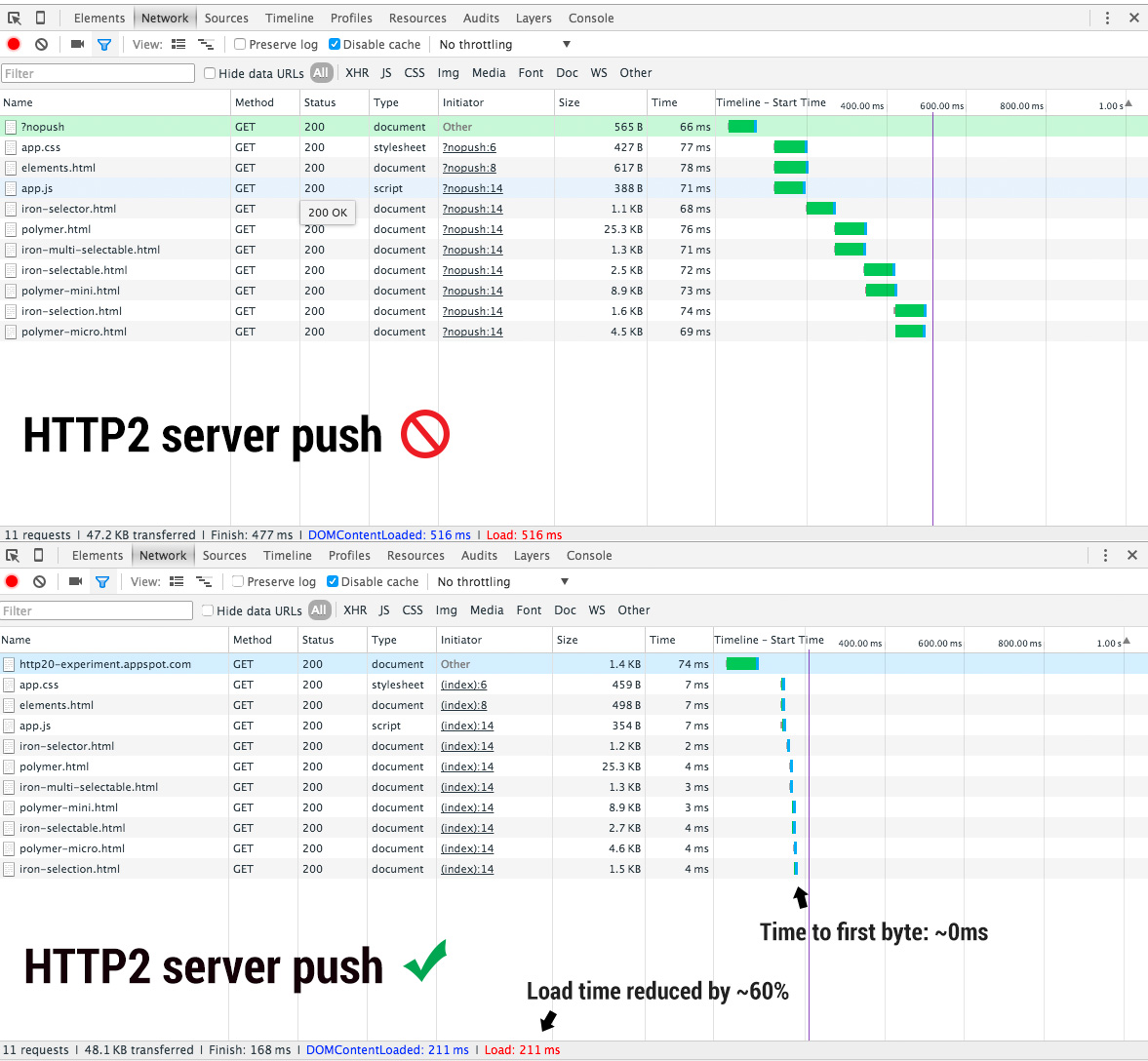
Full WebPageTest results
TL;DR;
- HTTP2 push means we no longer need to concatenate all our JS/CSS together in one file! This reduces the amount of required tooling to make a great, fast web app.
- In my testing, the browser can handle smaller, individual files better than one large file. More testing needs to be done here, but the initial results are promising.
- For HTML Import resources, we no longer need to run
vulcanize(crushes sub-imports into a single file). In testing, the latter is actually slower. Boom! - In a world of web components, authors write components in a modular way using HTML Imports, a bit of CSS/JS, and markup. Push means we can ship our code exactly as it was authored, minimizing the differences between dev and code shipped to production.
HTTP2 push on App Engine
GAE supports the Link rel=preload header! The max number of resources you can push is currently 10.
Verify resources are pushed
To verify resources are being pushed on production GAE:
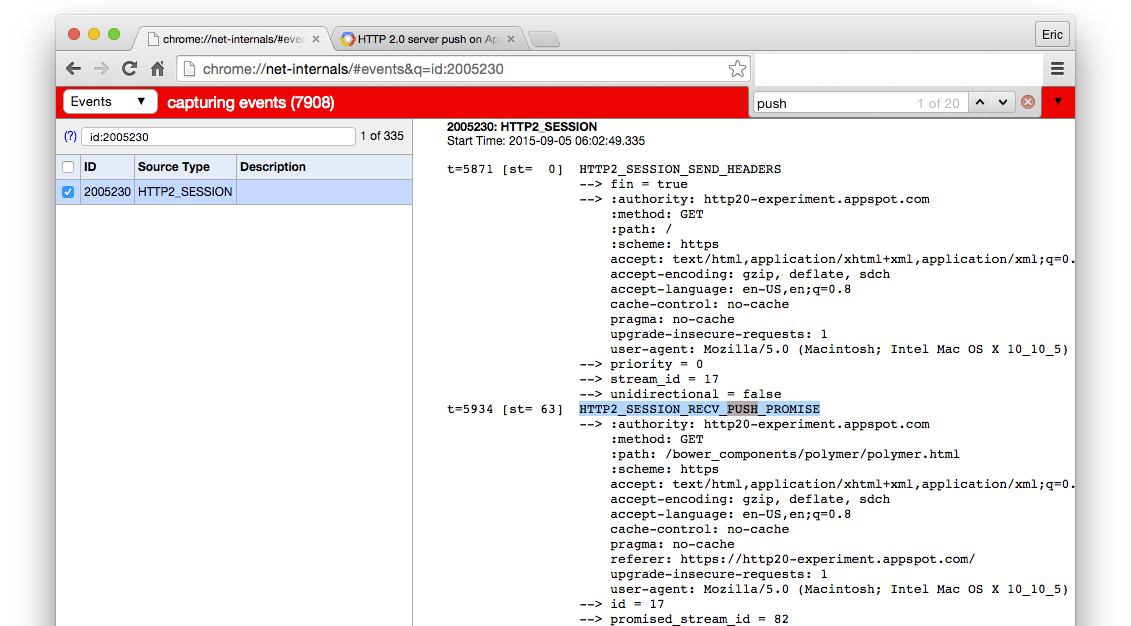
chrome://net-internalsin Chrome.- Change the dropdown to
HTTP/2 - Reload your app URL
- Go back to
chrome://net-internalsand drill into your app.
Pushed resources will show a HTTP2_STREAM_ADOPTED_PUSH_STREAM in the report.