Backend dev challenge
August 20, 2021 · View on GitHub


Rest Api for a survey management platform
Main features :
Api to create, take and manage surveys, it operates on 5 main routes:
- Surveys (list, filter, create, update, delete, take, metrics/statistics)
- Questions (list, filter, create, update, delete, upload description image, metrics, statistics)
- Entries (results when taking a survey - same previous operations)
- Answers (same operations)
- Auth (admin only) (register, login, logout, forgot password, reset password + manipulation operations on all objects and protected routes)
Technical Implementation :
Tech Stack
- NodeJS runtime environment
- Express.js back-end framework
- Mongodb database
- lowDB in-memory database
- Mongoose ODM
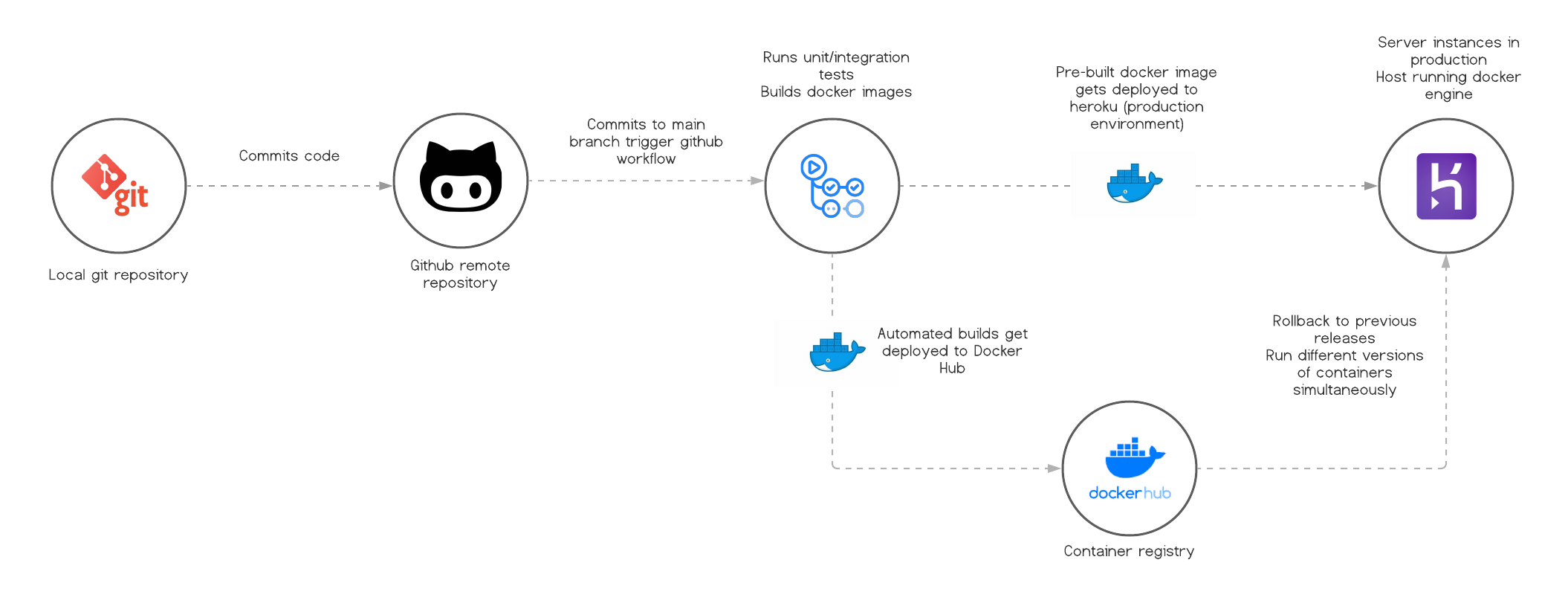
- CI/CD with GitHub Actions
- Containers registry and management with Docker Hub
- Deployment with Heroku server running Docker engine
Deployment Pipeline
Packages and libraries used
- Chai, Mocha, Jest and supertest for unit and integration testing
- mongoose for data interaction with MongoDB
- jsonwebtoken for authentication and token management
- cookie-parser for session management
- rotating-file-stream for periodic logging info persistence
- swagger-ui-express for documentation generation
- nodemailer for server-side email sending
- cloudinary for images manipulation and storage
- bcryptjs for password hashing
Usage
Production
- Swagger documentation and playground for the api are available here(make sure to set the server as "production environment" in swagger)
- Postman static api documentation is available here
Run Server locally
-
Clone the repository
-
Install dependencies :
$ npm install -
Start the server
$ npm run start -
Open browser and head over to the link :
$ http://localhost:5000/api-docs -
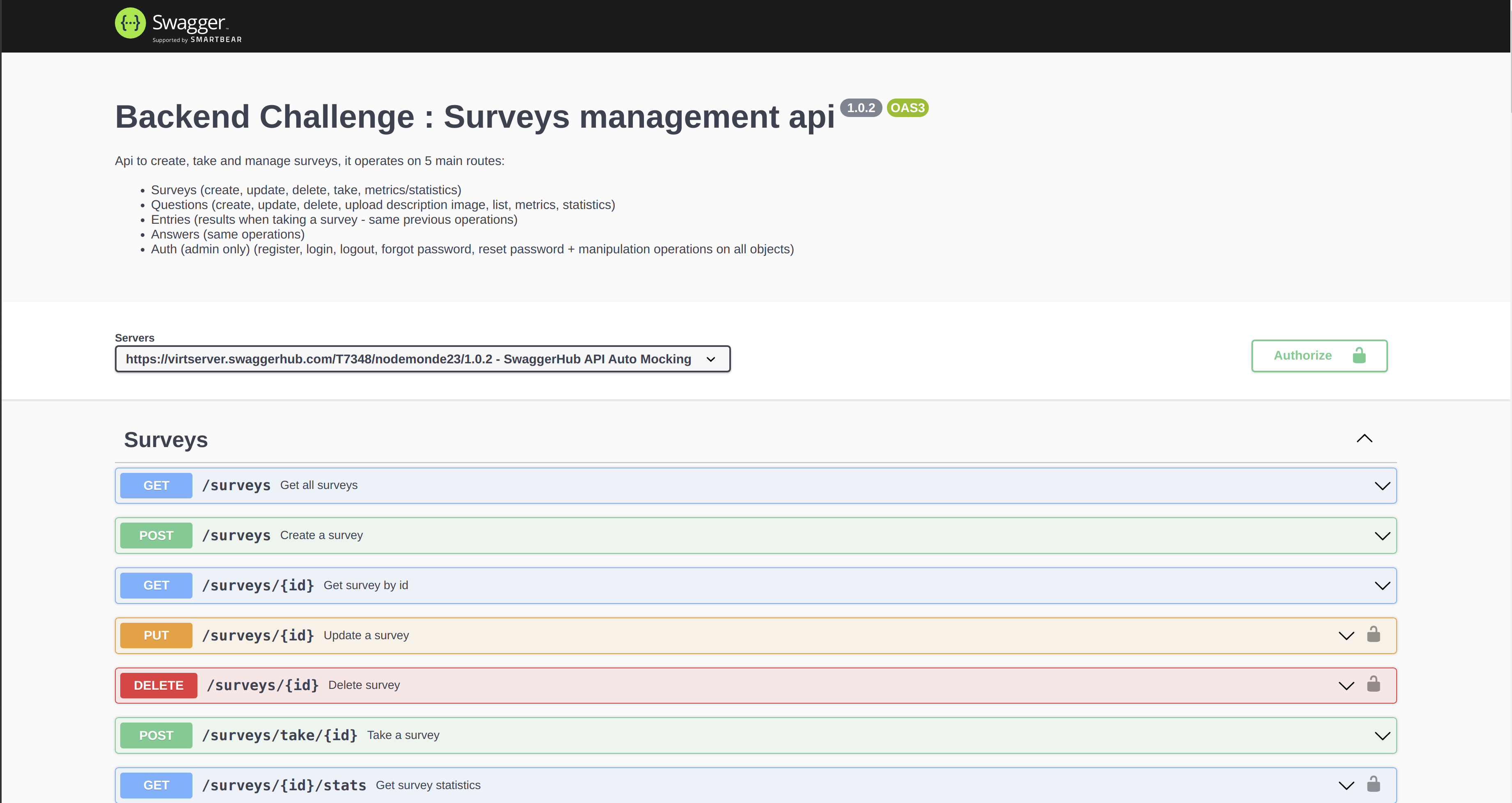
Swagger documentation interface :
- Select
Development environmentas shown below :
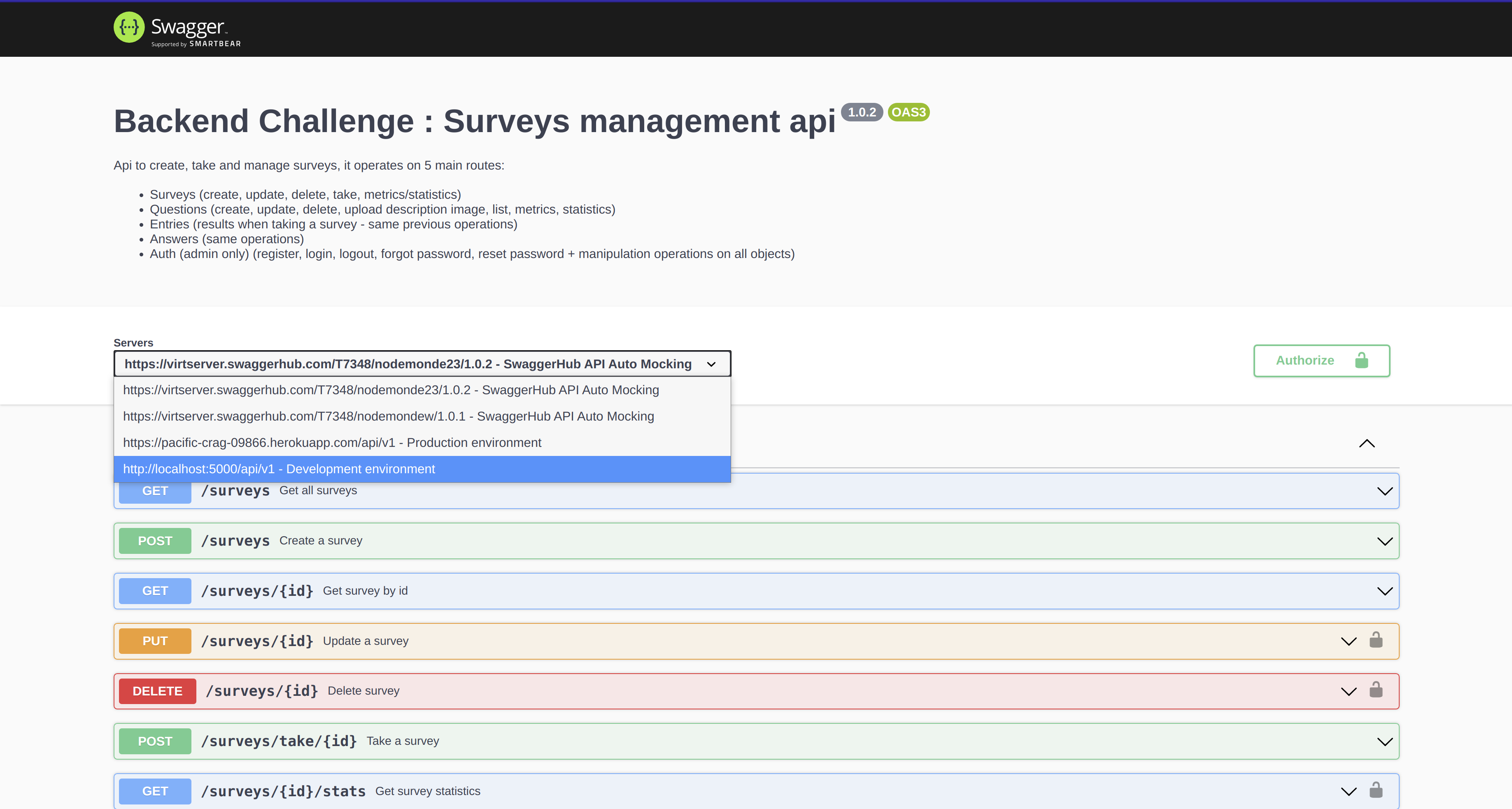
The Server is ready for local testing
Notes and potential improvements
Performance
The perceived latency and delay in requests time (particularly on production environment) can be linked to the following reasons:
- Hardware limitations since most of the components in the deployment pipeline uses the free-tier resources of their respective service provider which tend to be used for prototyping and not for testing.
- Third party services such as Cloudinary that is also using the free tier which has variant response time.
- Dyno cold start (Heroku server stops automatically when there are no requests to the server for a period of 30min and it take 5-10 seconds for the server to move from its idle state when a new request is initiated).
Security
Here are all security considerations that are included in api:
- Protection from DOS attacks with rate limiting.
- Protection from NoSQL injections using express-mongo-sanitize which sanitizes mongodb queries against query selector injections.
- Protection from cross-site scripting with helmet and xss-clean.
Improvements :
- Setup indexing on mongodb and leverage denormalized data models to speed up queries.
- Swap lowDB with redis since the latter has better support for caching.
- Introduce end-to-end monitoring for the deployment pipeline.
- Extend the deployment setup to run multiple instances of the server and add load balancing.
- Conternize the mongodb server instance and include it in the deployment setup.