ProxyBroker2
May 7, 2026 · View on GitHub
🚀 Production-Ready Async Proxy Management - v2.0.0b1
The modernized successor to ProxyBroker with Python 3.10-3.14 support, zero critical bugs, and 100% test coverage







ProxyBroker2 is an open source tool that asynchronously finds public proxies from 50+ sources, validates them against judge servers, and can operate as a rotating proxy server.
Features
- Finds more than 7000 working proxies from ~50 sources.
- Support protocols: HTTP(S), SOCKS4/5. Also CONNECT method to ports 80 and 23 (SMTP).
- Proxies may be filtered by type, anonymity level, response time, country and status in DNSBL.
- Work as a proxy server that distributes incoming requests to external proxies. With automatic proxy rotation.
- All proxies are checked to support Cookies and Referer (and POST requests if required).
- Automatically removes duplicate proxies.
- Is asynchronous.
🎉 What's New in ProxyBroker2 v2.0.0b1
🚀 Production-Ready Features
- ✅ Zero Critical Bugs - Fixed all signal handler leaks, deadlocks, and heap corruption
- ✅ 100% Test Coverage - All 131 tests passing with comprehensive validation
- ✅ Modern Async Patterns - Updated from deprecated asyncio patterns for Python 3.10-3.14
- ✅ Type Safety - Enhanced API with proper type validation and error handling
- ✅ Resource Management - Comprehensive cleanup and connection management
- ✅ Cache Optimization - Smart scheme caching with proper invalidation
🛠️ Core Capabilities
- 🔄 Asynchronous Operations - Built on asyncio for high-performance concurrent processing
- 🌐 Protocol Support - HTTP, HTTPS, SOCKS4, SOCKS5, CONNECT:80, CONNECT:25
- 🕵️ Anonymity Detection - Transparent, Anonymous, and High anonymity validation
- 📡 50+ Proxy Sources - Automatically discovers and validates from multiple providers
- 🖥️ Proxy Server Mode - Deploy your own rotating proxy server with automatic failover
- 🎯 Smart Filtering - Filter by country, protocol, anonymity level, response time
- 🐍 Modern Python - Full support for Python 3.10, 3.11, 3.12, 3.13, and 3.14
Docker
Docker Hub https://hub.docker.com/r/bluet/proxybroker2
$ docker run --rm bluet/proxybroker2 --help
  usage: proxybroker [--max-conn MAX_CONN] [--max-tries MAX_TRIES]
                     [--timeout SECONDS] [--judge JUDGES] [--provider PROVIDERS]
                     [--verify-ssl]
                     [--log [{NOTSET,DEBUG,INFO,WARNING,ERROR,CRITICAL}]]
                     [--min-queue MINIMUM_PROXIES_IN_QUEUE]
                     [--version] [--help]
                     {find,grab,serve,update-geo} ...

  Proxy [Finder | Checker | Server]

  Commands:
    These are common commands used in various situations

    {find,grab,serve,update-geo}
      find                Find and check proxies
      grab                Find proxies without a check
      serve               Run a local proxy server
      update-geo          Download and use a detailed GeoIP database

  Options:
    --max-conn MAX_CONN   The maximum number of concurrent checks of proxies
    --max-tries MAX_TRIES
                          The maximum number of attempts to check a proxy
    --timeout SECONDS, -t SECONDS
                          Timeout of a request in seconds. The default value is
                          8 seconds
    --judge JUDGES        Urls of pages that show HTTP headers and IP address
    --provider PROVIDERS  Urls of pages where to find proxies
    --verify-ssl, -ssl    Flag indicating whether to check the SSL certificates
    --min-queue MINIMUM_PROXIES_IN_QUEUE   The minimum number of proxies in the queue for checking connectivity
    --log [{NOTSET,DEBUG,INFO,WARNING,ERROR,CRITICAL}]
                          Logging level
    --version, -v         Show program's version number and exit
    --help, -h            Show this help message and exit

  Run 'proxybroker <command> --help' for more information on a command.
  Suggestions and bug reports are greatly appreciated:
  <https://github.com/bluet/proxybroker2/issues>
Requirements
- Python 3.10-3.14 (latest stable versions supported)
- Core Dependencies (automatically installed):
Installation
📦 Install v2.0.0b1 (Production Ready Beta)
🎉 ProxyBroker2 v2.0.0b1 is production-ready! Zero critical bugs, 100% test coverage, and full Python 3.10-3.14 support.
⚠️ WARNING: The PyPI package
proxybrokeris outdated (v0.3.2) and no longer maintained. Use ProxyBroker2 from GitHub for the latest production-ready version.
Install the latest stable release:
# Install stable v2.0.0b1 release
$ pip install -U git+https://github.com/bluet/proxybroker2.git@v2.0.0b1

# Or install latest development version
$ pip install -U git+https://github.com/bluet/proxybroker2.git
Why ProxyBroker2 v2.0.0b1?
- 🚀 Production Ready: Zero critical bugs, thoroughly tested
- 🐍 Modern Python: Full Python 3.10-3.14 compatibility
- ⚡ High Performance: Modern async patterns and optimizations
- 🛡️ Stable API: Contract-based testing ensures backward compatibility
- 📚 Great Docs: Comprehensive guides and API documentation
Use pre-built Docker image
$ docker pull bluet/proxybroker2
Build bundled one-file executable with pyinstaller
Requirements
Supported Operating System: Windows, Linux, MacOS
On UNIX-like systems (Linux / macOSX / BSD)
Install these tools
- upx
- objdump (this tool is usually in the binutils package)
$ sudo apt install -y upx-ucl binutils # On Ubuntu / Debian
Build
pip install pyinstaller \
&& pip install . \
&& mkdir -p build \
&& cd build \
&& pyinstaller --onefile --name proxybroker --add-data "../proxybroker/data:data" --workpath ./tmp --distpath . --clean ../py2exe_entrypoint.py \
&& rm -rf tmp *.spec
The executable is now in the build directory
Quick Start
After installation, you can immediately start finding proxies:
# Find 5 working HTTP proxies
$ python -m proxybroker find --types HTTP --limit 5

# Find 10 US HTTP proxies
$ python -m proxybroker find --types HTTP --countries US --limit 10

# Run local proxy server on port 8888
$ python -m proxybroker serve --host 127.0.0.1 --port 8888 --types HTTP HTTPS
Usage
CLI Examples
Find
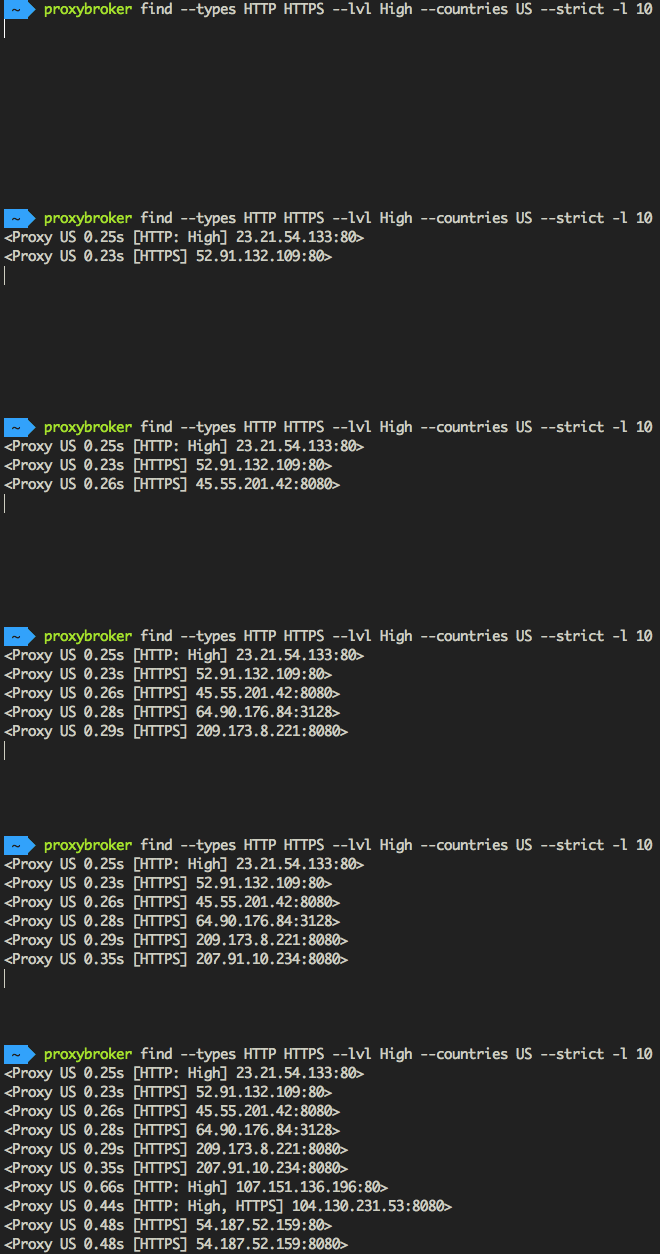
Find and show 10 HTTP(S) proxies from United States with the high level of anonymity:
$ python -m proxybroker find --types HTTP HTTPS --lvl High --countries US --strict -l 10
Grab
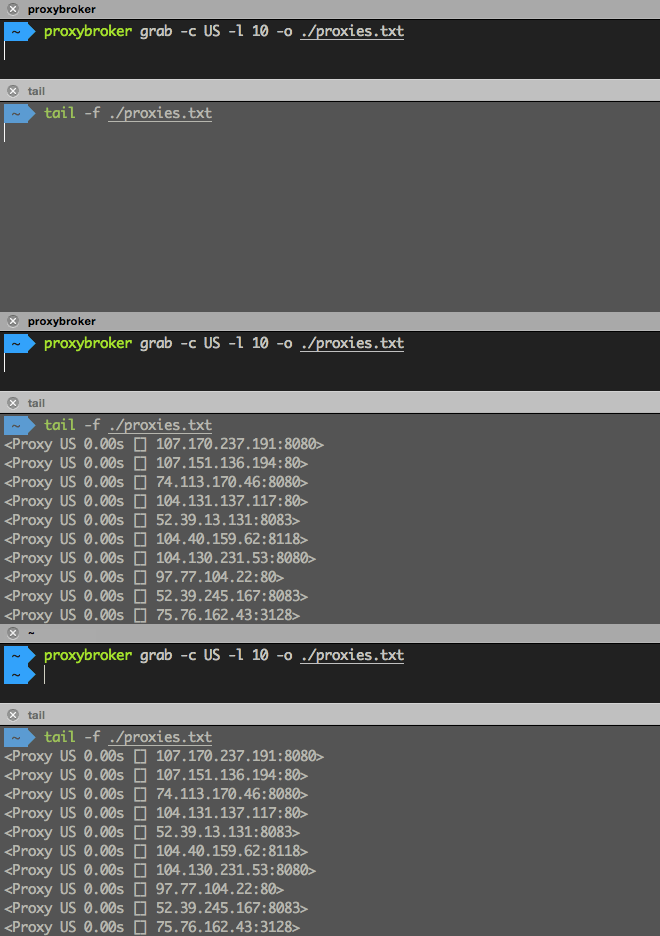
Find and save to a file 10 US proxies (without a check):
$ python -m proxybroker grab --countries US --limit 10 --outfile ./proxies.txt
Serve
Run a local proxy server that distributes incoming requests to a pool of found HTTP(S) proxies with the high level of anonymity:
$ python -m proxybroker serve --host 127.0.0.1 --port 8888 --types HTTP HTTPS --lvl High --min-queue 5
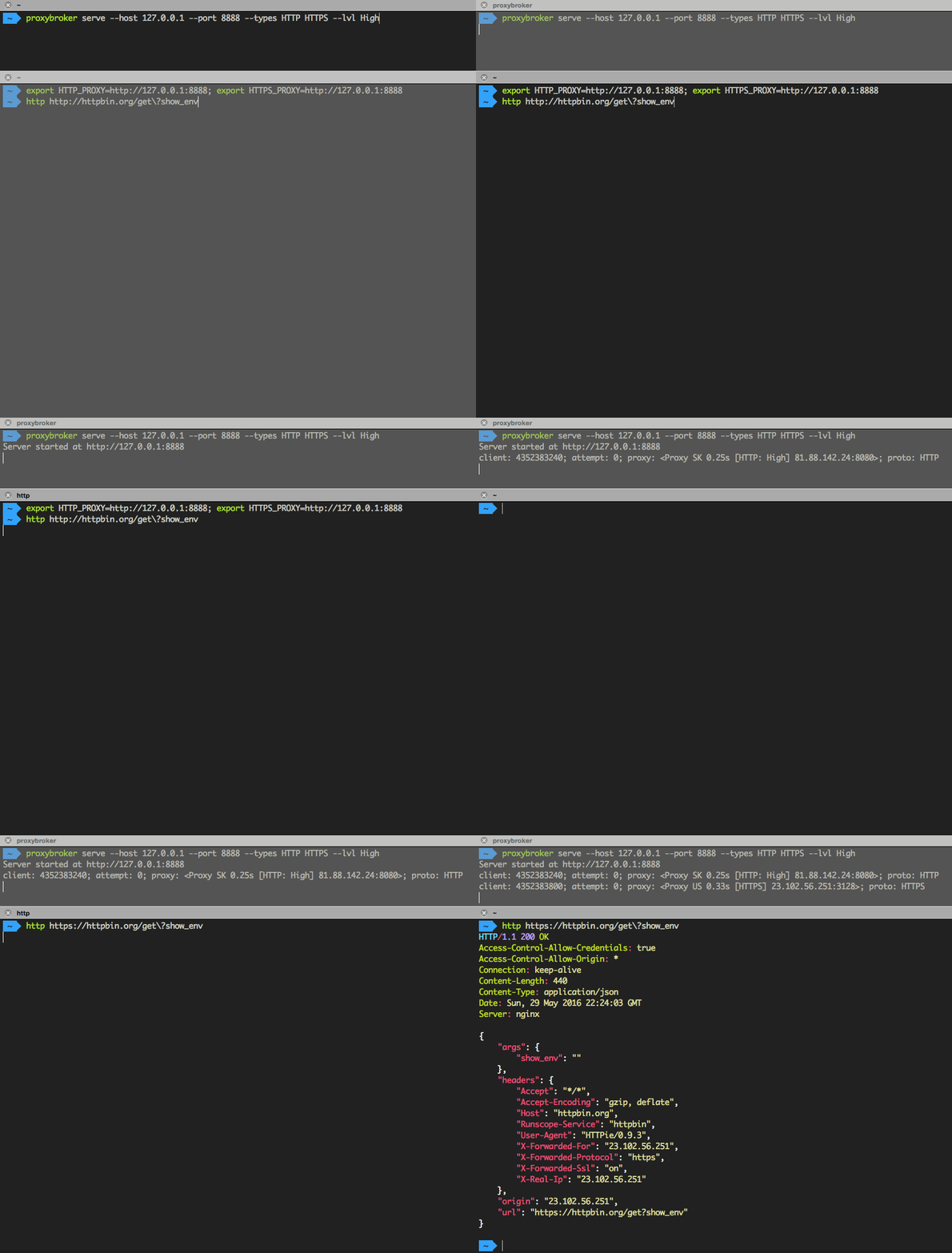
Run python -m proxybroker --help for more information on the options available.
Run python -m proxybroker <command> --help for more information on a command.
Basic code example
Find and show 10 working HTTP(S) proxies:
import asyncio
from proxybroker import Broker

async def show(proxies):
    while True:
        proxy = await proxies.get()
        if proxy is None:
            break
        print("Found proxy: %s" % proxy)

async def main():
    proxies = asyncio.Queue()
    broker = Broker(proxies)
    await asyncio.gather(
        broker.find(types=["HTTP", "HTTPS"], limit=10),
        show(proxies)
    )

if __name__ == "__main__":
    asyncio.run(main())
🆕 Custom Proxy Providers
Add your own proxy sources without modifying the codebase. Two paths:
Docker (no coding required)
Drop YAML/JSON config files into a folder, bind-mount it to /configs:
# ~/proxy-sources/my_list.yaml
name: My Internal Source
type: simple
url: https://my-server.example.com/proxies.txt
format: text
protocols: [HTTP, HTTPS]
docker run --rm \
  -v ~/proxy-sources:/configs \
  bluet/proxybroker2 \
  find --types HTTP --limit 10
The CLI also accepts --provider-dir PATH (repeatable) and reads $PROXYBROKER_PROVIDER_DIR if neither is set.
Python API
from proxybroker import SimpleProvider, Broker

class MyProvider(SimpleProvider):
    domain = "mysite.com"

    def __init__(self):
        super().__init__(
            url="http://mysite.com/proxies.txt",
            format='text',
            proto=('HTTP', 'HTTPS')
        )

broker = Broker(providers=[MyProvider()])
Full documentation on custom providers
🔬 Testing Philosophy
ProxyBroker2 implements a comprehensive contract-based testing strategy that ensures reliability while enabling innovation:
✅ What We Test (Stable Public Contracts)
- User-visible behavior - "Does proxy finding work?" vs internal algorithms
- API signatures - Method parameters and return types users depend on
- Protocol support - HTTP, HTTPS, SOCKS4/5 compatibility
- Error contracts - Exception types and error handling behavior
❌ What We Don't Test (Flexible Implementation)
- Internal algorithms - Allow optimization without breaking tests
- Exact protocol bytes - Enable protocol improvements and IPv6 support
- Provider specifics - Adapt to website changes without test failures
- Performance metrics - Implementation details that can evolve
This approach protects your code from breaking changes while allowing ProxyBroker2 to continuously improve its internals.
Proxy information per requests
HTTP
Check X-Proxy-Info header in response.
$ http_proxy=http://127.0.0.1:8888 https_proxy=http://127.0.0.1:8888 curl -v http://httpbin.org/get
*   Trying 127.0.0.1...
* TCP_NODELAY set
* Connected to 127.0.0.1 (127.0.0.1) port 8888 (#0)
> GET http://httpbin.org/get HTTP/1.1
> Host: httpbin.org
> User-Agent: curl/7.58.0
> Accept: */*
> Proxy-Connection: Keep-Alive
>
< HTTP/1.1 200 OK
< X-Proxy-Info: 174.138.42.112:8080
< Date: Mon, 04 May 2020 03:39:40 GMT
< Content-Type: application/json
< Content-Length: 304
< Server: gunicorn/19.9.0
< Access-Control-Allow-Origin: *
< Access-Control-Allow-Credentials: true
< X-Cache: MISS from ADM-MANAGER
< X-Cache-Lookup: MISS from ADM-MANAGER:880
< Connection: keep-alive
<
{
  "args": {},
  "headers": {
    "Accept": "*/*",
    "Cache-Control": "max-age=259200",
    "Host": "httpbin.org",
    "User-Agent": "curl/7.58.0",
    "X-Amzn-Trace-Id": "Root=1-5eaf8e7c-6a1162a1387a1743a49063f4"
  },
  "origin": "...",
  "url": "http://httpbin.org/get"
}
* Connection #0 to host 127.0.0.1 left intact
HTTPS
We are not able to modify HTTPS traffic to inject custom header once they start being encrypted. A X-Proxy-Info will be sent to client after HTTP/1.1 200 Connection established but not sure how clients can read it.
(env) bluet@ocisly:~/workspace/proxybroker2$ http_proxy=http://127.0.0.1:8888 https_proxy=http://127.0.0.1:8888 curl -v https://httpbin.org/get
*   Trying 127.0.0.1...
* TCP_NODELAY set
* Connected to 127.0.0.1 (127.0.0.1) port 8888 (#0)
* allocate connect buffer!
* Establish HTTP proxy tunnel to httpbin.org:443
> CONNECT httpbin.org:443 HTTP/1.1
> Host: httpbin.org:443
> User-Agent: curl/7.58.0
> Proxy-Connection: Keep-Alive
>
< HTTP/1.1 200 Connection established
< X-Proxy-Info: 207.148.22.139:8080
<
* Proxy replied 200 to CONNECT request
* CONNECT phase completed!
* ALPN, offering h2
* ALPN, offering http/1.1
* successfully set certificate verify locations:
...
*  SSL certificate verify ok.
* Using HTTP2, server supports multi-use
* Connection state changed (HTTP/2 confirmed)
* Copying HTTP/2 data in stream buffer to connection buffer after upgrade: len=0
* Using Stream ID: 1 (easy handle 0x5560b2e93580)
> GET /get HTTP/2
> Host: httpbin.org
> User-Agent: curl/7.58.0
> Accept: */*
>
* Connection state changed (MAX_CONCURRENT_STREAMS updated)!
< HTTP/2 200
< date: Mon, 04 May 2020 03:39:35 GMT
< content-type: application/json
< content-length: 256
< server: gunicorn/19.9.0
< access-control-allow-origin: *
< access-control-allow-credentials: true
<
{
  "args": {},
  "headers": {
    "Accept": "*/*",
    "Host": "httpbin.org",
    "User-Agent": "curl/7.58.0",
    "X-Amzn-Trace-Id": "Root=1-5eaf8e77-efcb353b0983ad6a90f8bdcd"
  },
  "origin": "...",
  "url": "https://httpbin.org/get"
}
* Connection #0 to host 127.0.0.1 left intact
HTTP API
Get info of proxy been used for retrieving specific url
For HTTP, it's easy.
$ http_proxy=http://127.0.0.1:8888 https_proxy=http://127.0.0.1:8888 curl -v http://proxycontrol/api/history/url:http://httpbin.org/get
*   Trying 127.0.0.1...
* TCP_NODELAY set
* Connected to 127.0.0.1 (127.0.0.1) port 8888 (#0)
> GET http://proxycontrol/api/history/url:http://httpbin.org/get HTTP/1.1
> Host: proxycontrol
> User-Agent: curl/7.58.0
> Accept: */*
> Proxy-Connection: Keep-Alive
>
< HTTP/1.1 200 OK
< Content-Type: application/json
< Content-Length: 34
< Access-Control-Allow-Origin: *
< Access-Control-Allow-Credentials: true
<
{"proxy": "..."}
For HTTPS, we're not able to know encrypted payload (request), so only hostname can be used.
$ http_proxy=http://127.0.0.1:8888 https_proxy=http://127.0.0.1:8888 curl -v http://proxycontrol/api/history/url:httpbin.org:443
*   Trying 127.0.0.1...
* TCP_NODELAY set
* Connected to 127.0.0.1 (127.0.0.1) port 8888 (#0)
> GET http://proxycontrol/api/history/url:httpbin.org:443 HTTP/1.1
> Host: proxycontrol
> User-Agent: curl/7.58.0
> Accept: */*
> Proxy-Connection: Keep-Alive
>
< HTTP/1.1 200 OK
< Content-Type: application/json
< Content-Length: 34
< Access-Control-Allow-Origin: *
< Access-Control-Allow-Credentials: true
<
{"proxy": "..."}
* Connection #0 to host 127.0.0.1 left intact
Remove specific proxy from queue
$ http_proxy=http://127.0.0.1:8888 https_proxy=http://127.0.0.1:8888 curl -v http://proxycontrol/api/remove/PROXY_IP:PROXY_PORT
*   Trying 127.0.0.1...
* TCP_NODELAY set
* Connected to 127.0.0.1 (127.0.0.1) port 8888 (#0)
> GET http://proxycontrol/api/remove/... HTTP/1.1
> Host: proxycontrol
> User-Agent: curl/7.58.0
> Accept: */*
> Proxy-Connection: Keep-Alive
>
< HTTP/1.1 204 No Content
<
* Connection #0 to host 127.0.0.1 left intact
Migration from ProxyBroker v0.3.2
If you're upgrading from the original ProxyBroker v0.3.2, here are the key changes:
🚨 Breaking Changes
Python Version
# v0.3.2: Python 3.5.3+ supported
# v2.0.0+: Python 3.10+ required
python --version  # Must be 3.10+
Installation
# v0.3.2: pip install proxybroker
# v2.0.0+: Install from GitHub (original is abandoned)
pip uninstall proxybroker  # Remove old version if installed
pip install git+https://github.com/bluet/proxybroker2.git
CLI Usage
# v0.3.2: proxybroker find --types HTTP --limit 10
# v2.0.0+: python -m proxybroker find --types HTTP --limit 10
✅ API Compatibility
The Python API remains 100% compatible:
# This code works in both versions
import asyncio
from proxybroker import Broker

async def main():
    proxies = asyncio.Queue()
    broker = Broker(proxies)
    await broker.find(types=['HTTP'], limit=10)

asyncio.run(main())  # Modern async pattern
✅ What's Improved vs v0.3.2
- Zero critical bugs - Fixed deadlocks, memory leaks, and race conditions that existed in v0.3.2
- Active maintenance - Regular updates vs abandoned original project
- Better performance - Modern async patterns and optimizations
- Python 3.10-3.14 support - Latest Python features and compatibility
- Comprehensive testing - Reliable test suite vs limited testing in v0.3.2
- Better documentation - Updated examples and comprehensive guides
Documentation
📚 Complete Documentation: https://proxybroker2.readthedocs.io/
Our documentation uses a modern approach:
- Auto-generated API reference - Always current with source code
- Hand-written guides - Installation, tutorials, architecture
- Enhanced Sphinx setup - MyST-Parser, auto-linking, cross-references
Documentation Features
- Live API docs - Generated from docstrings (19.6% coverage, high quality)
- Multiple formats - HTML, PDF, downloadable archives
- Modern Markdown - Enhanced syntax with MyST-Parser
- Cross-references - Links to Python and aiohttp documentation
TODO
- Check the ping, response time and speed of data transfer
- Check site access (Google, Twitter, etc) and even your own custom URL's
- Information about uptime
- Checksum of data returned
- Support for proxy authentication
- Finding outgoing IP for cascading proxy
- The ability to specify the address of the proxy without port (try to connect on defaulted ports)
Contributing
We welcome contributions! The project has excellent test coverage and development tooling.
Development Setup
- Fork it: https://github.com/bluet/proxybroker2/fork
- Clone and setup:
git clone https://github.com/yourusername/proxybroker2.git
cd proxybroker2
poetry install  # Install dependencies
Development Workflow
- Create your feature branch:
git checkout -b my-new-feature - Make changes and format:
# Auto-format code (required before commit) ruff check . --fix && ruff format . # Run tests to ensure everything works pytest tests/ -v - Commit with conventional format:
# Use conventional commit format for better automation git commit -m "feat: add SOCKS5 authentication support" git commit -m "fix: resolve memory leak in proxy pool" git commit -m "docs: update installation instructions" - Push to the branch:
git push origin my-new-feature - Submit a pull request!
Development Tools
- Poetry 2.1.3+: Modern dependency management and virtual environments
- ruff: Ultra-fast linting and formatting (replaces flake8/isort)
- pytest 8.3.5+: Modern testing framework with async support
- pytest-asyncio 0.26.0+: Enhanced async testing capabilities
- pytest-cov 6.1.1+: Comprehensive coverage reporting
- Sphinx 8.0+ + MyST-Parser 4.0+: Modern documentation with auto-generation
- ReadTheDocs: Professional documentation hosting
- Conventional commits: Structured commit format for automation
- Architecture guide: See CLAUDE.md for detailed insights
License
Licensed under the Apache License, Version 2.0
This product includes GeoLite2 data created by MaxMind, available from http://www.maxmind.com.
Refs
Contributors ✨
Thanks goes to these wonderful people (emoji key):
 a5r0n 💻 |
 C.M. Yang 💻 🤔 👀 |
 Ivan Villareal 💻 |
 Quancore 💻 |
 Felipe 🤔 |
 vincentinttsh 💻 👀 |
 Ziloka 💻 |
 hms5232 💻 |
 Stefan Machmeier 💻 |
 steven 📖 |
This project follows the all-contributors specification. Contributions of any kind welcome!
License