go_over
June 7, 2026 · View on GitHub



A tool to audit Erlang & Elixir dependencies, to make sure your ✨ gleam projects really sparkle!

🔽 Install
gleam add --dev go_over
📣 Also!
- add
.go-over/to your.gitignore - make sure
gitis installed. (If not running via the BEAM you needcurl,wgetorhttpieinstalled as well)
🌸 Javascript
If running with Javascript install
{
  "devDependencies": {
    "yaml": "^2.4.3"
  }
}
Bun, Deno & Nodejs are all supported!
▶️ Usage
gleam run -m go_over
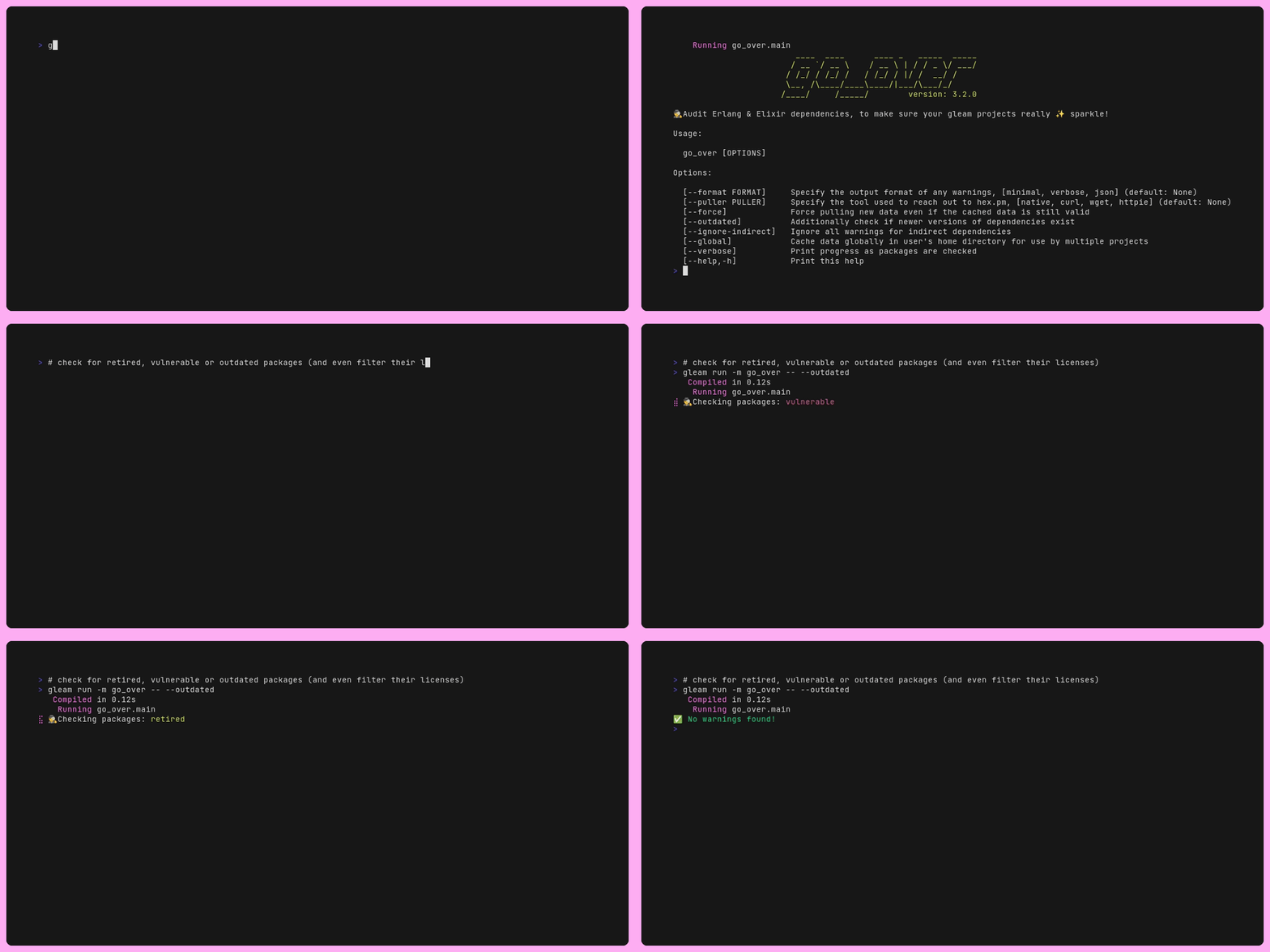
🎥 Obligatory VHS
🏴 Flags
--formatSpecify the output format of any warnings, [minimal, detailed, json, sarif] (default: None)--sarif-output PATHWrite SARIF output toPATHinstead of stdout (requires--format sarif)--pullerSpecify the tool used to reach out to hex.pm, [native, curl, wget, httpie] (default: None)--force: Force pulling new data even if the cached data is still valid--outdated: [deprecated] runsgleam deps outdatedinstead — use that command directly--verbose: Print progress as packages are checked--root PATH: Audit a single Gleam project atPATH(usesPATH/gleam.tomlandPATH/manifest.toml)--workspace [PATH]: Audit every Gleam project underPATH(default:.). Finds directories containing bothgleam.tomlandmanifest.toml. Each project's own[go-over]settings apply during its audit. Setworkspace_max_depthin the scan root'sgleam.tomlto control discovery depth (default:3).--local: Cache data in the project's.go-over/directory--global: Cache data in the user's home directory (shared across projects)--help,-h: Print help
Flags override config values if set
⚙️ Config
Optional settings that can be added to your project's gleam.toml
[go-over]
# force pulling new data even if cached data is still valid
# default: false
force = false
# maximum directory depth when scanning with --workspace (set on the scan root)
# default: 3
workspace_max_depth = 3
# if true all cached data will be stored in user's home directory
# allowing cache to be shared between projects
# default: true
global = true
# sets output format for warnings ["minimal", "detailed", "json", "sarif"]
# default: "minimal"
format = "minimal"
# [deprecated] runs `gleam deps outdated` — use that command directly instead
# default: false
outdated = false
# tool used to pull information from hex.pm ["native", "curl", "wget", "httpie"]
# default: "curl" for JS and "native" for Erlang
puller = "curl"
# licenses dependencies are allowed to use. If left empty then all licenses are allowed
# default: []
allowed_licenses = []

[go-over.ignore]
# will ignore all warnings for indirect dependencies
# default: false
indirect = false
# will ignore all warnings for dev-dependencies. Note: to ignore indirect dependencies regardless of source see go-over.ignore.indirect
# default: false
dev_dependencies = false
# list of package names to skip when auditing dependencies
# default: []
packages = ["example_package"]
# list of warning severities to skip when auditing dependencies
# default: []
# (case insensitive)
severity = ["example_moderate"]
# list of advisory IDs to skip when auditing dependencies
# default: []
ids = ["GHSA-xxxx-yyyy-zzzz"]
⌛ Caching
- Security advisory data is cached for six hours
- hex.pm retired package data is cached for one hour
🪝 pre-commit hooks
You can add go_over to you're pre-commit hooks by installing
🌵cactus & then adding this to your
gleam.toml
[cactus.pre-commit]
actions = [
  { command = "go_over" },
]
⚙️ CI
You can schedule daily runs to keep your deps up to date and open issues when necessary! Example ▶️
- run: gleam run -m go_over -- --local
SARIF output (GitHub Code Scanning)
Use --format sarif to emit a
SARIF 2.1.0
log suitable for GitHub's code scanning upload action:
- run: gleam build
- run: gleam run -m go_over -- --format sarif --sarif-output go-over.sarif
- uses: github/codeql-action/upload-sarif@v3
  with:
    sarif_file: go-over.sarif
By default SARIF is written to stdout. Use --sarif-output to write directly to
a file instead of shell redirection. Run gleam build first so compile output
does not mix into stdout. Info-level notices (unnecessary ignores, skipped
workspace projects, git dependencies) are included as SARIF note results.
You can validate SARIF output against GitHub ingestion rules at https://sarifweb.azurewebsites.net/Validation.
In workspace mode (--workspace), each Gleam project appears as a separate run
in the SARIF document. Pass --format on the CLI to use one format for every
project; otherwise each project's [go-over] format must match.
Upgrading to v4
See CHANGELOG.md for breaking changes from v3.
Other Art
- As I'm sure is no surprise this tool is inspired by (and all around worse than) mirego/mix_audit. Please check it out!
- It also draws inspiration from mix hex.audit
License
This tool uses mirego/elixir-security-advisories which is it self licensed with
BSD-3-ClauseCC-BY 4.0 open source- See their #license section
Code original to this repo is Licensed under MIT