README.md
June 15, 2026 · View on GitHub
Open Interpreter
A coding agent for low-cost models.



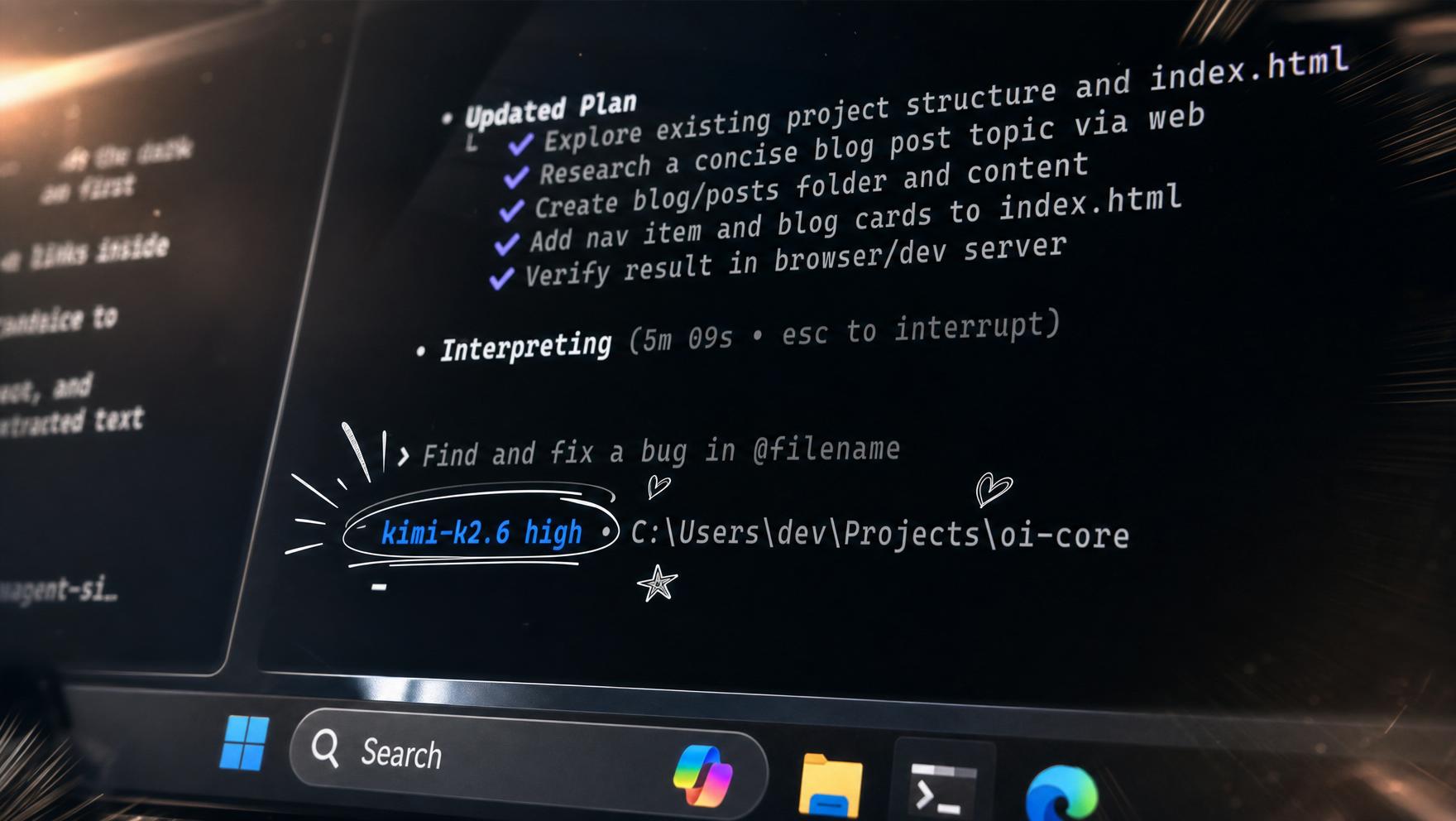
Note
This is the new Rust version of Open Interpreter. Looking for the original Python project? It lives on as a community-maintained fork at endolith/open-interpreter.
Installation
macOS and Linux:
curl -fsSL https://www.openinterpreter.com/install | sh
Windows:
irm https://www.openinterpreter.com/install.ps1 | iex
Then type i or interpreter in your terminal to start a session.
Harness Emulation
Open Interpreter is a fork of OpenAI's Codex, with a focus on emulating the agent harness that gets the best performance out of low-cost models.
Use /harness to switch the active harness:
> /harness

native
claude-code
claude-code-bare
kimi-cli
qwen-code
deepseek-tui
swe-agent
minimal
Read more in the harness docs and model provider docs.
Computer Use
Open Interpreter ships with a QA skill that lets any model operate and test interfaces. It can drive web apps in a real browser with agent-browser, or operate and test native apps with trycua.
Features
- Runs commands inside native sandboxing on macOS, Linux, and Windows.
- Switches providers and models from the TUI with
/model. - Inspects or switches Rust-native model harnesses with
/harness. - Tests web and native apps through the built-in QA skill.
- Runs as an Agent Client Protocol agent for editors with
interpreter acp. - Keeps config and session state local under
~/.openinterpreter. - Supports
exec, MCP, skills, hooks, permissions, andAGENTS.md.
Documentation
- Terminal docs
- Quickstart
- Install guide
- Configuration
- CLI reference
- Harnesses
- Model providers
- Sandbox & approvals
License
Apache-2.0