README.en.md
June 12, 2026 · View on GitHub
Yuxi
A multi-tenant agent platform combining RAG and knowledge graphs
Make enterprise knowledge retrievable, reasoned over, and deliverable by agents


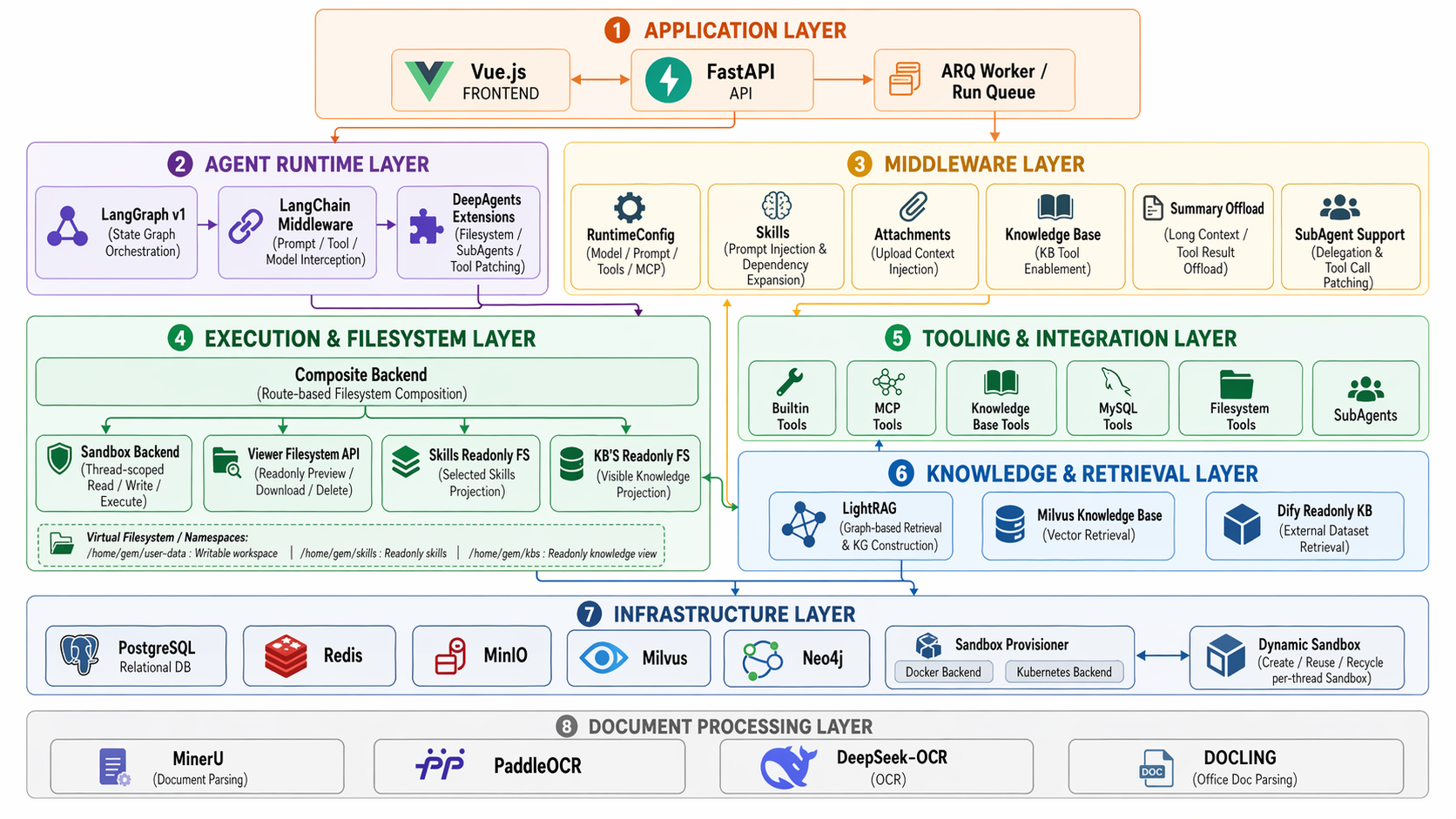
*Image generated by GPT-Image-2.
Introduction
Yuxi is an LLM-powered platform for building knowledge-base and knowledge-graph agents. It unifies RAG retrieval, Milvus-backed in-knowledge-base graphs, and LangGraph multi-agent orchestration into a single multi-tenant workspace: administrators configure knowledge bases, models, and permissions, while users chat — in a ChatGPT-like interface — with agents that can mount Skills, MCPs, sub-agents, and sandbox tools, and receive answers with cited sources, graph-based reasoning, and deliverable artifacts.
Navigation: Introduction | Quick Start | Roadmap; for the latest updates, see the changelog.
Core Features
- 🤖 Agent development — Built on LangGraph, with sub-agents (SubAgents), Skills, MCPs, Tools, and middleware; long-running tasks run asynchronously on a background worker, backed by a sandbox file system for persisting, previewing, and downloading tool artifacts.
- 📚 Knowledge base (RAG) — Multi-format document parsing (MinerU / PaddleX / OCR), configurable Embedding and Rerank models, knowledge base evaluation, in-app PDF / image preview, and retrieval sources backfilled as chat citations.
- 🕸️ Knowledge graph — Build, visualize, and retrieve entity-relation graphs inside Milvus knowledge bases, then fuse graph hits with chunk retrieval for agent reasoning.
- 🏢 Multi-tenancy & permissions — User / department-level access control, unified model provider configuration, and API Key authentication for external system integration.
- ⚙️ Platform & engineering — Vue + FastAPI architecture, ready-to-run Docker Compose deployment, dark mode, a lightweight LITE startup mode, and production-grade orchestration.
Tech Stack
| Layer | Technologies |
|---|---|
| Frontend | Vue 3 · Vite · Pinia |
| Backend | FastAPI · LangGraph · ARQ (async worker) |
| Storage | PostgreSQL · Redis · MinIO · Milvus · Neo4j |
| Doc parsing | MinerU · PaddleX · RapidOCR |
| Deployment | Docker Compose |

Quick Start
Prerequisites: Docker and Docker Compose installed, plus at least one OpenAI-compatible LLM API.
1. Clone and initialize
git clone --branch v0.7.0 --depth 1 https://github.com/xerrors/Yuxi.git
cd Yuxi

# Linux/macOS
./scripts/init.sh

# Windows PowerShell
.\scripts\init.ps1
2. Start with Docker
docker compose up --build
3. Open the platform
Once the services are ready, open http://localhost:5173 in your browser and sign in with the admin account generated during initialization.
💡 If you don't need heavy dependencies like knowledge bases / graphs, run
make up-litefor a lightweight LITE mode with faster cold starts. See the docs for more deployment details.
Examples and Demo
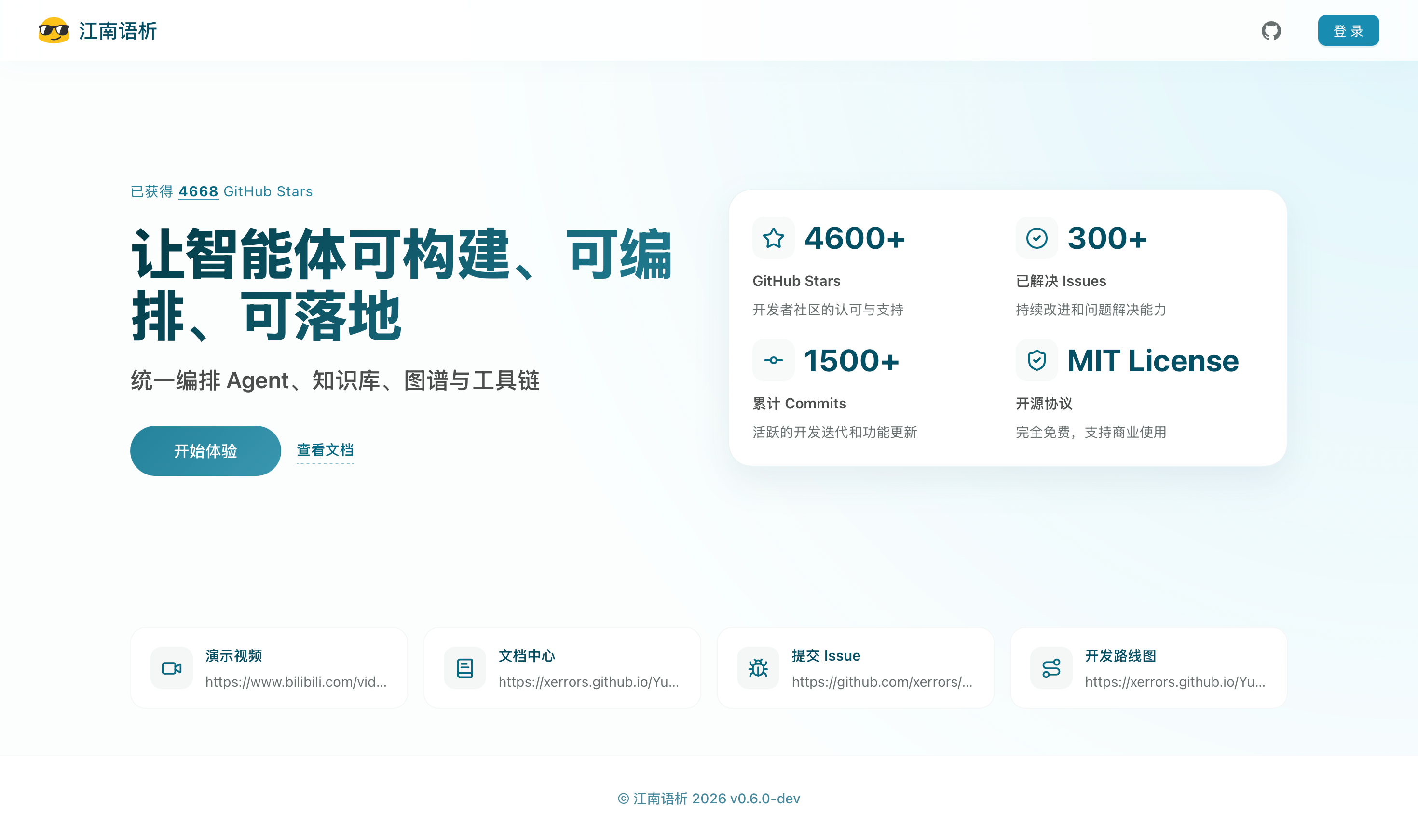
Home |
Dashboard Statistics |
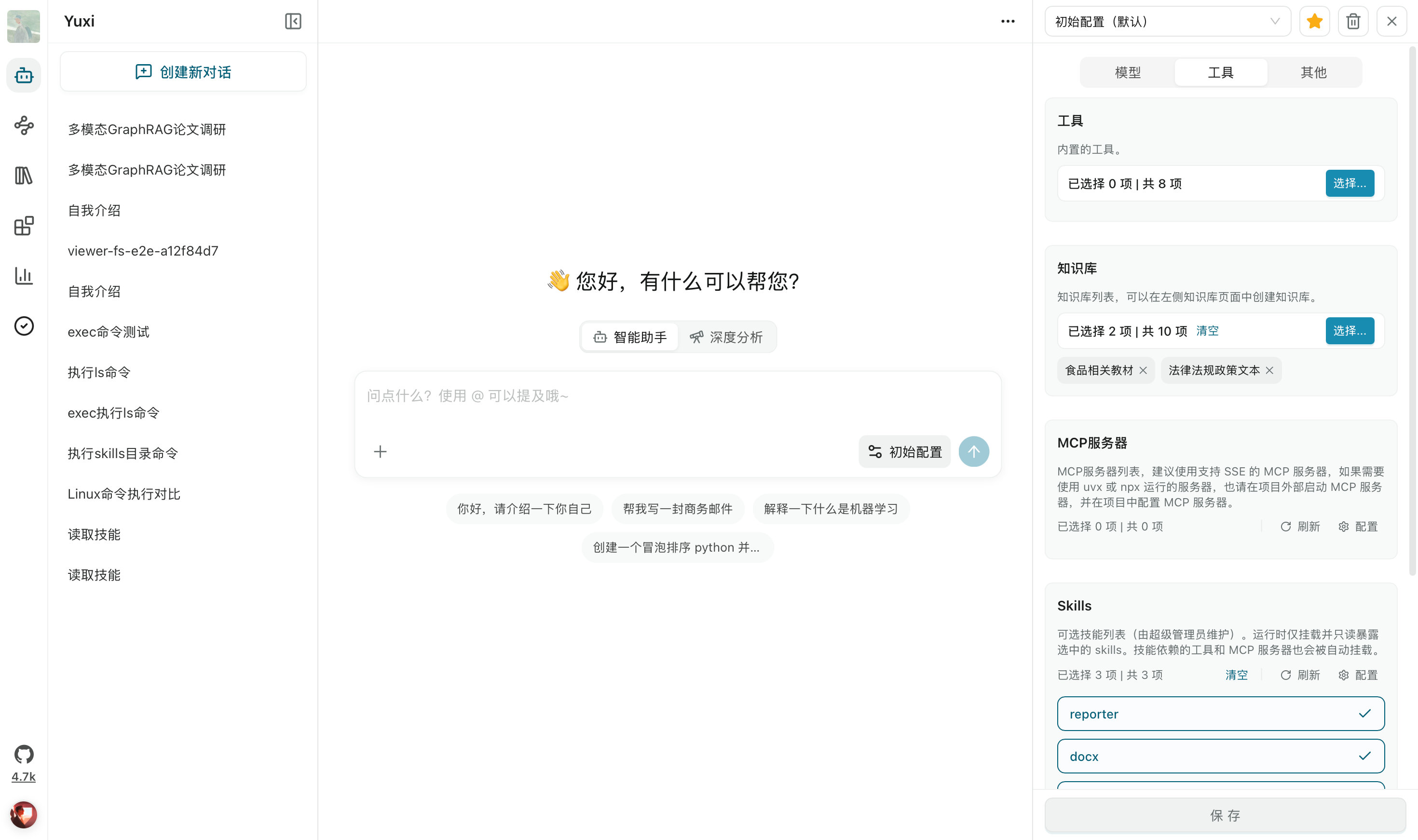
Agent Configuration |
Knowledge Base Invocation |
|
Create Knowledge Base |
Knowledge Base Management |
|
Knowledge Graph Visualization |
Project Documentation |
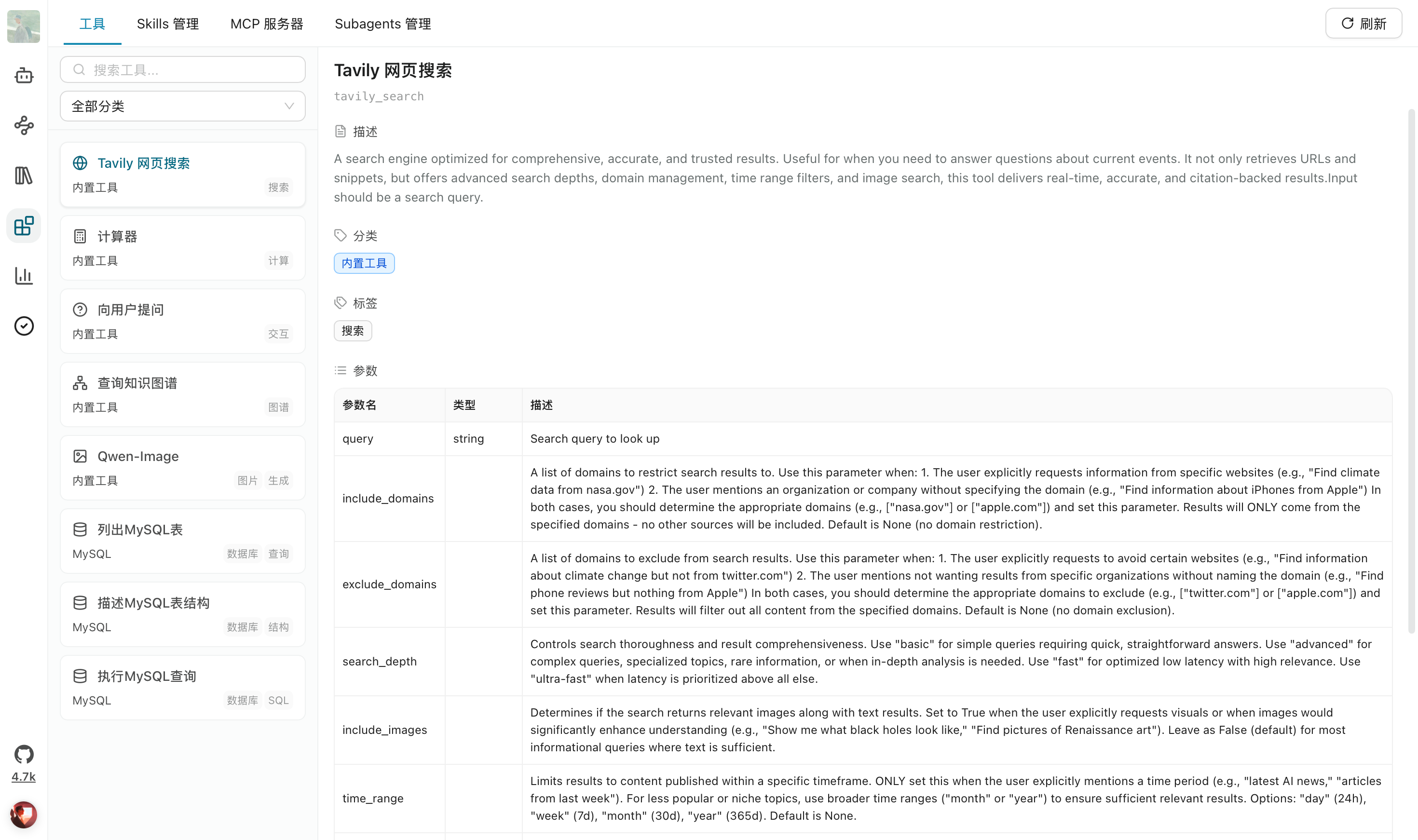
Extension Management (Skills) |
Extension Management (MCPs) |
|
User / Department Permission Management |
Model Provider Configuration |
Acknowledgements
Yuxi references and builds on the following excellent open-source projects:
- LightRAG - Used as the foundation for graph construction and retrieval.
- DeepAgents - Used as the deep agent framework.
- DeerFlow - Referenced for Sandbox agent architecture ideas.
- RAGflow - Referenced for document text chunking strategies.
- LangGraph - Multi-agent orchestration framework and the core architectural foundation of this project.
- QwenPaw - Referenced for model configuration and personal file area design.
Contributing
Thanks to all contributors for supporting this project!
Star History
📄 License
This project is licensed under the MIT License. See LICENSE for details.
If this project helps you, please give us a ⭐️.