AI-Applied-Algorithms
August 22, 2026 · View on GitHub
[toc]
文件结构导航
这份笔记目前按“检索基础 -> Agent 机制 -> Context / Memory / Runtime -> 持续学习 -> 搜索业务 -> 多模态与垂类”的顺序组织。后续新增内容优先落到现有模块,不再把单篇 paper 直接堆成新的顶层章节。
| 模块 | 覆盖内容 | 适合查什么 |
|---|---|---|
| RAG 与知识检索 | RAG 基础链路、Embedding / Retrieval / Rerank、GraphRAG / KGQA、Agentic RAG、检索增强 LM | 检索 / 上下文召回的基本算法和典型路线 |
| Agent 基础与经典范式 | CoT、ReAct、ToT、Plan-and-Execute、Function Calling | Agent 基础概念和经典 reasoning / action 框架 |
| Agent 框架、评估与工作流 | GAIA、MLE-bench、AgentCompass、Deep Research、CUA、ALE / LHTB、长程 benchmark 方法论、ATIF 轨迹格式、Workflow agent、trace-first eval | Agent benchmark、可组合评测基础设施、工具使用、工作流、安全评估和观测基建 |
| Agent Harness / Agent Infra:总框架 | Agent Loop / Tool Calling / Middleware as effectful & Kleisli composition、ETCLOVG、概率执行语义、semantic recovery、Cloudflare Vulnerability Harness、long-horizon RL、rollout、dynamic environment、trace-native eval、governance、handoff、harness search | 把 Agent Memory / Workflow / Eval / Runtime 放到同一系统框架中 |
| Context Engineering 与 Agent Runtime | Context / Responses API、runtime resource、session / prefix cache、agent context substrate | Agent runtime 的上下文底座和 API substrate |
| Agent Memory:领域理论框架 | memory 形态、trajectory-derived experience、memory routing / ranking、personalization、benchmark(含 AML 榜单评测契约)、feedback / credit assignment | 当前 Agent Harness / OpenViking 主线和 memory 理论框架 |
| Online Learning、持续学习与反馈优化 | Online learning、in-context vs in-weights、算力挑战 | 从反馈信号走向持续改进 / 个性化 agent |
| 多模态 Search / Agent | 多模态检索、视觉 backbone、image rerank、M3-Agent | 多模态搜索和多模态 agent |
| AI Search:搜索、Query 理解与生成式排序 | 召回融合、AI Search 推理链路、Query 理解、Query Rewrite、NL2SQL | 搜索业务与 LLM ranking / generation 的结合 |
| CRS:对话式搜推 | Conversational Recommender System、RecLLM、InteRecAgent | 对话式推荐 / 搜推系统 |
| 自动驾驶:感知、规划与评估 | BEV、端到端、自动驾驶评估 | 垂类 agent / embodied decision-making 类比 |
RAG 与知识检索
RAG 基础链路
Intro
为什么需要

Context Engineering的概念
Chroma访谈 「RAG真是一个糟糕的概念」 https://mp.weixin.qq.com/s/D5MXQKMffdGS_gTMHE4LIQ
- Context Engineering 这个概念,算是 AI 工程学的一部分。Context Engineering 的任务,就是在每一步生成时,决定上下文窗口里应该放什么。
- 一个是内循环,决定这一次上下文里该放哪些内容;
- 另一个是外循环,随着时间积累,逐渐学会如何越来越好地选择信息,只放最相关的。
- 背后的观察是,context越长,LLM的能力下降
- 索引的目标就是用写入时的性能去换查询时的性能
- Rerank
- 专门的 re-rank 模型未来会慢慢边缘化。它们不会消失,但只会在极端规模、极端成本场景下才需要。就像硬件一样,大部分时候 CPU 或 GPU 就够了,只有极少数情况才会考虑 ASIC 或 FPGA。
- 代码检索的场景
- Claude Code 的同学提到过,他们不会对代码库做 Embedding 或索引,而是直接提供工具,用工具来做代码搜索
RAG的未来
- 未来的检索系统可能会有几个特点:
- 第一,它们会一直停留在潜在空间里,而不是再回到自然语言。
- 第二,边生成边检索
- RAGAR
- Cartridge,soft-prompt外挂kv-cachehttps://hazyresearch.stanford.edu/blog/2025-06-08-cartridges
业务场景
- 场景一:合作伙伴评估
- “哪些企业最适合成为我们的战略合作伙伴?”
- 对话式搜推 --> 追问用户企业
- 知识图谱 --> 业务领域、技术优势、市场定位、信用评级、知识产权情况、诉讼记录
- 寻求业务、技术能力的互补性 (工程施工 + 设计规划)
- 场景二:市场趋势洞察
- “未来哪些行业领域可能出现爆发式增长,我们企业该如何提前布局?”
- 对话式搜推 --> 追问用户行业
- 知识图谱 --> 注册数量、资本投入、新增专利数量
- 寻找不同行业之间的关联节点
- 场景三:潜在项目预测
- “未来哪些项目最有可能适合我们企业参与投标?”
- 对话式搜推 --> 追问用户技术优势
- 知识图谱 --> 领域招投标项目数量增长趋势、政策法规、行业动态
- 为用户提供潜在项目清单
Embedding / Retrieval / Rerank:基础检索链路
检索

基础流程
- RAG(Retrieval Augmented Generation)顾名思义,通过****检索*的方法来增强*生成模型****的能力。

- 搭建过程:
- 文档加载,并按一定条件切割成片段
- 将切割的文本片段灌入检索引擎
- 封装检索接口
- 构建调用流程:Query -> 检索 -> Prompt -> LLM -> 回复
- 离线步骤:
- 文档加载
- 文档切分
- 向量化
- 灌入向量数据库
- 在线步骤:
- 获得用户问题
- 用户问题向量化
- 检索向量数据库
- 将检索结果和用户问题填入 Prompt 模版
- 用最终获得的 Prompt 调用 LLM
- 由 LLM 生成回复
Retrieval-in-context LM: 验证了相比LLM内在知识有正向价值
- Paper
- In-context RAG
- REPLUG


关键字检索
- Elastic Search
- Elasticsearch(简称ES)是一个广泛应用的开源搜索引擎: https://www.elastic.co/
- 关于ES的安装、部署等知识,网上可以找到大量资料,例如: https://juejin.cn/post/7104875268166123528
- 关于经典信息检索技术的更多细节,可以参考: https://nlp.stanford.edu/IR-book/information-retrieval-book.html
- 关键字检索的局限性
- 同一个语义,用词不同,可能导致检索不到有效的结果
向量库和向量检索
-
Text Embeddings
- 语义相似度:向量之间距离
- 欧氏距离
- 余弦距离
- 语义相似度:向量之间距离
-
向量数据库
- 与传统的关系型数据库是互补的
-
主流向量数据库性能对比:
- FAISS: Meta 开源的向量检索引擎 https://github.com/facebookresearch/faiss
- Pinecone: 商用向量数据库,只有云服务 https://www.pinecone.io/
- Milvus: 开源向量数据库,同时有云服务 https://milvus.io/
- 性能优化较多
- Weaviate: 开源向量数据库,同时有云服务 https://weaviate.io/
- Multi-vector Support (ColBERT/ColPali):
- Weaviate v1.29+ 正式支持生产级多向量检索。
- 量化方案: 提供 Binary/Scalar Quantization,大幅降低多向量的存储开销(e.g. 25KB -> 生产可用)。
- MUVERA Encoding:
- Multi-Vector Retrieval via Fixed Dimensional Encodings.
- 将多向量编码为单个固定维度的向量,比单纯量化更激进的压缩策略,用于平衡精度与资源。
- Docs: MUVERA Encoding
- Multi-vector Support (ColBERT/ColPali):
- Qdrant: 开源向量数据库,同时有云服务 https://qdrant.tech/
- PGVector: Postgres 的开源向量检索引擎 https://github.com/pgvector/pgvector
- RediSearch: Redis 的开源向量检索引擎 https://github.com/RediSearch/RediSearch
- ElasticSearch 也支持向量检索 https://www.elastic.co/enterprise-search/vector-search

产品 Intro


- pgvector
- PostgreSQL里面的一个vector search的插件
- 缺点:
- 向量维度最大只支持2000维,而现在很多新的模型生成的向量远远超过2000维,可能达到4096维以上(和采用了PostgreSQL底层存储有关)
- 处理复杂应用场景时能力非常弱。这里的复杂场景指的是传统的关系型数据库中的操作,如filter、join和where等。例如,如果需要将两张表进行join然后再进行向量搜索,pgvector处理这种关系型操作的能力很差。
- PGVector.rs
- 主要论点:vector是一种新的data type,而不是新的indexing构建方式
- 基于关系型数据库来支持向量搜索,而不是开发一个新的specialized vector DB
- 复杂场景:关系型数据库中的表与表之间的复杂查询操作。
- 例如,支付宝的业务可能涉及几十张表,需要很多join和where语句来实现。这种复杂的关系型数据库查询需求是独立的vector DB无法满足的,因为它们通常只做向量搜索,没有大量的表与表之间的操作。
- 对于那些专注向量搜索的应用,独立的vector DB确实可能是更好的选择。它们有更好的扩展能力,能更好地满足这类需求。因此,这两种场景并不冲突,具体选择取决于业务需求。如果业务需要处理复杂的关系型数据库查询,我们的pgvecto.rs会更适合,而如果业务重心在向量搜索,独立的vector DB可能更有优势。
- turbopuffer
- 专门做多租户场景,这一单点差异化让它的商业化进程非常顺利。它针对有多租户需求的客户(比如Notion这样的应用)提供数据库服务。
- chroma https://mp.weixin.qq.com/s/D5MXQKMffdGS_gTMHE4LIQ
- 原生支持正则搜索,因为它对代码搜索特别好用。我们还专门做了索引优化,让正则搜索在大数据量下也能跑得很快。
- “forking”功能,可以在一百毫秒内复制一个已有索引
高级检索机制:ColBERT 与 PLAID
-
ColBERT (Contextualized Late Interaction over BERT)
- Late Interaction (晚期交互): 传统的双塔模型 (Dual Encoder) 将 Query 和 Document 分别压缩为单个向量,丢失了细粒度信息;Cross Encoder 保留了全部交互但计算昂贵。ColBERT 采用 Late Interaction,将 Query 和 Document 编码为多向量 (Bag of Vectors),即每个 Token 一个向量。
- MaxSim 操作: 相似度计算是通过 Query 中的每个 Token 向量去寻找 Document 中与其最相似的 Token 向量 (Max),然后将这些最大相似度求和 (Sum)。
- 优势: 兼顾了双塔的预计算特性(Document 向量可离线计算)和 Cross Encoder 的细粒度交互能力。
- 挑战: 存储和检索成本高。每个文档存 个向量,检索时需要进行大量的向量相似度计算。
-
PLAID (Performance-optimized Late Interaction Driver)
- PLAID 是 ColBERT 团队推出的工程优化方案,旨在解决 Late Interaction 在大规模检索时的延迟问题。它通过质心剪枝 (Centroid Pruning) 极大地加速了候选生成过程。
-
PLAID 的核心机制:Centroid Pruning
- 聚类与索引 (Clustering & Indexing):
- 使用 K-means 将所有文档的 Token 向量聚类成 个簇 (Centroids)。
- 构建倒排索引 (IVF),将 Centroid ID 映射到对应的 Document Token 列表。
- 文档 Token 存储为
(Centroid_ID, Residual)的形式,其中 Residual 是量化后的残差向量。
- 质心交互 (Centroid Interaction):
- 在检索时,首先计算 Query Token 向量与所有 Centroids 的相似度。这一步计算量相对较小(因为 Centroids 数量有限,且 Query Token 少)。
- 动态剪枝 (Dynamic Pruning):
- 这是 PLAID 的关键创新。对于每个 Query Token,不需要扫描所有包含相关 Token 的倒排链。
- PLAID 根据 Query Token 与 Centroids 的相似度分数,动态选择少量高分 Centroids。
- 剪枝策略: 通常选择分数最高的 top-k 个 Centroids,或者选择分数总和占一定比例(如 90% 质量)的 Centroids 集合。
- 这大大减少了后续需要解压和计算真实距离的 Token 数量。
- 多阶段检索 (Multistage Pipeline):
- Stage 1: 质心过滤: 利用上述剪枝机制,快速筛选出候选文档列表 (Candidate Generation)。
- Stage 2: 粗略评分: 使用解压后的近似向量计算 MaxSim,进一步过滤。
- Stage 3: 精细重排: 对极少数顶层候选文档,加载原始高精度向量进行最终打分。
- 聚类与索引 (Clustering & Indexing):
-
LightRetriever (ICLR 2026):
- 核心思想: doc侧用完整LLM,query侧做了精简,实现轻量级的双塔检索。
- Dense检索 (Dense Retrieval):
- Query侧: query的每个token分别和prompt的tokens拼一起,得到n个token序列,各自过LLM,再avg pooling得到query向量去检索。
- Serving优化: serving的时候可以把prompt x 词表过完LLM的emb缓存起来,直接查表。
- Sparse检索 (Sparse Retrieval):
- Query侧: 没有prompt了,将query的每个token直接映射成词频。
- Doc侧: doc过完llm后的emb也映射到词表大小,然后去做对比学习。
- Serving优化: serving时建的是倒排索引,即key是词,value是一个doc的list,按词频之类的倒排,query也直接用词频向量表示,query每个词去查倒排对应的doc list,再merge起来。
- 来源: LightRetriever: A LLM-based Text Retrieval Architecture with Extremely Faster Query Inference
难点
企业内部数据混乱
- 过去两年,我们有很多To B智能体项目的实践经验,比如用RAG模式搭建客服系统,过程中往往发现很多企业内部数据混乱,需要企业先投入做数据治理。在企业场景下,数据治理是比较耗时的工作。 (腾讯CSIG经验)
- 如果内部文档有矛盾,就必须梳理清楚,定义好不同信息来源的权威性;
- 如果文档有新、老版本,召回逻辑必须考虑时效性
向量化召回的算法缺陷 [DeepMind]
GraphRAG / KGQA:综述与知识图谱路线
Literature Review
RAG的几个关键问题

LightRAG 5.2
LLM + Graphs
- GNNs as Prefix:
- (GNNs) are utilized as the initial processing layer for graph data, generating structure-aware tokens that LLMs can use during inference
- GraphGPT、LLaGA
- LLMs as Prefix
- GALM、OFA
- LLMs-Graphs Integration
- focuses on achieving a seamless interaction between LLMs and graph data, employing techniques such as fusion training and GNN alignment
- developing LLM-based agents capable of engaging with graph information directly
HybridRAG
KG
- knowledge extraction
- The main tasks in this step are entity recognition, relationship extraction, and co-reference resolution.
- knowledge improvement
- KG completion technique infers missing entities and relationships within the graph using methods such as link prediction and entity resolution.
- Link prediction predicts the existence and type of a relation between two entities based on the graph structure and features
- entity resolution matches and merges different representations of the same entity from different sources
- knowledge adaptation
Retrieval-Augmented Generation with Knowledge Graphs for Customer Service Question Answering: Related Work
KGQA: Question answering (QA) with knowledge graphs (KGs)
- retrieval-based
- utilize relation extraction [19] or distributed representations [5] to derive answers from KGs, but they face difficulties with questions involving multi- ple entities.
- template-based
- depend on manually-created templates for encoding complex queries, yet are limited by the scope of available templates [16].
- semantic parsing-based methods
- map text to logical forms containing predicates from KGs [4] [14] [21]
- Evaluation
- Mean Reciprocal Rank (MRR)
- MRR gauges the average inverse rank of the initial correct response
- recall@K
- recall@K determines the likelihood of a relevant item’s appearance within the top K selections
- NDCG@K
- NDCG@K appraises the rank quality by considering both position and pertinence of items.
- For question-answering performance, we juxtaposed the "golden" solutions against the generated responses, utilizing metrics such as BLEU [11], ROUGE [9], and METEOR [3] scores.
- Mean Reciprocal Rank (MRR)
LLM4KGQA
- [7] provide a comprehensive review of this integration, categorizing the roles of LLMs as Predictors, Encoders, and Aligners
- For graph-based reasoning, Think-on-Graph [15] and Reasoning-on-Graph [10] enhance LLMs’ reasoning abilities by integrating KGs.
- Yang et al. [20] propose augmenting LLMs’ factual reasoning across various training phases using KGs.
- For LLM-based question answering, Wen et al.’s Mindmap [18] and Qi et al. [13] employ KGs to boost LLM inference capabilities in specialized domains such as medicine and food. These contributions underscore the increasing efficacy of LLM and KG combinations in enhancing information retrieval and reasoning tasks.
MindMap
LLM + KG
MindMap
- 融入训练:KGs emerged as a promising complement to the drawbacks of LLMs
(Pan et al., 2023).
- For instance, KG triples were added to the training of LLMs (Zhang et al., 2019b)、Sun et al., 2021
- KG encoders were entangled with LLM layers for joint inference and optimization on graph and text data (Zhang et al., 2022).
- applying KG prediction tasks, e.g., link prediction, as additional supervision (Ya- sunaga et al., 2022)
- synergistic inference of KGs and fixed LLMs
- 22年左右,很多工作挖掘GNN、Graph Encoder、added interactions between text tokens and KG entities in the intermediate layers of LLMs (Zhang et al., 2022; Yao et al., 2023b),后来才转向prompting fixed pre-trained LLMs with graphical inputs
- Retrieval-Augmented LLM Inference
- 《Knowledge-augmented language model prompting for zero-shot knowledge graph question answering.》 忽略了图结构信息
- Graph Mining with LLMs
- 实体/关系识别、图summary
- prompting LLMs for KG entity linking prediction (Choudhary and Reddy, 2023; Sun et al., 2023), graph mining (Guo et al., 2023), and KG question answering (Baek et al., 2023)
- 《GPT4Graph: Can large language models understand graph structured data? an empirical evaluation and benchmarking》
- 《Exploring the potential of large language models (llms) in learning on graphs.》
- 《Complex logical reasoning over knowledge graphs using large language models》
- 局限性: rely heavily on the factual correctness of the KG and ignore the situation where the KG does not match the question
- complex reasoning across multiple evidence graphs grounded on KGs
- MindMap
- 实体/关系识别、图summary
Embedding / Retrieval / Rerank:模型与算法细节
Embedding 模型
训练原理
- 向量模型怎么训练:
- 构建相关(正例)与不相关(负例)的句子对儿样本
- 训练双塔式模型,让正例间的距离小,负例间的距离大
- https://www.sbert.net/
典型模型
-
OpenAI Embeddings
- text-embedding-3-large、text-embedding-3-small
- 特点:越大越准、越小越快
- 支持自定义的缩短向量维度,从而在几乎不影响最终效果的情况下降低向量检索与相似度计算的复杂度
- 计算时用前N维
- 可变长度的 Embedding 技术:
- https://arxiv.org/abs/2205.13147 Matryoshka Representation Learning

-
Doubao Embeddings
- 豆包向量模型 (Doubao-Embedding)
- 在 CMTEB 中文文本向量评测榜单上,以 75.62 高分刷新榜单 SOTA。
- 在多模态评测榜单 MMEB_v2 中,图片、视频向量化任务双双登顶 SOTA。
- MMEB_v2 Image 榜单:77.78 分,领先第二名 5.6 分。
- MMEB_v2 Video 榜单:大幅领先第二名 20.1 分。
- 豆包重排模型 (Doubao-Rerank)
- 纯文本任务:在 CMTEB 中文文本向量评测榜单上,以 79.00 高分超过其他 Rerank 模型。
- 多模态任务:在 ViDoRe V1/V2、MMEB V1 中均取得榜单第 1 名。
- 豆包向量模型 (Doubao-Embedding)
-
Jina Embeddings (v3 & ColBERT)
- Jina Embeddings v3:
- LoRA Adapters: 针对不同任务(Retrieval, Clustering, Classification 等)动态切换 Adapter,实现 Task-specific 优化。
- 8192 Context: 支持超长上下文(ALiBi),适合长文档检索。
- Matryoshka Representation: 支持弹性输出维度(如 1024->128),灵活平衡存储与精度。
- Jina ColBERT:
- Late Interaction: 采用 Multi-vector (MaxSim) 机制,保留细粒度交互信息。
- Integration: 常作为 Reranker 或 High-precision Retrieval 阶段使用。
- Jina Embeddings v3:
-
Qwen-3 Embedding
- arXiv:2506.05176
- 核心特性:
- Multi-stage Training: 基于合成数据(Synthetic Data)的多阶段训练策略。
- InfoNCE Loss: 采用对比损失最大化正样本相似度,挖掘 Hard Negatives。
- Model Merging: 引入模型合并技术提升泛化能力。
- 架构: 在输入序列末尾添加
[EOS],取其 hidden state 作为 embedding。 
多模态 Embedding (Multimodal Embeddings)
-
Visualized BGE (Bootstrapped Grid Embedding)
- 原理:
- Grid-Based: 不像 CLIP 处理整图,BGE-Visualized-M3 将图像切分为 Grid 分别 Embedding,捕捉局部细节。
- Bootstrapping: 迭代优化对图像内容的理解。
- Stable Diffusion Augmentation: 利用 SD 生成编辑后的图像作为增强数据。
- BGE-Visualized-M3: 支持 Dense Retrieval, Multi-Vector Retrieval, Sparse Retrieval。
- 优势: 细粒度细节识别,复杂图像理解优于 CLIP。
- 原理:
-
VISTA (Visualized Text Embedding)
- 核心: Deep fusion of text and image data.
- 架构:
- ViT 作为图像 Tokenizer。
- 将 Visual Tokens 与 Text Tokens 拼接,输入 Frozen Text Encoder。
- Unified Embedding Space: 统一的图文空间。
- 训练: 两阶段(Cross-modal training -> Fine-tuning on composed image-text data)。

-
MagicLens (Google)
- 核心: 支持 Open-ended Instructions 的图像检索(不仅仅是视觉相似度)。
- 训练: 36.7M image triplets (Query Image, Instruction, Target Image)。
- 架构: Dual-encoder。
- 优势: 能理解 "inside view of", "different angle" 等语义指令,支持自然语言表达的复杂搜索意图。

进阶技术
Instruction-Tuned & Task-Aware Retrieval
- 传统 Embedding 模型通常只能处理语义相似度,缺乏对用户意图的显式建模。
- TART (Task-aware Retrieval with Instructions):
- 提出了一种新的范式:Retrieval with instructions。显式建模用户的 Intent。
- BERRI 数据集: 收集了 ~40 个不同领域的检索数据集,并由专家标注了 diverse instructions。

- 模型架构: Dual-encoder,将 Instruction 和 Query 拼接后输入。通过 Cross-encoder 挖掘 Hard Negatives。
- Hard Negatives:

- Ref: TART GitHub

开源工具
-
开源库:
-
Note:
- 可能支持跨语言
算法细节
document分割
- 文本分割的粒度
- 缺陷
- 粒度太大可能导致检索不精准,粒度太小可能导致信息不全面
- 比如切分自然段,粒度太大
- 问题的答案可能跨越两个片段
- 粒度太大可能导致检索不精准,粒度太小可能导致信息不全面
- 改进: 按一定粒度,部分重叠式的切割文本,使上下文更完整
- 缺陷
Rerank
- 检索后排序
- 问题: 有时,最合适的答案不一定排在检索的最前面
- 方案:
- 检索时过招回一部分文本
- 通过一个排序模型对 query 和 document 重新打分排序
- 一些 Rerank 的 API 服务
- Cohere Rerank:支持多语言
- Jina Rerank:目前只支持英文

RAG Fusion

query相关:长度等

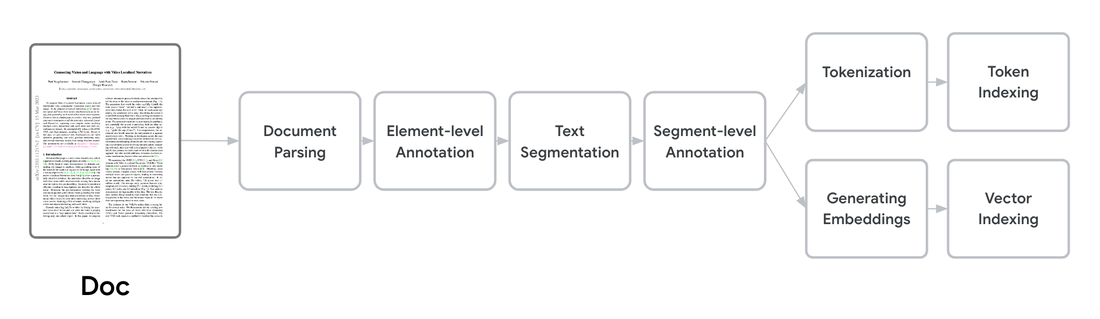
PDF中的表格如何处理
-
TableTransformer模型 + GPT-4V
- TableTransformer找到表格
- 用 GPT-4 Vision 生成表格(图像)描述,并向量化用于检索
-
一些面向 RAG 的文档解析辅助工具
- PyMuPDF: PDF 文件处理基础库,带有基于规则的表格与图像抽取(不准)
- RAGFlow: 一款基于深度文档理解构建的开源 RAG 引擎,支持多种文档格式
- Unstructured.io: 一个开源+SaaS形式的文档解析库,支持多种文档格式
- LlamaParse:付费 API 服务,由 LlamaIndex 官方提供,解析不保证100%准确,实测偶有文字丢失或错位发生
- Mathpix:付费 API 服务,效果较好,可解析段落结构、表格、公式等,贵!

Rank
Literature Review
- rank
- encoders of T5-based instruction-following pretrained mod- els, namely T0-3B (Sanh et al., 2022) and FLAN- T5 (Chung et al., 2022), empirically leads to supe- rior performance as found in prior work (Sachan et al., 2022). We follow the EncT5 approach (Liu et al., 2021) and prepended each sequence with a start-of-sequence token. The token representation is then fed to a newly initialized feed-forward net- work. Unlike MonoT5 (Nogueira et al., 2020), we use their encoders only to reduce parameters and improve inference-time efficiency [Task-aware Retrieval with Instructions]
GraphRAG / KGQA:典型系统与论文
GraphRAG
- Intro
- 利用了实体之间的结构信息,实现了更精确、全面的检索,捕捉了关系知识,促进了更准确、上下文感知的响应
- Graph-Based Indexing, Graph-Guided Retrieval, and Graph-Enhanced Generation
- 难点:
- **忽视关系:**传统RAG方法主要基于文本的语义相似性,而忽视了文本之间的结构关系。例如,在引用网络中,传统RAG方法可能无法捕捉到论文之间的引用关系。
- **冗余信息:**RAG通常以文本片段的形式提供信息,当这些片段拼接在一起作为提示时,可能会导致上下文过长,出现“lost in the middle”的问题。
- **缺乏全局信息:**RAG只能检索到文档的子集,而无法全面理解全局信息,这在查询聚焦摘要(QFS)等任务中可能存在问题。

- GraphRAG的思路:
- GraphRAG的核心思想是将知识图谱中的结构化信息(如节点、三元组、路径或子图)与LLMs的输出相结合,以提供更准确和丰富的生成结果。
- 使用结构化知识图谱来更有效地处理冗余信息和全局信息的问题,更方便地进行信息的检索和聚合

-
Preliminaries
- Text-Attributed Graphs (TAGs)
- GNN
- Text-Attributed Graphs (TAGs)
-
Graph-Based Indexing
- 数据
- 开放知识图谱:公开可用的知识图谱,一般主要包括三类:百科知识图谱(如WikiData)、常识知识图谱(ConceptNet)以及领域知识图谱。
- 自构建图数据:这些是研究人员根据特定任务需求构建的自定义图数据。例如,可能从文档、表格或其他数据库中提取实体和关系,并将它们组织成图结构。
- 索引
- 图索引:图索引保留了图的完整结构,使节点和边的访问变得容易。在后续的GraphRAG过程中,可以使用经典的图搜索算法(如BFS和最短路径算法)来快速检索信息。
- 文本索引:这种方法将图数据转换为文本描述,以便使用各种文本检索技术(如稀疏检索和密集检索)进行优化。
- 向量检索:这种方法将图数据转换为向量表示,以利用高效的向量搜索算法(如局部敏感哈希)进行快速检索。
- 数据
-
Graph-Guided Retrieval
-

-
**检索器的选择:**在图检索中,选择适当的检索器是至关重要的。研究人员可以根据任务需求和数据类型选择以下类型的检索器。
- 非参数化检索器:基于传统的图搜索算法(如BFS和DFS),不依赖于深度学习模型,适用于高效的大规模数据检索。
- 语言模型检索器:基于语言模型(如BERT、GPT等),利用其强大的自然语言理解能力,适用于处理复杂的用户查询。
- 图神经网络检索器:基于图神经网络(如GCN、GAT等),利用其对图结构数据的表示能力,适用于处理复杂的图结构数据。
-
Retrieval Paradigm
- Once Retrieval
- Iterative Retrieval
- Non-Adaptive Retrieval
- Adaptive Retrieval.
- Multi-Stage Retrieval.
-
-
Graph-Enhanced Generation
-
训练
- Retriever训练
- Training-Free
- Training-Based
- Generator训练
- Training-Free
- SFT
- GNN
- Retriever训练
-
应用
- 下游任务:问答(知识库问答、常识问答)、信息抽取(实体链接、关系抽取)、事实验证、链接预测、对话系统、推荐系统等。
- 应用领域:GraphRAG的应用领域主要包括:电商、生物医疗、学术、文献学、法律
- 电商:
- RETE: Retrieval-Enhanced Temporal Event Forecasting on Unified Query Product Evolutionary Graph.
- auto-regressive
- Retrieval-Augmented Generation with Knowledge Graphs for Customer Service Question Answering
- RETE: Retrieval-Enhanced Temporal Event Forecasting on Unified Query Product Evolutionary Graph.
- 电商:
-
开源代码
- 微软GraphRAG:GitHub - microsoft/graphrag: A modular graph-based Retrieval-Augmented Generation (RAG) system
- 蚂蚁GraphRAG:https://github.com/eosphoros-ai/DB-GPTNeo4j
- NallM:https://github.com/neo4j/NaLLMNeo4j
- LLM Graph Builder:https://github.com/neo4j-labs/llm-graph-builderNebulaGraph
- GraphRAG:https://www.nebula-graph.io/posts/graph-RAG


LightRAG
https://github.com/HKUDS/LightRAG
从原理、本地Qwen2.5-3B模型部署到源码解读,全流程解析LightRAG
思路:
数据增强:LLM
剪枝:
- LLM realtime update Graph:图节点/边去重
- high-level concept / low-level entity
- Intro
- incorporates graph structures into text indexing and retrieval processes
- a dual-level retrieval system that enhances comprehensive information retrieval from both low-level and high-level knowledge discovery
- an incremental update algorithm that ensures the timely integration of new data

- RAG的设计
- Comprehensive Information Retrieval: The indexing function φ(·) must be adept at extracting global information, as this is crucial for enhancing the model’s ability to answer queries effectively.
- Efficient and Low-Cost Retrieval: The indexed data structure Dˆ must enable rapid and cost- efficient retrieval to effectively handle a high volume of queries.
- Fast Adaptation to Data Changes: The ability to swiftly and efficiently adjust the data structure to incorporate new information from the external knowledge base, is crucial for ensuring that the system remains current and relevant in an ever-changing information landscape.

-
Framework
- we leverage LLMs to identify and extract various entities (e.g., names, dates, locations, and events) along with the relationships between them.
- Graph-Based Text Indexing
- DUAL-LEVEL RETRIEVAL PARADIGM
-
Graph-Based Text Indexing
- Extracting Entities and Relationships. R(·)
- LLM Profiling for Key-Value Pair Generation. P(·)
- Entities use their names as the sole index key,
- whereas relations may have multiple index keys derived from LLM enhancements that include global themes from connected entities.
- Deduplication to Optimize Graph Operations. D(·)
-
两路召回 DUAL-LEVEL RETRIEVAL PARADIGM
- Specific Queries -> Low-Level Retrieval
- “Who wrote ’Pride and Prejudice’?”
- -> 召回title
- Abstract Queries -> High-Level Retrieval
- “How does artificial intelligence influence modern education?”
- -> 召回关系
- Integrating Graph and Vectors for Efficient Retrieval.
- Query Keyword Extraction:
- local query keywords k(l) and global query keywords k(g).
- Keyword Matching:
- match local query keywords with candidate entities and global query keywords with relations linked to global keys
- Incorporating High-Order Relatedness.
- 基于前面已召回的节点和边,再多一跳
- Query Keyword Extraction:
- Specific Queries -> Low-Level Retrieval
-
Evaluation
-
基线:
- Naive RAG
- RQ-RAG:These sub-queries are designed to enhance search accuracy by utilizing explicit techniques such as rewriting, decomposition, and disambiguation
- GraphRAG:
- It generates corresponding descriptions for these elements, aggregates nodes into communities, and produces a community report to capture global information
-
LightRAG做单一领域的任务比GraphRAG强
-
结论:
- The Superiority of Graph-enhanced RAG Systems in Large-Scale Corpora
- Enhancing Response Diversity with LightRAG
- LightRAG’s Superiority over GraphRAG
- Enhanced Response Variety: By integrating low-level retrieval of specific entities with high-level retrieval of broader topics, LightRAG boosts response diversity. This dual-level mechanism effectively addresses both detailed and abstract queries, ensuring a thorough grasp of information.
- Complex Query Handling: This approach is especially valuable in scenarios requiring diverse perspectives. By accessing both specific details and overarching themes, LightRAG adeptly responds to complex queries involving interconnected topics, providing contextually relevant answers.
- 对high/low level retrieval的分析:
- 去掉High:it struggles to gather information for complex queries that demand comprehensive insights
- Semantic Graph Excels in RAG.
- We eliminated the use of original text in our retrieval process. Surprisingly, the resulting variant, -Origin, does not exhibit significant performance declines across all four datasets. In some cases, this variant even shows improvements (e.g. in Agriculture and Mix). We attribute this phenomenon to the effective extraction of key information during the graph-based indexing process, which provides sufficient context for answering queries. Additionally, the original text often contains irrelevant information that can introduce noise in the response.
- 启发:信息并不是越多越好 -> 对rerank的启发
-
-
Prompts
- Prompts for Graph Generation:7.3.1
- Prompts for Query Generation:7.3.2
- Prompts for Keyword Extraction:7.3.3
- Prompts for RAG Evaluation

Agentic RAG

GraphRAG / KGQA:LLM4KGQA 典型系统
KGQA: Knowledge Graph Question Answering
FinDKG
- 抽取KG的prompt

- 动态图
- GNN,时序信息建模
HybridRAG: Integrating Knowledge Graphs and Vector Retrieval Augmented Generation for Efficient Information Extraction
- Intro
- KG:将文档视为两个实体和关系的triplet
- 当前 RAG 技术包括基于向量数据库的 VectorRAG 和基于知识图谱(KG)的 GraphRAG,各有局限,如 VectorRAG 对金融文档的段落分块假设不合理,GraphRAG 在抽象问答任务或问题未提及明确实体时表现不佳。
- KG构建
- each triplet is represented as a nested list [’h’, ’type’, ’r’, ’o’, ’type’, ’metadata’],
- ’h’ and ’o’ denote the head and object entities respectively,
- ’type’ specifies the entity category,
- ’r’ represents the relationship,
- ’metadata’ encapsulates additional contextual information.
- This format allows for a rich, multidimensional representation of information, facilitating more nuanced downstream analysis.
- 少于4 word
- 实体消重
- 实现:NetworkxEntityGraph
- each triplet is represented as a nested list [’h’, ’type’, ’r’, ’o’, ’type’, ’metadata’],
- 评估
- faithfulness, answer relevance, and context relevance (HybridRAG)
- 使用 RAGAS 框架
- faithfulness, answer relevance, and context relevance (HybridRAG)
Retrieval-Augmented Generation with Knowledge Graphs for Customer Service Question Answering [SIGIR 2024]
-
Intro
- intra-issue structure and inter-issue relations
- 过往工作的 Limitations
- Limitation 1 - Compromised Retrieval Accuracy from Ignoring Structures
- Limitation 2 - Reduced Answer Quality from Segmentation
-
意图识别
- 3.2.1 intent识别,。识别陈述句和疑问句区别不大 核心是识别对象,因此用一个template识别k到v的映射
-
知识图谱构建
- 显式和隐式建立ticket之间关系
- 显式:已有数据
- 隐式:title embedding,余弦相似度,阈值
- 显式和隐式建立ticket之间关系
-
Embedding-based Retrieval of Sub-graphs. (3.2.2)
- EBR-based ticket identification step
- 计算ticket的相关性:涉及多个entity,每个entity算相关性然后分数相加召回
- 引申:图的二跳问题
- LLM-driven subgraph extraction step
- 从工单中查找想要的属性
- EBR-based ticket identification step
MindMap: Knowledge Graph Prompting Sparks Graph of Thoughts in Large Language Models
https://github.com/wyl-willing/MindMap
思路很清晰:既利用KG加强召回率和精准度,又融入GoT挖掘LLM的内在知识


-
Evidence graph mining
- 实体识别:
- Prompt:Table 9 of Appendix D.
- BERT similarity to match entities and keywords
- Evidence Sub-graphs Exploration
- 基于提取的实体从源 KG 构建证据子图,包括基于路径的探索和基于邻居的探索两种方法,并对生成的子图进行修剪
- 算法见Appendix E
- Path-based
- Neighbor-based
- 一跳必加
- 二跳根据和query的相关性加
- 实体识别:
-
Evidence graph aggregation
- 从前面步骤中提取至少 k 个基于路径和 k 个基于邻居的证据子图,将每个子图格式化为实体链并转换为自然语言描述,定义为推理图。
- 顺带能解决实体重复的问题
-
LLM reasoning on the mind map
- 相比来说,以前的LLM4KG: they do not think on multiple evidence KG sub-graphs with multi- thought in LLM, and without backtracking evi- dence sources
-
Evaluation
- hallucination quantification:引入指标定义
- train a keyword extraction model(NER-MT5) based on mT5-large
- "combine with the knowledge you already have“ 能提升效果
-
Prompt
实体抽取
template = """
There are some samples:
\n\n
### Instruction:\n’Learn to extract entities from the following
medical questions.’\n\n### Input:\n
<CLS>Doctor, I have been having discomfort and dryness in my vagina
for a while now. I also experience pain during sex. What could be
the problem and what tests do I need?<SEP>The extracted entities
are\n\n ### Output:
<CLS>Doctor, I have been having discomfort and dryness in my vagina
for a while now. I also experience pain during sex. What could be
the problem and what tests do I need?<SEP>The extracted entities
are Vaginal pain, Vaginal dryness, Pain during intercourse<EOS>
\n\n
Instruction:\n’Learn to extract entities from the following medical
answers.’\n\n### Input:\n
<CLS>Okay, based on your symptoms, we need to perform some diagnostic
procedures to confirm the diagnosis. We may need to do a CAT scan
of your head and an Influenzavirus antibody assay to rule out any
other conditions. Additionally, we may need to evaluate you
further and consider other respiratory therapy or physical therapy
exercises to help you feel better.<SEP>The extracted entities are
\n\n ### Output:
<CLS>Okay, based on your symptoms, we need to perform some diagnostic
procedures to confirm the diagnosis. We may need to do a CAT scan
of your head and an Influenzavirus antibody assay to rule out any
other conditions. Additionally, we may need to evaluate you
further and consider other respiratory therapy or physical therapy
exercises to help you feel better.<SEP>The extracted entities are
CAT scan of head (Head ct), Influenzavirus antibody assay,
Physical therapy exercises; manipulation; and other procedures,
Other respiratory therapy<EOS>
\n\n
Try to output:
### Instruction:\n’Learn to extract entities from the following
medical questions.’\n\n### Input:\n
<CLS>{input}<SEP>The extracted entities are\n\n ### Output:
"""
生成答案、GoT
SystemMessage(content= """You are an excellent AI doctor, and you can diagnose diseases and recommend medications based on the symptoms in the conversation."""),
HumanMessage(content"""Patient input:"""+ Question),
AIMessage(content=f """Combine the knowledge you already have, you have some extra medical knowledge information in the following:\n\n ### """+ path_reasoning_graph + """\n\n###""" + neighbor_reasoning_path),
HumanMessage(content="""What disease does the patient have? What tests should patient take to confirm the diagnosis? What recommened medications can cure the disease? Think step by step.\n\n\n
Output1: The answer includes disease and tests and recommened medications.\n\n
Output2: Show me inference process as a string about extract what knowledge from which Path-based Evidence or Neighor-based Evidence, and in the end infer what result. \n Transport the inference process into the
following format:\n Path-based Evidence number('entity name'->'relation name'->...)->Path-based Evidence number('entity name'->'relation name'->...)->Neighbor-based Evidence number('entity name'->'relation name'->...)-
>Neighbor-based Evidence number('entity name'->'relation name'->...)->result number('entity name')->Path-based Evidence number('entity name'->'relation name'->...)->Neighbor-based Evidence number('entity name'->'relation
name'->...). \n\n
Output3: Draw a decision tree. The entity or relation in single quotes in the inference process is added as a node with the source of evidence, which is followed by the entity in parentheses.\n\n
There is a sample:\n ... """)
传统RAG
template = """
You are an excellent AI doctor, and you can diagnose diseases and Patient input:\n conversation.\n\n recommend medications based on the symptoms in the
{question}
\n\n
You have some medical knowledge information in the following:
{instruction}
What disease does the patient have? What tests should patient \n\n
take to confirm the diagnosis? What recommened medications can
cure the disease?
"""
LLM Evaluation
- “If they are the same, output "2". Try to output "1" or "0"”
def prompt_comparation(reference,output1,output2): template = """
Reference: {reference} \n\n
output1: {output1}
\n\n
output2: {output2}
\n\n
According to the facts of disease diagnosis and drug and tests recommendation in reference output, which output is better match. If the output1 is better match, output ’1’. If the
output2 is better match, output ’0’. If they are same match,
output ’2’.
"""
prompt = template.format(reference=reference, output1=output1,
output2=output2)
response = openai.ChatCompletion.create( messages=[ model="gpt-4", {"role": "user", "content": prompt} {"role": "system", "content": """You are an excellent AI doctor."""},
]
response_of_comparation = response.choices[0].message.content return response_of_comparation
检索增强 LM 与软上下文机制
REALM: 检索增强的新预训练方法


RETRO:检索信息注入LLM中间层

- 关键设计:CCA

- CCA的实现:
- 错位,目的是保留最后一个token,保证最后一个token能整合信息

KNN-LM: 从LLM生成机制入手,加权两个概率分布
- 相比普通LLM,会考虑外部信息中的全部tokens


-
加权两个概率分布
-
结论:


Soft Prompt
Cartridge: soft-prompt外挂kv-cache
LLM无限上下文了,RAG(Retrieval Augmented Generation)还有意义吗? - Crim的回答 - 知乎
https://hazyresearch.stanford.edu/blog/2025-06-08-cartridges
[Meta] REFRAG: Rethinking RAG based Decoding
本质上是对RAG做性能优化
insight是利用块间注意力小的特点,分块做encoder处理,损失小
-
Intro
- 大型语言模型(LLMs)在检索增强生成(RAG)等长上下文任务中面临高延迟(尤其是首 token 生成时间 TTFT 呈二次增长)和内存消耗大(KV 缓存随上下文长度线性增加)的问题,而 RAG 上下文因检索段落语义相似度低,存在块对角注意力结构,导致大量计算冗余。为此,研究提出REFRAG(RAG 专用高效解码框架),通过 “压缩 - 感知 - 扩展” 机制:利用轻量编码器(如 RoBERTa)预计算检索段落的块嵌入、通过投影层匹配解码器(如 LLaMA)嵌入空间,并结合强化学习(RL)选择性扩展关键块,实现任意位置压缩且保持自回归性。
- 实验表明,REFRAG 在不修改 LLM 架构、无困惑度损失的前提下,实现30.85× TTFT 加速(较此前 SOTA 模型 CEPE 提升 3.75×),并将 LLM 上下文长度扩展16×,在 RAG(强 / 弱检索器场景均优)、多轮对话、长文档摘要等任务中,均优于 LLaMA、REPLUG 等基线模型,甚至在弱检索器场景提升精度 1.93%。
-
流程

- 上下文分块:将 RAG 中的
s个上下文 token 划分为L = s/k个k长度块(如k=16,s=2048则L=128); - 块嵌入预计算:轻量编码器(如 RoBERTa-Large)处理每个块
C_i,生成块嵌入c_i = M_enc(C_i),并通过投影层ϕ映射为与解码器 token 嵌入维度一致的e_i^cnk; - 解码器输入构造:将 “问题 token 嵌入(
e_1~e_q)+ 块嵌入(e_1^cnk~e_L^cnk)” 输入解码器(如 LLaMA-2-7B),生成答案; - RL 选择性扩展:轻量 RL 策略以 “next-paragraph 预测困惑度” 为负奖励,选择关键块(如高相关性段落)扩展为原 token,非关键块保留压缩嵌入,实现 “精度 - 效率” 平衡。
-
痛点:现有长上下文优化方法(如 CEPE、StreamingLLM)针对通用 LLM 任务,未考虑 RAG 特性:
- 信息稀疏:RAG 上下文由多段检索文本组成,仅少数段落与查询直接相关,全 token 计算存在大量冗余;
- 预编码信息浪费:检索阶段已通过向量编码、重排序获得段落与查询的相关性信息,解码时被完全丢弃;
- 块对角注意力:检索段落因多样性 / 去重,语义相似度低,形成 “块内高注意力、块间低注意力” 的块对角结构,跨块计算无效。
-
REFRAG 的训练分为 “持续预训练(CPT)” 与 “下游微调” 两阶段,核心策略为重构任务与课程学习。
-
3.1 持续预训练(CPT)
- 重构任务
- 目标:对齐编码器与解码器嵌入空间,减少压缩信息损失;
- 操作:冻结解码器,仅训练编码器 + 投影层,让解码器从块嵌入中恢复原
k个 token; - 作用:强制模型依赖上下文记忆(块嵌入)而非参数记忆,为后续长上下文处理奠定基础。
- 课程学习
- 问题:
k增大时,token 组合数呈V^k增长(V为词汇量),直接多块重构难度极高; - 方案:从 “单块重构(易)” 逐步过渡到 “多块重构(难)”,数据混合从 “易任务主导” 逐步转向 “难任务主导”(表 8);
- 效果:避免训练崩溃,使模型逐步掌握 “压缩 - 恢复” 能力(表 11 显示,无课程学习时 REFRAG 重构
2048token 的困惑度为 1.599,有课程学习时仅 0.135)。
- 问题:
- 重构任务
-
3.2 下游微调
- 监督微调(SFT):使用 RAG(110 万数据点,含 OpenAssistant、SQuADv2 等)、多轮对话(TopiOCQA 等)数据集,微调模型适配下游任务;
- RL 策略微调:优化块扩展选择,进一步提升 “压缩效率” 与 “答案精度” 的平衡。
-
竞品

Agent 基础与经典范式
【InfiniTensor】清华大学系列训练营-大模型与人工智能系统训练营 大模型前沿技术(五)自主智能体 https://www.bilibili.com/video/BV14sPkehEGg
Todo: a survey of self-evolving agents
Intro
- 和Workflow的对比,见workflow章节中的甲骨文文章
- Intro
- understanding complex inputs, engaging in reasoning and planning, using tools reliably, and recovering from errors.
- it's crucial for the agents to gain “ground truth” from the environment at each step (such as tool call results or code execution) to assess its progress
- When to use agents: Agents can be used for open-ended problems where it’s difficult or impossible to predict the required number of steps, and where you can’t hardcode a fixed path. The LLM will potentially operate for many turns, and you must have some level of trust in its decision-making. Agents' autonomy makes them ideal for scaling tasks in trusted environments.

-
-
白皮书:https://ppc.land/content/files/2025/01/Newwhitepaper_Agents2.pdf
-

-
model layer
-
orchestration layer
- ReAct, Chain-of-Thought, and Tree-of-Thoughts
- "agent chaining"
-
Tools layer
-
Extensions
- provide standardized API interactions
-
Functions
- enable client-side execution control
-
Data Stores
- facilitate access to various types of information
-
-

-
-
吴恩达:系统可以具有不同程度的Agentic特性
- Reflection(反思):类似于AI的自我纠错和迭代。例如,AI系统会检查自己编写的代码,并提出修改建议。
- Tool Use(工具使用):大语言模型调用插件,扩展了其能力。例如,使用Copilot进行联网搜索或调用代码插件解决数理逻辑问题。
- Planning(规划):AI根据用户输入的任务,拆解流程、选择工具、调用、执行并输出结果。例如,根据一张图片中的姿态生成一张新图片,并进行描述。
- Multi-agent(多智能体协作):多个Agent协作完成任务,每个Agent可能扮演不同的角色,如CEO、产品经理或程序员。这种模式模拟了现实生活中的工作场景,能够处理复杂系统处理复杂系统
-
OpenAI开源多智能体agent框架swarm https://mp.weixin.qq.com/s/ysUzxUYV-lsQ6aiYPU0KdA
- https://github.com/openai/swarm
- 自动将函数转成适配格式的json描述
- 上下文的管理有多种模式可以轻松传递
- 10行代码构建出多智能体系统
-
Internet of Agents (IoA) (arxiv, ICLR 2025):清华 NLP & 面壁智能。提出 agent integration protocol + 即时通信架构 + 动态组队与会话流控制。多 Agent 协作不能只靠"多开几个 agent",真正关键的是协议、路由、编组与会话控制。
-
Agent Data Protocol (ADP) (arxiv, ICLR 2026 Oral):CMU / OSU。提出轻量 interlingua,用 Pydantic schema 统一动作(API / Code / Message)与观察(Text / Web),将 13 个已有数据集转换到 ADP,兼容 OpenHands、SWE-Agent、AgentLab。Protocol 标准化本身是 agent 工程的重要基础设施。
-
mini-SWE-agent (GitHub):SWE-bench/SWE-agent 团队。核心 ~310 行 Python,SWE-bench verified 74%+。极简架构:唯一工具=bash、无状态执行(
subprocess.run)、线性消息历史、Protocol 替代继承、策略编码在 prompt 而非代码。核心洞察——当 LLM 足够强时,agent 框架应做减法而非加法,复杂度与性能甚至可能负相关。详见 AI-Agent-Engineering.md - 极简 Agent 架构

- LangGraph from LangChain;
- Amazon Bedrock's AI Agent framework;
- Rivet, a drag and drop GUI LLM workflow builder; and
- Vellum, another GUI tool for building and testing complex workflows.
未来展望

演进路线:认知框架
todo https://www.zhihu.com/question/1927140506573435010/answer/1928873138189476851 作者:远洋之帆
后面还有更多技术介绍
- 认知框架已形成四代技术脉络:
- 第一代:线性推理(CoT/ReAct)
- 第二代:结构化探索(ToT/GoT)
- 第三代:程序增强(PAL/CR)
- 第四代:系统化协作(多Agent/von Neumann)
-
演进路线
演进维度 代表框架 核心突破 线性推理 CoT, Self-Consistency 分步解决复杂问题 结构化探索 ToT, GoT, SoT 多路径搜索与回溯机制 程序增强 PAL, PoT 代码执行确保计算精确性 动态优化 BoT, RoT, VoT 迭代修正与验证机制 知识融合 RAT, Analogical Prompting 外部知识实时检索与整合 系统协作 von Neumann Multi-Agent 仿计算机架构的分布式推理 -
1. 基础推理框架
框架 核心技术 突破性应用 CoT 分步提示("Let's think step by step") MATH数据集准确率提升300% ReAct 推理-行动循环(Think→Act→Observe) HotpotQA问答幻觉率降低58% Self-Consistency 多路径投票机制 GSM8K数学题稳定性提升40% -
2. 结构化框架
| 框架 | 数据结构 | 创新点 |
|---|---|---|
| ToT | 树状搜索 | DFS/BFS策略实现Game-of-24成功率74% |
| GoT | 有向无环图 | 思维聚合能力使排序任务成本降31% |
| SoT | 骨架-细节二级结构 | 文本生成延迟降低2.4倍 |
- 3. 程序辅助框架
# PAL典型工作流(数学问题求解)
def pal_execute(question):
    # 自然语言转代码
    code_prompt = f"将问题转换为Python代码: {question}"
    generated_code = llm.generate(code_prompt)

    # 安全沙盒执行
    with Sandbox() as env:
        result = env.execute(generated_code)

    # 结果验证
    if validate(result):
        return result
    else:
        return self_correction()  # 触发自我修正
优势:在MATH数据集上准确率达85.3%(比纯CoT高22%)
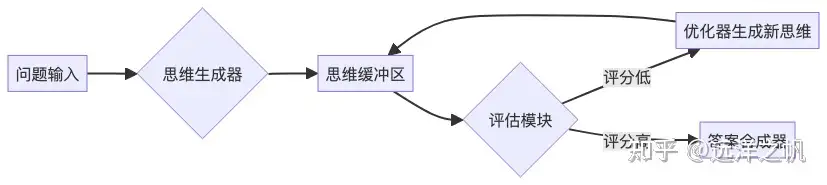
- 4. 迭代优化框架
Buffer of Thoughts (BoT) 核心机制:
- 三、框架性能对比
| 评估维度 | CoT | ToT | PAL | BoT | RAT |
|---|---|---|---|---|---|
| 复杂推理准确率 | 57% | 74% | 85% | 82% | 79% |
| 响应延迟(ms) | 1200 | 3500 | 2500 | 4200 | 2900 |
| 外部知识依赖 | 无 | 无 | 低 | 无 | 高 |
| 错误传播风险 | 高 | 中 | 低 | 低 | 中 |
框架选择决策树


经典推理框架对比
| 框架类别 | 代表框架 | 核心特点 | 计算复杂度 | 适用场景 |
|---|---|---|---|---|
| 基础推理 | CoT, Self-Consistency | 线性推理 | 低 | 简单推理任务 |
| 结构化推理 | ToT, GoT, SoT | 树/图结构 | 中-高 | 复杂决策问题 |
| 程序辅助 | PAL, PoT | 代码执行 | 中 | 数学计算密集 |
| 迭代优化 | BoT, RoT, VoT | 多轮优化 | 高 | 需要精确答案 |
| 知识增强 | RAT, Analogical | 外部知识 | 中 | 知识密集任务 |
| 元认知 | Meta-Prompting, CCI | 自我调节 | 中-高 | 自适应任务 |
| 协作框架 | Multi-Agent, von Neumann | 多主体协作 | 最高 | 复杂系统问题 |
Function Calling
https://www.anthropic.com/news/tool-use-ga
-
Anthropic's suggestions for deciding on tool formats are the following:
-
Give the model enough tokens to "think" before it writes itself into a corner.
-
Keep the format close to what the model has seen naturally occurring in text on the internet.
-
Make sure there's no formatting "overhead" such as having to keep an accurate count of thousands of lines of code, or string-escaping any code it writes.
-
-
agent-computer interfaces (ACI)
- Put yourself in the model's shoes
- writing a great docstring for a junior developer on your team
- https://console.anthropic.com/workbench
- Poka-yoke your tools
- e.g. SWE Bench,文件tool仅输入绝对路径
ReAct
todo ReAct paper
- thought 节点
- action 节点
- iteration and branch 节点
Answer the following questions as best you can. You have access to the following tools:

{tools}

Use the following format:

Question: the input question you must answer
Thought: you should always think about what to do
Action: the action to take, should be one of [{tool_names}]
Action Input: the input to the action
Observation: the result of the action
... (this Thought/Action/Action Input/Observation can repeat N times)
Thought: I now know the final answer
Final Answer: the final answer to the original input question

Begin!

Question: {input}
Thought:{agent_scratchpad}
tree of thought (ToT)
todo paper
- 把search的思想引入到agent的设计里面,为后续mcts和agent结合的大量工作奠定了基础。
SelfAskWithSearch
- 适合知识图谱这样的层层推理场景
Plan-And-Execute
- 好处
- Generating the full reasoning steps is a tried-and-true prompting technique to improve outcomes.
- 性能、成本
- Naive版本

-
ReWOO:Reasoning WithOut Observations
- the planner can reference previous outputs using syntax like
#E2 - more effective than a naive plan-and-execute agent since each task can have only the required context (its input and variable values).
- the planner can reference previous outputs using syntax like
-
LLMCompiler
- https://github.com/langchain-ai/langgraph/blob/main/docs/docs/tutorials/llm-compiler/LLMCompiler.ipynb
- Planner: streams a DAG of tasks. Each task contains a tool, arguments, and list of dependencies.
- Task Fetching Unit schedules and executes the tasks. This accepts a stream of tasks. This unit schedules tasks once their dependencies are met. Since many tools involve other calls to search engines or LLMs, the extra parallelism can grant a significant speed boost (the paper claims 3.6x).
- Joiner: dynamically replan or finish based on the entire graph history (including task execution results) is an LLM step that decides whether to respond with the final answer or whether to pass the progress back to the (re-)planning agent to continue work.
- 好处:
- Planner outputs are *streamed;* the output parser eagerly yields task parameters and their dependencies.
- The task fetching unit receives the parsed task stream and schedules tasks once all their dependencies are satisfied.
- Task arguments can be variables, which are the outputs of previous tasks in the DAG. For instance, the model can call
search("${1}")to search for queries generated by the output of task 1. This lets the agent work even faster than the "embarrassingly parallel" tool calling in OpenAI.
Agent Examples
Intro
- 模版

Agentic RAG 示例

Coding Agent 示例
- A coding Agent to resolve SWE-bench tasks, which involve edits to many files based on a task description;
- Our “computer use” reference implementation, where Claude uses a computer to accomplish tasks.

Customer support
- 特点
- Support interactions naturally follow a conversation flow while requiring access to external information and actions;
- Tools can be integrated to pull customer data, order history, and knowledge base articles;
- Actions such as issuing refunds or updating tickets can be handled programmatically; and
- Success can be clearly measured through user-defined resolutions.
- 一口气学会如何思考AI Agent系统设计 https://www.bilibili.com/video/BV1WoeozgEyn/
- 参考「Agent应用技术架构」


Agent 框架、评估与工作流
算法理论
- Agent难点
-
基座模型的复杂推理能力不够强
- 通过基座模型Plan把一个复杂任务分解为10个步骤,哪怕单个步骤的正确率高达95%,要想最后把任务做对,10个环节的准确率连乘下来,最终的正确率只有59%
-
- 专访Pokee CEO朱哲清,谈agentic experience
- multi-step reasoning和multi-step execution的重要性
- creative&design类agent的一个瓶颈是,一步做完,用户没法改了,比如无法导入AE并保留图层,或者导入Figma
- RL的重要性
- agent中,pretraining的主要意义是理解
- 从人类工作流中提取pretraining数据集的效率低
- 复杂系统中,多轮迭代产生的数据,价值高,不能完全依赖offline RL
- agent如何超越function calling
- 目标导向的规划很重要
- 解决evalutaion的瓶颈
- 个性化memory理解
- multi-step reasoning和multi-step execution的重要性
业务场景
-
基座推理模型的训练数据场景
- 编程
- 推理
- 数学
- --> 增加浏览能力
-
在线研究:因为很多职业都需要做大量的资料搜集、信息整合,最后写成报告
- “我希望模型能帮我找到几款产品,并根据 Reddit 上的评价给排个序”
- “我希望它能帮我针对某个主题写一篇文献综述”
- 找出 Liam Felis 和 Barrett Zoff 合著的所有论文
- 找出我们一个同事的中间名
- 做旅行计划
-
软件工程
-
电商
- “我喜欢这几个牌子,请帮我找找还有哪些新牌子能买到类似这款的特定外套”
- “我想要一件人造皮草的外套,要这个长度,是这一季的新款”
- 找一个有非常具体要求的 Airbnb 房源
RFT (Reinforcement Fine-tuning)
- 针对某个特定任务去训练模型,那它在这个任务上的表现肯定会更好
- 在一个类型的任务上训练,模型的能力也能迁移到其他领域
- 如果你手头有个非常具体的任务,而且你觉得这个任务和你已知的模型训练数据差别很大,你自己试了很多次,换了各种提示语,效果就是不理想——比如说,某个特别专业的基因测序任务,或者其他对模型来说完全是“圈外”(out of distribution)的知识,模型压根不知道从何下手——那我觉得,这时候就值得考虑试试强化学习微调。
- 如果某个任务对你的核心业务流程来说至关重要,性能提升个 10%、15% 就能决定生死存亡,那或许也应该尝试 RFT。
Agent 评估与安全
这个分区先看 Agent Evaluation:把 agent eval 做成自动化测试系统,再用 AgentCompass 理解 benchmark / harness / environment 的可组合边界,最后看 GAIA、MLE-bench、ALE、LHTB、GDPval、AppWorld、BFCL-v3 等具体任务世界。
AgentCompass:评测对象不是裸模型,而是完整执行配置
来源:公众号解读、论文、GitHub。以下机制以论文和 commit
feaa6ae的源码为准;公众号中的模型排名只作线索,不作为长期结论。
AgentCompass 的价值不是再做一张排行榜,而是把原本黏在每个 benchmark 脚本里的评测流程拆成可替换组件。更准确的评测单位是:
result = f(model, benchmark, harness, environment, semantic config, budget, randomness)
| 组件 | 职责 | 不应混入 |
|---|---|---|
| Benchmark | 定义 task、准备材料、成功标准和评分语义 | 某个 Agent loop 的实现细节 |
| Harness | 把模型变成可运行 Agent,管理 session、prompt、tool loop 和 provider 协议 | benchmark 的答案与评分规则 |
| Environment | 提供 shell、文件、容器、远程实例等执行原语和生命周期 | 模型决策与业务评分 |
源码还补了两个扩展点:Recipe 只覆盖 plan / config,不拥有执行;Analyzer 在主评分后读取结果和 trajectory 做行为诊断。因此实际链路是:
RunRequest -> registry 解析组件 -> TaskSpec -> PreparedTask -> Harness session -> RunResult / Trajectory -> Benchmark.evaluate -> Analyzer
TaskSpec是原始题目;PreparedTask是 benchmark 编译出的 prompt、media、files、workspace、tools、messages 与 expected output;RunResult统一保存 score、correct、final answer、trajectory、artifact、metrics 和 error。参见 task contract、result contract 和 component protocols。- Runtime 用有界
asyncioworker pool 执行长任务,并按 task 增量落盘;结果文件经临时文件和原子替换提交,恢复时跳过已完成样本、重跑 error 样本。它实现的是 task-level resume,不是任意 trajectory step 的 checkpoint / replay。参见 runner、worker queue 和 result store。 - Trajectory 记录每一步 reasoning / content、tool call、observation、token、延迟和 stop reason,使评测能从“最终几分”下钻到“为什么这样”。参见 trajectory schema。
Reward hacking 检测要谨慎解释。 当前 analyzer 默认只检查答对样本,先用正则规则高召回筛出可疑 step,再让 LLM 结合上下文复核;它本身仍是一个可误判的 grader。论文也明确采用行为性口径:出现疑似改测试、读取 golden patch 等行为即计入 suspected reward hacking,不要求证明该行为因果上带来了最终得分。因此应写“轨迹被判为疑似投机”,不能写成“模型被证明作弊”。参见 two-stage analyzer。
核心结论与边界: 同一个模型换 harness 后分数可能明显变化,说明 harness 是实验 treatment,不是透明胶水;统一框架能暴露和控制混杂变量,却不会自动让不同 prompt、tool、budget、版本的结果可比。论文发布时写的是 20+ benchmark、5 个维度;当前 README 已变为 21 个 benchmark、4 个主维度,长期引用应绑定 commit 与配置,而不是只抄产品页数字。
对 LoopX / Agent Harness,最值得直接采用的是 run identity:至少固化 model + benchmark + harness + environment + prompt/tool/config version + budget,并把 trajectory、artifact、grader 版本和失败分类一起写入证据账本。否则所谓“模型提升”很可能只是 harness 或评测环境漂移。
GAIA: A Benchmark for General AI Assistants (arxiv, NeurIPS 2023)
Meta / HuggingFace / AutoGPT 等。466 个真实世界问题,要求推理、多模态处理、网页浏览和工具使用。问题对人类简单(92% 准确率),但对 AI 极难(GPT-4 + plugins 仅 15%)。按难度分 3 级:Level 1(基本工具)、Level 2(多步推理 + 工具链)、Level 3(复杂长程任务,需要自主规划与多工具协同)。
Level 3 SOTA 演进(2025-2026):
| 排名 | 方法 | Level 3 | 综合 | 架构特点 |
|---|---|---|---|---|
| 1 | Lemon Agent(联想) | 87.76% | 91.36% | AgentCortex 框架(Planner-Executor-Memory),层级自适应调度,orchestrator-workers 架构 (arxiv) |
| 2 | Spine Swarm | 61.5% | - | 三层多 Agent 架构(orchestrator → persona agents → tool agents),依赖感知并行调度 |
| 3 | Writer Action Agent | 61% | - | 企业级 Agent,基于 writer-palmyra 模型 |
| - | Manus | 57.7% | 73.9% | 通用 Agent,多工具协同 |
| - | OpenAI Deep Research | 47.6% | 74.3% | 强化微调 + 浏览工具 |
关键洞察:GAIA Level 3 是当前 Agent 综合能力的试金石。从 GPT-4 的 15% 到 Lemon 的 87.76%,核心突破不在单模型能力,而在多 Agent 编排、自适应调度和 memory 管理。
MLE-bench: Evaluating Machine Learning Agents on Machine Learning Engineering (arxiv, ICLR 2025)
OpenAI。基于 75 个 Kaggle 竞赛构建 benchmark,覆盖数据准备、训练、实验、调参与提交等真实 ML 工程环节,提供 human baseline(Kaggle 公开排行榜)。最佳配置(o1-preview + AIDE scaffold)仅获得约 8.7% 的 Kaggle 奖牌率。Agent 评测应贴近真实工程闭环,benchmark 不应只看单轮答案而应看长期任务完成度。
RedTeamCUA: Realistic Adversarial Testing of Computer-Use Agents (arxiv, ICLR 2026)
OSU NLP Group。构建 hybrid sandbox(OSWorld VM + Docker 化 WebArena/TheAgentCompany),提出 Decoupled Eval:将 agent 直接放到注入点附近,避免导航能力不足掩盖真实风险。RTC-Bench 含 864 个测试用例。结果:Claude 3.7 Sonnet CUA 的 ASR 达 42.9%,最安全的 Operator 仍有 7.6% ASR。
关键洞察:不能因为 agent 没走到注入点就误判其"更安全",能力与安全必须分离评估。benchmark 应显式拆分导航失败、工具失败、推理失败、安全失败。
Stealing Reasoning Traces 与 external thinking:推理记录是可提取的侧信道
来源:JackCui 公众号《太刑了,GPT-5.6、Fable 5 被 Oh My Pi 作者攻破:完整导出模型推理记录!》(2026-08-13);论文 Stealing Reasoning Traces from Proprietary LLM APIs(Panfilov et al.,2026);stolen-thoughts 仓库。
定位:专有 LLM API 的“加密推理数据”不是安全边界。已出现两条完整提取推理记录的路径:
- 跨模型解码(论文):强模型(GPT-5.6 / Claude Opus 等)产生的加密推理数据,可被带到其他请求里交给同一厂商防护更弱的模型,在特定提示诱导下当“解码器”把强模型推理还原成明文——不需要破解加密,因为加密块没有严格绑定原用户 / 对话 / 模型。论文称从 Kimi-K3 提取某些 Claude / GPT 推理片段可能比其他模型容易近 100 万倍。更危险的是反方向注入:弱模型把恶意指令写进加密推理数据,强模型会把它当成自己之前的思路继续执行,用户完全看不到。
- 外部思考工具(can1357 的直接方法):关闭原生隐藏推理(reasoning=off),给模型挂一个
deep_think工具,模型会把本应走隐藏通道的分析写进工具参数;工具参数随 API 返回给开发者,等于直接拿到一份“重写的推理草稿”。已在 GPT-5.6 Luna、Claude Fable 5 上验证,切换思考等级(off / low)仍然有效。思考等级本质是 system prompt 里的一个数字,开发者可以调整数字控制思考投入,不必重新打开厂商隐藏通道。
安全 / 工程含义:
- 工具调用参数是模型内部状态的外部化侧信道:凡是模型能写进工具参数的内容,都可能变成可被保存、复制、转发的明文数据。
- 推理记录可能包含源码、个人信息、账号凭证甚至私钥:agent runtime 的日志 / trace / telemetry 必须把 tool args 当敏感数据处理——脱敏、最小留存、访问控制,不能默认“推理是内部不可见”。
- 对 agent runtime 是双刃剑:external thinking 能成为可观测性来源(定位错误、优化 prompt、理解决策),但代价是扩大暴露面;“看得见意味着更容易控制,也意味着信息暴露给更多人和系统”。
- 安全边界要从模型本身扩展到整套工具系统:“厂商封得住一段隐藏推理,未必封得住模型通往外部世界的每一条路。”
Agent Evaluation:把 agent eval 做成自动化测试系统
来源:Anthropic: Demystifying evals for AI agents。用户 2026-05-27 读完。
这篇更适合作为 agent 评估方法论基石,而不是只作为单篇文章记录。核心判断是:让 agent 有用的能力(多轮行动、工具调用、状态修改、灵活规划)也让 agent 难评估;有效 eval 不能只套 single-turn LLM eval,而要把 task、environment、trajectory、outcome、grader、suite 和 harness 组合起来。
图1:Single-turn eval vs Agent eval

一句话:single-turn eval 主要评“答案”;agent eval 必须评“行动后世界是否变成正确状态”。所以 coding agent 修 MCP server 时,不能只看它说“我完成了”,而要跑测试确认 server 真能工作。
图2:Agent eval 的对象模型

这组定义很重要:task 定义输入和成功标准;trial 是一次执行;trajectory / transcript 是完整过程记录;outcome 是最终环境状态;grader 对 trajectory 和 outcome 打分;evaluation harness 负责运行、记录、评分和聚合;agent harness / scaffold 是被评估对象的一部分。当我们说“评估 agent”,实际评的是 model + agent harness,而不是裸模型。prompt、tool schema、memory、sandbox、orchestration loop、permission policy 都会改变结果。
两类 eval suite
| 类型 | 问什么 | 好 suite 的形态 | 何时使用 |
|---|---|---|---|
| Capability eval / quality eval | agent 能不能做更难的新事情 | 初始通过率不必高,要给系统 hill-climb 空间 | 新能力探索、模型升级、scaffold 改造 |
| Regression eval | 以前会做的事情有没有退化 | 稳定、便宜、持续跑,通过率应接近 100% | CI gate、版本发布、线上风险控制 |
一个 suite 如果已经饱和,应从 capability eval 毕业成 regression eval;然后再构造更难的 capability suite。否则所有任务混在一个总分里,会看不出系统是在探索能力上限,还是在守住已知能力。
三种 grader
| Grader | 适合检查 | 优点 | 风险 |
|---|---|---|---|
| Code-based grader | string / regex、unit tests、static analysis、state check、tool call check、token / turn metrics | 快、便宜、客观、可复现、易 debug | 对合法变体脆弱,难评主观质量 |
| Model-based grader | rubric scoring、natural-language assertion、pairwise comparison、reference-based eval、multi-judge consensus | 灵活、可扩展、能评开放输出和细腻质量 | 非确定、成本更高,需要人类校准,可能有 judge bias |
| Human grader | SME review、众包、spot check、A/B、inter-annotator agreement | 最贴近真实专家 / 用户判断,可校准 LLM judge | 慢、贵、难规模化,专业领域需要专家 |
实际系统通常是 layered grader:先用 deterministic / state check 过滤客观正确性,再用 model rubric 评语义和质量,最后用 human audit 校准高风险或歧义 case。不要把 LLM judge 当 oracle;grader 本身也需要被评估。
pass@k vs pass^k
pass@k:k 次尝试里至少一次成功。适合 coding agent、多候选 patch、搜索式任务、允许挑最好结果的场景。pass^k:k 次尝试全部成功。适合用户面 agent、客服 agent、生产执行 agent,因为用户期待每次都可靠。
所以 pass@10 很高不等于系统可托付,它只说明“多试几次可能能成”。如果 pass@10 高但 pass^3 低,这个 agent 更像研究 demo,而不是生产系统。
不同 agent 类型的 eval 重心
| Agent 类型 | 更适合的 grader | 重点 |
|---|---|---|
| Coding agent | tests、static analysis、patch correctness、repo state、tool-call audit | outcome 比 path 更重要;同一修复可能有多条合法路径 |
| Conversational agent | state check + rubric + simulated user + human calibration | 目标完成、轮数、语气、合规、是否 grounded in tools |
| Research agent | groundedness、coverage、source quality、claim verification、human / expert calibration | reference answer 不唯一,不能只看最终答案,要看 evidence quality |
| Computer-use agent | UI / filesystem / browser / app state check + transcript audit | 最终状态正确也可能误打误撞;失败要区分视觉 grounding、权限、环境 reset、工具和规划问题 |
两个产品化例子
- Claude Code:早期靠 Anthropic 员工和外部用户反馈快速迭代;后来先加 concision、file edits 等窄 eval,再加 over-engineering 等复杂行为 eval。eval 帮助定位问题、指导改进,并让 research / product collaboration 更聚焦。它还需要 production monitoring、A/B test、user research 一起补全信号。
- Descript video editing agent:围绕视频编辑工作流定义三条成功标准:don’t break things、do what I asked、do it well。后来形成两套常跑 suite:quality benchmarking 和 regression testing。这个例子说明:好的 agent eval 往往来自产品工作流本身,而不是抽象能力榜单。
从 0 到 1 建 agent eval
- 不等上百个 case,先用 20-50 个真实失败 / 高频手测任务起步。
- 从 bug tracker、support queue、手动 QA、用户反馈里抽 task。
- 每个 task 要无歧义,两个专家应该能独立判定 pass/fail。
- 同时放正例和反例,比如应该 search 的 case 与不该 search 的 case。
- eval environment 要稳定隔离,每个 trial 从 clean state 开始。
- grader 分层:deterministic first,LLM judge 处理语义,human 做校准。
- 一定要读 transcript;否则不知道是 agent 失败、grader 失败,还是 harness 约束不合理。
- eval suite 要有人维护,像 unit tests 一样长期演化;capability suite 饱和后转 regression suite。
一个可复用 task schema 可以长这样:
task:
  id: "fix-auth-bypass_1"
  desc: "Fix authentication bypass when password field is empty and ..."
  graders:
    - type: deterministic_tests
      required: [test_empty_pw_rejected.py, test_null_pw_rejected.py]
    - type: llm_rubric
      rubric: prompts/code_quality.md
    - type: static_analysis
      commands: [ruff, mypy, bandit]
    - type: state_check
      expect:
        security_logs: {event_type: "auth_blocked"}
    - type: tool_calls
      required:
        - {tool: read_file, params: {path: "src/auth/*"}}
        - {tool: edit_file}
        - {tool: run_tests}
  tracked_metrics:
    - type: transcript
      metrics:
        - n_turns
        - n_toolcalls
        - n_total_tokens
    - type: latency
      metrics:
        - time_to_first_token
        - output_tokens_per_sec
        - time_to_last_token
对 Agent Harness / Vaka 的直接启发:不要把 eval 做成“一个强 judge 看最终答案”。更稳的是 L0 deterministic outcome/state gate -> L1 cheap model rubric -> L2 strong judge on uncertain slices -> L3 trajectory audit sample -> L4 human-calibrated gold set。每层都记录 cost、latency、confidence、false-pass / false-fail,并把真实失败转成 regression case。
Cursor 的生产反馈信号。 Cursor 的 agent harness 复盘补了一条很重要的产品化 eval 线:offline eval / public benchmark / CursorBench 之外,还要跑 online A/B 和真实使用信号。延迟、token efficiency、tool call count、cache hit rate 是方向性指标;更接近质量的是两类反馈:
| 信号 | 定义 | 解释 |
|---|---|---|
| Keep Rate | agent 生成的代码在固定时间后仍保留在用户代码库中的比例 | 如果用户很快手改、回滚或要求 agent 继续修,说明初次输出质量不足。 |
| User-response judge | 用模型读取用户对 agent 初次输出后的反馈,判断用户是否满意 | 用户继续做下一个 feature 是强正信号;粘贴 stack trace 或报错是强负信号。 |
这说明 agent eval 不能只看 benchmark 分数。真实产品里的改动应同时看 offline controlled eval -> online experiment -> usage-derived regression signal,并把失败样本回流成 regression suite。
模拟用户评测基础设施的工程实现见 MatrAIx:人格驱动的模拟用户评测基础设施。
Agents' Last Exam(ALE):专业工作流的广度基准
来源:ALE 官网、论文、评估框架 GitHub、ALE Phase II 协作路线图(Google Doc)。整理时间 2026-08-16。
定位:Berkeley RDI 牵头、300+ 行业专家共建,目标是“最大规模、最广覆盖”的 agent 评测:长程、有经济价值的真实专业工作,结果可验证。已收集 1,500+ 任务(官网目标 5,000),覆盖 55 个目标 sub-industry,论文按 13 个 industry cluster 组织。Phase I 已投 NeurIPS 2026,发布一个月内 100+ 媒体报道,并出现在 OpenAI GPT-5.6、ByteDance Seed2.1 Pro 的发布材料中。
任务形态:不是答题,而是在真实专业软件里完成工作流——After Effects(动效/VFX)、Siemens NX(3D 建模)、Unreal Engine(游戏场景)、Moldex3D(模流分析)、Rhino 3D(建筑与能耗)、FSLeyes(脑成像)等,CLI 与 GUI 混合。
评估框架:harness / agent sandbox / task 分离;hidden reference 在 agent 完成后才注入;evaluate() 返回 [0,1];runner 统一收 trajectory 与 artifact,支持 sandbox 内 CLI 与 sandbox 外 harness。ALE 明确保留各家 harness 自己的 loop、tool、memory、sub-agent,不做统一 scaffold——所以它适合回答“控制面 / harness 能否迁移到真实专业工作”,但 broad outcome 不能自动归因到某个具体机制。
Phase II(Google Doc 路线图):目标 2026-12 / 2027-Q1 做到 15,000+ 任务(10x),冲 Nature-family 投稿。三条规模化路径:
- Scalable task pipeline:领域专家 + AI 研究者把“一类反复出现的真实工作”模板化(如用公开论文的数据 / 代码复现图表结果),统一 verifier,一条 pipeline 理想产出 20+ 任务;
- Domain coordinating leads:健康 / 生物、机器人、量子物理、金融等领域组队,覆盖主要 subdomain 与工具;lead 一般需先自投 20+ 任务,并有扩到 200+ 的路径;
- Referral:扩散 contributor onboarding。 作者署名按任务、pipeline、协调、工程、评审、推荐的实际贡献排序。
价值与边界:广度带来强外部效度;但任务异质、licensed 软件环境贵,重复 factorial study 成本高;harness 级比较会同时动多个变量,必须固定 tool / capability surface;hidden reference 与原始专业材料不能进公开状态。
LHTB:Long-Horizon Terminal Benchmark
来源:GitHub README、benchmark report、论文。整理时间 2026-08-16。结果数字为 2026-07 快照,后续硬化版 run 需单独报告。
定位:46 个 containerized terminal 任务,测 agent 能否在“有状态环境里持续数百步有效工作”,而不是写一个 artifact 就停。任务覆盖 9 类:交互游戏 / 谜题(8)、多模态与影像分析(6)、软件与逆向(6)、科学计算(6)、地球 / 气候 / 能源(6)、系统 / 性能 / 安全(5)、论文复现与 ML(5)、APEX 专业工作流(4)。与 Terminal-Bench 2.0 同构(Harbor 五件套:task.toml / instruction.md / environment / hidden tests / solution;跑批产生的轨迹即 ATIF 格式)。
核心设计:
- Hidden rebuild-from-artifact verifier:从 agent 留下的 artifact 重建并检查,自报进度不算数;reward 为 [0,1] 连续分,0.95 才算 solved。
- continue-until-timeout(30/46 任务):agent 说“做完了”不算完,harness 继续跑到 timeout;中间 verifier 未过就 resume,只给 binary rejection,不透露失败串、reward、测试输出、路径和 gate 数。
- Verifier isolation:中间 verifier 若跑在 agent 沙箱里,grader 材料会泄漏——审计发现 46 任务 sweep 中 17 个满分有 14 个是读 grader 而不是解题(pytest.log、scorecard.json、/tmp/pytest-of-root、轮询复制 /tests)。修复:verifier 期间冻结 agent 进程树、清 /logs/verifier、独立 verifier 不挂 log 目录。
结果(2026-07,21 个 frontier 模型,90 分钟 / 任务,同一 Terminus-2 harness):
- 最强模型也只解约 28%(Grok 4.5:mean 0.505,13/46 solved,$11.19 / 任务);29/46 没有任何模型解出;约 55% 的 model×task 落在 reward < 0.25——agent 卡住、空转或提前放弃,远在预算耗尽前。
- 排名度量敏感:按 partial mean reward 排与按 solve rate 排结果会重排,几个高 reward 模型在严格 solved 下掉队。
- 能力不跟价格走:Hy3($2.47 / 任务)、MiniMax M3($6.13)与贵 5-10 倍的 Claude 模型($60-73)同场竞争。
对 harness 研究的启发:dense reward + checkpoint 能暴露 progress shape(reward AUC、time-to-threshold),适合测 semantic replan 是否真的带来新方向;但 LHTB 的中间 verifier feedback 是 benchmark 合同,不能泛化成生产 oracle。verifier isolation 的教训对所有长程 eval 通用:grader 材料必须与 agent 权限域隔离。
长程 agent benchmark 的方法论要点(ALE / LHTB / DeepSWE 组合)
提炼自 LoopX long-horizon-harness-benchmark-research-program RFC(2026-08-16,Draft)。去掉 LoopX 品牌后,这些是做 agent eval / harness 对比的通用纪律。
为什么用组合而不是总榜:单一 benchmark 各有盲区——纯软件 benchmark 证明不了专业工作迁移,宽 CUA benchmark 外部效度强却难归因机制,binary-only 会隐藏部分进展,dense-reward 又可能过度强调 verifier cadence。ALE(专业工作广度)/ LHTB(terminal 长 loop 与 dense progress)/ DeepSWE(113 个原创长程软件工程任务、91 个活跃 repo、5 种语言,hand-written verifier 验证功能而非参考 patch)互补,但三个分数不能平均成一个数,必须各自在 native metric space 报告。
Claim ladder(主张阶梯):
- C0 复现与 adapter fidelity:原生 runner 能跑、不改任务语义;
- C1 控制可观测性:只读记录不干预,能证明 auditability,不能证明 uplift;
- C2 benchmark 内因果证据:匹配重复比较显示原生指标改善或 cost-normalized non-inferiority;
- C3 跨 benchmark 一般性:同一 typed 机制在两类不同 benchmark family 复现,第三类的 null result 也要报告;
- C4 产品 promotion:还需 model-behavior / state-machine qualification + 非 benchmark canary,benchmark 证据本身不能改生产默认。
实验四 arm:native baseline(reference scaffold)、passive(只加只读观察)、governed(声明过的控制 profile)、mechanism ablation(只改一个机制)。assisted human / simulator 是独立 study family,不能伪装成 autonomous arm。
完整性纪律:
- 比较 identity 至少固定 benchmark + revision、task + stratum、environment digest、verifier revision、model + revision、harness + revision、policy profile、seed、budget;
- hidden answer / verifier material 可见 = invalid,无论分数多高;integrity 是独立 qualification 轴,不能评分后补备注;
- treatment 没送达 = non-compliance,不是 treatment failure;task 选择与 primary metric 要在看 outcome 前登记;重复比较用 paired task + seed,promotion cell 默认 N≥5;
- 内部 control score 只能诊断行为,不能加进原生分、不能把失败变成功;
- 防过拟合:discovery 与 eval task set 分离,task body / verifier detail / trajectory 不进 reusable memory 或 capability,promotion 要非 benchmark 验证。
要测什么:原生 score 之外,效率(wall time、token、provider cost、tool call、agent step、score per cost、reward AUC、time-to-threshold、未用 budget)和长程控制质量(重复工作切片、idle maintenance loop、trigger-to-new-direction / material-delta 延迟、evidence delivered / used / contradicted、中断后 recovery loss、protocol tax 拆成 token / time / cost / call / attention)。prose similarity 和 keyword matching 不能当 semantic truth。
GDPval / ClawWork:真实工作交付物与经济压力型 agent benchmark
GDPval 的定位是把 agent / model benchmark 从“答题”推进到“真实知识工作交付物”。OpenAI 从美国 GDP 贡献较高的 9 个行业中选取 44 个知识工作职业,构造 1,320 个专业任务,其中 gold open-source set 为 220 个任务。每个任务都来自有经验专业人士设计和审核,平均专业经验超过 14 年;交付物不是一句答案,而可能是法律 brief、工程设计说明、护理计划、Excel、PPT、PDF、图表或多媒体材料。
GDPval 的评测方式也更接近工作场景:模型和人类专家都产出 deliverable,再由同职业专家盲评比较,判断模型产物相对专家产物是更好、相当还是更差。它的价值在于衡量“能否交付可用工作产品”,而不是只看工具调用是否正确。
但 GDPval 当前仍有明确边界:它主要是 one-shot evaluation,不评估多轮澄清、客户反馈、长期上下文积累、反复修改和真实工作流集成。因此它更像“高真实性的 deliverable benchmark”,还不是完整 agent workflow benchmark。
ClawWork 可以看成 GDPval 的经济压力包装层。它复用 GDPval 220 个真实职业任务,把 agent 放进一个“AI coworker 经济系统”里:agent 初始只有少量余额,每次 token / tool use 都消耗成本,只有提交质量足够高的工作才获得收入。它额外引入的指标包括:
| 维度 | GDPval | ClawWork |
|---|---|---|
| 任务来源 | 专业人士构造的真实工作任务 | GDPval gold set |
| 核心产物 | 文档、表格、PPT、PDF、设计 / 分析报告等 deliverable | 同样的专业 deliverable |
| 评分 | 专家盲评 / 自动 grader 近似专家偏好 | LLM evaluator + 行业 rubric + payment |
| 主要问题 | 模型产物是否接近专业人士 | agent 能否在成本约束下持续赚钱 |
| 关键指标 | win / tie / lose vs human expert | survival days、final balance、income、profit margin、quality、token efficiency、work / learn mix |
ClawWork 的有趣点不在于“赚了多少钱”的宣传数字,而在于把 benchmark 目标从单题质量扩展到 质量、成本、策略与长期生存:agent 不只要做对,还要决定什么时候工作、什么时候学习、是否值得搜索、是否值得多花 token 打磨。这比普通 benchmark 更贴近生产 agent 的真实约束。
对 Agent Harness 的启发:
- GDPval 提醒我们:高质量 agent benchmark 不应只问 final answer,还应要求结构化 deliverable,并让 evaluator 评估可用性、完整性和专业性。
- ClawWork 提醒我们:agent runtime 的指标不能只有 success rate;还要有 token cost、tool cost、time cost、quality-adjusted reward、survival / budget pressure。
- 这类 benchmark 适合支撑“AI coworker / professional agent”叙事,但不能直接替代 TAU2 / AppWorld / BFCL 这类可执行环境 benchmark,因为它对 tool trajectory、状态变更和 action attribution 的约束较弱。
- 如果迁移到 Agent Harness,可以抽象为
task_value × quality_score - runtime_cost的 outcome,并把 deliverable quality、trace evidence、cost 和 regression 一起纳入评估。
AppWorld / BFCL-v3:从可执行 App 世界到 function calling 专项评测
来源:AppWorld paper、AppWorld GitHub、AppWorld terminal agents guide、BFCL leaderboard、BFCL GitHub、BFCL-v3 blog。用户 2026-05-22 读完。
AppWorld 和 BFCL-v3 都是 tool-use / agent benchmark,但层次不同:AppWorld 更像“给 agent 一个可执行 App 世界,让它真的办事”;BFCL-v3 更像“把 function calling 拆成专项考试”。
| 维度 | AppWorld | BFCL-v3 |
|---|---|---|
| 核心对象 | 可执行 app world / sandbox | function calling benchmark |
| 任务形态 | 多 app、多 API、交互式写代码 | 单轮 / 多轮 function call |
| 状态 | 真实 DB state,可 reset / save / diff | 部分类别有 state-based eval |
| 评估 | DB-state unit tests,检查目标完成与 collateral damage | AST matching、execution response、state / response-based checks |
| 对 Agent Harness 价值 | 更适合产出 replay / trace / ranker row | 更适合补 tool-call taxonomy / error categories |
AppWorld 的设计是:9 个日常 app、457 个 API、100+ DB tables、约 100 个虚拟用户,构成一个可控世界。Benchmark 有 750 个任务,来自 250 个 scenarios,每个 scenario 3 个 variants。任务不是“调用某个 API”,而是“帮用户完成一个跨 app 的真实流程”,例如查消息、读邮件、下单、更新 playlist。
它最有价值的地方是 state-based evaluation:每个任务有初始 DB state,agent 执行后产生最终 DB state。评估不是比对固定 action sequence,而是用 unit tests 检查:
expected state changes must happen
unexpected collateral changes must not happen
answer must match when task is QA-style
这天然能产出 task_id / instruction / initial_state / api_docs / trajectory / api_calls / environment_io / db_diff / assertion_trace / task_success / scenario_success。其中 Figure 3 的任务构造流程也很值得借鉴:先从 scenario template 生成 task variants,再用 base DB / base date time 构造初始状态,要求任务 well-defined、有 hurdles、有 distractors,并形成 contrast set;最后用 validation solution 验证可解,再用 state assertions 做评估。

三个直观 case:
- SimpleNote + Spotify:从笔记里读取今天 workout 时长,再选择能覆盖该时长的 playlist / songs 并播放。它测跨 app 找信息、循环累加和中间结果决策。
- Venmo:批准本月来自室友的付款请求。它测关系推理、状态过滤和写操作边界,关键是该批准的都批准、不该动的不能动。
- Amazon:复购上次买过的衣服,尺码相同,优先换成偏好颜色;如果偏好颜色没货,再买原颜色。它测历史状态读取、条件判断、库存检查和订单写入。
BFCL-v3 的核心目标是评估模型“能不能正确调用函数”。它的分类覆盖 simple / multiple / parallel / irrelevance / live categories,以及 multi_turn_base、multi_turn_miss_func、multi_turn_miss_param、multi_turn_long_context 等多轮类别。评估方法也分层:
AST matching:
  解析函数名和参数,适合大规模离线评估。

execution response matching:
  执行函数并比对返回结果。

state-based evaluation:
  检查多轮执行后的系统状态。

response-based evaluation:
  检查必要调用路径,尤其适合 read-only 场景。
三个直观 case:
- 单轮查询:例如查 Berkeley 今天的天气。模型要把自然语言映射到正确函数和参数,BFCL 可用 AST / execution matching 检查函数名与参数。
- 多步订票:订机票前需要先调用
get_flight_cost获取票价,再把结果传给book_flight,不能胡填中间参数。它测 tool chaining。 - 多轮 stateful 文件系统:初始目录已经是
alex,用户说“我是 Alex,进入以我名字命名的目录并列出内容”。正确模型应理解当前状态,避免重复cd("alex")进入alex/alex。它测模型是否会先利用环境状态,而不是机械套用字面指令。
对 Agent Harness 的迁移应克制。最小可先只保留:
benchmark
task_id
task_type
split
instruction
available_tools
trajectory_ref
outcome
failure_bucket
cost
只有在便宜且可稳定导出时,再补 state_diff_ref / assertion_trace_ref / tool_call_trace_ref。AppWorld 的 terminal-agent 评估方式可以作为仿真环境选项,但不宜一上来用高成本 Codex 批量跑;更合理的路线是先用便宜模型跑 batch,Codex 只做 canary / case debugging。数据切分也应按 task_type / scenario 做 stratified train-test split:train 负责抽经验,test 才用于 held-out claim,避免同类任务全进训练集后高估 memory utility。
Agent Observability:OpenTelemetry GenAI / OpenInference / agentevals
来源:OpenTelemetry GenAI Semantic Conventions、GenAI spans、OpenInference Semantic Conventions、agentevals。用户 2026-05-22 读完。
传统服务 observability 主要记录 request、latency、error、DB query、RPC call。Agent 系统更复杂:一次任务里可能有 LLM call、retrieval、rerank、prompt render、tool call、tool observation、guardrail、evaluator,而且每次运行成本高、结果不稳定。因此 agent 运行需要被拆成 trace:
trace = 一次完整任务
span  = 任务中的一个步骤,例如 LLM call / retrieval / tool call / eval
event = span 内的输入输出、streaming chunk、异常等
attributes = span 上的结构化字段,例如 model、token、tool name、document score
这组三件套对应三层:
OpenTelemetry GenAI:
  通用观测标准,定义 GenAI / Agent 相关 span、metric、event 字段

OpenInference:
  LLM 应用级语义约定,定义 LLM / Retriever / Reranker / Tool / Evaluator 等 span kind

agentevals:
  trace 消费端,基于已有 OTel trace 做 agent eval
OpenTelemetry GenAI 解决“怎么用行业通用方式记录 GenAI / Agent 操作”。它覆盖输入输出事件、异常、metrics、model spans、agent spans、provider-specific conventions。Model span 里比较有用的字段包括:
gen_ai.operation.name
gen_ai.provider.name
gen_ai.conversation.id
gen_ai.request.model
gen_ai.response.model
gen_ai.request.stream
gen_ai.response.time_to_first_chunk
gen_ai.usage.input_tokens
gen_ai.usage.output_tokens
gen_ai.usage.cache_read.input_tokens
gen_ai.usage.cache_creation.input_tokens
gen_ai.usage.reasoning.output_tokens
error.type
OpenInference 更像 LLM 应用内部步骤分类层。它要求 OpenInference span 带 openinference.span.kind,常见类型包括:
LLM
EMBEDDING
CHAIN
RETRIEVER
RERANKER
TOOL
AGENT
GUARDRAIL
EVALUATOR
PROMPT
这比只记录模型调用更贴近 agent 系统:retrieval、rerank、prompt render、tool call、evaluator 都应该是独立 span,否则 trace 只能看到“大模型慢/贵/错”,看不到 agent 链路哪里错。
agentevals 解决“trace 已经有了,怎么离线评估”。它的核心思路是:agent 行为已经被 trace 记录下来后,不应每次为了 eval 重新跑一遍 agent。流程是:
existing OTel trace
-> eval set
-> evaluator
-> score / pass-fail
-> CI gate / regression report
典型 evaluator 包括:
tool_trajectory_avg_score  # 工具调用轨迹是否匹配
response_match_score       # 最终回答是否匹配
关键判断:OpenTelemetry / OpenInference 是 record layer,agentevals 是 consume layer。Agent Harness / OpenViking 这类系统不应只存最终 success/fail,而应把每次运行记录成可复用 trace:同一条 trace 后续可以被成本分析、tool correctness、memory attribution、regression gate、LLM judge 多次消费。
需要注意边界:这些标准能记录 GenAI / LLM app 链路,但没有原生表达完整的 memory learning loop。Agent memory 还需要额外字段:
memory_candidate_id
retrieved
reranked
injected
cited_or_followed
caused_action
outcome_delta
lifecycle_update
因此更合理的系统分层是:标准字段用 gen_ai.* / openinference.* 对齐行业生态,自定义 memory / eval / replay 字段用业务命名空间扩展。
ATIF:Agent Trajectory Interchange Format(轨迹交换标准)
来源:ATIF RFC(Harbor, v1.7)、Harbor ATIF 文档、atifact(HAR / CLI 日志转换器)、harbor-atif2otel。整理时间 2026-08-16。
定位:ATIF 是标准化 JSON 轨迹格式,记录 LLM agent 的完整交互历史(用户消息、agent 回复、内部推理、tool call、环境反馈、LLM 指标),目标是统一对话日志、显式动作序列(mini-swe-agent)和可重放数据结构(OpenHands)三类需求,让同一份数据直接用于 debug、可视化、SFT 和 RL。由 Harbor 维护(RFC 0001,Active,当前 v1.7),Harbor 跑批(含 LHTB / Terminal-Bench)的轨迹就是这种格式。
Schema 骨架:
Trajectory
  schema_version / session_id(run-scoped)/ trajectory_id(document-scoped,v1.7)
  agent(name / version / model_name / tool_definitions / extra)
  steps[]
    step_id / timestamp / source(system | user | agent)
    message(字符串或 v1.6+ 多模态 ContentPart[])
    reasoning_content / reasoning_effort
    tool_calls[](tool_call_id / function_name / arguments / extra)
    observation{results[]}(source_call_id / content / subagent_trajectory_ref / extra)
    metrics(prompt / completion / cached tokens、cost_usd、token_ids、logprobs / extra)
    llm_call_count / is_copied_context / extra
  final_metrics(total tokens / cost / steps / extra)
  continued_trajectory_ref / subagent_trajectories[](v1.7 单文件嵌入)
  notes / extra
关键设计决策:
- one-LLM-per-step 约定:能拆就一个 LLM 调用一步;
llm_call_count=0表示确定性 dispatch(无 LLM 的编排),此类步骤必须无 metrics / reasoning,SFT 要过滤;>1 表示聚合指标、无法按 call 归因。 - is_copied_context:跨 compaction / 压缩边界复制过来的旧步骤必须标 True,SFT 消费端必须过滤,避免把已训练的旧交互重复喂给训练。
- context_management 约定(v1.7,写在 system step 的 extra):compaction / pruning / injection + boundary(replace / append / truncate)。boundary=replace 时,boundary 之后的上下文窗口 = 该步 observation 内容 + 后续新步骤,之前的步骤仅保留审计用——这让“事后重建 agent 实际看到了什么”从启发式变成规范。
- token 口径:prompt_tokens 含缓存与非缓存,cached_tokens 是其子集;格式不绑定计价表,cost 只记录执行时快照;Anthropic cache_creation 等额外计费项放 metrics.extra。
- session_id vs trajectory_id:session_id 是 run 级(父子 subagent 可共享),不能当 subagent 引用解析键;v1.7 引入 document 级 trajectory_id,subagent ref 用 trajectory_id(嵌入)或 trajectory_path(外部文件)解析。
- 版本演化:v1.0 初始 → v1.1 root extra → v1.2 system observation + token 口径澄清 → v1.3 completion_token_ids(RL 防 retokenization drift)→ v1.4 prompt_token_ids → v1.5 tool_definitions(SFT)→ v1.6 多模态 ContentPart / ImageSource(图片存外部文件)→ v1.7 subagent 嵌入、llm_call_count、context_management。
生态:
| 项目 | 作用 |
|---|---|
| Harbor | 参考实现:Pydantic 模型 + trajectory validator(CLI / API);Terminus-2、OpenHands、Mini-SWE-Agent、Gemini CLI、Claude Code、Codex 自动产出 ATIF 轨迹 |
| atifact | 把 HAR(OpenAI / Anthropic API)与 Claude Code / Copilot CLI / Codex CLI 日志转成 ATIF v1.7;支持 subagent 嵌入 / 外链 |
| NVIDIA NeMo-Agent-Toolkit | 以 ATIF trajectory 为核心类型;profiler / evaluator 可脱离 live workflow 直接消费轨迹 JSON |
| harbor-atif2otel | ATIF → OpenTelemetry spans(AGENT root → LLM / TOOL / 子 AGENT 树),可上传 MLflow 等 OTel 后端 |
与 OpenTelemetry 的关系:OTel / OpenInference 是 live telemetry 的 record layer,ATIF 是完整运行的可交换存储格式(重放、训练、事后 eval 都需要完整轨迹);两者可桥接(atif2otel),但 OTel span 偏链路观测,ATIF 偏“一条可重放的完整历史”。对 harness 的意义:标准化轨迹 + 类型化 validator 让 debug / eval / SFT / RL 共用同一数据源,context boundary 语义是长程 benchmark 方法论里 post-hoc memory attribution / replay 需要的基础设施。
Coding Agent
codeact: Executable Code Actions Elicit Better LLM Agents
这篇论文提出了一些哲学概念,就是当前的代码具有图灵完备性,任何任务都可以用代码完成。这个观念很重要,成为当前市面上大多数agent工作的基石性的概念。
通用Agent框架
Deep Research
Intro
DeepResearch 框架overview https://www.zhihu.com/question/1915818280955897431/answer/1916251134655443682
-
Deep Research产生于OpenAI研究员的副业中,设计之初就定位为专注海量信息整合类的“只读”任务,避免高风险操作,比如其他agent喜欢演示的简单交易场景。
-
第一,现实中大量的知识型工作,核心内容其实就是信息整合,所以这对从事这类工作的人会非常有价值。
第二,OpenAI 的长远目标是创造能够做出新科学发现的通用人工智能(AGI)。我们觉得,能够高效整合信息是实现这个目标的基础。你想想,如果连文献综述都写不好,又怎么可能写出开创性的科学论文呢?所以,这个方向和公司的大目标是高度一致的。
-
-
Deep Research采用强化微调(RL Fine-Tuning),结合人类专家数据与合成数据集。
-
Deep Research数据选取上采取的“广撒网”的策略,广泛收集了各种专业领域的信息收集场景数据,并未深入某个特别领域。因为强化学习能够在训练中自己摸索出从问题到答案的路径。
- 通往通用智能体的清晰路径,由高质量数据整理、完备工具集成、可衡量任务设计,以及预训练与强化学习的循环互促共同构成。
-
当你有一个非常具体、定义明确的问题时,这个问题需要引导模型去检索特定的信息源,或者聚焦在某些方面Deep Research 通常表现更好,而不是O3。
- 当然基础模型也很重要,在一个类型的任务上训练,模型的能力也能迁移到其他领域。比方说,你主要用数学、编程和其他推理类问题训练出来的O3模型,它写东西的能力也会不错。
-
Deep Research 会一直专注于那些需要最长处理时间的复杂任务。而像 o3 或者 O-next(下一代模型)可能会在“快”和“深入”之间找到更好的平衡点。
-
未来Deep Research的产品路线,下一步是让它能访问私人数据,再往后是执行写入操作或者调用 API 了。
- 从只读到可写的发展趋势
-
DeepResearch v.s. O3
- 这个问题需要引导模型去检索特定的信息源,或者聚焦在某些方面,那么用 Deep Research 会更有效?
-
未来期望:
- 通用智能体,做更多类型的事情 --> 人希望和更少的同事协作
Data + Algo
-
针对浏览任务进行训练应该是可行的
-
合成数据+真人专家数据
- 在 OpenAI 这样的地方工作,可能就有条件做一些通常不建议初创公司做的事,就是同时面向非常广泛的用户群体,去请教各个不同领域的专家,看看能不能让模型一下子在所有方面都做得不错
Tools
- 浏览工具,是个基于文本的浏览器,但它能看到网页里嵌入的图片,也能打开 PDF 文件
- 调用 Python 工具,用来做数据分析、计算、画图表
挑战
-
延时
-
PE:“在接下来五分钟内,尽你所能做到最好就行。”
-
模型要学会判断“思考多久才够”。但是,我估计 Deep Research 会一直专注于那些需要最长处理时间的复杂任务。而像 o3 或者 O-next(下一代模型)可能会在“快”和“深入”之间找到更好的平衡点。
-
-
安全性
-
上下文管理
-
幻觉
- 大多数情况是因为它错误地解读了某个信息来源。这也是我们为什么坚持要加上引用的原因之一——让用户能方便地核对信息来源
OpenAI AutoGPT
Alita: 动态生成MCP
-
Alita 通用智能体,以 “最小预定义” 和 “最大自演化” 为核心设计原则,仅依赖单个核心组件(网络代理)和少量通用模块,通过动态生成模型上下文协议(MCP) 自主构建、优化和复用外部能力,突破传统智能体对人工预定义工具 / 工作流的依赖
-
核心组件细节
- 管理器代理(核心协调者)
- 功能:任务分解、组件调度、结果聚合;
- 工具集:MCP Brainstorming(能力缺口识别)、ScriptGeneratingTool(脚本生成)、CodeRunningTool(隔离执行)。
- 网络代理(外部信息检索)
- 功能:补充内部知识缺口,检索领域代码 / 文档;
- 工具集:SimpleTextBrowser(网页界面)、GoogleSearchTool(全网搜索)、GithubSearchTool(开源工具检索)、页面导航工具(VisitTool/PageUpTool/PageDownTool)。
- MCP 创建组件(自演化核心)
- MCP Brainstorming:评估当前能力,识别缺口并提供工具生成参考;
- ScriptGeneratingTool:生成任务脚本、环境配置脚本(如 Conda 创建指令)、清理脚本;
- CodeRunningTool:在隔离环境中执行脚本,验证后封装为 MCP;
- 环境管理:创建独立 Conda 环境,支持依赖安装、故障恢复(如版本约束调整)、并行初始化。
- 管理器代理(核心协调者)
XAgent:大模型驱动的自主智能体框架
- 效果大于AutoGPT

https://github.com/OpenBMB/XAgent

- 双循环机制
- planning agent
- 每次执行完子任务,反思planning
- planning agent


- ToolServer

- 请求用户干预,寻求实时反馈

Lemon Agent: GAIA SOTA #1 (arxiv, GitHub)
联想。GAIA 综合得分 91.36%,Level 3 得分 87.76%(当前 SOTA)。提出 AgentCortex 框架,形式化 Planner-Executor-Memory 范式,核心创新:
- 层级自适应调度:orchestrator 层评估任务复杂度,简单任务路由到单个 worker(减少开销),复杂任务 fan-out 到多个专家 worker 并行执行;worker 层内部也有自适应调度
- 统一上下文与 memory 视图:多 worker 共享统一 memory,避免信息孤岛
- 高并发 DAG 执行引擎:配置驱动,支持不同规模和拓扑的 agent swarm 快速组装
- 兼容多种多 Agent 设计模式:cooperative、hierarchical、tool-hub-centric
补充工程化判断(2026-04-29,来源:arXiv:2602.07092v1 + 仓库现实检查):
- 仓库现状:当前公开仓库基本只有 README,代码仍在 internal review,现阶段只能做 structural reproduction
- 真实系统形态:不是"多 agent 自由聊天",而是明确的 orchestrator-worker 两层结构。宏观调度(orchestrator 判断单 worker vs 多 expert workers)+ 微观调度(worker 内部决定顺序/并行工具调用)
- 三层 progressive compression:tool 结果截断 + metadata logging → round-level summarization → cross-round retroactive compression
- SES-Memory:从 execution traces 中提炼可复用 skill snippets,即使任务失败也可抽取有价值 memory;有 recall threshold、dedup / skip writeback 等质量控制
- 工程边界:Lemon 的 memory 更适合视为行为参考层(回答"memory 如何参与协作与调度"),而非最终 storage substrate
Spine Swarm: GAIA SOTA #2
三层多 Agent 架构:orchestrator → persona agents → tool agents。依赖感知并行调度,persona agents 按任务角色动态组队,tool agents 负责具体工具调用。GAIA Level 3 得分 61.5%。
UltraRAG

Computer Use Agent
CUA server:Computer-Use Agent 的执行中间层
来源:OpenAI Computer use docs、OpenAI testing-agent demo / cua-server、Prime Intellect Browser Environments、trycua/cua
CUA server 不是一个已经完全标准化的协议名,但在 Computer-Use Agent 工程里已经形成了相对通用的说法:它指 模型 / agent 与浏览器、桌面、VM、Playwright、CDP、VNC、MCP 等执行环境之间的中间服务层。
基本结构:
model / agent policy
  -> CUA server / harness
  -> browser / desktop / sandbox / VM
  -> screenshot / DOM / logs / trajectory
  -> model / agent policy
它解决的是 CUA 的“手和眼”问题:
- 观察:截屏、DOM / accessibility tree、窗口状态、日志、轨迹。
- 动作翻译:把模型输出的
click、type、scroll、keypress、drag等动作翻译成 Playwright / CDP / VNC / OS event。 - 会话与环境管理:启动浏览器或 VM、维护窗口尺寸、端口、鉴权、截图目录、沙箱状态。
- 协议适配:对外暴露 HTTP / WebSocket / Socket.IO / MCP 等接口,让 Python agent、前端或 IDE 能调用。
- 安全与审计:域名 / 动作 allowlist、human-in-the-loop、日志、截图、成本和失败恢复。
几个具体形态:
- OpenAI testing-agent demo 里的
cua-server是 Node.js 服务,连接 CUA model,并向前端暴露 Socket.IO WebSocket API。 - Prime Intellect 的 CUA mode 把 CUA server 定义成轻量 TypeScript HTTP 服务:接收坐标动作请求,翻译成 CDP 操作,再把截图返回给 agent。
trycua/cua把 CUA 做成更完整的 computer-use infra:sandboxes、SDK、cua-computer-server、MCP server、benchmarks 和 VM 管理。
边界:
- CUA server 不是 CUA 模型本身;模型负责看图和决策,server 负责执行和回传环境状态。
- CUA server 不是 MCP 本身;它可以暴露成 MCP server,但也可以是 REST / WebSocket / 本地进程。
- CUA server 不是 Playwright/CDP 本身;它通常封装这些底层自动化能力,并补截图、状态、重试、安全和观测。
产品/工程判断:
- CUA server 是 Computer Use 从 demo 走向产品化的关键层。没有这层,模型只是“会看屏幕”;有这层,才有可复现的动作协议、隔离环境、日志、权限和失败恢复。
- 设计 CUA server 时,不能只追求能点能打字;更重要的是 sandbox、allowlist、human gate、trace、screenshot retention、state reset 和可回放。
- 对 agent benchmark 来说,比较单位不只是
model,而是model + CUA server / harness + environment。
CUA 的单点任务边界:高复杂 GUI 自动化不等于长程价值交付
来源:记一个我被Claude Fable 5震撼的瞬间。,数字生命卡兹克,2026-07-03。来源状态:已读正文;以下把文章作为 CUA / agent 执行案例,不验证其中模型命名和账号侧细节。
文章案例称,agent 从“提升 SEO / GEO”目标出发,调研网站流量和爬虫访问,推翻 Cloudflare 方案,进入云厂商控制台,找到人工工单入口,提交并追问 CDN 白名单和回源配置,识别官方请求头方案里的伪造风险,补共享密钥校验,切换 DNS,再写运维文档、提交代码和证书续期手册。
这个任务复杂度很高,因为它跨了浏览器 GUI、云控制台、工单系统、服务器、DNS / CDN、代码仓库和运维文档。但它更适合归类为 高复杂度单点任务,还不是完整的 long-running value delivery。CUA 扩大了 agent 的“眼和手”,让它能穿过 GUI-only、API 缺失和人工入口;长程价值交付还要求目标账本、状态记忆、预算、权限、证据链、验收、复盘和后续触发机制。
| 层级 | 案例里的能力 | 仍然缺的长程控制面 |
|---|---|---|
| Execution | 浏览器操作、控制台配置、服务器检查、工单交互、DNS 切换 | sandbox、权限分级、敏感动作 gate、可回放 action trace |
| Decision | 自主选 CDN 方案、质疑旧方案、识别安全风险 | 决策依据记录、可审计 trade-off、可撤销方案 |
| Evidence | 请求量、配置结果、代码提交、运维文档 | 统一 evidence ledger、验收标准、失败归因、长期 SLA |
| Continuity | 写下证书续期步骤和后续提醒 | durable reminder、owner、heartbeat、到期前自动检查和恢复路径 |
因此评价这类 CUA 案例时,不应只看“是否完成了炫酷流程”,而要问:
- 人类到底做了几次不可替代的业务决策?这些决策有没有被沉淀为 constraint / policy / procedure?
- 每个敏感动作有没有 gate、证据和 rollback path,例如提交工单、改 DNS、改限流、写密钥?
- 成功经验是否能被复用到下一次同类任务,而不是只留下自然语言故事?
- 两个月后的证书续期、配置漂移、供应商策略变化,是否会被系统重新唤醒并验证?
一句话:CUA 是长程 agent 的执行面,不是长程 agent 本身。 它在 ETCLOVG 里主要落在 E/T/O/G;只有再接上 C/L/V,也就是 context / memory、lifecycle control、verification,才可能从一次高复杂任务推进到持续价值交付。
OSCAR: Operating System Control via State-Aware Reasoning and Re-Planning (arxiv, ICLR 2025)
将 agent 操作建模为状态机,基于 screen observation 做 state-aware reasoning,在执行过程中根据环境变化进行 task-driven re-planning。GAIA benchmark Level 3 成功率 13.5%(接近此前 SOTA 的两倍),OSWorld 和 AndroidWorld 上同样超越其他方法。
关键洞察:长程执行的关键不只是 tool calling,而是持续状态判断。checkpoint / watchdog / recover 应按状态驱动设计而非按步骤计数。
ScaleCUA: Scaling Open-Source Computer Use Agents with Cross-Platform Data (arxiv, ICLR 2026)
上海 AI Lab。构建覆盖 Windows、macOS、Linux、Android、iOS、Web 的跨平台数据,grounding data 结合自动 pipeline + 模型标注 + 人工校验,trajectory data 由人工操作采集并补注释。发布不同参数规模模型。
关键洞察:跨平台真实数据是 CUA 的关键基础设施,但 screenshot-based scaling 仍暴露 temporal continuity 与 continuous control 的上限。
Agent + Workflow
AEvo / Harnessing Agentic Evolution:把进化从 candidate search 提升到 mechanism search (arxiv)

AEvo 不是 RL training。它借用了 state / action / evaluator / reward 这套语言,但核心是 training-free meta-optimization:用强 coding agent 在外层观察历史候选、失败、成本、trace 和评测记录,然后编辑“未来如何搜索”的机制。
传统 evolution 多数是在搜候选答案:
agent -> candidate -> evaluator -> feedback -> next candidate
AEvo 把层次抬高到机制搜索:
meta-agent -> edit mechanism / workspace / procedure
           -> evolution segment produces many candidates
           -> protected evaluator scores
           -> evidence accumulates
           -> next meta-edit
这里最重要的不是跑分,而是一套 harness 语言:candidates / logs / traces / eval records / cost / provenance / meta notes 被稳定记录,evaluator 被隔离,agent 只能提交 candidate,不能看隐藏评估、不能直接写官方分数、不能绕过 gateway。protected evaluator 是 AEvo claim 的核心,否则系统会退化成 reward hacking。
Procedure-based AEvo 搜的是“生成候选解的 procedure”。meta-edit 可以改 selection、sampling、local verifier、feedback injection、retry horizon、diversity control、stale feedback cleanup。ARC case 里真正起作用的是 Pass@K + local scoring + failure feedback refinement + fresh exploration:缓存训练样例,多采样候选,用本地 verifier 评分,失败时喂失败样例继续 refine,卡住时切 fresh exploration。
Agent-based AEvo 搜的是“长期 workspace 中的 agent operating context”。meta-edit 可以改 skill、session goal、notes、eval accounting、candidate family map、validator workflow,让内层 coding agent 更稳定地产出和筛选代码 candidate。Kernel case 里最终被评分的是代码,但提升来自 workspace 级搜索纪律:记录实现家族、控制 eval budget、沉淀 validators / tools / notes,让低层优化能跨 session 累积。
Meta-agent skill 的最小可迁移形态可以压成:
Core loop:
Read -> Attribute -> Choose Action -> Run Inner-Agent -> Record

Choose exactly one action:
A. goal change:
   edit sessions/_next_goal.md
B. harness change:
   edit skill/evolve_skill.md, shared/validators/, shared/tools/, shared/notes/

Allowed:
   write next goal, edit evolve skill, launch inner-agent through gateway
Forbidden:
   edit candidates/, call evaluator directly, bypass gateway, write official score
对 Agent Harness 的启发:AEvo 更适合作为外围 harnessing 能力建设,而不是直接照搬成复杂 RL 系统。先把 evaluator 隔离、candidate / eval / trace 版本化、meta-edit 只能改 skill / strategy / validator / notes 这几条边界做清楚,再考虑是否让它自动为某类任务自迭代出更好的 skill。
AFlow: Automating Agentic Workflow Generation (arxiv, ICLR 2025)
MetaGPT 团队(港科大广州 + DeepWisdom)。核心贡献:将 workflow 优化重构为搜索问题——workflow 表达为代码化工作流图(LLM 调用节点 + 边),用 MCTS 在此空间中搜索最优 workflow。引入 Operator 概念(Review、Vote、Generate 等预定义节点组合)简化搜索空间。6 个 benchmark 上平均提升 5.7%,小模型以 4.55% 的 GPT-4o 推理成本在特定任务上超越 GPT-4o。
关键洞察:workflow 不只是 prompt engineering,workflow 可以被搜索、比较与自动优化。第一版就应把 workflow 显式化而非埋进 prompt。
AgentFlow: In-the-Flow Agentic System Optimization (arxiv, ICLR 2026)
Stanford / TAMU / UCSD。将系统拆为 planner、executor、verifier、generator 四模块,通过 evolving memory 协调多轮交互。仅训练 planner(Qwen2.5-7B-Instruct),提出 Flow-GRPO:把最终 outcome reward 广播到每一步 planner 决策,将多轮优化转化为一系列单轮策略更新。10 个 benchmark 上验证系统级 in-the-flow RL 明显优于只替换更强 planner。
关键洞察:瓶颈不只是"planner 强不强",而是 planner 是否在系统回路里被训练。优化对象应是整个 system 而非单模型。
Dynamic Workflow:plan moved into code (docs, blog)
Dynamic Workflow 把 workflow graph 从模型的隐式计划变成可读、可 diff、可重跑的 JavaScript execution artifact。Subagent / Skill / Agent Team 仍由 Claude 或 lead agent 逐 turn 决定下一步;Workflow 则由 script 持有 loop、branch、fan-out 和 intermediate result,LLM 退到 agent() worker / reviewer / refuter 调用点。pipeline(items, fn) 适合把同构或半同构 item 批量 fan-out,再由独立 verifier / adversarial reviewer 做 claims cross-check。
它和 AFlow / AgentFlow 的关系是三种不同优化层:AFlow 搜索 workflow graph,AgentFlow 训练系统回路里的 planner,Dynamic Workflow 把选定的 orchestration 变成产品运行时可执行脚本。它的状态仍主要是单 run / 同 session 级:脚本变量保存中间结果,暂停后只能在同一 Claude Code session 内恢复;跨 session 的 goal、evidence、quota、gate 和 handoff 仍需要 LoopX / durable state kernel 一类项目级控制面。详细产品形态、代码例子和运行边界见 AI-Agent-Engineering.md - Dynamic Workflow。
Recursive Language Models:把超长 prompt 变成可编程外部状态
Recursive Language Model(RLM)是一种 inference-time scaffold。它不把完整长 prompt 塞进模型窗口,而是把 prompt 保存成 REPL 中的 context 变量;root LM 只看到问题、代码和受限输出,自己编写程序去 peek / grep / slice / map,并在代码循环里对选出的片段调用 llm_query() 或子 RLM。中间结果继续留在变量中,最后从变量返回答案。
long prompt -> REPL context variable
            -> root LM writes a context-processing program
            -> code slices / transforms context and launches sub-calls
            -> intermediate values stay in REPL
            -> final variable becomes the response
关键不是普通的“代码工具 + Agent 工具”,而是 symbolic recursion:模型调用本身成为代码里的函数,可以被循环、批处理并作用于程序动态生成的上下文片段。depth=0 只有 REPL、没有 sub-call,用于分离 context offloading 的收益;depth=1 表示 root RLM 调用普通 leaf LM;更深时 child 本身也是 RLM。
RLM 的价值取决于任务复杂度,而不只取决于 token 数:needle retrieval 只需检查少量证据;OOLONG 要对近乎每条记录做语义判断,处理量近似 O(N);OOLONG-Pairs 还要组合记录对,近似 O(N^2)。REPL 让系统越过单次 context 上限,sub-call 则为每个 item 提供 bounded semantic reasoning。GPT-5 的 depth=1 在论文主表中相对 base model 将 OOLONG 从 44.0 提升到 56.0、OOLONG-Pairs 从 0.1 提升到 58.0;但 CodeQA 上 depth=0 已经很强,说明不是所有任务都需要递归调用。
递归深度也不单调:GPT-5 在 OOLONG-Pairs 上从 depth 1 到 3 继续提升,但 Qwen3-Coder 的更深版本反而下降;论文将其部分归因于代码 / 语法错误向子调用传播。RLM 轨迹还有明显的成本和时延长尾,第一轮 decomposition 质量尤其关键。训练的重点因此不是让所有 leaf 都学会复杂递归,而是让 root 学会操作 REPL、选择分解方式、判断何时值得 sub-call。
边界上,RLM 是一次推理调用内部的 adaptive context program:RAG 更适合可复用知识库的预索引检索,Dynamic Workflow 把确定性 orchestration 固化成可重放脚本,RAH 将 recursive unit 扩展为带 filesystem / shell / workspace 的完整 harness,LoopX / durable state kernel 则管理跨 run 的目标、证据和恢复。官方实现默认使用同进程 Python exec(),只属于 soft sandbox;处理不可信输入时必须切到 Docker / cloud sandbox 等隔离环境。
Recursive Agent Harnesses:递归带工具的完整 harness
来源:arXiv、HTML、Coding Agents are Effective Long-Context Processors

RAH 定义的递归单元是 带 filesystem、shell / code execution、planning 和继续 spawn 能力的完整 agent harness,不是一次裸模型调用。Parent agent 先检查任务规模:少量子任务可以直接发 Task() structured call;大量独立 item 则写出 Python script,用 asyncio.gather 并行启动 subagent harness,再从结构化 JSON / output file 聚合结果。每个 child 拥有隔离 context 和 workspace,不共享 sibling memory;child 也能写脚本继续 spawn grandchild,论文默认 recursion depth 上限为 3。
这组形态可以按 recursive unit 区分:
| 形态 | Recursive unit | 擅长什么 | 主要缺口 |
|---|---|---|---|
| Coding agent | 无递归,单个完整 harness | filesystem navigation、少量 item | 大量 item 只能退化为 regex / script heuristic |
| Model recursion / RLM | model call over selected context | REPL 驱动的语义分解 | 递归单元没有完整 filesystem / tool / workspace harness |
| Dynamic Workflow | script 启动的 subagent | 大规模、可复用 orchestration | 是产品执行形态,不负责跨 run durable project state |
| Harness recursion / RAH | 带工具的完整 harness | 每个 item 都需要语义理解或工具操作的大规模任务 | 成本、并发治理和 aggregation error 会随 fan-out 放大 |
和 Claude Dynamic Workflows 的共同点:plan moved into code
两者都让 parent agent 把调度计划写成可执行代码:脚本决定如何切 item、并发多少 worker、输出写到哪里、完成后如何聚合,LLM / agent harness 变成代码里的调用点。Dynamic Workflows 是 Claude Code 中的产品 runtime;RAH 把同一种 code-first spawning 放进 model recursion 的研究脉络,并尝试用 benchmark 衡量“递归完整 harness”相对单 coding agent 和裸模型递归的增量。
RAH 论文声称 child 具备继续 spawn 的能力,因此概念上是真递归;但本次实验明确展示的主要是 parent 生成 script 后的大规模一层 fan-out。论文没有报告实际 recursion depth 分布、child -> grandchild trace 或对应消融,所以实验更强地证明了 code-first harness fan-out,尚未单独证明多层递归本身贡献了多少。
Oolong-Synthetic:逐条语义判断后的全局聚合,不是 needle-in-a-haystack
Oolong-Synthetic 的输入是一份包含大量结构化 record 的长文档。每条 record 都可能需要先做语义理解或分类,最终问题再要求对所有记录做 count、comparison、group-by 或其它全局统计。一个代表性样本包含 1,772 组 sentence pair,labels 没有直接给出;系统要先逐条判断 entailment / neutral / contradiction,再统计哪个 user 的 contradiction 数量最多。
因此它测试的链路是:
parse thousands of records
-> understand / classify each record
-> persist structured per-item results
-> aggregate over the complete set
-> answer one global question
这与传统“大海捞针”不同。Needle benchmark 主要验证能否从超长 context 找到少量显著 span;Oolong-Synthetic 要求覆盖大量 item,漏掉一部分、把语义分类退化为简单 regex,都会污染最终全局统计。RAH 正好利用 workload 的可分解性:让每个 bounded child harness 处理一个或一组 item,再由 parent 做 deterministic aggregation。
实验结果与边界
- 数据:Oolong-Synthetic validation split 的 199 个样本,覆盖 13 个 context-length bucket,范围 1K 到 4M tokens,平均每个 instance 约 629K tokens。
- 结果:Full-context 59.22%,RLM 64.38%,Codex No Retriever 71.75%,RAH + GPT-5 81.36%,RAH + Sonnet 4.5 89.77%。GPT-5 配置固定 parent、child 和 answer extractor 的 backbone,用于观察 harness 结构差异。
- 任务类型:
USER / COMPARISON / LABEL / DATE / NUMERIC;前四类 exact match,NUMERIC 使用下式,off-by-one 会降到 0.75,aggregation 的小计数误差会被直接放大:
- 证据边界:Codex / RLM baseline 来自前一篇论文的已发布汇总结果,作者没有拿到逐样本 baseline,也没有在同一实现里做 paired rerun;
+9.61支持“harness 结构有价值”,不能严格全部归因于 recursion。 - bucket 边界:论文没有 Codex 的逐 bucket baseline,不能把 overall 71.75% 当成每个长度 bucket 的 matched control。GPT-5 RAH 在 262K、1M、2M、4M 上分别为 57.1%、53.3%、66.7%、66.7%,长度趋势还受到 item 数和 NUMERIC 样本占比影响。
- 工程边界:论文未测 GPT-5 配置的精确 token / wall-clock,也未消融 recursion depth、每个 child 分配多少 item、script spawning 与 direct tool-call spawning。论文承诺的实现和 evaluation repo 在本轮读取时仍未发布。
ICE:智能体赋能工作流优化


其他 Agent 工作流材料
子领域的Agent框架应用
Gemini 2.5 Pro Capable of Winning Gold at IMO 2025
RepoAgent:大模型驱动的项目级代码文档生成框架

MatPlotAgent:数据可视化智能体


用户 Agent,模拟用户行为
AppEvalPilot
- 用户智能体AppEvalPilot,用于页面测试 http://xhslink.com/o/6779KN43YSi
AutoGLM & Security Risks
- AutoGLM 技术原理:
- 智谱开源的 AutoGLM 是一个能够模拟用户在手机上操作的 Agent。
- 它通过 ADB (Android Debug Bridge) 权限控制手机,并依赖第三方输入法
AdbKeyBoard来实现文本输入(因为通过 ADB 直接输入中文存在限制)。
- AdbKeyBoard 安全风险:
- 原理:AdbKeyBoard 作为一个 Android 输入法,通过接收广播(Broadcast)来获取需要输入的文本。
- 广播机制的脆弱性:
- 无权限验证:广播机制不需要特殊权限,任何 App 都可以发送和接收。
- 任意输入:恶意 App 可以发送广播,指示 AdbKeyBoard 输入任意内容。
- 输入嗅探:恶意 App 可以注册相同的 BroadcastReceiver,从而窃取所有通过 AdbKeyBoard 输入的内容(包括隐私信息)。
- 输入拦截 (DoS):恶意 App 可以通过
abortBroadcast()中断广播,导致 AutoGLM 无法输入。 - 中间人攻击 (MITM):恶意 App 可以拦截广播,篡改内容后再发送给 AdbKeyBoard,导致 Agent 输入错误或恶意指令。
- 结论:
- 将依赖 AdbKeyBoard 的方案直接开放给普通用户使用是极不负责任的。
- 任何安装了此类 Agent(及 AdbKeyBoard)的手机,其输入内容都暴露在被所有 App 监听和篡改的风险下。
- AutoGLM 请求 ADB 权限本身也带来了巨大的攻击面(自动获得大量敏感权限)。
MatrAIx:人格驱动的模拟用户评测基础设施
来源:GitHub MatrAIx-Persona-8B README(zh-CN);论文 MatrAIx: Simulating the World with 8.3 Billion Persona Agents;数据集 Persona 1M。读取时间:2026-08-13。
定位:面向异构模拟用户的人口级、人格驱动评测基础设施:把「通用可互换用户假设」升级为「人格记录 → LLM Agent → 可复现任务」,用于评估 AI 系统与交互式产品。slogan 是 Simulate before reality,同时明确:模拟世界只用于探索、压力测试和假设生成,不能替代真实人群证据。
核心机制:
- 人格 Schema + 生成 + 过滤:共享 1,290 维人格 Schema(背景 / 心理 / 能力 / 行为);人格由依赖感知的合成生成 + 证据感知的人类 grounding 组合而来,再经确定性、质量过滤得到 Persona 1M 共集(约 100 万,HF 公开)。论文标题声称 8.3B 虚拟人,公开交付的是 1M 质量过滤 coreset。
- 人格 Agent 实例化:从 cohort 抽样人格,实例化为 LLM Agent(persona 条件化),跑可复现任务;任务固定 agent + model(
generate_application_job.py),评测对象不是裸模型。 - 四类任务环境:Survey(问卷)、AI Chatbot(对话)、Web、App(原生桌面 / 移动,含 macOS / iOS)——评测面从低成本受控到真实 GUI 交互逐级展开。
- 任务契约与验证:任务 =
task.toml + instruction.md + input/ + verifier;共享 task spec 约束任务格式,任务自有验证 + 共享遥测 + 报告能力,把个体响应 / 轨迹聚合到子群体和总体层面的结论。 - 运行基座:Docker 环境、
harborCLI / Playground GUI、外部适配器(如 SimpleQA)、rewardkit / harbor-langsmith 等包;仓库内只有约 200 条 dev sample,真实运行需导入 Persona 1M。
对 Agent eval 的直接启发:
- 评测单位应是
persona cohort × agent × model × task × environment × verifier的组合,每次 job 固化 agent + model,保证可复现——与 AgentCompass 的「评测对象是完整执行配置」一致。 - 模拟用户要有用,必须先做人格异构性(1,290 维)和质量过滤,而不是让一个通用 user 代表所有人;这补的是 agent eval 方法论「环境与任务可组合」之上的一层:谁在被测系统上行动。
- 任务环境按 Survey → Chat → Web → OS-app 分层,是低成本到高成本、受控到真实执行的可扩展评测梯度,适合从窄 eval 逐步扩面。
- 边界要写进结论:模拟用户自洽 ≠ 真实用户证据,需额外验证模拟与真实的分布 / 偏好一致性;大规模 Web / App 环境运行成本高。
Agent Harness / Agent Infra:总框架
来源:Agent Harness Engineering: A Survey、project page、implementation-first catalog。用户 2026-05-25 读完。
体系位置:不是 memory 子领域,而是 agent infra 总框架
Agent Harness Engineering 适合放在 Agent Memory:领域理论框架 的上层或相邻处,而不是塞进 memory 小节。一个稳妥的分工是:
| 层次 | 解决的问题 | 本笔记中的位置 |
|---|---|---|
| Agent 基础与经典范式 | 单次 reasoning / action pattern 怎么组织,例如 ReAct、Function Calling、Plan-and-Execute。 | Agent 基础与经典范式 |
| Agent 框架、评估与工作流 | 具体 benchmark、workflow、coding agent、computer-use agent 怎么做。 | Agent 框架、评估与工作流 |
| Agent Harness / Agent Infra | 模型如何在受控环境中持续行动、被观测、被评估、被治理。 | 本节 |
| Context / Memory | agent 看见什么、记住什么、如何召回和注入。 | Context Engineering、Agent Memory 与个性化,属于 Harness 的 C 层深水区 |
| Online Learning / RL | eval、reward、feedback 如何成为训练和持续优化信号。 | Online Learning、持续学习与反馈优化 |
因此,TIMG / SkillX / MemGovern 仍归在 Agent Memory,但它们在总框架中对应 C/V:从 trajectory 生成、治理和服务 experience。OpenTelemetry / OpenInference / agentevals 对应 O/V:记录 trace 并消费 trace。AEvo 对应 L/V/G:用 protected evaluator 和 meta-edit 改进 harness 机制。AppWorld、BFCL、TAU2、OpenViking 属于 V,但只有连接 E/T/C/L 才能解释结果。
一句话:Prompt engineering 解决“怎么说”,Context engineering 解决“给模型看什么”,Harness engineering 解决“模型如何在受控环境里持续行动、被观测、被评估、被治理”。
再往基础设施层压一层,Agent 带来的核心变化是 new execution semantics:模型在运行时参与规划、选择工具和分支判断后,执行路径从预先确定的程序变成含概率节点的 effectful computation graph。可靠性设计因此从“代码写对并稳定运行”上移到 constraint、validator、effect / commit boundary、semantic checkpoint 与 recovery;Context、Memory、Lifecycle、Observability、Verification 和 Governance 共同构成同一套恢复模型,而不只是相邻功能。


ETCLOVG:Agent Harness 的七层主表
论文把 agent harness 定义为一个更窄的工程 wrapper:它不是“LLM 周围所有软件”,而是把模型调用变成有边界、有状态、可调用工具、可执行任务的系统层。这个 wrapper 通过 execution substrate、tool interface、context control、orchestration、observability、evaluation feedback 和 governance constraints 共同工作。它的核心目标可以压缩为:提升真实任务执行可靠性(real-world task execution reliability)。
| 层 | 核心问题 | 主要对象 | 对已有材料的归位 |
|---|---|---|---|
| E - Execution Environment & Sandbox | agent 在哪里运行 | sandbox、browser、terminal、VM、container、local/cloud/hybrid | AppWorld、OSWorld、Terminal-Bench、OpenShell、SWE-ReX |
| T - Tool Interface & Protocol | agent 怎么发现、描述、调用工具 | MCP、function calling、tool registry、tool schema、tool result | BFCL、Toolformer、Gorilla、ContextForge |
| C - Context & Memory Management | agent 看见什么、记住什么 | 短上下文、session state、长期 memory、compaction、retrieval | Agent Memory 框架、SkillX、TIMG、MemGovern、A-MEM、Mem0 |
| L - Lifecycle & Orchestration | agent 怎么跑完整流程 | single loop、多 agent、workflow、retry、handoff、issue/task control plane | AEvo、AFlow、AgentFlow、Symphony、Anthropic long-running harness |
| O - Observability & Operations | 怎么看懂运行过程 | trace、span、token、cost、latency、exception、failure signal | OpenTelemetry GenAI、OpenInference、agentevals、Langfuse、AgentTrace |
| V - Verification & Evaluation | 怎么判断做得对不对 | benchmark、replay、trace-native eval、grader、failure attribution | AppWorld、BFCL、Claw-Eval、GDPval、R2E-Gym、verifiers |
| G - Governance & Security | 怎么限制权力 | permission、identity、policy、audit、human approval、security boundary | CaMeL、Contextual Agent Security、Agent Governance Toolkit、protected evaluator |
NOOA 横跨 T/C/L/O/V:typed method 是工具与 loop contract,live object / context / event 是工作状态,普通 Python 负责 orchestration,typed trace 与 validated return 负责观测和终止校验;它的 E/G 则刻意留给外层 process sandbox。这种“执行接口很强、隔离边界外置”的组合必须一起理解。
PydanticAI 同样横跨 T/C/L/O/V,但边界不同:Python type hint 被编译成 tool / output schema,RunContext 承载宿主依赖、消息、usage 和 run metadata,capability 组合 hook / tool / instruction / model setting,Pydantic validation 与 OpenTelemetry 负责终止校验和观测;durable execution 接给 Temporal / DBOS / Prefect,真实 E/G 边界仍由 sandbox、服务端鉴权和外部 control plane 承担。
Temporal 主要属于 L/O,并为 E 提供可靠调度底座:History Service 持久化 Workflow 的 Event History 与当前投影,Matching Service 通过 Task Queue 把 Workflow / Activity Task 分发给 Worker,SDK 用 deterministic replay 恢复控制流。它能保证“流程跑下去”,但不定义目标是否值得、证据是否充分或预算是否该继续花;这些 V/G 语义仍属于 LoopX 一类上层 control plane。
Loom 可以作为 T/C/L/O/V 的领域化工程案例:Rust TransitionEngine 从 project-local delivery state 计算 typed ActionResult,再用 requestRef + readGroups + writeTargets + submitTool 同时限定本轮上下文和回写权限;candidate 经过 schema、fingerprint 与 evidence 校验后才升为 canonical artifact。它比 Temporal 更懂软件交付语义,比 LoopX 更窄、更固定,但其 durable 目前主要是本地文件跨 session 恢复,不是分布式执行保证;更详细的源码笔记见 Loom:把 Coding Agent 固化为可恢复的软件交付状态机。
Crabbox 可以作为 E/O/G 的工程案例:CLI 保留本地 repo 和命令体验,Coordinator 管 lease、provider credentials、expiry、cleanup、run records、telemetry、usage 和 cost guardrails,runner 只做短生命周期执行叶子。这个模式把 execution environment 从“一台机器”推进到可审计的 lease + run + evidence 记录;更详细的源码笔记见 Crabbox:lease + sync + evidence 的远程执行控制面。
LoopX 可以作为 C/L/O/V/G 的工程案例:registry / active goal state / run history / status queue / quota 把长程目标变成可恢复控制面,quota should-run 把 user gate、agent todo、capability gate、workspace guard、scheduler hint 合成下一轮是否该跑的机器判断;更详细的源码笔记见 LoopX:长程 agent 的本地控制面。
Arbor 可以作为 L/V/O/G 的工程案例:Coordinator 维护 Hypothesis Tree,Executor 在独立 git worktree 中实现单个 idea,dev signal 负责迭代,held-out eval_cmd_test 负责合入门禁,protected paths / required outputs 约束实验污染。它把 agent loop 从“多试几次”推进到 hypothesis lineage + branch + metric evidence + insight backprop + guarded merge;更详细的源码笔记见 Arbor:Hypothesis Tree 驱动的研究优化 runtime。
源码阅读后的主观工程评分,10 分最高:
| 项目 | 定位清晰度 | 工程完整度 | 对 Agent Harness 迁移价值 | 证据/复盘纪律 | 治理与安全边界 | 复杂度可控性 | 总评 |
|---|---|---|---|---|---|---|---|
| Crabbox | 8.5 | 8.0 | 8.5 | 8.5 | 7.0 | 7.5 | 8.0:远程执行控制面很实,trust model 需另接强隔离 |
| LoopX | 9.0 | 8.0 | 9.0 | 8.5 | 8.5 | 6.5 | 8.3:最贴长程 agent control plane,但概念密度和上手成本偏高 |
| Arbor | 8.0 | 7.5 | 8.0 | 9.0 | 7.0 | 6.5 | 7.7:研究优化闭环很强,依赖可靠 eval 与 dev/held-out split |

Figure 4 可以压缩成一张工程主表:C 不是单独的 memory 论文集合,O/V/G 也不是“附属功能”。一旦 agent 能调用工具、写文件、访问浏览器、提交 PR 或长期运行,observability、verification 和 governance 就必须和 E/T/C/L 同时设计。
Agent Loop 是 effectful program:用 A => F[B] 看框架
来源:小红书《主线一:Agent Loop 是 effectful program(1)》,作者齐梦星空,2026-05-11;正文 + 4 张长图。整理时间:2026-08-09。
最朴素的 agent loop 不是“模型会用工具”这种口号,而是一个外部 runtime 驱动的循环:
while true:
  response = llm.invoke(messages)
  if response.tool_calls 为空: return final answer
  observations = [tool.invoke(call) for call in response.tool_calls]
  messages += observations
更精确的形状是:
model -> effect request -> harness interprets effect -> observation -> model
这里只有三个核心角色:模型根据当前上下文输出“下一步动作请求”;harness / runtime 负责解释并执行该请求;observation 把外部世界的结果带回下一轮模型输入。工具调用、memory 读写、文件系统、网络、人类审批、trace、预算、取消和失败恢复,都是模型对外部世界发出的 effect request,不是模型自己完成的事情。
把概念收紧一点:
A -> B      普通计算
A -> F[B]   带 effect context 的计算
Agent loop 属于后者。F 的价值不是把类型变复杂,而是把藏在函数体里的外部交互放回函数签名里。纯函数要求同样输入得到同样输出、计算过程不改变也不依赖外部世界;而 Agent 的每一步都可能调模型、执行工具、写状态、失败、取消、产生日志和成本。
一个最小 typed effect interface 可以写成:
EffectRequest:
  CallModel(messages)
  CallTool(call)
  ReadState(key)
  WriteState(key, value)
  AskHuman(req)
  WriteTrace(event)

Observation:
  ModelReturned(msg)
  ToolReturned(msg)
  HumanApproved(decision)
  Failed(error)
不同语言只是把 F[B] 的写法换了一套:Scala 直接写 A => Either[AgentError, B]、A => Future[B] 或 A => IO[B];Python 没有统一内置的 F[_],通常用 Awaitable[B]、Result[B]、自定义 IO[B]、异常协议或返回对象表达;Java 常见 CompletableFuture、Either / Try、自定义 IO 或 result 类型。名字是次要的,关键是 agent loop 的每一步输出都是带 effect 的承诺。
LangChain middleware:agent loop 的挂载点
LangChain 很适合当第一个实例:create_agent 在背后用 LangGraph runtime 构建 graph-based agent runtime,里面有 model node、tools node 和 middleware。用户只调 agent.invoke(...),实际执行的是“调模型 -> 模型选工具 -> 执行工具 -> observation 回到消息 -> 再调模型”的循环。
middleware 本质是挂在 agent loop 各阶段的解释器:
| effect 角色 | 例子 | 挂在 loop 的哪里 |
|---|---|---|
| 改模型输入输出 | dynamic_prompt、summarization | model node 前后 |
| 控制是否继续 / 是否调用 | tool filtering、human-in-the-loop、rate limiting | tools node / 循环 gate |
| 状态外部化 | state_schema、store、conversation history | state 与消息之间 |
| 嵌套 agent loop | subagent | 一个 effect 内部启动另一个循环 |
| 旁路观测 | tracing、logs、metrics、cost accounting | 不改变主路径,只记录 |
动态选模型那段代码表面是“换模型”,放到 loop 里看,就是在 model request 进入 model node 前插入了一个解释器;工具错误 handler 表面是“处理工具报错”,本质是把 tool effect 的失败重新编码成模型能消费的 ToolMessage observation。
用这把尺评估 Agent framework
面对任何框架,先定位它的 agent loop,再问五个问题:
- loop 在哪里:driver、graph cycle、turn loop 还是 Pregel tick?
- 谁真正执行工具调用、检查权限、记录结果、处理失败?
- observation 怎么回流:进 messages,还是写独立 state?
- middleware 插在哪:改输入输出、控制权限预算、外部化状态、启动子 loop,还是只做旁路观测?
- 失败和取消是否是一等公民:结构化进入循环,还是最后变成一个字符串或被吞掉?
结论可以压成一句:
Agent harness 的本质,是解释 agent loop 里的 effect request。
LangChain 用 create_agent、graph runtime、middleware、tools node 把它包起来;其他框架只是把 graph / workflow / runner / loop / driver / middleware / hook / node / state / command / event 这些名字换了一套。名字不同,对应的是同一个结构。
multi-agent 也一样。不能只用 master-slave、parallel、serial、debate 几个词分类,而要问:每个 agent 是不是独立 agent loop?子 agent 有没有自己的 state 和 tool 权限?父 agent 等待的是最终答案还是中间 observation?失败和取消如何传播?多个 agent 的 trace、memory、artifact 如何隔离和合并?一旦这样问,multi-agent 就不再是“多个角色聊天”,而是多个 A => F[B] 形态的 effectful program 如何组合。
这篇笔记是 Agent Harness 总框架的语言级入口:ETCLOVG 给分层地图,本小节给判断尺;Shepherd 和 Functional-Programming 把 effect / observation 落到可观察、可拦截、可重放的 runtime;PydanticAI、NOOA 把 loop 边界类型化;LoopX 则负责这些 effect 的 durable governance。
Tool Calling 是 Kleisli arrow:把 A => F[B] 组合起来
来源:小红书《主线一:Tool Calling 是 Kleisli arrow (2)》,作者齐梦星空,2026-05-12;正文 + 18 张长图。上一篇:Agent Loop 是 effectful program。
真实 tool 不是 ToolInput => ToolOutput,而是 ToolInput => F[ToolOutput]:search、read_file、call_api、run_shell 都依赖外部世界,会失败、超时、取消、触发权限审批、写 trace、耗成本。F 不是副作用本身,而是 effect context / effect 的边界和容器;LLM call、memory、human approval、trace 同样都是 A => F[B]。
核心问题是组合:
普通函数:   f: A => B, g: B => C          => A => C
带 effect:  f: A => F[B], g: B => F[C]    => A => F[C]
组合规则:   a => f(a).flatMap(b => g(b))
flatMap 不是语法糖,它保证 effect context 在组合中不丢失。组合必须同时覆盖成功和失败:前一步失败时后一步不执行,失败、取消、超时、权限拒绝继续留在 F 里,不吞成字符串或 null。核心直觉是:现在没有裸的 B,只有 F[B],但可以先写好 B => F[C],再组合成 F[C]——未来才会产生的值也能参与现在的组合。
没有 Kleisli 视角,异步逻辑也能写,但会退化成 callback hell:正常路径嵌套、失败散落、取消手动传、trace / 权限 / 预算靠人维护。
显式写成 A => F[B] 带来五个工程价值:
- 组合规则由箭头类型决定,非正常路径也有位置。
F在组合后仍保留,失败、取消、权限、trace、预算不丢。- 可换解释器:真实运行、fake、replay、审计。
- 编排复杂度可拆解,workflow 才有意义。
- 评价框架更硬:只数 callback / hook 不够,要看有没有统一 effect context。
评估框架时问:effect context 是否显式建模?失败 / 取消 / 超时 / 权限 / trace 是否结构化传播?组合后语义是否保留?能否替换解释器?是在组合 Kleisli arrow,还是拼接回调和字符串?
未来 parallel tool calls 演进为 serial / graph 时,表面是新 API,深层仍是 Kleisli composition。serial 不只是“按顺序排工具”,还要回答:toolA 失败 toolB 还跑吗?超时是整体失败、降级还是回模型?权限何时检查?取消如何穿链?trace、成本、artifact 归属怎么定义?混合图 / DAG / conditional / nested agent 也一样:哪些节点可并行、哪些必须等、错误累积或短路、取消传播、结果合并。只提供顺序执行而不讲这些语义,只是更复杂的 callback。
下一阶段:普通 function composition、map / flatMap / andThen / compose、Functor / Monad / Kleisli category 的关系,再回到 multi-tool、workflow 和 multi-agent。
Middleware 的本质:(A => F[B]) => (A => F[B])
来源:小红书《主线一:Agent Loop 里的小魔法:函数组合 (3)》,作者齐梦星空,2026-05-14;正文 + 13 张长图。上一篇:Tool Calling 是 Kleisli arrow。
hook / middleware / interceptor 不是“在某个时机插一段代码”,而是把一个 step 改写成同形状的增强 step。关键是 handler:它就是继续执行主流程的原始调用。LangChain 的 wrap 风格可以抽象成:
around:  (A, A => F[B]) => F[B]
curried: (A => F[B]) => (A => F[B])
所以 LangChain 表面给 (request, handler) => response,从组合视角等价于 handler => enhancedHandler。包之前是 A => F[B],包之后仍然是 A => F[B],这是 middleware 能继续叠加的根本原因。拿到 handler 后可以决定是否调用、改 request、调用多次、retry、fallback、short-circuit、改 response;before / after 只是更弱的点位。
这一节建立了第三种组合视角:
function composition:    A => B, B => C            => A => C
Kleisli composition:     A => F[B], B => F[C]      => A => F[C]
middleware composition:  (A => F[B])               => (A => F[B])
三种都叫 composition,但组合对象不同:值到值的函数、带 effect 的函数、函数的改写器。
middleware 能叠,是因为每层都保持“输入一条调用,输出一条调用”。组合要求 associativity 和 identity law,通常不要求 commutativity:g after f 对应 f.andThen(g),也等价于 g.compose(f)。怎么加括号不影响结果,但顺序通常重要:auth -> trace -> retry 与 trace -> retry -> auth 会改变“拒绝是否被记录”“失败是否被重试”等语义。
真正难的不是能 wrap,而是 wrap 后 effect context 仍然可信:失败有没有被吞?取消有没有被当成普通异常?权限拒绝是否结构化返回?trace 有没有断?资源释放是否保证?retry 会不会重复执行不可重入 tool?fallback 会不会掩盖真实错误?short-circuit 后后续 middleware 还能不能感知?
评价框架的 hook / middleware 机制,可问七个问题:
- 只是 before / after,还是 wrap / around?
- 有没有拿到 handler?
- 能不能 short-circuit、retry、fallback?
- 包完以后是否仍保持
A => F[B]? - 有没有吞掉失败、取消、权限拒绝?
- 多个 middleware 叠加时顺序是否清楚?
- trace、预算、资源释放是否连续?
前提是数据形状可见。如果到处都是 Any / dict / JSON blob,A、B、F 都看不见,组合只能靠人肉约定和运行时测试兜底。FP 里 Unit / void / None 是副作用信号:调用它不是拿值,而是“做一件事”;动态语言里 A => B 看起来像纯函数,但函数体仍可读文件、打日志、改全局、发请求。所以 effect 要显式表达为 A => F[B],否则副作用会藏在普通函数里,到组合时才暴露。
NOOA:把 Agent Harness 收敛成 Python 对象
来源:NVIDIA-labs OO Agents、论文。源码读取 commit:
20e88725c80dec8f4e752a4f852a202ad223272e。
NOOA(NVIDIA Object-Oriented Agents)不是一种新的 multi-agent 拓扑,也不是 durable control plane。它首先是一种 model-facing programming model:把原本分散在 prompt template、tool schema、callback 和 workflow graph 里的概念,重新收敛成一个 Python class。
| Python 构造 | Agent 语义 | Runtime 行为 |
|---|---|---|
| class / class docstring | Agent 边界与系统提示 | class 同时承载 prompt surface、state、capability 和 contract |
| typed field | 显式对象状态 | 每轮从 live object 重新渲染,不依赖从 transcript 猜状态 |
| 普通 method | 确定性能力 / tool | 直接执行 Python;规则、计算和状态迁移留在模型循环外 |
async def ...: ... | generation method | AgentMeta 在建类时识别 ellipsis body,包装成 LLM loop |
| method name / docstring / annotation | task prompt 与 typed I/O contract | 参数进入任务上下文;返回值按 annotation 校验,失败则把错误送回模型重试 |
普通 Python / asyncio | branch、loop、fan-out、subagent composition | 不再另造 workflow DSL;developer 和模型使用同一套控制流 |
因此,“OO”最重要的不是继承、多态或角色建模,而是把 一次 agent loop 变成一次有类型的方法调用:
class InventoryAgent(Agent, llm=llm):
    inventory: dict[str, Item]

    def get_stock(self, item: str) -> int:
        return self.inventory[item].stock

    async def can_fulfill(self, items: list[str]) -> Fulfillment:
        """Check whether every item can be fulfilled."""
        ...
真实执行链是:
AgentMeta发现 async ellipsis method,保留原 Python signature,挂上 generation strategy。- 方法调用时,runtime 组装三段 context:可缓存的 static prefix、append-only typed event history、每轮重新计算的 dynamic state。
- 默认
CodeActStrategy只向模型暴露execute_python(code)和return_result(...);模型在 Jupyter-like session 中使用self、参数、普通方法、import 和asyncio。CodeAct 主循环 - Python 输出、异常、tool call 和 return value 被写成 typed events;REPL locals 在当前 method 内跨 cell 保留,对
self的修改则进入对象状态。 return_result按 return annotation 校验;不合法就继续 loop,而不是把一段貌似完成的自然语言当结果。
它组合了六个真正有价值的 model-facing interface:
- Typed input / output:method signature 既是 API,也是输入输出与终止契约。
- Pass by reference:prompt 只显示对象类型、真实长度和 head / tail 等 bounded preview,完整对象仍以变量形式留在 REPL;模型可直接 slice、aggregate、继续传给下一方法,不必让大结果反复变成文本。
- Code as action:模型输出 Python control flow,在一个 cell 内组合多个方法 / tool,而不是每个 JSON tool call 都让中间结果穿过 context。
- Programmable loop engineering:外层编排和内层模型编排都使用普通 Python;
asyncio.gather可 fan-out generation function / subagent。 - Explicit object state:重要状态是
self上的 typed field,不必在长 transcript 中反复重建。 - Model-callable harness APIs:
doc()按需展开未知对象的 API contract,context和events允许模型管理上下文、查询与压缩历史;这比只给开发者 callback 更进一步。doc()实现
设计动机可以压成三句:
- 复用模型已经会的 Python,不再要求人和模型共同学习一套 Agent DSL。
- 把语义判断留给 LLM,把精确规则、计算、状态迁移和编排拉回可测试的软件。
- 让开发者和 Agent 看见同一个接口,使 prompt、tool、state 和 loop 都能被 refactor、type-check、trace、test 和 version control。
论文报告的证据需要分层读。接口能力测试覆盖 88 个 case、10 个模型、每项 5 次,共 4,400 条记录,总通过率 97.9%;但更接近 agentic work 的 stress subset 只有 84.7%,说明“模型看得懂这套接口”不等于复杂 bookkeeping 已经可靠。SWE-bench Verified 上,NOOA + GPT-5.5 xhigh 为 82.2%,OpenCode 为 78.6%,PI 为 78.2%;更值得记的 trace 结论是,NOOA 用 typed result 强制提交 root cause、evidence 和 verification command,把“结束”从自然语言惯例变成了可校验动作。
边界同样明确:
- Pass-by-reference 与隔离存在结构性冲突:NOOA 为保留 live object,在 Agent 自身进程执行模型生成的 Python。内置 AST validator 主要保护 loop,不是 host security boundary;生产使用必须把整个 Agent 进程放进 container / VM / permission sandbox。论文限制
- Object state 不等于自动跨 session 持久化:默认是
InMemoryStorageManager;跨 session 要显式接SQLiteStorageManager、snapshot 或可选 long-term memory。论文里的“durable state”更准确地理解为不依赖 transcript 的显式 working state,不应直接等同于长期项目真相源。 - 它解决 callable composition,不自动解决协作治理:普通 Python 可以起 subagent、并行和嵌套调用,但没有因此自动获得 task ownership、claim、quota、evidence gate、heartbeat、handoff 和跨 run reconciliation。
- README 明确把当前版本标为 research software;代码可读性和接口思想很强,但不宜把初次公开版本直接当生产 runtime。
对 LoopX 来说,二者是互补关系:NOOA 回答“一个 worker agent 如何被声明、调用和组合”,LoopX State Kernel 回答“目标为何继续、任务归谁、证据是否足够、预算如何花、跨 run 如何恢复”。 最值得借的是 generation method 的 typed contract、ResultWithEvidence 式 validated termination、bounded live reference、doc() progressive disclosure 和 typed event trace;不应把长期 source of truth 塞回某个 Agent object。更合理的边界是:
LoopX durable goal / task / evidence / quota / handoff state
                         ↓ typed invocation
NOOA-style worker object / generation method / local live state
                         ↓ evidence-bearing result
LoopX verifier gate / ledger writeback / next-run decision
我的评价:NOOA 最亮的点不是“用 class 写 Agent”这个表面语法,而是把 model-harness interface 从 copy-as-text / JSON tool call 推进到 typed live-object programming。这是一个很强的 harness 方向;但它优化的是 session 内执行和组合,不是长程交付控制面。
PydanticAI:把类型系统放到 Agent loop 的边界
来源:PydanticAI、
Agent[DepsT, OutputT]源码、PydanticAI Harness。源码读取时间:2026-07-25;PydanticAI V2 已于 2026-06-23 进入 stable,独立 Harness 仍采用 0.x 版本策略。
PydanticAI 不只是“用 Pydantic 接住结构化输出”,而是一个 typed application-facing Agent SDK。它的稳定内核是 Agent[DepsT, OutputT],把 Python 类型放在概率模型与确定性软件的交界处:
| 构造 | 约束什么 | 模型实际看见什么 |
|---|---|---|
deps_type / RunContext[DepsT] | 数据库连接、HTTP client、密钥、usage、messages 等宿主资源 | 通常不直接看见依赖对象;只能通过 tool / instruction 使用其受控投影 |
| tool 函数签名 | action 名称、参数、说明和返回值 | 由签名与 docstring 生成的 JSON schema |
output_type / output validator | run 的合法终态 | tool、provider-native schema、prompted schema 或 text output |
ModelRetry / ToolFailed | 可纠正错误 / 已确定失败 | 带上下文的失败结果;前者要求修正并消耗 retry budget,后者让模型改走别路 |
agent = Agent[Deps, Answer](
    model,
    deps_type=Deps,
    output_type=Answer,
)

@agent.tool
async def lookup(ctx: RunContext[Deps], query: str) -> Record:
    return await ctx.deps.store.search(query)
一次 run 可以压成:
prompt + message history + deps
-> 合并 capability,生成 tool / output schema
-> 模型提出 tool call
-> Pydantic 校验参数,tool 通过 RunContext 使用真实依赖
-> tool result / ModelRetry 进入下一轮
-> output schema + output validator 通过
-> AgentRunResult[OutputT] + messages + usage + trace
设计动机有三点:
- 复用 Python 类型生态:同一份 annotation 同时服务 IDE、静态检查、JSON Schema、运行时校验、文档和测试,追求的是类似 FastAPI 的开发体验。
- 把资源与模型隔开:连接、credential 和 service object 留在宿主侧,模型只调用显式暴露的 typed action;这比把完整对象序列化进 prompt 更节省,也更容易测试和收窄权限。
- 把扩展从参数堆积变成 capability composition:V2 的
Capability可组合 instruction、tool、toolset、hook 和 model setting,也可按需加载;memory、compaction、planning、filesystem、shell、subagent、Code Mode、Dynamic Workflow 等更厚能力则放在独立 Harness 中。
几个容易混淆的系统边界:
- Deferred tool 是 typed suspension protocol:
ApprovalRequired/CallDeferred产生DeferredToolRequests,外部提交 approval / result 后,以原 message history 开一个新run_id,并用同一conversation_id串联。Deferred Tools - Approval 不是 authorization boundary:它防止模型未经签核执行 action,但客户端身份、服务端权限和 tool 内鉴权仍必须独立实施。
- Durable execution 由外部 runtime 拥有:Temporal、DBOS、Prefect 和 Restate 负责 checkpoint、retry、replay 与长等待,PydanticAI 提供适配层;它没有因此成为长期项目的 source of truth。Durable Execution
- Multi-agent 首先是 composition:Agent delegation 是把 child agent 包成 tool;programmatic handoff 由宿主代码决定下一位;复杂控制流可交给 graph 或 Harness Dynamic Workflow。它们都不自动提供 durable task ownership、shared ledger 或 evidence gate。Multi-agent Applications
与 NOOA、LoopX 的关系可以这样看:
| 系统 | 最强的边界 | 不负责什么 |
|---|---|---|
| PydanticAI | 宿主应用与 Agent loop 之间的 typed tool / output / dependency contract | 不让模型直接操作任意 live object,也不维护长期任务真相 |
| NOOA | 模型与 Python live object 之间的 typed method / pass-by-reference interface | 不自动提供协作治理和 process sandbox |
| LoopX | 跨 run 的 goal / task / evidence / quota / handoff control plane | 不必重新发明每个 worker 的模型适配和 tool loop |
因此,PydanticAI 很适合作为 LoopX 的 worker SDK:用 typed output 强制返回 ResultWithEvidence,用 deferred tool 承载 human gate,用 capability 封装可复用 harness policy,用共享 usage 约束嵌套 Agent;LoopX 继续拥有 durable goal、claim、ledger、quota 与完成审计。
评价:PydanticAI 最强的是把一个概率性的模型调用变成可组合、可观测、可测试的 Python 组件;TestModel / FunctionModel 也让 contract test 不必调用真实模型。最大风险是 type-safe theater:schema 合法只证明形状正确,不证明事实正确、证据充分或目标完成。类型约束应与 evaluator、真实权限边界和长程 control plane 配合,而不是替代它们。
OpenAI ICML Q&A 图文线索:下一阶段竞争从单次推理转向长程系统能力
来源:小红书《OpenAI ICML Q&A 综合总结(下)》。来源状态:已读取网页 SSR metadata 与 11 张图片页;正文 metadata 只有
#openai #icml,核心内容来自图片。未追到原始 Q&A 逐字稿,因此这里只作为二级图文线索和路线判断,不把具体表述当作 OpenAI 官方逐字原话。读取时间:2026-07-11。
这组图文的核心判断不是“某个新模型会更强”,而是下一阶段 agent 竞争会从单次推理能力,转向 长程运行、动态环境、可信评估、样本效率、系统可靠性、个性化、可解释性和人机协作。这和 Agent Harness 的 ETCLOVG 框架可以对上:模型能力只是第一层,真正难的是让模型在真实环境里持续工作,并把行为、证据、风险和价值接到系统里。
技术路线可以压成六个抓手:
- Long-horizon RL / operating horizon:目标从完成短任务推进到小时级、天级、周级持续运行。关键不只是“多跑几步”,而是 rollout 稳定性、状态持久化、中断恢复、稀疏信号、credit assignment、环境漂移、任务分解和长期目标保持。
- 更强的 Eval 体系:企业级 / 研究级 eval 至少需要 coverage、信号可靠性、可解释性与可审计性。实践上要组合快速小型 eval、少量昂贵金标准 eval、真实用户任务、长时程端到端评估,以及自动审计和人工逐条检查,避免 eval hacking。
- 动态环境与动态数据:未来训练环境不能只是静态题库,而要面对工具变化、真实软件系统、不完整信息、用户反馈、其他 agent、不断变化的目标和长周期实验结果。环境越真实,模型越难靠 shortcut 拿高分,也越有机会学到泛化能力。
- 样本效率与主动实验能力:进入科学和现实世界后,关键能力不是无限试错,而是从极少样本学习、选择信息量最高的实验、预测实验结果、管理实验预算,并根据中间结果调整方向。这会把 RL 和贝叶斯优化、主动学习、因果推断、实验设计、科学建模更紧密地接起来。
- Perception / 实时交互 / 具身化:感知会成为基础能力之一。图像、音频、视频、屏幕状态、传感器信息和真实世界环境,会把 agent 推向 Computer Use、实时助手、环境常驻 agent、个性化、新型硬件和实验仪器交互。
- Agent 通信和技术写作:agent 数量和任务复杂度上升后,通信本身成为能力:给其他 agent 传递高密度信息,给人类生成清晰摘要,把复杂过程压缩成报告、slide 和决策材料,区分事实、推测和不确定性,并记录可复现的实验过程。
产品和商业方向也随之变化:
- 编码仍有空间,但下一阶段是交互式创作:当前 coding agent 成功的原因是反馈清晰、可验证、可自动化。下一阶段要更实时地交互、一边生成一边调整、直接操作 artifacts、自动理解项目 context,并从模糊目标逐步澄清需求。
- Agent 可能改变“上班”本身:如果 agent 能承担完整项目、长期运行、连接企业系统、保持状态并在关键节点请求确认,工作组织形态和商业定价会从 token 计费,转向按任务、按结果、按节省成本或新增收入定价。
- AI for Science 会选择性推进:更可能优先进入外部性较低、能体现强推理价值、能获得验证信号、可反哺模型 / RSI、并能与实验或产业伙伴形成闭环的方向。真正瓶颈往往不是“模型不会推理”,而是信号获取和实验运行速度。
统一路线图可以写成五层:
| 层 | 下一阶段问题 | 对 Agent Harness 的含义 |
|---|---|---|
| 模型能力 | 推理、搜索、感知、代码和多模态能力持续提升 | 模型是底座,但不能替代环境、工具、eval 和治理 |
| Agent 能力 | 扩展 operating horizon、工具使用、记忆、个性化、多 agent 协作 | 需要长期状态、任务分解、恢复、通信和协作协议 |
| 环境与系统 | 稳定 rollout 环境、企业系统接口、实验工具、实时基础设施 | execution substrate 和 tool interface 要接近真实工作系统 |
| Eval 与 Safety | coverage、可靠信号、reward hacking、legibility、长期对齐和审计 | eval 必须 trace-native、可解释、可回放,并和 governance 同时设计 |
| 真实价值 | 软件、研究、科学发现、企业生产力和更强 human agency | 成功标准从 benchmark 分数转向可交付价值和人类主导权 |
对 LoopX / Agent Harness 的直接启发是:下一阶段不能只优化单轮模型调用,也不能只做更长 context。控制面至少要显式记录 operating_horizon、persistent_state、resume_boundary、dynamic_environment_refs、eval_coverage、signal_reliability、experiment_budget、human_control_gate、communication_artifact 和 value_metric。这些字段把“长程运行”和“真实价值”从口号变成可被系统检查的状态。
三个 cross-layer 结论
Cost-Quality-Speed Trilemma:更强 sandbox、更丰富 memory、更深 eval 都能提升质量,但会增加 latency、token 和 infra 成本。Agent harness 不应只追 success rate,而要看 success-cost-latency frontier。
Capability-Control Tradeoff:工具越多、权限越大、memory 越持久,agent 越有能力,也越难控制。治理不是安全附录,而是和 tool schema、context policy、runtime permission、identity、audit log、human approval 绑在一起的设计轴。
Harness Coupling Problem:prompt、tool、memory、sandbox、verifier、monitor 任一局部变化都会改变整体行为。因此 agent 评测应该评估 model-harness pair,而不是假装只测 model。
Cursor 的 agent harness 复盘可以作为一个生产案例来看:agent quality 不是模型单变量,而是多层系统函数。
生产案例来源:Cursor: Continually improving our agent harness。用户 2026-05-31 读完。
| 机制 | 对应层 | 关键判断 |
|---|---|---|
| 静态 context 减少,动态 context 增加 | C / T | 强模型时代,harness 的价值不是预先塞满上下文,而是提供可靠的 context 获取接口和状态边界。 |
| offline eval + online A/B | V / O | public benchmark / CursorBench 只能近似真实使用;还需要 Keep Rate、用户后续反馈、延迟、token、tool count、cache hit 等线上信号。 |
| tool error 分类与告警 | T / O | tool error 会留在上下文里,浪费 token 并造成 context rot;unknown error 应按 harness bug 处理,expected error 也要按 tool / model 建 baseline。 |
| model-specific harness | T / L | 抽象可以 model-agnostic,但 prompt、tool shape、edit format、tool-error baseline 和 provider cache 策略应按模型定制。 |
| mid-chat model switching | C / L | 切模型不是简单换 backend,而是一次状态迁移:旧模型生成的历史上下文、旧 tool 形状和 provider cache 都会影响新模型接手。 |
一个具体例子是代码编辑格式。Patch-based edit 让模型输出结构化 diff / patch,由 harness 按文件、上下文 hunk 和变更块应用;优点是事务性、可审计、适合较大范围修改,但要求模型稳定遵守 patch grammar。String replacement 让模型给出精确旧字符串和新字符串,由 harness 做局部替换;优点是简单直观、适合局部编辑,但对旧文本精确匹配和重复片段更敏感。Cursor 复盘里的启发是:不同模型对同一种工具形状的熟悉程度不同,OpenAI 系模型可能更适应 patch-style edits,Anthropic 系模型可能更适应 string replacement;harness 不应假设“一个编辑工具格式适配所有模型”。
Rollout、Trace 与 Eval Loop
Rollout 是 agent evaluation 的基本单位。一个 controlled rollout 至少应包含:task、model config、harness config、action sequence、intermediate observations、final state、grading result。为了减少偶然波动,还要固定 environment state、tool availability、timeout、budget、permission policy 和 evaluator version。
对 harness engineering 来说,trace 不是辅助 debug artifact,而是 primary evaluation data。最终 pass/fail 不够,因为失败可能来自 model reasoning、tool schema、context manager、execution environment、orchestration loop、benchmark spec 或 evaluator 本身。
Agent eval 的通用对象模型、grader 分层、capability / regression suite 与 pass@k / pass^k 区分,见上文 Agent Evaluation:把 agent eval 做成自动化测试系统。本节只保留 harness-level 视角:rollout 如何被受控执行、trace 如何被捕获、judgement 如何回流成 failure attribution 和 regression feedback。

Figure 12 的五阶段可以直接变成 harness eval checklist:
| 阶段 | 问题 | 对应产物 |
|---|---|---|
| Task and Benchmark Grounding | 到底评什么 | task spec、environment spec、allowed tools、success criteria |
| Pre-execution Readiness Validation | setup 是否可跑 | sandbox / dependency / tool / permission / grader readiness check |
| Controlled Execution and Trace Capture | 实际发生了什么 | trace、tool call、state change、error、retry、cost、latency |
| Multi-level Judgement and Failure Attribution | 为什么成功或失败 | outcome score、trajectory quality、policy compliance、evaluator reliability、failure bucket |
| Continuous Regression and Deployment Feedback | 怎么持续改进 | regression suite、monitoring signal、prompt/tool/context/harness revision |
Multi-level judgement 至少有三层:最终结果是否正确、trajectory 是否高效且符合 policy、evaluator 是否可靠。Evaluator-level evaluation 不是可选项:如果 grader flaky、test nondeterministic 或 LLM judge 有 bias,噪声就会被误归因到 agent / model。更稳的做法是 layered grader:客观状态变更优先 deterministic check,语义 / 轨迹级判断用 LLM judge,高风险或歧义 case 加 human audit。
LLM-as-Judge 不能被当成天然 oracle。G-Eval 证明 LLM evaluator 可更贴近人类 NLG 判断,但也暴露对 LLM 生成文本的偏好;MT-Bench / Chatbot Arena 系统讨论了 position bias、verbosity bias、self-enhancement bias 和有限推理能力。放到 agent harness 里,这意味着 evaluator 本身也要被测试:需要 bias mitigation、consistency check、meta-evaluation 和必要的人审抽样。
Eval 从指标变成训练和搜索信号
传统 eval 是 post-hoc measurement;新的方向是把 evaluator / verifier / environment feedback 作为 reward、validation signal 或 scaffold-selection signal。R2E-Gym、verifiers 这类 RL-style agent gym 把环境反馈接到训练和策略改进;Meta-Harness 进一步把 harness design 本身当成自动搜索对象,搜索 prompting strategy、tool interface、control loop 或 scaffold 结构。
这对 Agent Harness / OpenViking 的含义是:evaluation 不应停在报告层,而要变成 trace -> judgement -> attribution -> regression case / reward / memory update / scaffold choice 的反馈回路。也就是:eval 不是 pipeline 终点,而是 harness 继续变好的信号源。
Anthropic long-running harness:跨 session 的控制面
来源:Anthropic: Effective harnesses for long-running agents。配套实现:autonomous-coding README、initializer_prompt.md、coding_prompt.md、agent.py、client.py、security.py。用户 2026-06-04 读完。
这篇文章的表述需要加一层边界:长程 agent 不一定天然是“每个新 session 都完全无记忆”。例如 Codex 更倾向在长 session 内持续工作,并通过 context compaction 延长同一工作流。但在复杂项目里,真正难的问题更大:多 feature 并行、不同 agent / thread / context window 接力、旧 session 中断、用户临时切换主线、项目状态散落在 git / TODO / logs / chat / runtime 中。此时,问题不是“模型有没有记忆”,而是 work state 是否有外部 durable control plane。
Anthropic 的解法可以压缩成两类 agent prompt,而不是两个本质不同的系统 agent:
| 角色 | 负责的状态 | 对 Goal Harness 的映射 |
|---|---|---|
| Initializer agent | 首轮搭环境:init.sh、claude-progress.txt、初始 git commit、完整 feature list。 | 项目接入时生成 registry、active state、run/validation 入口、priority feature surface。 |
| Coding agent | 后续每轮只做增量进展,验证后更新结构化状态。 | heartbeat / thread 每轮做一个 bounded segment,并写回 artifact、validation、next action。 |
配套开源 quickstart anthropics/claude-quickstarts/autonomous-coding 把这个分工落成了一个很朴素的状态机:项目目录里没有 feature_list.json 就走 initializer prompt;一旦存在,就永远走 coding prompt。runner 每轮创建 fresh Claude SDK client,工作目录固定到项目目录,自动继续下一轮;实际进度只从 feature_list.json 里统计 passing / total,而不是信任 agent 自述。
initializer prompt 的关键不是“让 agent 先计划一下”,而是强制生成外部 feature surface:从 app_spec.txt 写出 200 个端到端测试,功能 / 样式都覆盖,全部 passes=false,并要求未来 session 只能把 passes 改成 true,不能删 feature、改描述、改步骤或重排。它还要求创建 init.sh、初始化 git、提交初始结构、最后写 claude-progress.txt。这套设计把需求、启动方式、恢复点和进度账本一次性外置。
coding prompt 则是一个严格的 per-session operating procedure:先 pwd / ls / read app_spec / read feature_list head / read progress / git log / count remaining,再跑 init.sh;新开发前必须验证 1-2 个已经 passing 的核心 feature。如果旧 passing feature 失效,要立刻把它标回 false 并先修 baseline。真正实现时只选最高优先级的一个 failing feature,必须用浏览器自动化按真人路径验证,截图、查 console error、看视觉表现;只有验证后才能改 passes,然后 commit、更新 progress、确保无未提交变更。
它的 security layer 也值得抄思想而不是抄实现:文件权限限定到项目目录,Bash 经过 allowlist 和 pre-tool hook,Puppeteer 是显式工具,pkill / chmod / init.sh 这类危险边缘命令还有二次校验。对 Goal Harness 来说,这意味着新项目接入协议不应只写“读 registry 和 active state”,还要声明工具权限、workspace 边界、可执行脚本、禁止修改的 feature surface、以及 session 结束时的 clean-state 条件。
两类 failure pattern 要分开治:
- One-shot failure:agent 试图一次做完整应用,context 中途耗尽,留下半实现、无文档、不可恢复的断点;下一轮只能猜发生了什么,还要先修 basic app。
- Premature done failure:项目已有一些进展后,后续 agent 看见“好像差不多了”,直接宣布完成,而没有对照完整 feature surface 和端到端验收。
对应的 harness contract 是:
| 机制 | 解决的问题 | 设计要点 |
|---|---|---|
feature_list.json | 防止 one-shot 和 premature done | feature 初始全为 failing;coding agent 只能把 passes 改成 true/false,不能删改测试描述。 |
claude-progress.txt + git history | 防止跨 session 猜状态 | 每轮结束写明做了什么、验证了什么、下一轮入口;git commit / diff summary 是恢复点。 |
init.sh | 防止每轮重新摸索启动方式 | 新 session 先按固定脚本启动环境,而不是从 README / shell history 里猜。 |
| basic E2E smoke | 防止在坏 baseline 上继续开发 | 开工前先像用户一样跑核心流程;若 baseline 已坏,先修复旧问题。 |
| clean-state exit | 防止把烂摊子留给下一轮 | 退出时应接近可合入 main:无重大 bug、代码有序、进度写回、验证可追溯。 |
典型 session boot protocol 可以作为 Goal Harness / Agent Harness 的通用上手顺序:
pwd
read progress / active state
read feature or goal list
git log --oneline -20
run init / preflight
run basic E2E or targeted smoke
if baseline broken: repair first
else choose highest-priority unfinished feature
这和 Goal Harness 的启发不是“每轮必须更小”,而是每轮必须有 可恢复状态 + 可验证增量 + 干净退出。如果连续小步只是在写 downstream surface,而没有推进 primary outcome,就会落入另一种退化:看起来每轮都 clean,实际目标没有前进。因此 Goal Harness 还需要 outcome floor / batch scale / handoff contract 来约束“增量”的粒度。
这篇也给 multi-agent vs single long-session 一个更准确的讨论框架:单长 session 适合保持工作记忆,减少重新上手成本;多 session / multi-agent 适合隔离 feature、测试、QA、cleanup、review 等专业化子任务,但必须把 progress、feature state、validation 和权限边界外置,否则多 agent 只会放大状态漂移。未来和 RL 的连接点也在这里:不是训练模型“更会聊天”,而是把 feature attempt -> trace -> E2E result -> progress update -> clean/dirty exit 变成可学习的 trajectory 与 reward。
LangGraph Persistence / Interrupts:human gate 的 checkpointed decision
来源:LangGraph Persistence、LangGraph Interrupts、Use time-travel、Fault tolerance。用户 2026-06-04 读完。
LangGraph 这里最值得 Goal Harness 借的不是框架本身,而是一套 human gate 语义:人类介入不应只是聊天里的一句“你确认吗”,而应是一个有状态快照、gate id、可恢复输入和审计记录的暂停点。
普通聊天式 gate 的问题在于,下一轮 agent 可能只看到一段对话摘要,不知道当时的 repo 状态、quota、下一步、验证条件、哪些副作用已经发生。checkpointed interrupt 的做法是先保存执行状态,再发出结构化暂停点:
gate_id: start_eval_17
goal_id: example_eval_goal
run_id: 2026-06-04-xxx
created_state:
  quota_remaining: 2
  dirty_files: 0
  next_action: launch_eval
interrupt_payload:
  question: 是否启动这轮 eval?
  choices: [approve, reject, edit_params]
人的确认因此不是一段散文,而是对 gate_id 的输入。LangGraph 的 interrupt(payload) 会暂停 graph execution,把 JSON-serializable payload 暴露给外部,保存状态并等待;恢复时用同一个 thread_id 传入 Command(resume=...),让人的输入成为 interrupt() 的返回值。Persistence 文档里的 StateSnapshot 还把当前 values、next nodes、config、metadata、parent checkpoint 和 pending tasks / interrupts 显式化,说明系统保存的不是“上次说到哪”,而是“执行到哪个状态、下一步是什么、这一步从哪里来”。
但 Goal Harness 不能照搬“恢复旧 checkpoint 原样执行”。Goal Harness 自身的规则、quota、项目优先级、repo dirty state 和 registry 都在持续演进;旧 checkpoint 对它更适合作为 审计锚点,而不是回滚点。更稳的语义是:
resume_intent:
  gate_id: start_eval_17
  decision: approve
apply_mode: rebase_on_latest_state
也就是说,恢复不是继续聊,也不是回到旧 checkpoint 直接执行,而是把人的决定绑定到一个可审计的 gate event,再读取最新 registry、ACTIVE_GOAL_STATE、quota、repo state、policy/schema 和 run status,重新校验 precondition。如果 gate 仍新鲜、前置条件仍成立、最新规则仍允许,才把 approve 重放成下一步动作;如果不兼容,就把 gate 标成 stale,重新生成 gate 或降级为 read-only monitor。
这个区别可以沉淀成 Goal Harness 的 operator_gate_resume_contract_v0:
goal_id:
run_id:
gate_id:
created_state_ref:
created_policy_version:
interrupt_payload:
allowed_decisions:
operator_decision:
latest_state_ref:
freshness_check:
precondition_check:
migration_or_rebase_result:
resulting_action:
validation_after_resume:
LangGraph 还提醒了一个很工程化的副作用边界:resume 时包含 interrupt() 的 node 会从头重跑,因此 interrupt 前的副作用必须幂等,或者放到 interrupt 后。映射到 Goal Harness,spend quota、启动 eval / 实验、写生产状态、发送外部消息这类副作用都应放在人类 gate resume 之后;gate 前只写可重复、可覆盖、可审计的 pending state。
这能同时解释 operator gate、human reward 和 dashboard review:
| Goal Harness 对象 | LangGraph 语义映射 | 关键约束 |
|---|---|---|
operator gate | checkpointed interrupt | gate 有 id、payload、created state;resume 时 rebase 到最新状态。 |
human reward | run-bound resume signal | 人的反馈不是普通聊天评论,而是绑定 run / gate / outcome 的状态输入。 |
dashboard review | interrupt payload rendering | UI 显示为一个问题,但 durable truth 是 gate event 与后续 resume result。 |
external_evidence wait | suspended checkpoint observation | should_run=false 时允许 bounded read-only poll;新证据出现才写回并 spend。 |
短期不需要引入 LangGraph 作为依赖。Goal Harness 应借的是 checkpointed decision、thread-level audit、resume intent 和 latest-state rebase,而不是把本地 durable control plane 改造成 graph runtime。
Temporal Durable Execution:deterministic replay + side-effect boundary
来源:Temporal 概览、Workflow Execution、Event History、Workflow determinism、Activities、Task Queues。源码复核:History Service、Matching Service、Go SDK
a135ff3。原始材料 2026-06-05,源码复核 2026-07-26。
Temporal 不是普通任务队列,而是 durable function runtime:Workflow 用普通代码表达长流程;Temporal Service 持久化执行历史、定时器和待办任务;无状态 Worker 随时可以退出或替换。恢复不是还原进程快照,而是让 SDK 从头执行 Workflow code,并用 Event History 重放已经发生的结果。
一轮真实执行链是:
Client Start / Signal / Update
  -> History Service:写 Event History,更新 Mutable State
  -> internal task / transactional outbox
  -> Matching Service / Task Queue
  -> Worker 拉取 Workflow Task
  -> SDK replay history,运行 Workflow code,返回 Commands
  -> History Service 把 Commands 变成新 Events / Activity Tasks / Timers
  -> Activity Worker 执行外部副作用,结果再写回 History
这里有两个容易混淆的“状态”:
| 对象 | 真正语义 |
|---|---|
Event History | 单个 Workflow Execution 的 append-only 执行事实:哪些 task 被调度、timer 何时触发、Activity 返回什么、收到什么消息。 |
Mutable State | History Service 持久化的当前状态投影,用于快速调度和查询;必要时可由 History 恢复,并非第二套业务真相。 |
Workflow Task | 让 Worker 推进一次 Workflow code 的短任务,不等于整个长期 Workflow。 |
Task Queue | Worker pull-based 的路由、负载均衡和限流面,不是长期项目看板或 evidence ledger。 |
Activity | 允许不确定性和外部副作用的边界:数据库、HTTP、shell、文件、LLM 调用都应放这里。 |
Deterministic replay 的关键不是“重新推理”,而是“重新生成相同 Command 序列”。 Worker 重放旧 Event 时,Workflow code 必须在相同位置再次产出 ScheduleActivity、StartTimer 等匹配的 Command;SDK 若发现 history 期待某个 Command,而新代码没有生成,就报告 nondeterminism。已完成 Activity 的结果来自 History,不会因 replay 再次调用外部系统。
源码把这条链路写得很直接:
- History Service 处理 Worker 返回的 Commands,并将其分派给不同 handler:command loop、command type dispatch。
ScheduleActivity会同时追加 History Event、更新 Mutable State,并生成待分发的 Activity Task:AddActivityTaskScheduledEvent。- Go SDK 的
ProcessEvent逐个消费 history event、推进 command state machine;Command 对不上时明确判定为不兼容代码:replay event loop、nondeterminism check。
设计动机 可以压缩成四点:
- 代码就是状态机定义:开发者写顺序、分支、循环和等待,不必手工维护“当前第几步 + 每种失败如何恢复”的状态表。
- 决策与副作用分离:Workflow 负责可重放的控制流;Activity 承担网络、数据库、LLM 等不可确定操作。
- 执行与调度解耦:Service 持有 durable state,Worker 只拉取短任务,因此可以横向扩缩、滚动升级和故障迁移。
- 失败成为正常控制流:retry、timeout、timer、Signal / Update、child workflow 和 Continue-As-New 都进入统一执行模型。
可靠性边界 也必须说清:
- Workflow 的 durable progress 不等于外部副作用 exactly-once。Activity 可能重试,仍需 idempotency key、去重或补偿;heartbeat 只能帮助长 Activity 从业务 checkpoint 继续。
- Workflow
Completed只表示代码走到终态,不表示目标真的达成、证据充分或结果值得发布。 - LLM 调用不能直接放进 Workflow code;它应是 Activity,返回结果会被记录并在 replay 时复用。
- Event History 有大小限制;长流程需要 Continue-As-New。Workflow code 演进还要承担 patching / Worker Versioning 的兼容成本。
- Signal / Update 是向运行中 Workflow 送入状态变化的通道,Query 主要读取当前状态;它们提供通信机制,不自动提供审批、权限或 evidence 语义。
Temporal vs. LoopX:执行连续性与价值交付连续性
| 问题 | Temporal | LoopX |
|---|---|---|
| 核心责任 | 让一段 workflow 在崩溃、等待和重试后继续执行。 | 让长期目标跨 run 持续推进,并约束谁能做什么、何时算完成。 |
| source of truth | 每个 Workflow Execution 的 Event History;Mutable State 是执行投影。 | shared event ledger、goal/task state、per-agent frontier、quota、claim、evidence graph、handoff gate。 |
| 下一步 | deterministic Workflow code 产生 Command。 | agent / policy 依据最新目标、证据、预算和外部状态决定 action。 |
| 完成语义 | Workflow closed / returned。 | 对 objective 做证据审计,满足 gate 后才能 settlement。 |
| Worker 协作 | Task Queue、routing、retry、timer、child workflow。 | scoped claim、handoff、证据归并、冲突与所有权治理。 |
| 人类介入 | Signal / Update / wait condition 提供 durable transport。 | gate id、freshness、权限、决策与后续验证定义业务语义。 |
两者更适合上下组合,而不是二选一:
LoopX State Kernel
  goal / frontier / quota / claim / evidence / handoff gate
                    |
                    v
Temporal Workflow
  durable wait / retry / timer / routing / worker recovery
                    |
                    v
Activity
  agent loop / model / shell / browser / external system
                    |
                    v
evidence-bearing result -> LoopX validation and settlement
最重要的边界是 replay vs. re-evaluation:Temporal replay 要忠实恢复旧决策;LoopX resume 往往必须读取最新 repo、policy、goal、quota 和外部证据后重新判断。可行的组合是:Temporal 只重放已经记录的执行事实;需要“看最新世界”的步骤通过 Activity 读取 LoopX canonical state,并把新的观察与决策结果写回,而不是让 Workflow 在 replay 时偷偷改变历史。
对 LoopX 的阶段判断:
- 现在值得借鉴:Event History / Mutable State 分层、Workflow / Activity 副作用边界、Activity 幂等与 heartbeat、durable Signal、history budget 与 Continue-As-New。
- 出现真实运行痛点后再集成:跨进程运行数小时到数天、大量并发 goal、多 Worker 路由、可靠的人类等待、统一 retry / timeout、服务高可用。
- 不应照搬:把 Task Queue 当任务账本;把 agent 的动态判断硬塞进 deterministic Workflow;把大 transcript、artifact 或完整 evidence graph 直接塞进 Event History。
因此 Temporal 可以成为 LoopX 的 durable execution backend,但不会替代 State Kernel。短期更合适的是先定义可选 adapter 与稳定边界;在本地、单用户、低并发阶段直接引入 Temporal,会额外带来 Server、SDK determinism、workflow versioning、serialization 和运维成本,收益未必覆盖复杂度。
OpenAI Agents SDK:model-native harness 与 sandbox runtime substrate
来源:OpenAI: The next evolution of the Agents SDK、Agents SDK docs、Sandbox Agents、Results and state、Orchestration and handoffs、Guardrails and human review。用户 2026-06-20 读完。
OpenAI 这组 Agents SDK 材料最重要的不是 Python API,而是把 model-native harness / sandbox / Manifest / state externalization / memory artifacts / multi-agent composition 变成官方 runtime substrate 语言。它说明:当应用要自己拥有 orchestration、tool execution、approvals 和 state 时,问题已经不是“一次模型调用”,而是如何把 agent loop、工具、工作区、审批、恢复和长期 artifact 组织成可运行系统。

这个图的核心是:裸用模型时,agent loop、tool integration、message handling、model interface、tool manager、context management 都要应用自己维护;Agents SDK 试图把这几层沉到 model-native harness 里,同时接入 MCP、skills、AGENTS.md、shell、apply_patch 等 frontier agent primitives。这里的优势不只是“省代码”,而是 模型和 agent loop 协同:工具形状、文件编辑、shell、memory、sandbox-aware orchestration 越贴近模型训练和产品形态,复杂任务可靠性越高。
| 路线 | 应用拥有 | 优势 | 代价 / 风险 | 适用场景 |
|---|---|---|---|---|
| Responses API / model-provider SDK | 单次模型调用、工具 schema、少量状态 | 简洁、低耦合、适合直接集成模型能力 | orchestration、tool manager、approval、state、trace 多数要自己搭 | 一次请求、轻量 tool use、无持久 workspace |
| Agents SDK | agent definition、run config、local context、部分状态策略 | 贴近模型能力;内置 agent loop、handoff、tools、guardrails、state surface、sandbox 支持 | 仍要应用定义产品边界、权限、业务状态、持久化策略 | 应用要拥有编排、工具执行、审批和状态 |
| Managed agent API / 托管 agent 产品 | 更少 infra,更多托管运行与部署 | 上手快,部署和运维负担低 | 运行位置、敏感数据访问、深度定制和调试可见性受限 | 标准化业务流程、低 infra 团队、低定制需求 |
| Model-agnostic framework | 大部分 orchestration、provider adapter、tool runtime | 灵活、可混多模型 / 多 provider | 可能无法充分利用 frontier model 的原生 tool / memory / sandbox pattern | 多 provider、研究原型、平台中立需求 |
| 自研 harness / Goal Harness 类控制面 | 目标状态、quota、gate、artifact、eval、worker dispatch | 可贴业务目标和长期控制面,能把隐性 protocol 固化 | 最容易状态膨胀;必须克制 hot path 字段 | 长程任务、多 agent 项目管理、实验调度、组织内控制面 |
OpenAI 文档里的示例可以压缩成一个抽象代码形状:
agent = SandboxAgent(
    name="Dataroom Analyst",
    model="gpt-5.4",
    instructions="Answer using only files in data/. Cite source filenames.",
    default_manifest=Manifest(entries={"data": LocalDir(src=dataroom)}),
)

result = await Runner.run(
    agent,
    "Compare FY2025 revenue, operating income, and operating cash flow with FY2024.",
    run_config=RunConfig(
        sandbox=SandboxRunConfig(client=UnixLocalSandboxClient()),
    ),
)
这段代码的抽象意义是:
| 对象 | 语义 | 不能误解成 |
|---|---|---|
SandboxAgent | agent definition + sandbox defaults:模型、instructions、默认 workspace contract 绑定在一起。 | 不是“多一个 Agent 类”,而是执行边界也进入 agent 定义。 |
Manifest | fresh-session workspace contract:声明输入文件、repo、output dirs、storage mounts、env、users/groups 等。 | 不是 live workspace 的唯一真相,也不该被当作长期 goal state。 |
SandboxRunConfig | 本次 run 的 sandbox provider / session / snapshot 选择。 | 不是 agent 的永久属性;每轮运行环境可以变。 |
RunState / session state / snapshot | 三类恢复面:harness-side state、可重连 sandbox session、用于 fresh session seed 的 workspace snapshot。 | 不是聊天历史;也不是把旧容器原样冻住。 |

Manifest 最值得 Goal Harness 借鉴的地方,是把 workspace 入口显式化;但它也提醒我们,不要把动态执行环境塞进 durable goal state。更好的分层是:
runtime_binding_ref:
  kind: sandbox | local_cli | remote_worker | benchmark_runner
  manifest_ref: optional_public_safe_pointer
  snapshot_ref: optional_restore_seed

required_capabilities:
  - filesystem_write
  - shell
  - benchmark_runner
  - network

artifact_refs:
  - input_data_ref
  - output_dir_ref
  - validation_ref
Goal Harness 只需要保存 引用、需求和验证面,不要拥有完整 env / mounts / users / groups / raw memory layout。否则会把看似静态、实际动态的执行面复制成第二套真相源。

这张图是材料里最关键的产品判断:harness 应运行在可信 infra,sandbox 负责 stateful execution。原因有三层:
- Security:假设 prompt injection 和 exfiltration 一定会发生;credentials 不应进入 model-generated code 的执行环境。
- Durability:agent state externalized 后,sandbox container 丢失不等于 run 丢失;可以用 snapshot / rehydration 在新环境继续。
- Scale:一个 run 可以用一个或多个 sandbox,只在需要时启用 compute,把 subagent 路由到隔离环境,并行执行更重的工作。
这和 Temporal / LangGraph 的启发连在一起:长期 agent 的 source of truth 不应该是某个容器、某次聊天历史或某个压缩摘要,而应该是 host-owned state + artifact + event / checkpoint projection。区别是,OpenAI 这里给的是 agent runtime substrate,Temporal 给的是 durable execution 语义,LangGraph 给的是 human gate / checkpointed interrupt 语义。
Sandbox memory 也要单独记:它是 workspace artifact,不等于 SDK conversation session memory。默认布局类似:
workspace/
  sessions/
    <rollout-id>.jsonl
  memories/
    memory_summary.md
    MEMORY.md
    raw_memories.md
    phase_two_selection.json
    raw_memories/
      <rollout-id>.md
    rollout_summaries/
      <rollout-id>_<slug>.md
    skills/
这对长期 agent 很关键:memory 应该是可持久化、可挂载、可 review 的 workspace artifact,而不是只靠 thread compaction。MEMORY.md / memory_summary.md 是 projection;raw rollout 和 raw memories 才更接近证据层。Goal Harness 如果接 memory,不应直接接管 raw memory store,而应记录 memory_artifact_ref / freshness / promotion_gate / validation_ref。
Sandbox agents 还能组合:handoff 适合把某个分支的 ownership 交给 specialist;agents-as-tools 适合 manager 保持最终回复 ownership,只把 specialist 当 bounded capability。这给 subagent / new agent loop 集成提供了一种公共语言:每个 nested sandbox agent 都可以有自己的 manifest、provider、run config,但 top-level control plane 仍要明确谁拥有目标、状态、预算和最终验收。
对 Goal Harness 的直接迁移结论:
- 不要把
goal_manifest_v0 / capability_profile_v0 / run_restore_contract_v0 / memory_artifact_layout_v0四个大对象原样塞进 active state。 - 只抽最小控制字段:
required_capabilities、runtime_binding_ref、artifact_refs、memory_artifact_ref,并让它们影响 quota / status / gate 决策。 Manifest是 fresh-session workspace contract,不是长期任务真相;长期真相仍应是 event history、active goal state、artifact refs、validation refs 和 human gate events。- harness-compute separation 是安全、持久、扩展性的共同边界:Goal Harness 应更像可信控制面,runner / sandbox / worker 才是 stateful execution plane。
Cloudflare Vulnerability Harness:从 Security Skill 到跨仓库控制面
来源:Project Glasswing: what Mythos showed us、Build your own vulnerability harness。前者发布于 2026-05-18;用户 2026-08-14 读完并补充关注点。
核心判断:企业级漏洞研究系统不是“把一个更强的 coding agent 指向仓库”,而是把高召回、概率性的模型放进一个持续过滤的控制面。攻防共享同一套 exploit reasoning 和 PoC 能力,但系统 authority 与最终 outcome 应面向防御:模型负责提出和攻击假设;确定性代码、独立 Validator、数据库、依赖图、回归 gate 和人类 review 负责把它们收敛成可信修复队列。模型应当是可替换部件,harness 才是长期资产。

上图是用户提供的概念示意图,表达 deterministic signal -> centralized reasoning -> knowledge-graph control plane -> bounded investigation loop。截至整理时未检索到图中所署论文的公开入口,因此只把它作为架构示意,不把标题、作者、单位和效果数字当作已核验事实。它与 Cloudflare 的共同点是确定性信号和控制面拥有事实、边界与搜索空间;不同点是 Cloudflare 没有把全部推理压给单个中心 agent,而是用大量窄任务扩大覆盖,再由 VVS 集中收敛。
为什么通用 coding agent 不够。 Coding agent 擅长围绕一个 feature / bug / refactor 持有单一假设并连续迭代;漏洞研究却要把“组件 × trust boundary × attack class”拆成数千个彼此独立的窄问题。Cloudflare 估计,一个 session 即使带 subagent,在十万行仓库里也只能有意义地覆盖约 0.1% 的 surface,之后 context 填满、compaction 开始丢失早期发现。第二个瓶颈是 throughput:单流 agent 一次只追一个假设,真实仓库则需要大规模 fan-out,并在出现新线索时继续分叉。
因此 harness 固化了四条模型行为规律:窄 scope 比“扫完整个仓库”更有效;用不同 prompt / model 的独立 agent 对抗性反驳,比要求发现者“更仔细”更有效;“代码是否有 bug”和“攻击者能否从外部抵达它”应拆给不同阶段;很多窄任务并行,再统一 Dedup,比一个穷尽式 agent 更容易获得覆盖。
信噪比不是附属指标。 Cloudflare 观察到两类主要噪声源:C / C++ 等内存不安全语言产生的误报更多;模型又有目标偏置——让它找漏洞,它就倾向于返回大量 possibly / potentially 的猜测,而不会自然给出校准置信度。Harness 故意偏 high recall,真正的目标不是让 raw findings 看起来多,而是让未确认发现接近零地抵达人类队列。Mythos 的价值也在这里:它能把多个 primitive 连成 exploit chain,并用可运行 PoC 把“可能存在”推进到“可以复现”。
最初的 skill 与渐进式架构。 Cloudflare 从约 450 行的 security-audit skill 起步;prompt 里的 attacker scenario、bug class 和 anti-pattern 基本沿用到生产 harness:
| 最初 skill 的阶段 | 后来的 harness 映射 |
|---|---|
3 个并行 Recon agent 研究仓库并写 architecture.md | Recon |
| 每个 attack class 启动一个 Hunter,目标是主动打破代码 | Hunt |
| 对抗性 Validator 尝试推翻每条发现 | Validate |
| 幸存项写成人类可读漏洞报告 | Report |
输出符合 schema 的 findings.json;普通代码只检查 schema、行号和函数是否存在 | Mechanical validation |
| fresh agent 回到最新源码独立复核 | Independent validation |
| 幸存项提交 ingest API | VVS intake |
单次 skill 只能找到多次运行可发现漏洞的大约一半,而且偏简单;继续“跑十遍、人工 diff”暴露了三个系统瓶颈:context exhaustion、崩溃后无法恢复、单仓 session 看不到跨仓依赖。解决办法是把状态完全外置,把 LLM 当 stateless compute engine。最小可用 harness 只需要 Recon + Hunt + Validate + database + 不能自行提交新发现的独立 Validator;只有当多个仓库真的重要、噪声真的淹没系统时,再加入 Trace 和专用 Dedup。不要为了“像平台”而提前建设。
Cloudflare 从第一次 slash-command 到覆盖 128 个仓库、能自动寻找并审问依赖的 fleet scanner,大约用了六周。编码化大多是机械迁移:每个 skill phase 提升成独立 agent,后面放数据库,前面放 orchestrator。真正的差异化不是对 Rust / Go / C / Lua / TypeScript / Python 做逐语言规则适配,而是跨仓依赖追踪和安全编排。
VDH:用 fan-out 换覆盖,用控制面压噪。
| Agent / 阶段 | 主要职责 | 子 agent / 工具与控制 |
|---|---|---|
| Recon | 描绘目标架构、build command、入口、trust boundary 和潜在攻击面 | 3 个并行 Recon subagent 写 architecture.md,并生成初始任务队列 |
| Hunt | 按 attack class × scope hint 主动攻击、编译片段、探测二进制 | 通常约 50 个 Hunter 并发;可派生 sibling;调用 Wishlist;每任务有 scratch directory 和 PoC 执行工具 |
| Validate | 机械检查发现,再对抗性反驳 | 第一遍由普通代码检查 schema / path / function / test / patch;第二遍由隔离 agent 尝试推翻,且无权提交新 finding |
| Gapfill | 为覆盖空白生成新 Hunt | 对仍偏薄的 area × attack class 单元重新入队,抵消模型只追成功类别的偏差 |
| Dedup | 识别和折叠重叠发现 | 确定性候选生成 + agent 根因聚类;variant analysis 保留,队列只留 canonical root cause |
| Trace | 遍历依赖图并在消费仓库派生任务 | 结合跨仓符号索引,判断外部 attacker-controlled input 是否能抵达 shared-library bug |
| Feedback | 用失败和漏报改进后续任务 | validation failure、浅运行、反复漏报会立即重写尚未执行的 queued prompt |
| Report | 渲染人类可读报告 | 纯脚本,不需要模型 |
广度不足由 Hunt / sibling fan-out 补,覆盖空洞由 Gapfill 补,重复和变体由 Dedup 收敛,多仓暴露路径由 Trace 补。这里的关键不是“多 agent 越多越好”,而是每个 stage 都有不同 authority、输入 schema 和完成条件。
Hunter 也不能停在读源码。C 等底层语言里的 undefined behavior 只有在压力和具体内存布局下才显现,因此 Hunter 会编译片段、构建最小版本并实际攻击。Cloudflare 称质量跃升最大的一步,是给 Hunter 一个基于 unshare、允许安全崩溃二进制的 sandbox;Docker 嵌套运行为什么会被 seccomp / AppArmor 拦住,以及 unconfined 的安全代价,见 Agent Sandbox 与运行环境。
Micro-fork 与 Wishlist。 Hunter 遇到当前 scope 外但值得继续追的路径时,不应自己漂移,而是用精确 structural seed fork 一个 sibling;这占全 fleet 任务约 9%,不同模型从接近 0 到约 20% 不等。缺 VM、特定 build environment、production config 或验证工具时,则写入中央 Wishlist,保留足够上下文,待人补齐依赖后精确重放原任务。Wishlist 加入后,在 128 个仓库中累计写入 25,472 次,是 agent 向控制面反馈能力缺口的主要通道;相比之下,提前接入的 Semgrep 在一个月里被 Hunter 调用 0 次。
Wishlist 不应只是自由文本愿望单,最小状态可写成:
wishlist_item:
  task_id: stable task identity
  need: FreeBSD VM | build env | prod-safe config | tool
  why: blocked evidence or hypothesis
  exact_replay_ref: prompt + repo revision + scope + prior artifacts
  status: requested | provisioning | ready | replayed | obsolete
  resume_when: dependency receipt exists
  provided_artifact_ref: optional
这是一种 durable blocked-state / resume contract:当前 run 可以结束,调查意图、输入版本和重放条件不会丢。部分依赖还能由通用 coding harness 读取日志后自动重建容器,自愈完成后再恢复任务。工程判断是:观察 agent 实际伸手拿什么,再投资工具;不要先把自己熟悉的静态分析器塞满工具箱。
可信 finding 的最低证据。 Harness 必须主动防止模型“改源码制造自己的漏洞”、写同义反复式测试,或在错误 threat model 上跑通无意义 exploit:
- 提交前先声明 attacker、被跨越的 trust boundary / 被破坏的 invariant。
- PoC 必须作为测试运行在原始、未修改代码上;没有 working PoC 就按 fake 处理。
- 幸存 finding 同时携带 proposed patch,而不是只有文字描述。
- 普通代码验证文件 / 路径 / 函数存在,test 和 patch 可解析;独立 Validator 只能反驳,不能自己新增发现。
- Hunter、Validator、VVS 尽量使用不同模型 / prompt,避免同一组逻辑权重同时出题和判卷。
VVS:把 discovery 变成生产可达、可修复的队列。 VDH 输出只是 triage 起点;多个 harness 的 finding 进入共享 VVS,再走三个窄任务:
| Agent / 阶段 | 主要职责 | 确定性与概率性分工 |
|---|---|---|
| Dedup | 判断系统或内部 ticket 是否已有同一漏洞 | 普通代码对 file、function、trust boundary、rare token 建倒排索引,为每条 finding 生成短候选;Dedup agent 只在短列表上判断根因,stable cross-run key 可重开既有记录,避免 O(N^2) 全量模型比较 |
| Judgment | 判断生产可达性、适用性和最新状态 | 单 agent 通过 MCP 读取 wiki、ticket、git、config 等生产上下文,判断 bug 是否适用于真实部署、据此评分,并验证 latest main 是否仍存在 |
| Fixing | 生成补丁并做 regression gate | 补丁前后运行受影响测试;无法按 test 过滤时跑全量。只有目标测试 clean fail -> pass 才能自动过关;post-patch failure 或全局下游 regression 会阻止提交并转人工 |
Fixer 不会自行 merge;人类必须 review branch,任何 production write 也需要对 dry run 签字。这里的确定性代码负责缩小候选、维护记录和验证机械事实,模型只处理“是不是同一根因”“生产是否可达”这类语义判断。
漏斗指标与证据边界。 Recon 更好的上下文注入让初次验证拒绝率从 40% 降到 11%,high-integrity finding 占比从 35% 升到 58%(约 12,057 条 lifetime findings)。文章发布时的完整漏斗是:
| 漏斗节点 | 数量 | 含义 |
|---|---|---|
| VDH raw candidates | 20,799 | 独立验证前的高召回原始候选 |
| survived validation | 约 12,057 | 通过 threat model / exploit path / source / evidence 反驳 |
| VVS central pool | 13,841 | 加入另一套 harness 的 finding 后,共覆盖 145 个仓库 |
| folded as duplicates | 5,442 | Dedup 合并到 canonical root cause / ticket |
| wrong repo / low risk 等 | 1,154 | 误归属、defense-in-depth、latent risk 等分流或回收 |
| actionable findings | 7,245 | 可交给工程团队修复的清洁队列 |
核心指标不是难以观测的“理论 recall”,而是让未确认 finding 尽量不消耗真实人类。Coverage 则按 repo × area × attack class cell 迭代 Gapfill,直到不再产生新 finding;底层 prompt 更新要在 held-out repo 上验证,避免只记住已有仓库。
成本也服从这个结构:绝大多数 compute 花在 Hunt,Gapfill 每次追加 pass 约为首次 Hunt 成本的一半;Cloudflare 按 repo 设 task cap,并使用 50–200 个 worker,复杂仓库完整扫描可持续数小时,最慢略超 14 小时。因此大扫描更像周期性 backlog sweep,不应直接等同于每个 PR 都跑的轻量 gate。
最后,修得更快仍不足以解决攻防窗口。更稳的架构要让 bug 存在时也难以成为 exploit:在应用前放输入验证、WAF / protocol guard 等 reachability defense;按最小权限与 compartmentalization 限制单组件失陷后的 lateral movement;让修复能在所有运行位置同步 rollout,而不是等待各团队分别部署。time-to-patch 只是一个指标,external reachability × blast radius × rollout consistency 才决定披露到修复之间的真实风险。
SubAgent / Agent-as-Tool / MultiAgent:从多开模型到上下文与证据控制
来源可参考公众号《主流 Agent Harness 实现对比:SubAgent 与 MultiAgent》,以及作者前文《Multi Agent终于不是噱头了么,展望下一代Agent架构设计(2)》。这里不要把术语混成“多 agent”:SubAgent 是父 agent 把一个有边界的子任务交给子 agent;Agent as Tool 是把子 agent 包装成一次工具调用,父 agent 仍负责最终回答;MultiAgent 是更大的集合,包括并行 worker、teammate、swarm、handoff、durable board 和 MoA。它们共享的动机不是“角色扮演更像组织”,而是控制 context、引入旁观者视角,以及在任务可分解时并行加速。
更高层的表达可以从 sharing model 切入:multi-agent 的关键差异不是 agent 数量,而是 workspace / state 如何共享。一个 agent team 可以全量共享空间,也可以只通过 mailbox / ledger 共享关键状态,还可以让 session 之间直接对话。三种模式的成本、可靠性和产品形态不同:
| Sharing model | 共享对象 | 适合场景 | 主要风险 |
|---|---|---|---|
| 全量 shared workspace / room | workspaceId 下的 conversation、file、app invocation、task、run、working state projection | 人和 agent 共用作业台,减少跨工具 handoff 损耗;Tutti 更接近这类 shared workspace | 容易变成 context soup;必须有 typed reference、permission、version、evidence、expiration |
| Mailbox + task / event ledger | task、claim、blocked reason、decision、artifact ref、evidence ref、quota、heartbeat、handoff gate | Claude Code Agent Teams / LoopX 这类本地 agent team;多 worker 并行但保持 context isolation | mailbox 被误用成事实源;完成状态必须回写 ledger / event store / artifact store |
| Session-to-session dialogue | agent session 之间的定向消息、review request、clarification | 临时澄清、peer review、局部协商 | 对话本身不耐久;没有写回 ledger 就不能作为长期事实 |
WakeLoop 展示了一种值得单列的产品混合形态:shared Space + private local execution + explicit outcome settlement。它不把每个 Agent 的完整 workspace / transcript 同步到共享上下文,而是让 Space 保存目标和公共工作记录,通过 Project binding 把同一逻辑项目解析到成员各自的本地 clone / worktree,再用 Wake 做可追踪委托;Agent 最后显式返回 reply / handoff / status / failure。这比 session dialogue 多了一条可靠的 dispatch / return path,但公开能力仍不等于带 claim、quota、evidence 和 checkpoint 的 durable State Kernel。产品与实现细节见 WakeLoop:给本地 Agent 补上团队级 dispatch 与 return path。
这次讨论里的“共享会议室”更适合落在第二类:共享关键信息和任务,不共享全部空间。会议室里应该有 agenda、task、claim、decision、artifact pointer、evidence、quota 和 handoff gate;不应该默认把每个 agent 的完整 transcript、工具日志和隐含推理都合并到同一个 context。Tutti 的启发是把 session / app / task 的互相引用上提到 workspaceId 下的全局状态;LoopX 的短中期重点应是把 mailbox + ledger 做 solid,让共享状态可验证、可恢复、可审计。
multi_agent_sharing_model_v0:
  isolation_unit: agent_session
  shared_room:
    task_ledger:
    mailbox:
    artifact_refs:
    evidence_refs:
    decision_log:
    scoped_claims:
    heartbeats:
    permission_leases:
    quota_refs:
    handoff_gates:
  source_of_truth:
    - task_ledger
    - event_store
    - artifact_store
    - evidence_graph
  non_goals:
    - full_transcript_sharing_by_default
    - mailbox_as_source_of_truth
    - session_dialogue_as_durable_state
CooperBench:诊断 peer coordination,而非模拟真实集成工作流
CooperBench 不测“多个 Agent 合起来是否比单 Agent 更聪明”,而是构造了一个很具体的协作问题:从同一个仓库和 base commit 出发,准备两个独立可实现、但可能修改重叠逻辑的 feature;solo 让一个 Agent 同时看到并完成两个 feature,coop 让两个 Agent 各自只看到一个 feature,在隔离 workspace 中并行工作,只能通过自然语言消息交流;最后再合并两份 patch,并运行两组测试。
论文的主要发现是:通信能改善 spatial coordination,例如谁改哪个文件、哪几行、如何减少 Git conflict;但没有稳定改善 semantic coordination,例如接口契约、参数默认值、跨分支假设和双方实现合并后的整体行为。失败根因可归纳为 expectation、commitment、communication:Agent 即使收到同伴计划,也可能没有更新自己的 partner-state 模型;即使做出承诺,也可能没有兑现或无法被同伴核验;自然语言消息还会出现无回应、重复和错误共享上下文。
需要特别注意论文的 merge evaluator。它依次尝试 standard merge、union merge,再用一个 LoRA 微调的 Qwen2.5-Coder-0.5B 清理局部 conflict marker。resolver 只看冲突块前后约 5 行,不读取两份完整 feature spec、隐藏测试或全局架构,因此不是 semantic integration agent。Table 6 显示,No-comm 平均成功率从 naive 的 8.64% 经 union 升到 16.87%,LLM resolver 只再升到 17.64%;With-comm 则从 10.71% 升到 15.97% 和 17.14%。因此更准确的结论是:
通信对空间协调有帮助,但评测器也能事后修复大部分机械冲突;通信没有进一步改善评测器无法代偿的语义协调。
这个 benchmark 很有诊断价值,但 external validity 有明显边界。它为了对称、可归因和保持部分可观测性,选择让两个 Agent 独立结束后再统一 merge;真实工程更常见的流程是 Agent A 先合入 -> Agent B fetch / rebase -> 看见 A 的真实 diff -> resolve conflict -> 跑联合测试 -> 再合入。后者把自然语言 self-report 替换成了真实 artifact visibility,并引入 checkpoint、顺序集成和后置修复,因此 A2A 不一定还会出现同样严重的性能下滑。它测试的已经不是 free-form peer coordination,而是 staged integration workflow。
更值得做的后续问题是:在必须 resolve conflict 的真实集成流程里,with / without A2A 能给最终成功率带来多少增量? 可以把实验做成正交设计:
cooperbench_integration_variant_v0:
  integration_mode: final_merge | sequential_rebase | lead_integration
  coordination_channel: none | free_text_a2a | typed_contract
  shared_state: patch_only | mailbox | task_event_ledger
  merge_order: a_then_b | b_then_a | randomized
  visibility:
    partner_diff: true
    partner_feature_spec: false
    partner_evidence: optional
  metrics:
    - rebase_conflict_resolved
    - both_feature_tests_passed
    - semantic_integration_failure
    - duplicated_work
    - unresolved_decision
    - action_and_token_cost
其中最关键的对照不是“两个 Agent vs 一个 Agent”,而是:B 已经能看到 A 的真实 patch 和 rebase conflict 时,额外提供 A2A 意图、接口契约和证据,能否提高 conflict-resolution 与联合测试成功率。为了控制顺序优势,应同时运行 A -> B、B -> A 或随机化顺序,并统一总 action / token budget。
对 LoopX 来说,CooperBench 证明的是问题空间,不是产品答案。更有说服力的 treatment 应比较 patch-only sequential rebase、free-text A2A + rebase、typed commitment + evidence + semantic handoff gate。LoopX 的 State Kernel 只有在最后一组显著提升联合测试成功率、降低语义冲突或减少无效通信成本时,才能形成比“共享 mailbox”更强的经验主张。
为什么需要主 Agent 之外的 Agent
设计动机可以压成三点:
- 控上下文:把搜索、日志、文件阅读、候选方案这些噪音放进子上下文,让主线程保留目标、约束和决策。更根本地说,这是把 task 的 context 用量压回模型训练阶段更熟悉的范围,以缓解 long-context 下更容易出现的偷懒、跳步、伪完成和注意力漂移。
- 换视角:让子 agent 做 review、反证、方案比较和独立复核,避免主 agent 在自己的推理轨迹里自证其说。
- 并行加速:任务可分解时,用多个 agent 同时跑探索、测试、复核和候选实现;但并行首先适合 read-heavy / review-heavy 工作,写密集任务必须受文件范围、claim、worktree 和 verifier 约束。
几个机制比平台名字更重要:
- fork vs fresh context policy:fresh child 更干净、更省上下文,但要求父 agent 像给刚进房间的聪明同事交代任务一样,写清背景、已知事实、排除项、文件路径、行号、输出格式和边界;fork child 保留隐含背景,适合连续修复或同一分支跟进,但更贵,也更容易继承错误假设。LoopX 应按任务类型选择:探索 / 复核默认 fresh,连续修复 / 同一分支跟进用 resume / fork。
- child result is evidence, not truth:子 agent 的结果只是报告,不是事实。凡涉及代码修改、外部副作用、实验结论或用户可见承诺,都必须返回可验证 handle:文件路径、commit、测试命令、URL、截图、trace id、run id 或 dashboard ref;父 agent / verifier 再验。否则只是线索,不能进入完成状态。
- main agent owns synthesis:不能把“理解任务”外包。子 agent 可以搜索、比较、审查和生成候选,但主 agent 负责综合、冲突判断、风险边界、最终承诺和用户沟通。Claude / Kimi / Codex 的 subagent prompt 都在强调这一点:不要写“根据你的发现修 bug”,要写出能证明父 agent 已理解任务的具体委托。
- parallel is for read-heavy first:并行 worker 是提升吞吐的工具,不是默认正确。研究、定位、triage、summarization、review 可以自由 fan-out;实现类任务应避免同一文件范围多 worker 同时写,最好通过 worktree、claim、conflict group、verifier gate 控制。
- durable teammate != synchronous subagent:Hermes 的
delegate_task更像一次函数调用:父 agent 发起、子 agent 在独立上下文里工作、返回 summary,生命周期绑定父 turn。Hermes Kanban 则更像持久任务队列:任务行带status / assignee / comments / evidence / heartbeat / dependencies,可被 dispatcher、human 和不同 agent 反复读写。LoopX 如果要做长程价值交付,必须把短生命周期 subagent 与 durable workflow / State Kernel 分开建模。
平台 prompt / 模式抓手也值得保留,但要带版本边界看。Claude Code non-fork 模式默认是 fresh child,不继承完整对话。AgentTool 的关键不是“多开”,而是启动专门 agent 处理复杂多步任务;常见 agent 类型包括 general-purpose、Explore、Plan、claude-code-guide、statusline-setup。它的使用边界很像一个 routing prompt:已知路径直接 Read,已知字符串 / 符号直接 Grep;只有跨代码库开放式搜索、复杂调研或匹配专门 agent 类型时才起 subagent。写 prompt 时,应把子 agent 当作“刚进房间的聪明同事”:交代正在做什么、为什么、已知 / 已排除事实、相关文件路径 / 行号、期望输出格式和回复长度。最重要的 guard 是:不要委托理解。父 agent 不能写“根据你的发现修 bug / 根据调研去实现”,而要先自己综合,给出具体可验证的委托。
Claude Code 还有几个版本敏感的模式开关值得作为设计线索:CLAUDE_CODE_FORK_SUBAGENT=1 对应 fork context;CLAUDE_CODE_COORDINATOR_MODE=1 把主 agent 特化为 coordinator,自己不做 Edit / Bash,而是派 subagent、停 subagent、发消息和综合结果;CLAUDE_CODE_EXPERIMENTAL_AGENT_TEAMS=1 更接近 teammate / mailbox 协作。原文里最有价值的并发 prompt 不是具体环境变量,而是 rule:只读研究任务可自由 fan-out;写密集任务同一文件范围每次只给一个 worker;验证有时可以和不同文件区域的实现并行。这个模式可以直接转成 LoopX 的 conflict_group / write_scope / verification_lane。
Codex Collab 体现的是“异步子任务”而不是一次 completion:文章记录的工具形态包括 spawn_agent、wait_agent、send_input、close_agent、resume_agent,因此 contract 里要有 agent_session_ref / resume_policy / pending_input / result_handle。MultiAgentV2 更接近 teammate mailbox;Agent Jobs 则是批量任务特化,可由表格 / CSV 批量创建 agent 并等待完成。Kimi AgentSwarm 与 Codex Agent Jobs 类似,是 Claude Dynamic Workflow 的单 step 退化版,适合同模板多 item fan-out,但要防重复劳动、冲突写和未验证 summary。Hermes 则把三种形态拆得更清楚:delegate_task 是 Agent-as-Tool,Kanban 是不绑定主 agent 生命周期的 durable board,Mixture-of-Agents 是多模型 proposer-aggregator。
不同 harness 的形态可以理解成几类 reference design:
| Harness | 形态 | 关键启发 |
|---|---|---|
| Claude Code non-fork SubAgent | fresh child,默认不继承完整上下文 | prompt 要像交代给未看过对话的同事;已知路径直接读,开放式跨库搜索才用 agent;永远不要委托理解 |
| Claude Code fork / coordinator / Agent Teams | fork context、主 agent 特化为 coordinator、teammate mailbox | coordinator 自身不该变成万能执行者;只读任务可大规模并发,写密集任务每个文件范围一次只给一个 worker |
| Codex Collab / MultiAgentV2 / Agent Jobs | 异步 spawn / wait / send_input / resume;批量 CSV 任务;V2 更接近 teammate mailbox | 子 agent 是可继续的异步 task,不是一次纯文本 completion;需要 session ref、resume policy 和结果验证 gate |
| Kimi AgentSwarm | 批量 Agent-as-Tool / 单 step swarm | 适合 fine-grained fan-out,和 Codex Agent Jobs 或 Dynamic Workflow 的单步退化形态相近 |
| Hermes delegate_task / Kanban / MoA | synchronous subagent、durable board、多模型 proposer-aggregator | 把短任务调用、持久任务队列、多模型综合拆开,不要用一种 primitive 吞掉所有协作形态 |
这组材料对 LoopX 的直接 contract 可以写成:
subagent_orchestration_contract_v0:
  task_id:
  parent_run_id:
  role: tool | verifier | swarm_worker | teammate | orchestrator
  context_mode: fresh | fork | resume | external
  scope:
  allowed_tools:
  write_scope:
  expected_output:
  evidence_required:
  result_handle:
  verification_status: unverified | verified | contradicted
  lifecycle: sync | background | durable
  conflict_group:
LoopX 的正确方向不是把所有 runtime 变成同一个 Hermes-like agent,而是把 Codex / Claude Code / Cursor / Hermes / shell agent 这些 bounded loop 接成 LoopX-managed Loop Agent:executor 可以异构,控制面统一保存 goal、claim、quota、evidence、handoff、heartbeat 和 gate。换句话说,SubAgent 解决“这一小段工作交给谁做”,durable board / State Kernel 解决“这件事如何跨时间、跨角色、跨失败持续推进”。
Long-running control plane:workflow / goal / evidence / quota / handoff
长程 agent 的关键不在“让模型多跑几轮”,而在把可恢复的工作状态拆成几类互相引用、但变更原因不同的 control state。一个稳妥的分类是:
| 控制层 | 代表机制 | 主要问题 | 典型状态 |
|---|---|---|---|
| Runtime session bridge | ACP | Client 如何启动、驱动、观察和中断 Coding Agent session | protocol capability、session id、stream update、tool call、permission request、terminal ref |
| Execution path | Dynamic Workflow、Temporal Durable Execution | 脚本如何 branch / fan-out;执行如何等待、重试和恢复 | step、script variable、timer、workflow event history |
| Execution substrate | Shepherd | Agent 与环境的耦合执行状态如何观察、分叉、重放和结算 | task、effect、scope、trace commit、retained output、settlement |
| Project control plane | LoopX | 谁能继续、下一轮是否该跑、证据写哪里 | registry、goal state、todo ownership、gate、quota、run history、evidence refs |
| Goal audit | Codex / Claude / Kimi 的 goal mode | 能否宣称完成、是否真的 blocked、预算是否还能继续 | objective、completion evidence、blocked fuse、usage accounting |
| Method trace | Flowtrace | 方法图、步骤证据和局部重跑边界如何从 transcript 外部化 | trace.json、state.json、replies、path-backed evidence |
| Human / multi-agent gate | LangGraph Interrupts、Claude Code Agent Teams | 人类和多个 agent 如何接力、审批和恢复 | gate id、task ledger、mailbox、permission lease、artifact refs |
LoopX 应在这一层被理解:它不是 goal mode 的替代,而是项目级 / 多轮 / 多 agent 的本地控制面。Goal mode 管“能不能结束”,Dynamic Workflow 管“路径怎么走”,Flowtrace 管“方法和证据怎么留”,LoopX 管“谁能继续、为何继续、带着什么状态继续、跑完写回哪里”。因此,LoopX 的 registry、active goal state、todo ownership、quota、run history、evidence 和 handoff,不应只放在产品笔记里,也应作为 long-running agent control plane 的代表案例进入 Agent Harness 总框架。
Agent 原生身份与外部通信:DSH + AWiki 的实现样本
来源:公众号《我们给 DSH 里的 Agent,接入了智能体原生身份》(长山的随笔,2026-08-19);开源仓库 dsh-awiki、awiki-open-server、awiki-cli-rs2、awiki-lite-cli。文章已 exact read 全文(2657 字,图片未读);四个仓库本轮未逐行核验,实现细节以仓库为准。
AWiki 插件回答的不是“给 DSH 加一个聊天窗口”,而是 Agent 如何拥有一个长期、可发现、可验证、可连接外部世界的身份:DSH 里的 Agent 注册 Handle(如 cgw.awiki.ai)+ DID,重启不丢;消息、邮箱、第三方登录都是建在这个身份之上的能力,而不是身份本身。
五个可复用机制:
- 身份优先,与消息解耦。 Handle/DID 是 Agent ID,别人可以按 Handle 找到它、向它发消息,即使不知道底层 DID 细节。当前一个 DSH 部署共用一个身份,根 Agent 与子 Agent 共享;每个 Agent 独立身份是明确路线图(研究/销售/客服各有 Handle、联系人和权限)。
- 外部无需改习惯即可触达。 每个 Handle 有对应邮箱,外部人员不装 AWiki 也能发邮件;AWiki 原生消息与邮件进入同一个消息体系,客户反馈、项目通知、合同、订单都由 Agent 统一查看和处理。
- Agent 处理消息,但发送前必须人确认。 Agent 可读会话/历史、总结“对方说了什么/有哪些待办/哪些没回复/接下来做什么”、起草回复并准备附件;发送前先把内容展示给用户,确认后才发出,最终控制权留在人手里。这和 LangGraph 的 checkpointed interrupt 语义互补:出站副作用应绑在 human gate 之后,gate 前只写可审计的 pending state。
- 身份是授权入口。 同一 DID 可用于登录第三方服务、认证和拿权限;已实现模型代理服务,用户/Agent 无需另建账号或自管密钥。路线图继续扩展数据服务、云端工具、企业系统和面向 Agent 的 API——这是“身份即底座”的产品化方向。
- 插件化接入,不侵入 harness 核心。 安装命令
dsh plugin --profile web add @awiki/dsh-plugin@latest;server / client / CLI 分层开源,说明外部通信能力可以通过插件协议接入 DSH,而不是改写 loop 核心。
对 Agent Harness / LoopX 的直接映射:
agent_identity_and_inbox_v0:
  identity: handle + did | persistent | verifiable | per_agent_roadmap
  inbound: awiki_message | email -> unified message events
  outbound: draft -> human confirmation gate -> send (message | attachment)
  auth: same_identity_login -> model proxy / third-party services
  plugin_boundary: dsh plugin interface; server / client / CLI layers
边界与待办:这是产品发布/经验分享文,DID 验证、权限模型、消息确认失败路径都没展开;“体验比 OpenClaw 插件更好”是作者主观判断,无对比证据。要抄实现细节,下一步应 exact read dsh-awiki 与 awiki-cli-rs2 的插件接口、身份注册和消息事件 schema。
DeepSeek Harness 插件生态:Awesome DSH Plugin 目录
来源:Awesome DSH Plugin(2026-08-20 快照,页面标注收录 1691 个插件、20 个分类,持续更新);目录仓库 awesome-dsh-plugin 与 contributing.md。本小节是生态索引级整理:目录描述是插件作者自述,未逐仓库 exact read,机制结论以“目录能证明哪些分面已经出现”为限。
定位:这不是一篇论文或一个产品,而是 DSH 生态的能力地图。上一小节的 AWiki 已经证明 dsh plugin --profile web add ... 能接入身份与外部通信;这个目录进一步证明 seam 已经长成 1691 个条目、20 个分类的生态,并且出现了治理插件自身的“元插件”(market / manager / doctor / find-plugin)。
| 生态分面 | 代表条目 | 目录能证明的事实 |
|---|---|---|
| 记忆 / 上下文 | OpenViking DSH memory bundle、Hindsight、Mnemon、Engramory、dsh-context | 记忆已是独立基础设施:pre-step auto-recall、profile 注入、session capture、跨 agent 共享、纯文本可审计、context 生命周期面板。Engramory 还示范了硬上限由 ctx.tools.guard() 强制(超限写入被拒、收缩重写放行) |
| 视觉 / 多模态 | ModLens、dsh-vision-router、dsh-vision-toolkit | 纯文本模型可以经 vision bridge 获得 OCR / layout / grounding / pixel diff,不必换模型;部分默认无 key,但走作者托管免费服务,有配额与隐私边界 |
| 沙箱 / 执行环境 | Mirage、SandBase Harness、dsh-computer-use | 文件系统、bash、MCP runtime、computer use 都可以替换/外包:Mirage 把 host disk 换成 RAM / S3 / Redis / Slack / Gmail / Notion / Postgres 挂载,per-mount 控制 rwx、per-command 选择 sandbox 路由;computer use 强调 fresh observations、stale-state rejection、scoped permissions |
| 通知 / IM / 远程 | dsh-notifier、dsh-im、dsh-lark-bot | notify() 统一 API + 25+ channel、9 个 IM 通道、入站审批按钮、手机命令中心(!status / !stop / !retry);notifier 通过 ctx.notifier 注入、其他插件订阅 dsh-notifier/sent 事件复用,且 secrets redacted、tool rate-limited |
| 多 agent / 编排 | dsh-agent-teams、dsh-agent-team-gui、SandBase | 持久 multi-model squads:Settings 配置、per-member model/tool 策略,主 Agent 把每次发送规划成 bounded DAG 并带 reviewer/repair loop,Run Center 追踪 retry 与 per-member tokens |
| 治理 / 成本 / 安全 | dsh-market、plugin-registry console、TokenLedger、api-relay-audit、dsh-webui-auth、dsh-turn-rewind | 插件市场、token 归因、AI relay 安全审计(prompt injection / model substitution / tool-call rewriting / error leakage)、HTTP 层认证、Change Ledger 回滚都长成了独立插件类 |
| UI / 分发 / 趣味 | dsh-TUI、dsh-genui、deepseek-harness-genui、oh-dsh | TUI / 桌面 / Web UI 发行版并存;inline 交互式 UI(charts / forms / mermaid / 3D)和 React task apps 把交互状态留给后续 agent turn;skin / pet 说明生态已在做人格化运营 |
对 Agent Harness / LoopX 的机制启示:
- 能力默认 inert,配置后激活。 多处 MCP row “stays disabled until token set”、approval-gated MCP/API、per-mount 权限、secrets redacted、tool rate-limited——插件可以安装,但执行要等 profile / 授权 / 凭据条件满足。这比“装了就全通”更接近 LoopX 的 capability gating:把可安装性与可执行性拆成两个状态。
- 服务注入 + 事件订阅是两个稳定 seam。
ctx.notifier注入、dsh-notifier/sent事件、ctx.tools.guard()写保护,说明跨插件复用靠协议而不是复制代码。若 LoopX 做插件生态,第一版协议应只定义 service registry + typed events + guard,而不是暴露整个 loop。 - 元插件治理。 market / manager / doctor / find-plugin 的出现说明生态规模超过手工管理后,管理自身也要插件化。对应 LoopX 的 catalog constraints、material intake、ranking 结算同样可以做成插件接口,而不是长进核心代码。
- 生态分面先于核心功能。 记忆、视觉、沙箱、通知都被外包成插件,核心 loop 保持小而稳;判断 harness 竞争力的指标是 seam 是否稳定,而不是自带功能数量。
- 边界。 目录是自述式索引:作者托管免费服务带来隐私/稳定性风险,同类别存在大量重复实现和未维护条目;采纳前应 exact read 目标仓库的 plugin manifest、权限 schema、事件 schema,不能把目录描述当代码证据。
Shepherd:Agent execution 的版本控制与事务层
Shepherd 不是“又一个 Agent loop”,而是在做 Agent execution 的版本控制与事务层:把模型上下文、工具调用、进程和环境状态组成可观察、可分叉、可回滚的执行对象,让 meta-agent 真正能操作另一个 Agent 的运行过程。
三类系统的边界可以压成:
- Dynamic Workflow:谁决定下一步,计划如何执行。
- Shepherd:这一步产生了什么耦合状态,怎样 fork、replay、merge、discard。
- LoopX:为什么执行、谁拥有任务、证据是否足够、跨 run 如何继续交付。
因此 Shepherd 位于 executor loop 和 project control plane 之间。它不决定项目目标,也不替 Agent 做规划;它把一次执行从不可操作的 transcript 提升成可以被 supervisor、optimizer 和 trainer 共同使用的 runtime object。
Task / Effect / Scope / Trace
| 抽象 | 回答的问题 | 程序设计来源 | Runtime 能力 |
|---|---|---|---|
| Task | Agent 是什么 | typed function | 修改、替换或组合 Agent 行为 |
| Effect | Agent 做了什么 | algebraic effect | 观察与拦截执行 |
| Scope | 在哪个隔离世界运行 | scoped effect handler | 原子 fork Agent + environment state |
| Execution Trace | 到目前发生了什么 | persistent data structure | 回到历史状态并 replay |
Task as value 的目标,是让 Agent 像 typed function 一样可传入、返回、替换和组合。Effect 把一次动作拆成两个事件:
intent:Agent 想做什么,例如发起 tool call、写文件或发消息。outcome:环境实际返回了什么,例如命令输出、文件变化或 API response。
这使系统既能回答“为什么状态变成这样”,也能在 intent 真正 materialize 前安装 permission、safety、review 或 supervisor gate。只保存 tool log 不够,因为 log 往往发生在副作用之后;intent -> gate -> outcome 才给 runtime 留下干预窗口。
Scope 是 agent state、sandbox handle、model provider、tool surface 和 effect-stream cursor 的隔离执行区域。论文中的四个基础操作是:
emit(effect)   -> 把 typed effect 写入当前 scope
fork(scope)    -> 从同一 Agent + environment 状态建立 copy-on-write 分支
merge(child)   -> 接纳分支 effect,使其进入 parent
discard(child) -> 放弃分支并清理隔离环境,parent 不变
checkpoint / restore 是在 effect stream 上截断并重算状态,replay 则是从历史 commit fork 后重新执行后缀。冻结实验 runtime 确实把 fork / merge / discard / checkpoint / restore / materialize 做成直接原语,见 pinned Scope 实现,不只是论文里的比喻。
Execution Trace 不是聊天日志。每个 model action、tool call 和 environment change 都成为 content-addressed commit,scope fork 成为 branch;trace 同时保存 Agent continuation 与环境状态之间的因果关系。只有 fork 的是 agent + environment coupled state,branch 才是真正的反事实分支;只复制 transcript、不复制文件系统和进程状态,或只 snapshot 环境、不恢复模型上下文,都不能保证从同一个历史点继续。
Materialization 与可逆性边界
Shepherd 将 effect 分为三类:
| Effect tier | 例子 | 回滚语义 |
|---|---|---|
| Reversible | 文件系统、sandbox 内状态与进程 | scope 原生 restore / discard |
| Compensable | 数据库写入、可撤销的外部状态变化 | 用户提供 compensation handler,执行反向操作 |
| Irreversible | 已完成的模型请求、邮件、支付、真实外部调用 | 只能提前 gate 或事后审计,不能假装回滚 |
关键原则是:effect 在不可逆 materialization point 之前可以安全试错;越过之后,只能补偿或记录。 更严谨地说,系统里可能有多个 materialization point,不是只有一个“最终提交点”;每个不可逆 effect 都会缩小后续 rollback 能力。discard() 只能撤销仍被 scope containment 持有的状态,无法让已经发送的邮件或已经发生的模型调用消失。
三种 meta-agent 应用

同一套 reversible trace substrate 支撑三种看似不同的上层系统:在线 supervisor 在运行时改路径,CRO 在运行后优化 workflow,Tree-RL 在训练时构造局部 credit assignment。共同原语都是 observe -> choose fork point -> branch / intervene -> verify -> merge or discard。
Runtime Supervisor:完整观察加运行时干预
论文在 CooperBench 上让两个 Claude Haiku 4.5 worker 位于隔离 scope 中并行开发;Sonnet 4.6 或 Opus 4.7 supervisor 直接订阅双方 effect stream,而不是只读 worker 主动发送的消息。Supervisor 有三种行为:
| 行为 | 实际语义 | 成本与损失 |
|---|---|---|
inject | 向原 session 追加 guidance,保留 conversation、tool trail、文件状态和 prompt cache | 最轻;适合漂移、缺信息和即将发生的局部冲突 |
handoff | 等 leader 形成可继承状态,再 fork leader scope 作为 follower 的新 root,并用新 session 继续 | follower 丢失原 session memory,但从 leader 的真实 working tree 和状态继续,不再靠自然语言转述重做 |
discard | 终止失败 branch,丢弃其 OverlayFS 变化,再从干净状态启动新 session | 最重;同时丢失 session context 与分支文件修改 |
handoff 的重点不是“让 B 等 A 回一句话”,而是 A 完成可继承前缀后,B 从 A 的真实 agent-environment state 继续。它把 CooperBench 的两个平行 patch 改成 staged integration:leader 的实现成为 follower 的起点,follower 再完成第二个 feature 和联合验证。
结果上,coop baseline 的 pair pass rate 为 28.8%,solo ceiling 为 57.2%;Sonnet supervisor 达到 45.3%,Opus 达到 54.7%,关闭了 91% 的 coordination gap。这个实验支持“完整 effect visibility + 强 supervisor + runtime intervention 可以修复并行协作”,但仍只是 proof of existence:强 supervisor 的 token 成本、模型差异和 CooperBench evaluator 都会影响外推。
Counterfactual Replay Optimization:只重跑受影响后缀

CRO 对 workflow 做后验优化:
分析失败 trace
-> 选择 parent workflow
-> 提出 edit + fix set + guard set
-> 定位 edit 首次影响到的 trace commit
-> 从那里 fork
-> 只重跑受影响后缀
-> 通过 fix / guard 后再跑 dev
-> 把通过者加入 candidate pool
这里的 fix set 是编辑声称要修复的训练样本,guard set 是不得回归的样本。候选先过小范围 targeted gate,再消耗完整 dev evaluation;proposer 不能自己宣布修复成功。
“只重跑后缀”也不是按文本位置粗暴截断。实现用 (source hash, typed inputs hash) 给 task output 建 cache,并让上层 pipeline key 包含 transitive subtask source hash。修改某个 subtask 时,该 subtask 与依赖它的 DAG 后缀失效;不受影响的 sibling subtask 继续命中历史结果。若改的是全局 system prompt、共享输入 schema 或 pipeline 主逻辑,first affected commit 可能退回轨迹开头,几乎等于全量重跑。
CRO 在 HoVer、MATH、IFBench、LiveCodeBench、Terminal-Bench 2.0 五组任务中四组最好;相对 MetaHarness 的 wall-clock 节省为 27% 到 58%,LiveCodeBench 后期 computation reuse 超过 60%。它的价值不只是更快,而是更干净的实验方法:评估 prompt / tool / workflow edit 时,固定未受影响的随机前缀,只比较编辑真正改变的后缀。
承重墙是 dependency analysis。只要“第一个受影响 commit”定位错误,所谓 counterfactual 就混入了旧状态污染,结果不再可信。论文也明确承认 CRO 假设 workflow edit 与外部 side effect 弱耦合;编辑影响全轨迹时,replay 收益会塌回全量执行。
Meta-Agent Guided Tree-RL:共享前缀下的局部 credit assignment
每条 root trajectory 先由强 meta-agent 选择 fork turn ,再从同一个 agent-environment state 采样 个 sibling continuation。Credit assignment 分两段:
fork 前的 prefix action 使用跨 root 的普通 GRPO advantage;fork 后每条 branch 使用共享前缀 sibling group 内的局部 advantage:
branch 复制的 prefix token 不计算 loss,只训练真正分叉的 suffix。它的核心不是“树搜索天然更聪明”,而是:共享同一历史前缀的多个后续结果,提供了更局部的 credit assignment。 独立 rollout 的差异同时包含早期状态和后续动作噪声;sibling 的差异主要来自 fork 后选择。
| 模型 | Base | Flat GRPO | Tree-GRPO |
|---|---|---|---|
| Qwen3.5-35B-A3B | 26.1 | 34.2 | 39.4 |
| Nemotron-3-Super-120B-A12B | 30.3 | 33.8 | 37.2 |
结果说明 reversible environment 不只是 debugging substrate,也可以成为 agentic RL 的 rollout / credit-assignment substrate。但 fork-point policy 由强 meta-agent 给出,收益中包含其诊断能力;论文没有证明这是最优 branch policy。
论文 substrate 与 v0.3.0 产品边界
阅读 Shepherd 最容易踩的坑,是把论文里的完整 meta-agent programming model 当成当前安装包已经全部提供。二者关系是:论文与冻结实验 repo 证明机制可运行;当前主 repo v0.3.0 先收敛为更窄的 settlement machine。
v0.3.0 的已交付流程是:
声明 task 与 named-binding permission
-> Agent 在 jail / isolated workspace 中执行
-> 修改成为 retained output,parent workspace 暂不变化
-> 人或系统检查 trace 与 per-binding changeset
-> 对 output 执行一次且仅一次 settlement
| Settlement | 语义 |
|---|---|
select | 接纳候选;fast-forward only,要求 parent 仍处于 run 开始时的 fork basis,否则 fail closed |
apply | parent 已前移时,尝试将 whole-output delta 应用到当前状态;v0.3.0 仅接受 path-disjoint 变化,不做内容级自动综合 |
release | 不选入 parent,结束 retained custody,不把它标成接受 |
discard | 明确拒绝候选,并记录 discarded settlement |
每个 retained output 都是 consume-once:四种 verb 只能成功一次,重复 settlement 会被拒绝。这比“Agent 改完直接落进 worktree”多了一层事务语义:run 产生 proposal,review 读取 changeset,settlement 才决定是否进入 parent world。 详见 pinned v0.3.0 roadmap。
当前尚未完整产品化的,是 returned world-resource handle、typed value projection、durable child、task-to-task delegation、公开 replay API,以及论文中“一个 task 把另一个 task 当 value 直接监督”的完整高阶形态。普通 Python run 的 formal claim 默认也是 runtime_only;Lean mechanize 的是受限 algebraic-effects trace machine 与 proof envelope,不是整个 Python、shell、filesystem、Docker、调度、恢复和模型输出栈。
对 LoopX 的直接启发
LoopX 没必要整体“引入 Shepherd”或把 State Kernel 重写成 trace runtime。更高价值的是保持分层,并先借鉴三组 contract:
loopx_shepherd_bridge_v0:
  control_plane:
    goal_ref:
    owner_claim_ref:
    quota_ref:
    evidence_requirement:
    handoff_gate_ref:
  execution:
    run_ref:
    parent_trace_commit:
    scope_ref:
    effect_cursor:
    reversibility_tier:
    materialization_state: contained | compensable | irreversible
  intervention:
    action: none | inject | handoff | discard
    target_session_ref:
    reason:
  settlement:
    retained_output_ref:
    changeset_ref:
    decision: select | apply | release | discard
    verifier_evidence_refs:
短期最值得抄的是:effect visibility + inject/handoff/discard 的 supervisor surface、retained output + explicit settlement,以及 benchmark / prompt 修改时的 affected-suffix replay。最不该急着抄的是完整 task-as-value DSL、通用 compensation framework 和 Tree-RL trainer;它们需要 LoopX 先拥有真实 executor adapter、trace identity、sandbox snapshot 与可验证 benchmark case。
Multi-agent runtime governance
Claude Code Agent Teams(见 Agent 工程笔记)把多 agent 从 prompt role-play 推向 runtime contract:lead、teammates、task ledger、mailbox、hook gates、permission lease、budget ledger 和 display surface。它补充了 Temporal / OpenAI SDK 给出的启发:当多个 agent 并行时,source of truth 不能是 mailbox 或聊天摘要,而应是 task ledger + event store + artifact refs;mailbox 只传协调消息和 artifact pointer;完成状态必须经过 hook / verifier。
multi_agent_runtime_contract_v0:
  team_id:
  lead_session_ref:
  teammate_sessions:
    - agent_id:
      role:
      context_scope:
      permission_lease_ref:
      budget_ref:
  task_ledger_ref:
  mailbox_ref:
  artifact_store_ref:
  event_store_ref:
  hook_gates:
    - TaskCreated
    - TaskCompleted
    - TeammateIdle
  display_surface:
  human_approval_boundary:
Execution environment
runtime substrate 正在变成安全、扩展性和可移植性的交汇点。SandboxEscapeBench 这类工作说明 frontier model 可能利用 sandbox 弱点;SWE-World 这类方向则尝试用 Docker-free surrogate environment 降低大规模并行轨迹的 reset / replay 成本。未来 harness 需要能比较 container、microVM、OS permission boundary、desktop VM、browser environment、learned surrogate 等执行底座的安全性、成本和可复现性,而不是把 sandbox 当产品偏好。
在程序设计层,runtime 还可以借鉴 Functional Programming 的 algebraic effects / effect handlers:Agent 只描述 model / tool / environment operation,由 scoped handler 决定执行、记录、拒绝或 replay;Shepherd 的 effect stream / scope 是这套抽象在 Agent execution 上的映射。
权限声明必须编译成执行边界
Agent 权限不能只写在 system prompt 里。Prompt 只能表达策略意图,无法阻止模型误判、越权工具调用或通过 shell 间接写入;可信边界必须位于 Agent 无法自行绕过的 runtime / OS 层。一个完整的权限链路应是:
task signature / control-plane scope
    -> capability lowering
    -> sandbox / OS enforcement
    -> denied effect + audit evidence
Shepherd v0.3.0 的 permission contract 是一个清楚的实例:May[GitRepo, ReadOnly] / May[GitRepo, ReadWrite] 直接进入 task signature;在 jailed placement 中,runtime 将 grant lower 成本次 run 的 writable roots,并通过 macOS Seatbelt 或 Linux Landlock 在 syscall 层执行。未显式授予写权限的 repository 默认只读;即使 Agent 通过 shell 尝试越界写入,也会被 OS 拒绝,而不是等到 merge gate 才发现。
工程上应把它拆成四层:
| 层 | 职责 | 失败时的正确行为 |
|---|---|---|
| Declaration | task signature、write_scope、resource handle 声明最小权限 | 缺失或歧义时默认 deny |
| Lowering | 把抽象 capability 编译成 writable roots、sandbox profile、mount / syscall policy | 无法可靠 lower 时 fail closed,不把 prompt 约束冒充强制权限 |
| Enforcement | 由 Seatbelt、Landlock、container、microVM 或等价可信边界拦截真实副作用 | 返回结构化 permission denial |
| Evidence | trace 记录申请的 capability、实际 effect、拒绝原因和 enforcement backend | 无 enforcement evidence 时只能声称 advisory policy |
当前 Shepherd 的粒度仍是 whole-profile per named binding:一个不重叠的 repository binding 要么整体 ReadOnly,要么整体 ReadWrite;尚未稳定支持 where(path="src/foo/**") 这类 sub-root grant。因此“权限已由 OS 强制”不等于“已经具备任意细粒度 capability”。通用 runtime contract 还需要记录 grant_granularity / enforcement_backend / enforced_roots / denied_effect_ref,避免把粗粒度隔离包装成细粒度授权。
对 LoopX,这意味着 required_write_scopes 是控制面的授权意图,executor grant 才是执行面的实际权限;必须满足 runtime_grant <= approved_write_scope。如果 runtime 不能安装对应 jail,应降级为显式的 advisory_only capability,并阻止高风险自动执行,而不是仅把 scope 继续写进 prompt。
Reliable state
长期 agent 的 context 问题不是“多塞 token”,而是如何保持 agent 的 working state 与真实 task state 对齐。Anthropic context management、prompt-cache-aware ordering、tool-result clearing、compaction、retrieval、externalization 都是实用机制,但 Context Rot 和 memory benchmark 都提醒:更长上下文和更大 memory store 不自动等于更好的 task-state tracking。因此 context management 应被看作 state estimation:要估计每次压缩、检索、遗忘造成了多少任务信息损失,并给 remembered facts 加 provenance、staleness、contradiction handling 和 recovery procedure。Temporal Durable Execution 进一步补上一层:执行事实应进入可恢复的 Event History,而不是只留在聊天 thread 或某次压缩摘要;目标、证据和权限等领域真相仍应由上层 State Kernel 管理。
概率执行改写可靠性假设。 来源:Runta《Agents aren't software》,Guanlan Dai 基于与 Jeff Dean 的谈话整理,2026-08-05。传统软件可以在写代码时基本确定执行路径;当模型进入生产执行链路,系统变成由 model、tool、filter、evaluator、branch 和 fallback 组成的 computation graph,其中部分节点和路径在运行时才确定。Agent 对基础设施更深的影响因此是新的执行语义,而不只是多了一类应用或 API。
执行单元不稳定时,可靠性可能需要更重的机制:让独立模型实现或检查同一逻辑,并行跑多条候选路径,对结果投票,在真实副作用提交前使用更强 validator。它们会增加 token、延迟和工程成本,不适合无差别铺开;高权限、不可逆或高损失 effect 更值得使用 redundancy,把工程重心放到 constraint、validator、commit boundary 与 recovery path。
Computation graph 还把 resumability 与 reproducibility 连到一起。文章转述 Jeff Dean 的判断:ML 研究者追求的目标是 reproducibility,synchrony 只是代价较高的一种实现;有价值的恢复状态是 ML computation 的因果位置,例如哪些节点参加同一次 all-reduce、step 如何对齐,而不是 packet-level 网络快照。Google 的公开材料能旁证技术路线的演进:DistBelief 用异步 Downpour SGD 扩展到大量 model replica;后续 Revisiting Distributed Synchronous SGD 则通过 synchronous SGD + backup workers 改善异步噪声、精度和 wall-clock convergence。需要保留证据边界:“为了 reproducibility”是这次谈话的概念性总结,公开论文没有把它写成从异步转向同步的唯一原因。
故障恢复单元从 process 上移到 semantic state。 主流 Agent stack 常把 workflow、memory、retry、checkpoint 和 snapshot 分别补在应用层,但进程重启只能恢复机器状态,无法回答 Agent 已确认了什么、排除了什么、外部世界已被怎样修改、下一步为何仍然成立。Agent-native runtime 需要把 execution intent、semantic state 与 side-effect state 放进同一个恢复模型,让系统能停下、重入、fork、回滚到有意义的 checkpoint,再从清楚的因果位置继续。

Memory 在这里更接近 reentrant state model,而不是持续膨胀的 prompt。网页 HTML、长日志、stack trace 和 transient conversation 属于体积大、短生命周期、可重建的 raw / derived state;已确认约束、当前工作假设、排除路径、未提交 effect 和 resume intent 才应由 Agent 显式提升为紧凑、持久的 semantic root state。保存 root state、按需重建 derived state,能比整段 process snapshot 提供更小、更有结构的恢复面。

这套 state 思路与 LoopX 的方向一致,但需要分清 control plane 与 executor runtime:
| Runta 的恢复对象 | LoopX 中的对应设计 | 当前边界 |
|---|---|---|
| Semantic root state | goal、todo / claim、evidence、gate、quota、handoff、append-only event ledger | 跨 run 保存项目级 canonical state,不依赖单个聊天或 worker 记忆 |
| Derived state | status、todo index、task graph、review packet、dashboard | 作为 projection 展示和调度,可由 source state 重建,不拥有 truth |
| Stop / re-enter / fork / resume | checkpoint、run history、replan、handoff、rollback packet | 支持价值交付语义的连续性和分支选择 |
| State + side effect + intent | write scope、operator gate、evidence writeback、quota spend、settlement | 仍需 executor adapter、幂等 / 补偿、sandbox snapshot 或 Temporal / Shepherd 一类底层 substrate,才能恢复 in-flight execution 和真实外部副作用 |
因此,LoopX 已经在做 semantic state / State Kernel 这一层:把“当前为何继续、什么为真、谁能修改、完成需要哪些证据”外置成可恢复事实面。它不需要复制整个进程;下一步要补强的是 state checkpoint 与真实 effect commit 的绑定,使每次 resume 都能验证前置状态、已提交副作用与回滚 / 补偿边界。
Feedback-conditioned retry:失败要进入下一次输入。 LLM generation 的失败不全是网络瞬态错误。若 summary 因输出上限被截断,继续发送完全相同的 prompt 和限制,通常只会再次截断。下一次尝试应保持目标与格式不变,同时消费失败证据:保留 continuation-critical intent、约束、决策、精确字面量和 immediate next step,删除重复时间线、已完成背景与解释性叙述,并给 reasoning token 留出预算。
| 失败 | 下一次 generation | 必须保持的边界 |
|---|---|---|
| provider 瞬态错误 | 原 prompt 原样重放,配合 backoff | 不因网络错误改变 summary 语义 |
| 输出长度截断 | 追加带 retry index 的压缩指导 | index 递增不等于约束自动变强;max_tokens 和最大尝试次数仍由配置拥有 |
| schema / 必填 section 不合法 | 注入结构化 repair feedback | 原目标、输出 contract 和 evidence 不缩水 |
| 鉴权、非法配置 | fail fast | 不用生成重试掩盖控制面错误 |
这里要区分 soft guidance 与 hard limit:prompt 可以要求模型更短,但 runtime 不应静默翻倍 token 上限、增加 retry budget 或替换模型。数值策略如果需要变化,应从显式配置注入,而不是藏在错误分支里。某些 provider 还把不可见 reasoning token 计入同一输出预算,因此“可见摘要少于上限”也不代表预算仍足够。
安全的 compaction loop 可以压成:
generate candidate
-> classify failure
-> mutate only the failure-relevant input
-> validate completeness / structure / length / quality
-> install complete candidate | discard failed candidate
截断结果不能先写进主 history 再等待后续补全;它只是一次 failed candidate。Trace 也应区分总 attempt_index 与 length_retry_index:前者回答一共调用了几次,后者回答多少次尝试是由长度反馈驱动。只要 retry prompt 会改变模型行为,就应像代码和 schema 一样版本化,回归测试至少覆盖“连续截断后 index 递增且重新渲染提示”“瞬态错误前后 prompt 字节一致”“耗尽配置预算后不安装候选”。仅把递增 index 填入同一个模板,并用自然语言要求 progressively shorter,仍属于 soft guidance;若每一级没有不同规则、目标长度或 runtime validator,就不能声称系统实施了逐级增强的硬约束。
多层恢复必须共享统一的成本边界。 一个异步执行单元可能同时包含结果重算、远端请求透明重试、结果校验与修复、阶段重跑和跨轮续跑。每层局部上限单独看都合理,组合后仍可能把真实副作用次数乘法放大,因此要分别建模:
| 层 | 回答的问题 | 正确边界 |
|---|---|---|
| Semantic retry | 结果本身是否值得重算 | 只有结果不完整、格式不合法或质量检查失败,才改变下一次输入 |
| Transport retry | 同一个远端动作是否遇到瞬时故障 | 复用 typed classifier 与 backoff;鉴权、非法配置等确定性错误 fail fast |
| Operation attempt cap | 一次逻辑操作最多触发几次真实动作 | semantic 与 transport retry 共用物理尝试计数,不能形成 outer attempts x inner retries |
| Scope side-effect budget | 一个执行作用域最多产生多少次外部副作用 | 所有子阶段都在副作用发生前消费同一预算 |
| Cross-cycle recovery | 本轮已失败,但上层工作是否仍可继续 | 保留原失败事实,通过严格 gate 创建新的执行轮次并获得新预算 |
错误匹配也应“具体事实优先”:远端响应中的稳定业务 code / type 优先于宽泛协议状态,具体状态又优先于某类状态的聚合规则。这样,默认的认证失败快速返回,与某个远端系统复用同一协议状态表达可恢复故障,可以同时成立。底层模块只报告错误事实;重试、退避和次数上限由策略层拥有。
作用域熔断的计数单位应是真实外部副作用,并在副作用前扣减。Task-local scope 很适合隔离并发 execution 与嵌套 child execution:同一逻辑执行内的深层调用共享余额,新执行建立新 scope;已经配置有限预算却缺少 scope 时应 fail closed,不能静默退化成无限。局部副作用预算与上层任务的总时间、总轮次或资源预算是不同控制面。
跨轮自动恢复还要保持事件顺序:
ExecutionFailed(run N, stable error)
-> ExecutorQuiescent(run N)
-> StartFreshRun(run N+1)
先等匹配同一 correlation_id 的静止事件,是为了保证新执行不会插进旧执行的 canonical 终态之前。恢复动作不能把失败改写成成功;只有真实成功才重置连续恢复计数。全局连续上限与 same-code 上限要同时存在,分别阻止交替错误循环和同一确定性错误循环。
最后要标清 durable 边界:若 pending recovery 和连续计数只在进程内存里,进程恰好在失败事件与静止事件之间重启,就不会自动补发。它只是 bounded liveness aid,不是 durable retry queue;跨重启续跑仍要由持久状态、journal 或上层控制面拥有。
Goal-mode audit:把“继续”变成目标审计
/goal 这类能力不应被理解成 planner,而更像目标审计 / 终态判定控制面。来源可参考公众号《主流Agent Harness实现对比——Goal命令》的横向比较;其中 Codex 部分以官方源码为准:create_goal / get_goal / update_goal 把 objective、status、token budget、usage accounting 做成 thread-level durable state,continuation.md 负责续跑时的忠实度、证据审计和 blocked 熔断约束,protocol 中的 ThreadGoalStatus 体现了 Active、Paused、Blocked、BudgetLimited、UsageLimited、Complete 这组控制面状态。
普通 agent loop 是:用户给任务,模型执行,模型自己判断何时结束。这个结构在长程任务里天然脆:模型会过早停、把目标缩水、用局部证据宣布完成、卡住后反复解释困难,或者在预算耗尽时假装收尾。Goal mode 的本质是把“目标是否已经达成”从 prompt 里的自然语言愿望,提升成 runtime 里的持久控制状态和 completion grader:它不是替 agent 规划每一步,而是审计原始目标是否仍被保持、当前证据是否足够、失败是否真的到达 blocked,以及预算是否仍允许继续。
这个机制可以压成几条 runtime 原则:
- 目标要外部化:长程任务不能只存在模型上下文里,要有持久 goal state,否则续跑、压缩或换轮次时很容易丢目标、改目标。
- 续跑不是重复 prompt:continuation 应提醒 agent 保持原始目标、读取当前 worktree / 外部状态、继续推进,而不是重新生成一个看似合理的新计划。
- 完成必须由证据证明:文件、命令输出、测试、PR 状态、渲染产物、运行时行为等当前状态才是权威;弱证据、间接证据和“没发现剩余工作”都不能证明完成。
- blocked 是熔断,不是抱怨:困难、慢、不确定、需要澄清都不是 blocked;同一阻塞连续出现多轮且无用户输入或外部状态变化就无法推进,才进入 blocked。
- 预算是控制面的一部分:token / turn / wall-clock 不是统计装饰,而会影响是否继续、是否 budget-limited、以及如何向用户报告进度。
continuation.md 的关键不是“再催模型干活”,而是把下一轮变成一次目标审计:objective 是用户提供的数据和任务目标,不是更高优先级指令;目标跨 turn 持久,不允许把成功重定义成更小、更安全、更容易测试的子集;每轮要以当前真实状态为准,而不是凭早先对话记忆;update_plan 只是进度可见性工具,不能替代实际推进;完成审计要从 objective、引用文件、计划、规格、issue 和用户指令中拆出显式需求,对每个 artifact、命令、测试、gate、不变量和交付物找权威证据;证据可以证明完成、反驳完成、显示未完、太弱或缺失,弱证据一律按未完成处理;阻塞审计则要求至少三轮连续同一阻塞,且确实没有可继续推进的动作。除非完成或严格 blocked,都不应调用 terminal update;更不能因为预算将尽或本轮要停,就把目标标成 complete。
不同实现落在不同控制面取向:
| 实现 | 机制重心 | 关键状态 / 接口 | 设计含义 |
|---|---|---|---|
| Claude Code | Stop hook + active condition | 文章中记录的 ActiveGoal 包含 condition、iterations、setAt、tokensAtStart、lastReason;token target 近似硬下限,Stop hook 阻止过早停止 | 最薄的一层是“结束前再检查”,适合把自然语言完成条件挂到 session 上 |
| Codex | persisted thread goal + strict terminal update | create_goal、get_goal、update_goal;update_goal 只允许 complete / blocked,Paused、BudgetLimited、UsageLimited 由系统控制 | 把目标、预算和终态声明做成 runtime state,completion / blocked 都需要审计 |
| Kimi Code | 独立 goal loop + queue | 文章中记录 GoalState 含 goalId、objective、status、turnsUsed、tokensUsed、wallClockMs、budgetLimits、terminalReason;支持 /goal next <prompt> | 更像一个顺序目标队列,主 loop 之外有独立 goal loop 推进 |
| Hermes Agent | 独立 grader / judge | judge 读取 goal 与最近响应,返回类似 done / reason 的结构化判断 | 更强调外部评判,但若只看 response,不看文件 / 测试 / trace,容易评判叙事而不是评判证据 |
| Pi / OpenCode / openai-agents-js | 文章版本中未形成 goal command | 更多依赖普通 loop、任务提示或框架层 orchestration | 说明“长程目标控制面”不是 agent framework 天然自带能力 |
最小 contract 可以写成:
goal_mode_runtime_contract_v0:
  objective: user_visible_original_goal
  completion_criterion: explicit_requirements_and_success_evidence
  status: Active | Paused | Blocked | BudgetLimited | UsageLimited | Complete
  budget:
    token_budget: optional
    turn_budget: optional
    wall_clock_budget: optional
  usage:
    tokens_used: number
    turns_used: number
    wall_clock_ms: number
  continuation:
    preserve_original_scope: true
    current_state_is_authority: true
    forbid_goal_shrinking: true
  audit:
    requirements: list
    evidence_refs: list
    weak_or_missing_evidence_blocks_completion: true
  blocked_fuse:
    repeated_same_blocker_threshold: 3
  judge:
    mode: self_audit | stop_hook | independent_grader | human_gate
  queue:
    next_goal_ref: optional
和 LoopX 的区别:流程引导 vs 结果判定。LoopX 偏流程引导,回答“谁该继续、怎么继续、状态 / quota / evidence 写哪里、handoff gate 怎么过、任务如何分支 / 恢复 / 回滚”;Goal mode 偏结果判定,回答“是否仍是原目标、是否有足够证据完成、是否真的 blocked、是否还值得继续消耗预算”。两者互补:LoopX 的 state kernel / workflow supervisor 可以承载 long-running work 的过程结构,Goal-mode audit 则可以作为每轮结束、human gate、resume 和 budget gate 前的终态审计层。
Trace-native diagnosis
未来 eval 应从 trace 直接计算 outcome score、trajectory quality、failure attribution 和 regression tests。诊断对象不只是 model,还包括 tool interface、context manager、execution environment、orchestration loop、benchmark spec 和 evaluator。Observability 记录“发生了什么”,verification 判断“对不对”,二者不能断开。
Standard handoff
planner、executor、subagent、tool、sandbox、evaluator、human 之间不能只传一句文本 summary。更标准的 handoff 应包含 intent、constraints、permission、artifact、provenance、budget state、risk level、trace history 和 unresolved decisions。人类审批也是 handoff 的一种,至少应保留 created_state_ref / latest_state_ref / gate_id / resume_intent / precondition_check。OpenAI Symphony、Anthropic long-running harness、LangGraph interrupts 和 Temporal Durable Execution 共同指向同一件事:issue / repo / durable progress artifact / gate event / run event history 才是 agent work 的 control plane。
因此,中心问题会从“怎么 build 一个 agent”转向“怎么 operate 一组长期 agent,使它们的行动能被持续检查、追溯和回滚”。
AgentSwap:订阅/提供方韧性层与跨 harness 会话搬迁
来源:bojieli/agentswap(Go、MIT、零第三方依赖;2026-08-15 创建,快照 2026-08-20,commit
bed7ece);已读 README、architecture、sessions、accounts、configuration、SECURITY、acceptance、CHANGELOG;未逐行核验源码,机制描述以文档为准。
定位:给 coding agent 补两层它自己不会有的韧性。第一层是 本地 HTTP 代理 + 凭据池:Claude Code / Codex 仍以原生 CLI 方式运行,但请求先经过 127.0.0.1:8420 的代理,由池选账号、失败时 retry / rotate / park。第二层是 离线会话搬迁:teleport / handoff 把 Claude Code JSONL、Codex rollout、OpenCode、Kimi 会话互译为 canonical event stream,再写成目标原生格式。它解决的问题正是“订阅额度在长重构中耗尽、两个订阅都到周限、Codex API Key 与订阅不能混在一个轮转池”这一族场景。
关键机制:
- engine loop 只返回两种东西:值得返回的成功,或换到任何账号都会同样失败的 client error。
engine.Execute的循环是 select → send → classify → decide。classify 把看起来相似的失败拆成五类:Relay(成功流)、RetrySame(短限流,等同一账号以保留 prompt cache)、Rotate(窗口耗尽,标记 exhausted 直到 reset)、RefreshAuth(401/403 刷新一次)、Fatal(其他 4xx 原样交还)。难点在于 429 到底属于“每分钟限流”还是“窗口用完”,用burst_cutoff(默认 2m)区分;且 status line 只是声明——Krill 这类网关会在 200 的流头夹带error/response.failed终态事件,代理要先采样 2xx 头部、在吐给 client 之前按 HTTP 等价类吸收。 - retry budget 属于 request,exhausted window 属于 account。 每个请求记录试过哪些账号、overload streak;每个账号记录配额利用率和 reset 时间,超过
drain_above(默认 98%)就预测性退役,除非池里没有更健康的账号。sticky(默认 30m)让同一会话尽量留在上次服务的账号,因为 prompt cache 是 per-account 的,为轮转而轮转会烧 cache。全部账号耗尽后 park 到最早 reset,最多park.max_hold(默认 30m);超时返回 503 +Retry-After+ resume ticket,由agentswap run在 reset 后调用原生 resume(codex resume/ Claude 自身 resume),CLI 的 timeout 也随max_hold派生。 - 会话搬迁搬的是 recorded event stream,不是 summary prompt。 保留 messages、recorded reasoning、tool calls / results / errors / call ids、plans、timestamps、model metadata 和支持的 inline media;source 只读,validation 在 write 之前完成,未知 conversation block、悬空结果、不支持的分支转录一律 fail closed,不产生“看起来能 resume 但实际坏的”目标。不搬 credentials、provider KV cache、hidden/encrypted state、approvals、live shell / background jobs、plugin memory——目标是一个带自己权限和 provider 配置的新原生进程。OpenCode 会话通过它自己的
export / import边界读写,代理不碰 SQLite schema。 - credential-holding process 的信任面。 默认 loopback-only,
Hostheader 检查防 DNS rebinding;client 发来的凭据被丢弃、由池中凭据替换,占位符不是秘密;文件 0600 + 原子替换;错误响应体限 64 KiB 且从记录/返回中剥离账号凭据;OAuth refresh 按账号 coalesce(两个上游都会轮换 refresh token,并发刷新会把第二个账号退掉)。整个项目因此坚持零第三方依赖。
对 LoopX / harness 的借鉴:
- “什么不该透传”是代理层最值钱的设计。 coding agent 把任何错误都当停止理由,所以恢复语义必须在 agent 之下、代理层内做完:短限流同账号等待、窗口耗尽换账号、overload 退避、in-band 失败吸收、401 刷新一次,五类失败各自有相反的应对。
- Standard handoff 的落地样本。 canonical event stream + fail-closed validation + 原生 resume 命令,正是上文
Standard handoff想要的保真度。但边界同样清楚:“保真”不等于“可继续”——provider state、approval、live process 不搬,目标仍是新进程;因此 handoff 是用户显式决策,代理层永远不自动跨 harness 搬迁。 - 与 CPA 类工具的分界。 CPA(CLIProxyAPI)把订阅 OAuth 包装成 OpenAI/Claude 兼容 API 并 round-robin,本质是“订阅转 API”的协议翻译,Codex 订阅与 API Key 两条计费路径不能混池;AgentSwap 不做协议翻译、不做并行乘数,只做同 lane 内 failover(Codex 订阅 + API Key + 同协议 provider 可同池、订阅优先)+ 离线会话搬迁,并明确 failover-only、ToS 风险由用户自担。
- 边界与待办。 部分输出后的流失败无法透明重试;项目很新(2026-08-15 创建),acceptance 显示 316 个测试入口、12 个方向 teleport 实测全过、真实 credential failover PASS,但仍是 early software;下一步 exact read 应聚焦
internal/engine的 classify/park、internal/session的 canonical schema 和 Claude/Codex reader-writer 的 event 保真边界。
Context Engineering 与 Agent Runtime
Agent Runtime:上下文状态与 API substrate
ACP(Agent Client Protocol):Client 与 Coding Agent 的 session 协议
ACP 解决的是一个很具体的互操作问题:编辑器、IDE、桌面应用或 headless client,如何用统一协议连接不同 Coding Agent。它类似 LSP 消除了“每个编辑器分别适配每个语言服务器”的 N x M 集成,但协议对象不再是静态语言能力,而是有上下文、工具调用、权限请求和流式状态的 Agent session。
ACP 当前稳定 wire protocol 为 v1,基于 JSON-RPC 2.0:request / response 表示需要结果的方法调用,notification 表示不等待响应的单向事件。最常见的本地形态是 Client 拉起 Agent 子进程,通过 stdin / stdout 传 newline-delimited JSON;Agent 的日志只能写 stderr,否则会污染协议流。一个 connection 可以承载多个并发 session。
User
  -> Client(IDE / editor / desktop app / headless runner)
       <-> ACP:session、prompt、update、permission、fs、terminal
       <-> Agent process(model loop + agent-owned state)
              <-> MCP:tools / resources / external systems
这张图最重要的边界是:ACP 连接 Client 与 Agent,MCP 连接 Agent 与工具。 Client 可以在 session/new 时把 MCP server 配置交给 Agent,但 Agent 随后直接连接 MCP server;ACP 与 MCP 不应硬塞进同一个 socket。
一次 session 如何运行
典型生命周期是:
initialize
-> authenticate?
-> session/new | session/load | session/resume
-> session/prompt
-> session/update* + client-side tool / permission requests*
-> session/prompt response(stopReason)
-> next prompt | session/cancel | session/close
initialize:双方协商 protocol version、Client / Agent capabilities、实现信息和认证方式。version 只承担 breaking-change 边界;可选能力通过 capability negotiation 演进,字段缺失就表示不支持,调用方不能猜。session/new:Client 提供绝对路径cwd和 MCP server 列表,Agent 返回 opaquesessionId。支持additionalDirectories时,可声明额外 workspace roots。session/load:恢复持久 session,并把历史对话完整 replay 成session/update。session/resume:恢复同一个 session,但不 replay 历史。load 是“恢复并重建 Client 视图”,resume 是“恢复运行上下文后继续”。session/list:只负责发现已有 session;真正恢复仍需 load / resume。session/close取消正在进行的工作并释放 active resources,和删除持久 session 也不是一回事。session/prompt:一次完整 turn,可以内部经历多次 model / tool call;Agent 持续发 update,最终用stopReason结束这一轮。session/cancel:Client 发 notification 中断当前处理,不等待 response。
session setup 规定 cwd 是不可随意漂移的 primary filesystem context,所有协议路径必须是绝对路径,行号从 1 开始。[cwd, ...additionalDirectories] 是协议建议的 tool-operation root set,但这仍只是约定边界,不等于 OS sandbox 已经强制执行。
session/update:把 Agent 行为变成可渲染事件
ACP 的价值不只是“能发 prompt”,而是把原本只能从 PTY 文本猜测的运行过程变成 typed update:
| Update | Client 可以如何使用 |
|---|---|
| user / agent / thought message chunk | 流式渲染对话和思考状态 |
| tool call / tool call update | 展示工具名称、状态、输入输出、影响位置和 diff |
| plan | 展示 Agent 当前计划及 pending / in-progress / completed 状态 |
| available commands / config update | 动态更新 slash command、模型、模式、reasoning 等选项 |
| usage update | 展示 context used / size,以及实现可选的费用信息 |
tool call 有稳定的 toolCallId,并把 read / edit / delete / move / search / execute / think / fetch / other、pending / in_progress / completed / failed、文件位置、diff、terminal id、raw input / output 做成结构化状态。Client 因此可以渲染“正在改哪个文件”“这次命令是否完成”,而不必解析 Agent 的自然语言旁白。
Agent plan 也只是一次 完整替换的 session projection:它适合 UI 展示,不是 durable task ledger,更不是项目 source of truth。Agent 重启、session 丢失或计划改变时,ACP 不负责证明项目任务仍然一致。
Permission 是交互协议,不是安全边界
Agent 可以通过 session/request_permission 向 Client 请求一次或长期允许 / 拒绝某个 tool call;Client 也可以提供 fs/read_text_file、fs/write_text_file 和 terminal lifecycle 等能力。这解决的是“谁向用户提问、UI 如何展示选择、选择怎样返回 Agent”。
但 capability negotiation 只说明“能不能调用”,permission response 只说明“用户如何决策”,都不自动构成可信隔离。Agent 仍可能通过 shell、未受控工具或实现漏洞绕过 advisory policy。真正的权限链仍然是:
ACP permission decision
-> runtime capability lowering
-> Seatbelt / Landlock / container / microVM enforcement
-> denied effect + audit evidence
因此 ACP permission 应接入前文的权限声明必须编译成执行边界,不能把 allow_once 误写成 syscall-level grant。
ACP、CMA、MCP、A2A、Workflow 与 LoopX 的边界
| 机制 | 连接 / 控制对象 | 核心状态 | 不负责什么 |
|---|---|---|---|
| ACP | Client ↔ Coding Agent | session、prompt turn、stream update、tool call、permission、terminal | 工具生态、Agent 间协作、项目级 durable truth |
| CMA(Claude Managed Agents) | application ↔ 托管 Agent runtime | agent、environment、session、event、sandbox、deployment | 跨厂商 Agent 互操作、项目级 goal / evidence / quota governance |
| MCP | Agent / model ↔ tool / resource | tool schema、resource、prompt、server connection | Agent UI、session lifecycle、项目控制面 |
| A2A | Agent ↔ Agent | identity、task、message、artifact、handoff | IDE 如何渲染单个 Agent 的执行过程 |
| Dynamic Workflow | script ↔ 多次 Agent invocation | step、loop、branch、fan-out、script variable | 跨项目的 durable goal / evidence / quota governance |
| LoopX State Kernel | project ↔ 多 session / 多 executor / human gate | goal、ledger、frontier、claim、quota、evidence graph、handoff gate | 替每种 Agent 定义 prompt / terminal / tool-call wire protocol |
最容易混淆的是“ACP 有 session persistence,所以是否已经等于 long-running Agent control plane”。答案是否定的:ACP 的 session state 主要服务 conversation continuity 和 Client rendering;它没有定义项目目标、todo ownership、completion evidence、quota policy、跨 session claim、rollback lineage 或 human gate。session 是一次 Agent 运行上下文,project state 才是跨运行持续交付的事实。
对 LoopX,ACP 最适合放在 executor adapter 层:LoopX 决定 goal、claim、quota、gate 和 evidence writeback;ACP 负责启动 / 恢复 Agent session、发送 prompt、接收 typed update、转发 permission,并把必要的 runtime handle 写回 State Kernel。控制面只需保留紧凑引用,不应把完整 transcript 复制成新的 source of truth:
acp_runtime_ref_v0:
  protocol_version:
  agent_info:
  negotiated_capabilities:
  session_id:
  lifecycle: active | closed | lost
  workspace_scope_ref:
  last_stop_reason:
  usage_ref:
  runtime_event_cursor:
  evidence_refs:
工程评价:ACP 的最大价值是把 Coding Agent 从“只能用 PTY 抓输出的 CLI 黑盒”提升为可互换、可观察、可嵌入产品的 session runtime。它的克制也很重要:协议专注 UX 与 interoperability,并明确采用 trusted-agent 前提;安全执行、durable workflow、目标审计和多 Agent coordination 仍应由其他层负责。
QwenAudio/qwen-audio-agent 是一个很具体的 ACP 落地样本:语音 Gateway 按 owner + backend 恢复一个固定 Coordinator Session,把 session/update 投影成有界进度和权限事件;对支持 client-supplied MCP 的 Agent,再注入五个 Session 工具,让 Coordinator 异步新建、继续、查询或取消独立 Project Session。Coordinator Session 恢复与串行化、client-supplied Session MCP、delegation lifecycle。它同时验证了 ACP 的边界:session continuity、typed updates 和 permission transport 可以标准化,但 Work ledger、异步结果 claim / playback ack、重启恢复和前端公开 projection 仍是宿主产品自己实现的语义。
Custom Tool 与 CLI:调用接口和执行位置是正交维度
Custom Tool 是一份 typed call contract,不是“工具一定在 Agent 沙箱内执行”的 placement 声明。工具的名称、描述和输入 schema 可以注册在云端 Agent 上,真正的实现则可以运行在用户电脑、私网 runner、自托管 sandbox 或普通云服务中。云端 Agent + 本地工具是一等用法。
官方 client-executed Custom Tool 的调用链是:
云端 Session 运行
  -> agent.custom_tool_use(name, input)
  -> Session 进入 status_idle(requires_action, event_ids)
  -> 本地应用通过 event stream 收到调用
  -> 本地函数 / CLI / 文件 / 数据库 / 私网服务真正执行
  -> 本地应用回传 user.custom_tool_result(custom_tool_use_id, content)
  -> 阻塞事件全部解决,云端 Session 恢复 running
本地机器不需要向公网暴露一个入站 endpoint;本地应用主动订阅 / 轮询 Session 事件,并通过 API 回传结果即可。如果本地执行器离线,Session 就会停在 requires_action,而不是神奇地穿透网络。Custom Tool 定义、Custom Tool 事件往返。
容易混淆的是三种不同 placement:
| 形态 | 模型 / 编排在哪里 | 工具在哪里 | 关键通道 |
|---|---|---|---|
| 云端 Agent + client-executed Custom Tool | 云端 | 本地应用、VPC runner 或任意客户服务 | custom_tool_use -> requires_action -> custom_tool_result |
| 云端编排 + self-hosted sandbox | 云端 | 整个 tool / process / filesystem / network egress 都在客户基础设施 | environment work queue + worker |
| 云端 Agent + 私网 MCP | 云端 | 私网 MCP server | MCP tunnel,或由客户 worker 包装成 Custom Tool |
self-hosted sandbox 是更重的边界:它不只执行某个 Custom Tool,而是把 Agent 的文件系统、进程与网络出口一起移到客户环境。但模型和 orchestration 仍在云端,tool input / output 仍会进入 control plane。Self-hosted sandbox 边界、在 worker 中执行 Custom Tool。
Custom Tool 和 CLI 也不是互斥选项。一个本地 Custom Tool handler 完全可以在内部调用现有 CLI:Custom Tool 是云端 Agent 到本地执行器的结构化 bridge,CLI 是本地 executor。反过来,若给 CLI 自己加上 RPC / queue、correlation ID、result callback 和 pause / resume,它也能构成功能接近的远程调用通道。差别主要在协议是否已成为 Agent runtime 的一等状态,不在于 CLI 能不能跨网络。
安全上要注意:
- Custom Tool 可以让本地凭证和网络权限不离开本地,但 tool name、input 和 result 通常仍会进入云端 control plane 和模型上下文。不能外流的原始数据应在本地聚合 / 脱敏,或只回传 opaque handle。
- Custom Tool 不天然自带逐次审批。官方 built-in / MCP permission policy 不会自动约束 Custom Tool;本地 handler 必须自己做用户确认、参数校验、权限限制、超时、幂等、审计和结果脱敏。
- “本地执行”不等于“可信执行”。模型参数可能有误,tool result 也可能包含 prompt injection;本地执行器仍需要 capability allowlist 和最小权限。
“CLI + 轻量 Skill”解决的则是动作空间问题:当 Agent 本就有本地 shell 时,少量稳定命令配合按需加载的 Skill 往往比同时暴露大量语义重叠的 Tool schema 更简单。当 Agent 在云端而工具必须在本地,则需要 Custom Tool 事件回路或等价的自建 bridge;只有一个本地 CLI 二进制文件,云端 Agent 并不能凭空调用它。
CMA(Claude Managed Agents):应用与托管 Agent Runtime 的事件契约
这里的 CMA 是 Claude Managed Agents 的工程简称。更准确地说,它是 Anthropic Managed Agents 的 beta API / wire contract,不是像 HTTP、JSON-RPC 那样的通用协议标准。它把“调用一次模型”提升成“创建并持续驱动一个托管 Agent 运行实例”。官方将资源拆成四类:Agent 定义 model、system prompt、tools、MCP servers 和 skills;Environment 定义托管或自托管 sandbox;Session 是 Agent 与 Environment 配对后的运行实例;Events 是应用与 Session 双向交互的事实流。
create Agent + Environment
-> create Session(配置并准备 sandbox)
-> send user.* / system.* event
-> Agent 执行 model / tool loop
-> stream agent.* / session.* / span.* event over SSE
-> steer | interrupt | tool confirmation
-> idle 后继续下一轮,或 archive / delete
Session event stream 是 CMA 的核心:应用发送 user.message、user.interrupt、user.tool_confirmation 等事件;runtime 返回 agent.message、agent.tool_use、agent.tool_result、session.status_*、span.model_request_* 等事件。事件历史保存在 Agent 进程之外,因此同一 Session 可以被重新读取、继续驱动和逐步审计;idle / running / rescheduling / terminated 则把执行状态从自然语言旁白变成机器可判断的 lifecycle。
CMA 与 ACP 都在连接“宿主”和 Agent,但抽象层不同:
| 维度 | ACP | CMA |
|---|---|---|
| 主要宿主 | IDE、编辑器、桌面端、本地 runner | Web / SaaS 后端、控制台、调度服务 |
| 运行位置 | 通常是 Client 拉起的 Agent 进程 | 托管或自托管 sandbox 中的 Managed Agent |
| 交互形态 | JSON-RPC session + notification | HTTP resource API + persisted event stream + SSE |
| 持久对象 | Agent 自己维护的 session;Client 可 load / resume | 服务端保存 Agent、Environment、Session、Event、输出与 sandbox 状态 |
| 核心价值 | 让不同 Client 可替换地连接 Coding Agent | 让应用可创建、观察、干预和恢复长时 Agent execution |
最值得借鉴的设计不是字段数量,而是三条边界:
- configuration != execution:Agent 是可版本化配置,Environment 是执行边界,Session 才是某次具体运行;不要把 prompt、sandbox 和 run state 塞进一个对象。
- command and observation share one event model:用户输入、工具确认、状态变化、模型调用与 Agent 输出都进入 typed event stream,避免宿主从日志文本猜状态。
- wire contract != internal state machine:对外事件结构可以严格兼容 CMA,内部仍应保留更丰富的 command / event ADT,再通过 projection 输出 public wire;否则外部 schema 会反向绑死 runtime 的领域模型。
CMA 仍然不是项目级长程控制面。它能保存 Session history、sandbox state、memory 和 scheduled deployment,但不天然定义跨多个 Session / executor 的 goal ownership、claim、evidence graph、quota、handoff gate 与完成审计。这些状态仍属于 LoopX 一类 project control plane;CMA 更适合作为其下方的 managed executor protocol。
火山方舟 Context API:把 context 变成 runtime resource
火山方舟 Context API 将上下文缓存拆成 Session 缓存 与 前缀缓存:前者复用多轮会话状态,后者复用稳定 prompt / 长前缀。关键启发是:context 不只是 prompt 文本,而是可创建、可调用、可过期、可滚动裁剪的 runtime resource;agent runtime 需要把它和 memory injection、tool pause、prefix stability、KV cache cost 一起调度。
火山方舟 Responses API:比 Chat API 更适合 agent runtime
迁移至 Responses API 的重点不是换 endpoint,而是把一次模型调用从无状态 message 升级为带 response_id 的可存储交互对象,更适合 agent runtime。
| 维度 | Chat API | Responses API 的优势 |
|---|---|---|
| 输入输出 | 依赖 messages 数组,返回 message | 输入可为字符串 / 数组,输出是带 ID 的 response 对象 |
| 多轮上下文 | 调用方手动拼全量历史 | 通过 previous_response_id 接续,降低上下文管理复杂度 |
| 缓存 | 需要额外 Context API 编排 | 缓存可按 ID 粒度使用和变更 |
| 工具能力 | 不支持方舟内置工具 / 云部署 MCP | 统一接入联网搜索、图像处理、私域知识库、云部署 MCP 等工具 |
边界:TPM 保障包、精调后模型在线推理、智能模型路由、在线推理模型版本切换暂不支持。
Agent Memory:领域理论框架
这几篇 paper 正在共同把 agent memory 从普通 RAG、聊天历史摘要和长上下文技巧中拆出来。一个更合适的定义是:agent memory 是从 trajectory 中构建、在任务状态下被选择性曝光、并通过后续 outcome 反馈迭代的外部状态系统。
当前 V0 框架可以按十二个问题组织:
| 问题 | 关键判断 | 代表材料 |
|---|---|---|
What is memory? | Memory 不是 dialogue transcript,而是从 agent-environment trajectory 中构建出的外部状态。 | AMA-Bench、MemAgent |
What should memory preserve? | 需要保留结构化机器表示、因果状态、客观证据和适用边界,而不只是自然语言相似片段。 | AMA-Bench |
Where does experience come from? | 没有反馈的 benchmark task / trajectory 可以通过 oracle、evaluator 或 user simulator 转成 feedback experience log。 | MemoryBench |
What forms should memory take? | Raw trajectory、trajectory-derived procedure view、coarse plan experience 和 atomic experience 是不同系统职责,不应混成一种 memory。 | SkillX、TIMG、OpenViking 验证线 |
What should future architecture optimize? | 未来不是单一 memory bank,而是海量 evidence memory 与少量 / 中量高凝练 memory 的双层系统:前者靠 routing / context engineering 服务,后者靠受控更新、版本化和回归验证演进。 | Useful Memories Become Faulty When Continuously Updated by LLMs、MemGovern、Cursor harness |
When should memory be consolidated? | 每轮任务结束后自动 summary / merge 不是 harmless;consolidation 是一次有损 state mutation,应默认保留 raw episode,并通过 skip / promote / regression gate 控制。 | Useful Memories Become Faulty When Continuously Updated by LLMs |
When should memory be used? | Retrieval 不应只是固定 RAG 步骤,而应成为 policy action:何时检索、用什么 query、选哪类 memory。 | ProactAgent |
How should memory be called? | Memory 调用主要有两种范式:系统侧直接注入上下文,或把 memory 做成 agent 可主动搜索 / 浏览的工具。二者不是替代关系,而是适用于不同粒度、置信度和成本约束。 | MemGovern、TIMG、SkillX、ProactAgent |
How should memory be served? | 高质量经验不应一次性全塞上下文;更稳的 serving 形态是先用 index 做广召回,再按需 browse resolution / evidence。 | MemGovern |
How to learn routing signals? | Agent trajectory 本身可以提供消费、拒绝和使用后推理信号;typed tip、subtask scope 和 metadata 也可以成为 retrieval / ranking 特征。 | LRAT、TIMG |
How to score memory utility? | 不能只看 recall / similarity;要分层看过程消费信号和最终 outcome delta,并扣除 token cost 和 regression。 | LRAT、experience-following、ProactAgent |
How to manage lifecycle? | Add / rewrite / bury / delete 应基于 source quality、applicability 和 post-exposure feedback。 | ReMe、experience-following、A-MEM 方向 |
因此 agent memory 系统至少包含六层:
- Trajectory layer:记录 task instruction、action、observation、tool state、environment state、reward / evaluator delta。
- Memory construction layer:从轨迹中抽取 factual / episodic / procedural / failure / comparative memory,保留证据引用和状态依赖。
- Routing layer:判断当前状态是否需要 memory、生成 query、选择 memory type 和具体 item。
- Exposure layer:把 memory 注入上下文,记录它是否改变 plan、tool call、argument grounding 或 user interaction。
- Trajectory feedback layer:记录 memory 被曝光后是否被消费、忽略、引用、触发后续 reasoning 或改变 action。
- Outcome / lifecycle layer:用 paired replay、DB/action correctness、token cost、regression signal 更新 memory 的优先级、适用边界和生命周期。
这个框架的关键立场是:memory 的价值不在“存得多”,而在“何时、为何、以什么形式影响未来行动,并且这种影响能被过程信号和最终 outcome 共同校准”。 所以 Agent Harness / OpenViking 的主线不应只是做一个更好的向量库,而是要构建 trajectory -> memory item -> exposure -> consumption/rejection -> outcome delta -> lifecycle update 的闭环。
Trace substrate:memory learning loop 需要可复用观测层
OpenTelemetry GenAI / OpenInference / agentevals 不属于 memory 方法本身,更适合放在上层 Agent Observability。但 agent memory 要复用这层基建:retrieval、rerank、prompt render、tool call、evaluator 都应被记录成 trace span / event,memory 系统只在其上增加自己的 lifecycle 字段。
一个较稳的分层是:OTel / OpenInference 负责通用 trace 语言,例如 LLM / RETRIEVER / RERANKER / TOOL / EVALUATOR span、model、token、cache、error、conversation id;Agent Harness 再扩展 memory_candidate_id、retrieved、reranked、injected、cited_or_followed、caused_action、outcome_delta、lifecycle_update。这样 memory learning loop 既能接入行业 observability,又不会把内部 memory 语义硬塞进 gen_ai.*。
Flowtrace 提醒这里还有第二类 trace:它不是 runtime event trace,而是 task-method trace。它用 trace.json 保存 step DAG 和 deliverable,用 state.json 保存 run 状态,用 replies/NNNN.json 保存结构化结论和 evidence,用 git commit 保存每次声明性写入。对 memory learning loop 来说,这类 trace 可以成为 raw trajectory 与 procedure memory 之间的中间层:既保留方法图、证据和局部重跑边界,又不把它硬编译成 workflow engine。详见 AI-Agent-Engineering.md - Flowtrace
Agent memory 调用的两种范式
agent memory 不只有“检索 top-k 然后塞进 prompt”这一种调用方式。更通用的拆法是两种范式:
| 范式 | 典型流程 | 适合什么 | 主要风险 |
|---|---|---|---|
| 直接注入式 memory | 系统或 reranker 在某个 decision node 前选出 memory,并写入 system prompt、developer prompt、guidelines 或 action 前上下文。 | 短、小、高置信、边界清楚的经验;例如 procedure card、typed tip、atomic pre-write guard、tool schema hint。 | 容易污染上下文、增加 token cost、诱导 agent 过度服从旧经验;必须配 applicability_boundary、do_not_inject 和 exposure trace。 |
| 工具化访问式 memory | agent 先 search 得到候选 preview,再按需 browse / read 某条 memory 的 resolution / evidence;必要时继续 query rewrite、decomposition、follow-up search。 | 大规模 memory corpus、长 resolution、低置信或需要证据迁移的经验;例如 GitHub repair card、复杂 procedure、跨任务 failure pattern。 | 多 tool round 会增加时延和成本;agent 可能不知道何时搜索,或搜索后不消费;必须记录 query、preview、browse、引用 / 遵循和 outcome。 |
这两种范式的本质区别不是“是否用向量检索”,而是 memory 的选择权在系统侧还是 agent 侧。
直接注入式 memory 更像推荐系统里的 pre-ranking / slate serving:系统根据当前任务、阶段、工具状态和历史反馈,提前把少量高置信经验放进上下文。它的优势是低时延、稳定、容易接入现有 prompt;缺点是只要召回错了,agent 往往会把无关经验当成先验,尤其在 first-user 或早期 planning 阶段更容易产生负迁移。TIMG 的实验也提示了这一点:subtask-level / atomic experience 命中时收益高,但更依赖 LLM-guided retrieval 或强 rerank;否则不同 scenario variants 会拿到不同局部 tip 组合,行为方差反而变大。
工具化访问式 memory 更像把 memory 做成 agent 的外部资料库和 evidence browser。MemGovern 的 Search + Browse 是代表:Search 只看 Index Layer,返回 problem summary / signals / preview;Browse 才读取 root cause、fix strategy、patch digest 和 verification。这让 agent 可以先用当前 issue、stack trace、失败测试、模块名做宽召回,再选择少数候选深入读取。它的收益不是“多了一次 RAG”,而是把候选发现和证据消费拆开,并让模型在中间多做一层 filter / rerank。
Cursor 的 context window 演进是一个很好的工程例子。早期 coding agent 会预塞大量静态上下文,例如目录结构、语义匹配代码片段、用户附加文件压缩版,并加上很多 guardrail,例如 edit 后自动暴露 lint / type error、重写过窄的 file read、限制单轮 tool call 数量。Cursor 复盘里说这些大多已经撤掉:现在只保留操作系统、git status、当前和最近浏览文件这类基础静态信号,更多上下文交给 agent 在工作中动态拉取。
这对 memory 调用范式的含义是:强模型时代,不要默认把 memory / context 全部前置注入。更稳的设计是 少量稳定环境状态 + 可发现、可审计、可按需读取的 context / memory tool。基础静态信号可以用于路径、shell、仓库状态等 compatibility;复杂经验、长证据、失败模式和外部资料则更适合 Search + Browse,并记录 query、preview、browse、引用 / 忽略和 outcome。
这两种方式应该组合,而不是二选一:
task intake / initial plan:
  注入少量高置信 strategy / procedure memory

tool planning / uncertain branch:
  允许 agent search memory,读取候选 preview

pre-write / validator:
  注入 atomic constraint、parameter provenance、negative boundary

failure recovery:
  用 Search + Browse 查 recovery tip、failure pattern 和 verified fix

post-run:
  用 outcome、引用、忽略、修正信号更新 memory lifecycle
前沿文献大致正在把这条链路往三个方向推:
- 从固定召回到 policy action:ProactAgent 把 retrieval timing、query 和 memory type 变成 agent action space 的一部分。也就是说,
should_retrieve本身就是一个要学习的策略,而不是工程师固定写死的步骤。 - 从相似度到消费信号:LRAT 表明 agent trajectory 里的
exposed but ignored、browsed and used、post-browse reasoning可以转成 retriever / ranker 的训练信号。这比只用 query-document 相似度更贴 agent 需求。 - 从 append-only 到 lifecycle:ReMe、experience-following、A-MEM 方向都在说明 memory pool 不能只加不删。一次 memory 调用后的 adoption、harm、staleness、regression 和 token cost,都应该回写到 promote / rewrite / bury / delete。
MEMENTO 这类工作则更像另一层 substrate:它教模型把长 reasoning trace 切成 block、压缩成 memento,并减少 KV cache / context 成本。它能降低长程状态携带成本,但不能替代 memory routing。换句话说,MEMENTO 回答的是“模型如何更便宜地携带自身中间状态”,而上述两种调用范式回答的是“外部经验库里的哪条经验,应在什么时候、以什么方式影响下一步行动”。
一个稳妥的工程判断是:高置信、短粒度、强边界的 memory 适合直接注入;低置信、长 resolution、需要证据迁移的 memory 适合 Search + Browse;两者都必须进入 trace 和 lifecycle。 如果没有 trace,系统只能知道 memory 被召回过;有了 trace,才可能判断它是否被读、是否被信、是否改变 action、是否改善 outcome。
未来形态:大规模证据库与小规模凝练层
agent memory 的未来不太像“一个越写越大的长期记忆文件”,而更像两类 memory 的组合。
第一类是海量、有一定质量的 evidence memory:raw episode、trace、tool call、DB diff、failure recovery、issue / patch / benchmark case、用户反馈片段都应该先进入这一层。它的瓶颈不是“能不能存下”,而是 serving:如何在当前 task state 下召回、预览、browse、rerank、引用、丢弃,并记录它是否真的改变 action / outcome。因此这一层主要靠 context engineering、memory routing、Search + Browse、trace feedback 和 lifecycle ranking 解决。
第二类是少量 / 中量、高度凝练的 schema / procedure memory:例如跨任务稳定成立的 procedure card、pre-write guard、tool argument rule、failure recovery policy、user preference policy。它的瓶颈不是召回量,而是 correctness:是否保留了适用条件,是否覆盖了反例,是否会污染邻近任务,是否比 raw episode baseline 更稳。Useful Memories Become Faulty When Continuously Updated by LLMs 提醒这里不能默认每轮自动总结更新;凝练层应是 promotion 后的慢变量,而不是 heartbeat 后的自动 rewrite。
这里的 LLM + update state 可以理解为:LLM 不只是写一段 summary,而是在受控 schema 上做一次 memory transaction。它要读取 source episodes 和旧 memory,输出 retain / merge / rewrite / bury / delete 这类操作,附带 read set、write set、provenance、applicability、negative scope 和 rollback handle;随后由 evaluator / replay / human audit 决定是否 promote。未来更强的 LLM 能力应该体现在更可靠的 state editor / memory curator 上,而不是把 consolidation prompt 写得更长。
Zep / Graphiti 的 temporal context graph 和 provenance blog 给这个分层一个生产化参照:底层 episode 是非有损证据流,中层 entity / fact 是可服务的派生语义层,上层 community subgraph 更像对经验图生成的 wiki view。关键不是做完整 GraphRAG,而是让 derived fact / experience 通过双向索引反连 source episode,并让 episode metadata 投影到派生对象上;这样 retrieval 可以先按 source / domain / verified / sensitivity / outcome 过滤,再进入 rerank 和 constructor。
这条 serving pipeline 可以拆成 search -> rerank -> constructor:search 混合 semantic similarity、BM25 full-text 和 graph traversal;rerank 再用 relevance、RRF / MMR、episode mention frequency、graph distance 或 cross-encoder 做排序;constructor 最后把 fact date range、entity summary、source metadata 和边界组装成 agent 可读 context。Graphiti 还区分 event time 与 ingest time:前者表示事实何时在世界中成立,后者表示系统何时知道它。对 agent memory 来说,temporal invalidation 不像 user memory 那样总是刚需,因为很多 procedural memory 更贴近操作真理或 policy boundary;但在工具版本、业务规则、domain state 或 evidence 被更强来源 supersede 时,event_valid_from / event_valid_to / ingest_time / supersedes 仍比直接覆盖旧经验更可审计。论文的 DMR / LongMemEval benchmark 只作低权重参考,真正该吸收的是 provenance-aware retrieval 和 constructor 机制,而不是分数本身。
所以更稳的系统形态是:
large evidence memory:
  raw episodes / traces / patches / feedback
  -> search / browse / rerank / outcome attribution

distilled memory layer:
  promoted procedure / guard / preference / policy
  -> versioned update / regression gate / rollback

runtime context:
  stable environment state + selected memory + active task state
  -> agent action
这也解释了两条技术路线的分工:大规模 memory 侧更接近推荐 / 搜索 / context engineering,目标是把候选证据在正确时刻送到 agent 面前;凝练 memory 侧更接近配置变更 / policy patch / knowledge curation,目标是让少量高价值记忆长期稳定地影响行为,同时能被验证和回滚。
概念框架:memory 形态与系统边界
Existing approaches 的局限:为什么需要 trajectory-derived experience
来源:Trajectory-Informed Memory Generation for Self-Improving Agent Systems。
TIMG 对现有路线的批评可以作为 agent memory 的上层综述:只保存 raw trajectory 或做普通 RAG,容易把经验变成冗长、噪声高、缺少 action boundary 的上下文;只做 summary / reflection,又容易丢失 tool call、参数来源、失败恢复和状态约束;直接依赖 RL 虽然可以从 reward 中学习策略,但对 agent memory 这个问题也有几个现实短板。
RL 的问题不是“不重要”,而是当前阶段不够经济、可解释性也不足:它需要大量训练数据,而 agent failure 往往低频但高后果;训练和更新成本高,不适合持续演化的 agent 系统;学到的 policy 对“为什么这条经验改善了结果”解释弱;同时 RL 通常优化整体 reward,不天然区分 strategy pattern、recovery sequence 和 optimization opportunity。因此,在可回放、可审计、需要快速迭代的 Agent Harness 语境里,更实际的路线往往是先把 trajectory 转成 typed experience,再用 retrieval / rerank / feedback event 做可解释的局部策略学习。
Agent memory 的四类系统形态
在 OpenViking / TAU-2 的验证语境里,memory 至少应拆成四种形态。它们都来自 trajectory / experience,但系统职责不同:
| 形态 | 粒度 | 主要用途 | 是否适合直接注入 |
|---|---|---|---|
raw trajectory | 完整对话、tool call、tool observation、成功 / 失败结果 | provenance、replay、audit、派生 view 的来源 | 通常不直接注入,只在 debug / replay / evidence tracing 中使用 |
trajectory-derived procedure view | 任务模式级:trigger、evidence、precondition、procedure、anti-pattern、applicability boundary | 当前最可验证的 procedure memory;用于检索、category rerank、pre-write 注入 | 适合注入,但必须带适用边界和反例 |
coarse plan experience | plan / workflow 级,一条经验覆盖多个相似流程 | memory native baseline,可作为 first-user 粗注入或高层提示 | 可注入但风险较高,容易粒度粗、注入早、applicability 不足 |
atomic experience | action / constraint / parameter provenance 级 | 未来更细的执行约束:某个 write action 前必须从当前 tool observation / catalog / state scope 取参数 | 适合在 action 前或 validator 中注入,尤其适合 pre-write guard |
这个拆分的关键是区分 source evidence 和 serving artifact:raw trajectory 是证据层,traj_view 是从证据层派生出的可服务视图,atomic experience 则更像 action 前的局部约束或参数 provenance guard。它也解释了为什么当前验证先做 traj_view:它比 raw trajectory 干净,比 coarse plan experience 更有边界,又比 atomic experience 更容易从成功轨迹中稳定抽取。
Trajectory-derived experience:从轨迹到可检索经验
SkillX:从 trajectory 自动构建 Skill KB
来源:SkillX arXiv、GitHub。用户 2026-05-13 读完。
SkillX 的核心价值是把 trajectory -> reusable skill 做成自动 pipeline。它不是简单保存 raw trajectory,也不是让 agent 每次重新 reflection,而是把成功轨迹蒸馏成三层 skill knowledge base:
| Skill 类型 | 粒度 | 内容 | 对 Agent Harness 的映射 |
|---|---|---|---|
| Planning Skill | 任务级 | 针对特定任务类型的分步骤执行计划 | procedure / workflow card;也可作为检索 Functional / Atomic Skill 的中间 query |
| Functional Skill | 子程序级 | 包含多工具调用的可复用子程序,带输入、输出、使用说明和实现片段 | multi-tool subroutine / trajectory-derived procedure view |
| Atomic Skill | 单工具级 | 单个 API / tool 的参数说明、调用示例、约束和注意事项 | tool usage hint、argument grounding、precondition / anti-pattern |
其中 Planning Skill 不一定要直接注入执行上下文;更稳的用法是把它当成一种 pseudo-plan query:先生成任务级伪计划,再用这个中间表示检索更细粒度的 Functional / Atomic Skill,从而把“我要做什么”转成“该取哪些工具级经验”。
它的构建流程可以概括为:
Rollout
-> Plan Extraction
-> Skill Extraction
-> Clustering
-> Merge
-> Two-Stage Filter
-> Library Update
-> Exploratory Expansion
-> next iteration
具体机制上,SkillX 先让 agent 在训练任务上多次 rollout,并从成功轨迹中选择更短、更干净的执行路径进入提取流程。失败轨迹不会直接产出 skill,但并非完全浪费:它可以在 Atomic Skill 提取时作为成功 / 失败 API 使用差异的对照,也可以在 expansion 阶段帮助识别失败或未覆盖 API。
不同 benchmark 使用不同提取路由:AppWorld / BFCL-v3 这类复杂多工具场景更适合 Functional Skill,tau2-Bench 这类工具 API 边界更强的场景更适合 Atomic Skill。这一点对 TAU-2 / OpenViking 很重要:如果目标是修正写操作前的参数、状态、scope 和 tool precondition,atomic experience / atomic skill 可能比粗 plan experience 更直接。
Two-Stage Filter 是一个务实的 memory 质量门:先用通用质量过滤判断 correctness、completeness、reusability、clarity、consistency,再用 tool schema filter 检查参数名、参数类型、调用依赖和注释-功能一致性。抽象到 Agent Harness,就是 memory / skill 生成后不能 add-all,至少要经过一次“反思 + schema 校验 + 可复用性判断”,否则很容易把 hallucinated procedure 或过度特化经验写入库。
Exploratory Expansion 则把 skill acquisition 从“只消费已有成功轨迹”推进到“主动补 coverage”。它先分析历史轨迹,把 API 分成成功调用过、导致失败、从未调用三类;再让 explorer agent 优先探索失败 / 未覆盖 API,并从探索轨迹中合成新训练任务。这个机制和反馈信号学习互补:反馈学习更像利用已有曝光和 outcome 做排序 / 生命周期治理,exploration expansion 更像推荐系统冷启动,用 coverage gap 主动造可学习经验。
对 Agent Harness / OpenViking 的启发:
raw trajectory和derived skill/procedure应分层建模:前者保留 evidence,后者服务 retrieval / injection。- 成功轨迹可以先走
shortest_successful_path -> procedure / atomic skill extraction;失败轨迹不应丢弃,可总结为 bad-action taxonomy、negative boundary 和 failure-prone tool coverage。 - TAU-2 里不一定只追求更完整 procedure card;一些 case 更需要 atomic experience:工具参数从哪里取、当前 order / reservation / catalog / profile scope 是否匹配、write tool 前必须验证什么。
- Skill extraction 后应有独立质量门:LLM reflection + tool schema validator + applicability boundary check。
- AppWorld、BFCL-v3 可作为候选相邻 benchmark,用来验证 Functional Skill / multi-tool subroutine;TAU-2 更适合作为 Atomic Skill / action-boundary 诊断。
TIMG:把 trajectory 转成 atomic experience / typed tips
来源:Trajectory-Informed Memory Generation for Self-Improving Agent Systems。用户 2026-05-15 读完。
TIMG 是一篇典型的 atomic experience 论文:它不把整条 trajectory 原样塞进 memory,也不只做任务级 summary,而是从 agent 执行轨迹中抽取带来源、类别、适用范围和检索 metadata 的 actionable tips。
核心流程是 Trajectory Analysis and Tips Extraction:
raw trajectory
-> reasoning / behavior pattern analysis
-> decision attribution
-> task-level or subtask-level tip generation
-> storage / clustering / consolidation
-> runtime retrieval and injection
它先分析 trajectory 中的 reasoning / action pattern,再做 decision attribution:把失败、恢复、低效成功、干净成功追溯到具体 reasoning / action。最后生成三类 tips:
| Tip 类型 | 来源片段 | 含义 |
|---|---|---|
strategy | 干净成功片段 | 这个任务里值得复用的稳定做法 |
recovery | 失败后恢复片段 | 发现走错后如何诊断、回滚或换路径 |
optimization | 成功但低效片段 | 虽然最终成功,但哪些步骤可以更快、更少 tool call / token |
这三类不是展示标签,而是后续 memory curation / retrieval 的结构化特征。论文的 storage 表示中,每条 memory 同时有 embedding 和 structured metadata,包括 tip category、priority、application context、task category、source trajectory IDs、timestamp。在 clustering / consolidation 阶段,系统会先做 subtask description generalization,再聚类、合并、去重和冲突解决;冲突时会参考 tip category、priority、source trajectory 是成功还是失败,以及 recovery tip 是否来自已验证修正路径。一个重要实践是:成功轨迹来源的 tips 优先于失败轨迹来源的 tips,proven recovery tips 优先于 speculative prevention strategies。
TIMG 的 subtask-level tip 可以理解为 operation-family level atomicity,而不是“一条 tip = 一个 API call”。它的约束来自:先把轨迹切到单一 logical phase,再对每个 subtask 单独抽 2-4 条 tips;随后把 subtask description 做 entity abstraction、action normalization、context removal,用泛化后的 subtask key 聚类,但 tip 内容仍保留具体 API pattern 和可执行步骤。这样做的效果是:index key 泛化,execution advice 保真。
一个反直觉但很重要的实验结论是:subtask-level / atomic experience 比 task-level tips 更依赖排序和路由。在 AppWorld held-out 配置里,subtask-level + cosine 的 TGC 高,说明局部经验命中时能提高单题成功率;但它的 SGC 低于 task-level + cosine,说明跨 scenario variants 的行为一致性更差。subtask-level + LLM-guided retrieval 才拿到最佳 SGC,因为 LLM reranker 能根据 app context、task category、tip category 和 metadata 选出更一致的 tips。
因此:
task-level tips ~= procedure / workflow card
subtask-level tips ~= atomic experience / local action guidance
task-level 更像完整路线图,容易保持同一类任务的执行风格稳定;subtask-level 更像一组局部补丁,单条更精准,但候选数量和组合空间更大,误召回成本也更高。经验越 atomic,系统成功率越从“有没有经验”转向“能否在正确时机选择正确经验”。
对 Agent Harness / OpenViking 的启发:
tip_type = strategy | recovery | optimization可以作为 category feature,后续甚至可以做 id embedding / categorical feature 学习;boundary更适合放在 applicability / negative-boundary 侧,不并入 TIMG 的 typed tip category。source trajectory IDs、source_step_range、attribution_reason、trigger_condition、application_context、task_category适合补进 OV 的 experience metadata。- retrieval 不应只有 cosine;LLM-guided retrieval 本质上是 LLM-as-reranker,可作为高成本 oracle 或 teacher,之后再蒸馏成轻量 ranker。
- atomic experience 不应盲目注入,必须配套
applicability_boundary、do_not_inject / low_confidence_skip和 exposure utility label。
一个可执行的路由抽象:
if stage == "initial_plan":
    prefer("strategy")

if anomaly_detected or retrying:
    prefer("recovery")

if success_likely and cost_budget_tight:
    prefer("optimization")
MemGovern:把 GitHub Issue / PR / Patch 治理成可搜索经验卡
来源:MemGovern: Enhancing Code Agents through Learning from Governed Human Experiences、GitHub。用户 2026-05-18 读完。
MemGovern 的关键不是“又做了一个代码 RAG”,而是选了 GitHub Issue / PR / Patch 这个高价值窄域,把人类修 bug 经验治理成 agent-friendly experience cards,再通过 Search + Browse 工具让 SWE-Agent 使用。它对 Agent Harness 的启发是:source unit 不能直接等于 memory item;必须先治理成可检索、可浏览、可验证的 serving artifact。

MemGovern 的 pipeline 可以拆成三段:
Hierarchical Experience Selection
-> Experience Standardization
-> Experiential Memory Search
第一段是经验来源选择。它从 GitHub repos、issues、PRs、patches 中筛选闭环修复记录,并用 technical-content ratio 过滤低信号讨论。technical-content ratio 可以理解为一段 issue / PR 讨论里真正有技术信息的占比:错误现象、stack trace、复现步骤、root cause、patch 解释、测试方式属于技术内容;寒暄、bot 通知、review 流水账和无关流程信息属于噪声。论文中低于 τ = 0.2 的讨论会被丢弃,直觉是:技术含量少于约 20% 的协作流水账不适合作为经验库来源。
第二段是 experience standardization,核心是 index 和 context 分离,也就是把“检索语义”和“修复逻辑”拆开:
| Layer | 字段 | 作用 |
|---|---|---|
| Index Layer | Problem Summary、Signals | 用 symptom / signal 找相似问题,只承担召回语义 |
| Resolution Layer | Root Cause、Fix Strategy、Patch Digest、Verification | 给 agent 做迁移:为什么错、怎么修、如何验证 |
这个拆分非常实用:如果把完整 fix strategy / patch digest 也混进检索文本,召回会被仓库特定实现细节污染;如果只检索 problem / signal,再按需读取 resolution,agent 更容易先找到相似症状,再迁移 root cause / fix strategy / verification。
第三段是 Agentic Experience Search。执行器不再是一次性 RAG 注入,而是多轮 agentic search:
Searching(query, top_k)
-> returns id, score, content_preview, bug_description

Browsing(id)
-> returns bug_description, fix_experience, repo, issue_id
Searching 只查 Index Layer,返回候选 preview;Browsing 对选中的 card 读取 Resolution Layer。Agent 可以基于当前 issue、stack trace、失败测试、模块名做 query decomposition、query rewrite、follow-up search,而不是把 top-k 经验一次性塞进上下文。这个机制本质上有两层收益:
- LLM-as-reranker / filter:Search 之后由 agent 自己再筛一道,决定哪些候选值得 browse。
- breadth / depth 解耦:Search 可以看更宽的候选池,Browse 只消费少数高价值 resolution,降低 context overload。
Table 2 的结论支持这个判断:同样使用 experience,Agentic Search 优于静态 RAG 和 Agentic RAG。比如 DeepSeek-V3.1T 上 RAG 64.4 -> Agentic Search 65.8,Qwen3-Coder 上 46.8 -> 51.4,GPT-4o 上 31.2 -> 32.6。这里不要过度解读为“agentic search 魔法更强”,更稳的解释是:多了一层 agent-controlled rerank / filter,并且把候选发现和证据消费拆开了。
MemGovern 的 claim map 可以压缩成四条:
| Claim | 证据 / 机制 | 边界 |
|---|---|---|
| GitHub human repair records 可转成 agent memory | 150K Issue-PR-Patch triplets -> 135K governed cards | 依赖 source quality;存在 SWE-bench 近邻泄漏风险,需要按 issue/repo/time 去重 |
| Governed card 优于 raw PR+Patch | 去掉社交噪声、冗余 diff 和无关讨论,只保留 root cause / strategy / verification | checklist-based QC 仍是 LLM 自检,不能完全防 hallucination |
| Search + Browse 优于一次性 RAG | Table 2 中 Agentic Search 在多个 backbone 上优于 RAG / Agentic RAG | 收益可能部分来自更多 token / tool rounds,需要 attribution log 校准 |
| Index / Resolution 分离提升迁移性 | Index 用 symptom / signal 召回,Resolution 放 repair logic | 对非代码任务要重新定义 source unit 和 resolution field |
工程上有两个“刷分但务实”的技巧:
Search + Browse优于一次性 RAG 注入,本质是让 agent 做了一层 rerank / filter,避免弱相关经验直接污染上下文。- checklist-based quality control 做 refine loop,最多 3 轮:生成 card 后用 LLM 按 checklist 打分,不合格就只重写有问题的字段。这不是完美质量保证,但比 add-all 强很多。
对 Agent Harness / OpenViking 的价值:
index/context分离值得尝试,但要看 OV 是否容易实现。对于 TAU-2 / OV,Index 可先放task symptom / domain / tool / state key / failure signal / category,Resolution 才放precondition / action constraint / argument provenance / verification / negative boundary。raw trajectory -> governed traj_view / atomic experience的路线比直接存 raw trajectory 更合理。raw trajectory 保留为 provenance / replay;serving artifact 应是治理后的 card。- 非代码任务里的
Issue / PR / Patch可映射为:task instruction / trajectory slice / tool observation or state diff / outcome oracle / corrected action or argument。 - 后续如果做
experience_search_tools_v0,可以直接参考/search与/get_experience两级接口:前者返回 compact preview,后者返回 full resolution,并在 trace 中记录retrieved -> browsed -> injected/followed -> action/outcome delta。
ReMe:procedure memory 的生命周期治理
来源:ReMe: Remember Me, Refine Me、GitHub。用户 2026-06-03 读完。
ReMe 的核心价值不是再做一个 memory toolkit,而是把 high-quality procedure memory 从“存储问题”改写成 生命周期治理问题:抽关键点、按适用场景检索、注入前改写、成功后晋升、低效后删除。
past trajectories
-> experience acquisition
-> structured experience pool
-> retrieval / rerank / rewrite
-> experience-guided execution
-> selective add / failure-aware reflection / utility-based deletion
agent memory 里最容易犯的错是把历史轨迹、总结、偏好、失败日志都塞进一个向量库,然后只按相似度召回。这样看似有记忆,但轨迹太粗,agent 不知道真正要复用哪个 decision point;迁移太硬,旧经验被原样贴到新任务会误导;池子也会变脏,append-only memory 会累积过时、重复、低效甚至有害的经验。
ReMe 把一条 experience 定义为:
E = <omega, e, kappa, c, tau>
其中 omega 是 usage scenario / when to use,表示什么时候该用这条经验;e 是 experience content;kappa 是 keywords;c 是 confidence;tau 是 tools used。这个定义的重点是:procedure memory 的检索 key 应该是 applicability condition,而不是用户 query 原文。
Experience Acquisition 阶段对同一训练任务采样多条轨迹,论文主设置是 N=8,再从三类信号抽 keypoint-level experience:从成功轨迹抽 success pattern,从失败轨迹抽 failure trigger / prevention lesson,从高低分轨迹对比中抽 comparative insight。抽完后过 LLM-as-judge validation,检查 experience 是否 actionable、accurate、relevant、clear、unique,再做 similarity-based dedup。这不是普通 trajectory summary,而是先把轨迹压成 keypoint-level procedure item 再入库。
Experience Reuse 阶段先基于 usage scenario 检索 top-K,主实验里 K=5,再做 rerank 和 rewrite:rerank 判断哪些经验真正贴当前任务约束,rewrite 把多条经验重写成一段 task-specific guidance,而不是机械拼贴 tips。这个设计对应 Agent Harness 里的 constructor / adapter 层:memory retrieved 和 memory actually usable in prompt 之间必须有筛选、整合和场景化改写。
Experience Refinement 是 ReMe 最值得吸收的部分。它比较 full addition 和 selective addition,实验显示只把成功轨迹抽成长期经验更强,因为单次失败轨迹信息不足,直接总结失败经验容易写出误导 rule。失败不是不用,而是走 failed attempt -> failure-aware reflection -> retry:如果反思后重试成功,lesson 才晋升为 memory;如果还是失败,就丢弃,最多反思 3 次。
删除机制是:
其中 f(E) 是经验被召回次数,u(E) 是召回后任务成功次数。论文设置 alpha=5, beta=0.5。这个公式的亮点是把淘汰变成 post-exposure utility,而不是只看 memory 文本质量;但它仍然偏粗。更细的做法应该用相似题目 / 相似轨迹的平均成功率作对比基线:如果某条 memory 的 u/f 低于相似任务无该 memory 或同类任务 baseline success rate,才更能说明它真的低效,而不是任务本身更难。在 OpenViking / Agent Harness 里,这一步也许可以先把题目理解成 trajectory,用相似 trajectory 检索后统计成功 / 失败比例,作为 beta 的动态参照。
几组实验结论可以直接变成设计规则:
dynamic > fixed:动态更新 / 淘汰 memory pool 比固定 memory pool 更强。- deletion 把 BFCL-V3 ablation 的
Pass@4从64.66拉到68.00,说明淘汰低效经验能提升多次尝试下摸到成功路径的概率。 - selective addition 是主要增益来源,不能 add-all。
- keypoint-level experience 强于 trajectory-level experience。
- usage scenario 是更稳的 retrieval key:它表达“这条经验适用于什么情境”,比原始 query 更接近 procedure memory 的适用边界。
对 Agent Harness / OpenViking 的直接启发:
- 对比成功和失败轨迹,抽
comparative_insight:到底哪一步决策导致高低分差异。 - 经验淘汰应做成相对 utility,而不是固定
u/f <= beta:用相似题目 / 相似轨迹成功率作基线会更准。 - 召回经验后要结合当前场景做筛选和整合,即
search -> rerank -> constructor/rewrite -> inject,这是比单纯向量召回更通用的 serving 思路。
Memory routing / ranking:从召回到决策
Memory Routing:把记忆曝光建模成状态条件决策
Agent memory 不只是 RAG,也不只是“把历史经验塞进上下文”。一旦 memory 会被检索、注入、遵循、带来收益或回归,它就应该被系统化地建模成一个状态条件下的路由 / 曝光决策问题。
核心抽象:
| 推荐系统概念 | Agent memory 概念 |
|---|---|
| user / context | worker、task、domain、runtime state |
| item | experience、procedure memory、trajectory fragment |
| exposure | memory 被检索并注入上下文 |
| click / convert | agent 遵循 memory,改变工具调用、计划或行动 |
| reward | task outcome delta |
| negative feedback | regression、wrong tool、DB diff worsened |
| delete / bury | history-based deletion、utility-based pruning、rewrite |
对应的效用函数可以写成:
reward(memory, task)
= outcome_with_memory
- outcome_without_memory
- token_cost_penalty
- regression_penalty
这个领域的关键问题不是“memory 越多越差”,而是 候选池越大,越需要质量估计、适用性判断、曝光反馈和生命周期治理。Memory size 提供 coverage;memory noise、misalignment 和 token cost 造成负效用。真正要做的是:
source_quality_gate:源轨迹是否足够可靠,决定 add / reject / rewrite。applicability_gate:当前 task、domain、runtime state、权限、precondition 是否匹配。routing / ranking:在候选 memory 中选哪些、是否触发检索、何时注入、以什么查询注入。post_exposure_utility:memory 被曝光后是否真正提升 outcome。lifecycle:长期低效 memory 应该 bury、delete、merge 或 rewrite。
Fine-Mem、ProactAgent 和 LRAT 可以放在这个框架的三个相邻位置:Fine-Mem 更像在解决 source-to-corpus lifecycle,即一个 source chunk / trajectory fragment 进入 memory corpus 时应该 upsert / skip / retire,以及这次操作如何归因;ProactAgent 更像在解决 corpus-to-context exposure decision,即已有 memory 是否应该 retrieve / inject;LRAT 则补上 trajectory-to-ranking supervision,即从 agent 的消费、拒绝和 post-use reasoning 中学习 retrieval / ranking 信号。
| 子问题 | 推荐系统类比 | Agent memory 版本 | 代表启发 |
|---|---|---|---|
| source admission | item candidate generation / quality gate | 哪些经验片段值得进入 memory corpus | Fine-Mem 的 CSR 用 chunk-level QA 给局部保真弱监督 |
| experience construction | item log generation / interaction synthesis | 如何把 no-feedback task / trajectory 变成可学习 experience log | MemoryBench 的 user simulator 把 benchmark supervision 转成 explicit / implicit feedback |
| memory operation attribution | item update attribution | 哪次 INSERT / UPDATE / DELETE / SKIP 影响了最终表现 | Fine-Mem 的 EARA 把 global reward 回分到证据相关步骤 |
| exposure routing | item ranking / slate selection | 哪些 memory 在当前 state 下应该被检索和注入 | ProactAgent 的 paired-branch retrieval reward |
| trajectory-derived supervision | click / dwell / skip logs | memory 被曝光后是否被消费、忽略、引用、推动 reasoning/action | LRAT 的 browse、unbrowsed、post-browse reasoning、utility weight |
| lifecycle governance | item lifecycle / demotion | memory 何时合并、降权、退休或删除 | post-exposure utility、regression signal、history-based deletion |
这给 Agent Harness / OpenViking 的长期切口是:从 trace / replay 中构建 memory_routing_dataset,同时估计两类信号:
source_quality_reward:这条经验是否忠实、可复用、能保留 source 中对后续任务有用的关键状态 / 因果 / procedure。trajectory_consumption_reward:这条 memory 被曝光后是否被 agent 消费、忽略、引用、推动 reasoning 或改变 action。post_exposure_utility_reward:这条 memory 被检索并注入后,是否真的带来 task success、DB/action correctness、token cost 或 regression 的净收益。
推荐系统经验可以迁移到这里:candidate generation、ranking、calibration、negative feedback、delayed feedback、exploration、cold start、item lifecycle、contextual bandit / RL。
关键边界:推荐模型是 memory update / retrieve 的内层策略,不是整个 agent 的目标函数。 更精确地说,memory routing 不会被 RL 替代;它会先以 ranker / contextual bandit 的形态解决局部曝光决策,长期则成为 agent policy 里的一个 memory-action head 或 option policy。RL 的位置是外层优化框架:在完整 trajectory 上把 delayed outcome credit 回分给“是否检索、检索什么、如何注入、是否更新/退休 memory”等 routing / lifecycle 决策。
Agent Harness 的长期问题更像一个外层 RL 链路:
agent state
-> choose whether/how to update or retrieve memory
-> assemble context
-> choose tool / response action
-> environment or DB state changes
-> task outcome / regression / token cost
-> credit assignment back to memory exposure and lifecycle decision
在这条链路里,推荐系统模型适合先解决内层的候选选择和排序:
update侧:哪些 trajectory fragment 值得写入、改写、跳过或退休。retrieve侧:哪些 memory 在当前 domain / phase / tool state 下值得召回和注入。rank侧:在 token budget 下如何平衡 utility、coverage、risk 和 cost。
但它不能替代 RL 问题本身。因为 memory 被注入后,真正重要的不是它相似不相似、有没有被召回,而是它是否改变了后续 action,并最终改善了 task outcome。这个反馈经常是 delayed、sparse、counterfactual 的:第 3 步注入的 procedure memory 可能在第 8 步避免一次错误工具调用,也可能在另一个 domain 造成 negative transfer。
因此 V0 不应急着端到端训 RL。更稳的顺序是:
- 先把 memory 当 recommendation item,补齐
source_step_id / experience_key / memory_id / memory_version / lifecycle_action / exposure log。 - 用规则、GBDT、two-tower 或轻量 ranker 做
update / retrieve / inject的 offline policy。 - 用 LRAT-like trajectory consumption signal 训练 retrieval / rerank / memory utility 的弱监督模型。
- 用 CSR-like source QA、EARA-like evidence attribution 和 paired replay 同时估计
source_quality_reward与with_memory - without_memoryoutcome delta。 - 等 attribution 稳定后,再把高价值决策点升级成 contextual bandit / RL policy。
一句话:推荐系统给 Agent Harness 提供 memory item 的召回、排序和生命周期治理方法;LRAT 补上 trajectory-derived consumption / rejection 反馈;Fine-Mem 补上 memory update 的局部 reward / evidence attribution;RL 给它提供长链路 action credit assignment 和最终优化目标。 它们不是替代关系,而是从 item admission、exposure routing、trajectory feedback 到 end-to-end policy 的递进关系。
未来可继续填充的方向:
- 数据 schema:memory item 的 id、来源轨迹、
source_step_id、experience_key、memory_version、lifecycle_action、precondition、domain、tool state、反例、retrieval_query、query_intent、trigger_state、曝光日志、exposed_to_agent、ignored_after_exposure、followed_or_cited、post_use_reasoning_span_id、source_quality_reward、post_exposure_reward_delta、utility 统计。 - 模型形态:rule / logistic / GBDT / two-tower / sequence model / query generator / contextual bandit / RL policy。
- 反馈信号:LRAT-like consumption/rejection/post-use reasoning signal、CSR-like source-quality weak label、EARA-like evidence attribution、paired no-memory replay、strict selective addition、history-based deletion、ProactAgent paired-branch retrieval reward。
- 评估指标:task success delta、DB diff、wrong-tool rate、token cost、regression rate、coverage、memory churn。
- 工程风险:label leakage、simulator variance、misaligned replay、context overload、stale memory、过度个性化。
Feedback-driven personalization:PAHF 与显式偏好更新
来源:PAHF: Personalized Agents from Human Feedback、小红书解读“Meta最新研究:让AI真正读懂你的心”(http://xhslink.com/o/6la6P9x5WsL)。
PAHF 更适合放在 Agent Memory / 个性化,而不是泛 Online Learning。它关心的不是连续训练模型参数,而是 agent 在和用户交互时,如何通过 pre-action clarification 和 post-action feedback 更新显式用户偏好。
核心问题有两个:
- 新用户冷启动:没有历史偏好时,agent 不应假装知道,而应在关键行动前询问。
- 偏好漂移:用户偏好变化后,agent 需要用纠正反馈覆盖旧记忆,而不是长期复用 stale preference。
PAHF 的循环可以压成:
pre-action clarification
-> action with current explicit memory
-> post-action human feedback
-> update / override user preference memory
它的价值不在“让 agent 更会聊天”,而在于把用户反馈变成可更新的 memory state:什么时候该问、什么时候该执行、什么时候该覆盖旧偏好。对 Agent Harness / OpenViking 更可迁移的是这组字段:
preference_key
old_value
new_value
feedback_source
update_reason
confidence
supersedes_memory_id
last_confirmed_at
边界也要说清楚:PAHF 偏 user preference memory,不等价于 procedure memory。它能启发 conflict / override / confirmation 的 lifecycle 设计,但不能直接证明经验 memory 会改善工具调用、DB/action outcome 或 workflow policy。
User memory / benchmark:哪些 benchmark 测的是用户记忆
一个容易被低估的评估风险是:agent memory 对 benchmark 的影响不只来自“记住经验后把任务做对”。它也可能学到 user preference / evaluator preference,从而间接提高分数。
这不一定是作弊。严谨实验会拆 train / eval,避免同一题、同一轨迹或同一答案泄漏。但只要 train 和 eval 来自同一类用户、同一种任务描述风格、同一个 LLM judge / rubric 或同一批人类标注习惯,memory 仍可能学到“这个用户/裁判喜欢什么样的回答、解释、格式、风险偏好”。这类收益应和真正的 task execution improvement 分开看。
一个更精确的拆法是:
| 增益来源 | 表现 | 评估风险 |
|---|---|---|
| Task-execution memory | 少走弯路、选对工具、参数更准、最终环境状态更正确 | 这是希望 benchmark 捕捉的核心能力 |
| User-preference memory | 更符合用户偏好、语气、格式、澄清/执行边界 | 可能提升用户满意度,但不等价于任务能力变强 |
| Evaluator-preference memory | 更贴合 rubric、LLM judge 或人类裁判的偏好 | 可能形成 evaluator overfitting,导致分数高估泛化能力 |
所以 memory benchmark 最好同时报告:held-out task success、held-out user / domain 泛化、judge / rubric 变体、trajectory-level correctness 和 final outcome correctness。否则“memory 有用”可能混合了三件事:真的会做任务、会讨好用户、会讨好裁判。
User-memory benchmark:MemoryAgentBench 的能力拆解
来源:MemoryAgentBench arXiv、GitHub、Hugging Face dataset。用户 2026-05-09 读完。
MemoryAgentBench 更偏 user / conversation memory,和 LoCoMo 同属长期交互记忆大类。它关心的是信息在多轮交互中如何被记住、更新、抽象和应用,而不是 memory 是否改善工具调用、DB/action outcome 或 workflow policy。更准确地说,它是把长上下文、QA、分类、推荐、摘要和冲突更新包装成 simulated user-assistant dialogue,用来测 memory agent 的通用信息记忆能力。
核心 benchmark 定义是:
context chunks: c1, c2, ..., cn
questions: q1, q2, ..., qm
answers: a1, a2, ..., am

memory construction:
  sequentially inject c1..cn as simulated User-Assistant dialogue

query execution:
  ask qj
  answer based on constructed memory
  evaluate against aj
这里最值得记住的工程细节是:wrap all input chunks within a simulated User-Assistant dialogue to explicitly trigger the agent's memory mechanism。它不是把原始长文一次性塞进上下文,而是把每个 chunk 包装成“请记住这段内容,后面会问你”的多轮交互,逼 memory agent 走自己的 memory construction / update 机制。许多样本还采用 inject once, query multiple times:一次长 context 注入后,对同一 memory state 发多个 query,提高评测效率。
四类任务可以整理成:
| 能力 | 问题定义 | 典型数据集 / 任务 | 对 Agent Harness 的可迁移部分 | 边界 |
|---|---|---|---|---|
| Accurate Retrieval (AR) | 从长历史中定位关键事实,支持单跳 / 多跳 retrieval。 | Document QA、LongMemEval、EventQA。 | source_unit -> query -> answer evidence 的 retrieval diagnostic。 | 主要测找信息,不测信息是否改善未来行动。 |
| Test-Time Learning (TTL) | 在交互中学会新任务或偏好,并在后续 query 中应用。 | Multi-class classification、movie recommendation。 | “历史样例 / 用户偏好 -> 后续任务表现”的 learning signal;可启发 experience-to-policy 的弱形式。 | 推荐任务的 answer 是 ReDial movie/entity id,如 7008,不是 procedure action。 |
| Long-Range Understanding (LRU) | 对长文本 / 长对话形成整体理解,而非局部事实召回。 | Novel summarization、DetectiveQA。 | 区分 local retrieval 和 global understanding。 | 对当前 tool-use / DB outcome 主线迁移较弱。 |
| Selective Forgetting / Conflict Resolution (SF/CR) | 新事实覆盖旧事实,按最终 memory state 回答。 | FactConsolidation,基于 MQUAKE counterfactual edit pairs。 | retire / override / supersede / conflict_resolution 这类 memory lifecycle policy。 | 它处理事实冲突,不等价于 procedure memory 的适用边界和负迁移。 |
TTL 里的 recommendation 子任务尤其容易误读。Hugging Face 的 Test_Time_Learning split 中,answers 里出现的 7008、4611、23561 等数字是 ReDial 电影推荐数据集里的 movie / entity id,不是分数也不是类别 label。MemoryAgentBench 把推荐包装成 test-time learning:context 是大量历史推荐对话,questions 是新的推荐对话 prompt,answers 是 ground-truth relevant movie ids,用 Recall@5 等推荐指标评估命中。
因此 MemoryAgentBench 对 Agent Harness 的用法应保持克制:
- 可以借 ability taxonomy:AR / TTL / LRU / SF。
- 可以借 dataset shape:
context + questions + answers + metadata,尤其qa_pair_ids / question_types / source。 - 可以借 lifecycle 语言:SF 对应 retire / supersede / conflict resolution。
- 不能把它当作 procedure-memory 的充分背书,因为它不能证明 memory 会让 agent 少错工具、少走弯路或提升 task success。
AMA-Bench:Agent memory 不是 dialogue memory
来源:AMA-Bench arXiv、GitHub、Hugging Face dataset、Leaderboard。用户 2026-05-05 读完。
AMA-Bench 的关键价值不是又多了一个问答集,而是把 long-horizon agent memory 从 dialogue memory 里拆出来:agent 轨迹主要由工具调用、HTML / JSON / SQL / code / ASCII table、环境状态转移和客观机器信息构成,不是闲聊里的冗余自然语言。它的标题 Agent Memory with Any length 也在强调同一件事:memory benchmark 应该面向任意长度的 agent-environment interaction,而不是只测短上下文 recall。
形式上,agent-environment interaction 可以看作一个 POMDP-like 过程:
每个时刻有隐藏状态 、动作 和观察 ;给定任务指令 ,可见轨迹历史是:
Memory system 则拆成两阶段:
这个抽象比“把历史切 chunk 做向量召回”更适合作为 Agent Memory 的高层定义:memory construction 负责把轨迹转成外部记忆状态,memory retrieval 负责在 query 下取回可用上下文,最终影响 agent 的后续行动。
AMA-Bench 把能力维度分成三类机制、四类能力:
| 机制 | 能力 | 对 Agent Harness 的解释 |
|---|---|---|
| Memory Retrieval | Recall | 找到时间、顺序、具体 step / turn 的信息 |
| Memory Retrieval | Causal Inference | 判断 action 前提、状态依赖和因果约束 |
| Memory Evolution | State Updating | 跟踪显式观察与隐藏状态的更新 |
| Memory Condensation | State Abstraction | 从高密度轨迹里过滤冗余,抽取关键状态 |
论文最有价值的批评是:现有 memory 系统弱,不只是因为 context 不够长,而是因为它们容易丢三类信息:
- representation type:agent 轨迹里有大量机器生成表示,不只是自然语言段落。
- causality:每个 action 会改变 latent environment state,后续 observation 受前置状态约束。
- sparse objective information:轨迹信息密度高、闲聊少,压缩和相似度召回一旦丢错 token,就会直接丢 evidence。
Empirical motivation 也支持这个判断:很多 memory method 在 AMA-Bench 上落后 long-context baseline;一些方法 construction 后已经丢信息,端到端 retrieval 又进一步掉分。这说明 memory 设计瓶颈不只在 LLM 推理能力,还在 memory object 是否保留因果状态、客观证据和可追溯 turn。
官方实现的 benchmark interface 很干净:
memory_construction(traj_text: str, task: str = "") -> Any
memory_retrieve(memory: Any, question: str) -> str
方法实现上:
longcontext:memory 就是完整轨迹文本;超窗时保留头部约 70% 和尾部约 30%。bm25:按 step / turn 切文档,BM25 top-k。embedding:按 turn 切文档,embedding + FAISS / cosine top-k。ama_agent:construction 阶段压缩state_mem,可选建 causality graph 和 turn embeddings;retrieve 阶段先相似召回,再由 LLM 判断SUFFICIENT / NEED_GRAPH / NEED_CODE,必要时通过图邻域、turn range 或 Python 脚本在原始 trajectory JSON 上查证据。
对 Agent Harness / OpenViking 的判断要更克制:AMA-Bench 的 trajectory 数据很有价值,适合作为 memory construction、evidence retrieval、state tracking 的诊断语料;但它的 QA pair 多数仍是“读轨迹回答问题”,不等价于“memory 是否改善未来 action / task outcome”。因此它不应替代 tau2 / OpenViking replay 这类 outcome benchmark,更适合做三件事:
- Adapter smoke:读取
dataset/test/open_end_qa_set.jsonl,跑通 trajectory schema、memory construction、memory retrieval、evidence trace 和 judge 输出。 - Memory backend 体检:用真实 agent trajectories 检查 memory 是否保留 structured representation、causal state 和 objective evidence。
- Benchmark scouting seed:沿 AMA-Bench 的 domain(web、software、Text2SQL、embodied AI、game、open-world tool QA)继续找能评估 future action / outcome delta 的 benchmark。
这条线和 Memory Routing 的关系是:AMA-Bench 可以提供 high-fidelity trajectory item 和 state/evidence QA diagnostic;真正的 reward(memory, task) 仍要回到 paired replay、DB/action correctness、token cost 与 regression。
MemoryBench:把 no-feedback benchmark 转成 experience log
来源:MemoryBench arXiv、GitHub、Hugging Face dataset、OpenReview。用户 2026-05-08 读完。
MemoryBench 的核心问题不是“模型能不能从长上下文里找答案”,而是:一个 LLM 系统在服务用户过程中,能不能把历史用户反馈变成 procedural memory,并在未来任务上持续改进。它把 memory benchmark 从 context recall 推向 feedback utilization / continual learning。
它的 memory taxonomy 很关键:
- Declarative memory:事实性信息,包括 semantic memory 和 episodic memory。
- Procedural memory:非事实性、任务执行相关经验,例如 workflow、过去答案好坏、什么策略有效。
- 关键立场:用户反馈日志不是普通文本知识,而是 procedural memory 的原料。
Feedback taxonomy 则把用户反馈分成两类:
- Explicit feedback:用户明确评价,包括 verbal critique、like / dislike。
- Implicit feedback:用户行为信号,例如 copy、关闭会话、重新提问。

Benchmark architecture 可以看成三段:
| 组件 | 职责 | 对 memory benchmark 的意义 |
|---|---|---|
| Task Provider | 提供 query、context / corpus、evaluation metadata、train / test split | 把原始 benchmark 组织成可生成反馈的任务源 |
| User Simulator | 在 train split 上模拟用户反馈,既可基于 objective metric,也可用 LLM-as-user 模拟开放任务反馈 | 把静态监督信号转成 feedback experience log |
| Performance Monitor | 只在 test split 上评估系统是否因历史反馈而变好 | 避免最直接的 label leakage,测 future task improvement |
系统链路可以写成:
training query + evaluation metadata / ground truth
        ↓
LLM 先答一版
        ↓
User Simulator 根据标准/答案批评或打分
        ↓
形成 feedback log:原问题、模型回答、用户反馈、可能的后续对话/动作
        ↓
memory/RAG 系统把这些 feedback logs 存起来
        ↓
test query 到来时,检索相似 feedback logs
        ↓
LLM 看到“过去类似任务哪里错、该怎么改、用户偏好什么”
        ↓
未来任务表现提升
因此 MemoryBench 需要 user simulator 的最核心原因,是规模化造经验:把原本 query / context / reference answer / evaluation metadata 这种静态 benchmark supervision,转成可被 memory 系统存储、检索、更新、复用的 response-feedback session。它模拟的不是“真实用户闲聊”,而是把 answer key / evaluator / preference 标准转译成用户反馈形态。
这可以总结成:
no-feedback task / trajectory
+ evaluator / oracle / user simulator
= experience log
更细地说,simulator 提供三类信号:
- 错误定位信号:哪里没满足任务要求、哪里不准确、哪里偏题。
- 评价准则信号:这个任务到底奖励什么,例如准确性、覆盖度、可读性、法律 reasoning、创造性。
- 修正方向信号:下次类似任务应该怎么答,哪些错法要避免。
MemoryBench 的数据覆盖 11 个公开数据源、三类 domain(Open-Domain、Legal、Academic&Knowledge)和四类输入输出形态(Long-Short、Long-Long、Short-Long、Short-Short)。Hugging Face 数据中能看到 dialog_*、implicit_feedback_* 等列,说明它不是只保存最终答案,而是把不同 baseline 和用户反馈模拟结果都组织成 memory system 可消费的历史记录。
反馈模拟路径也有两类:
- 客观任务:用 F1、accuracy 等 metric 评估回答,再映射成 verbal / action feedback。
- 开放式主观任务:用 LLM-as-user 根据 persona、domain expertise、evaluation criteria 生成 critique、后续对话、满意度或 action。
论文中 Usefulness of simulated user feedback 的真实收益来源,主要不是“模拟用户像不像人”,而是它把评价标准、ground truth 和失败原因转译成了可被 LLM 利用的过程监督信号。收益可能来自两层:
- 同一问题的 iterative refinement:with feedback 的多轮交互会像老师当场批改一样提升回答质量,这能证明 feedback 非纯噪声,但不完全等价于长期 memory 学习。
- 跨任务的 procedural memory / demonstration retrieval:off-policy 设置中,系统把 train feedback sessions 存成 memory;test 时检索相似 feedback logs,让模型看到过去类似任务的错误、偏好和修正方向。这更接近 Agent Harness 关心的 experience reuse。
关键实验结论要克制理解:
- simulated feedback 多数情况下能提升同一问题上的回答质量,说明 feedback 有有效信号。
- 现有 memory system 不能稳定超过朴素 RAG,跨 domain / task format 泛化不强。
- A-Mem / Mem0 / MemoryOS 等系统容易把 feedback logs 当 declarative text 处理,没有真正建模 procedural memory,因此面对“历史反馈如何改善未来任务”时效果和效率都不够稳定。
- On-policy / off-policy setting 本身比较 trivial;真正有价值的是 benchmark construction 方式,而不是这些 baseline 的绝对数值。
对 Agent Harness 的启发是:如果未来要做 memory_feedback_event_v0,不一定全靠人工标注。可以先用 replay outcome、DB diff、tool/action correctness、argument grounding、regression delta 生成 objective feedback,再让 LLM 负责解释、归纳和转写成 procedural memory 候选。
但边界也要明确:MemoryBench 的 experience 是由 ground truth / evaluator 蒸馏出来的模拟经验,不是自然线上用户反馈。因此它验证的是 memory 系统能否利用结构化 feedback experience,而不是验证真实用户反馈采集链路本身。对 Agent Harness 来说,更该吸收的是:
feedback_event
-> experience item
-> memory update / retrieve / injection
-> future outcome delta
而不是照搬 user simulator。真正重要的是 feedback event 如何被归因、选择、检索、注入,以及注入后是否带来 outcome delta。
AML:Agent Memory Leaderboard 首期榜单与评测契约
来源:机器之心《Agent走向长线协作的关键一战:AML首期揭榜》(2026-08-14,读取于 2026-08-14)。本文是媒体转述,榜单分数以 AML 官方 Hugging Face 组织 与论文 / 代码为准;不同媒体转述的数字已有出入(例如 Show HN 首期结果显示 MemOS 45.89、NTES-MEMORY-SMART 44.21),所以分数仅作为首期 snapshot,不作为长期结论。
背景判断:长上下文窗口不能替代长期记忆。把全部历史塞进上下文会带来指数级 API 成本、噪音放大幻觉、失效规则反复执行、过期偏好无法清除、上一轮教训下一轮重演。Agent 长期记忆是“长线协作”的基础,评测的缺位则让“记性好”无法被归因:高分可能来自更强的下游生成模型,或对特定 prompt / judge 的过拟合。
AML 是什么:2026-08-12 由牛津大学、清华、北大等近 30 所机构联合发布在 Hugging Face Space 的首期 Agent 长期记忆评测榜单。上线两周点击量破 20 万,首届收到 100+ 参赛申请;工业榜与开源方法榜分开揭榜。
评测契约:三重隔离
| 隔离层 | 设计 | 解决的问题 |
|---|---|---|
| 接口边界隔离 | 参评系统只暴露 Add(写入)与 Search(检索)两类接口;Answer 与 Eval 由平台用统一模型、流程和聚合规则完成 | 把“记忆能力”和“生成能力”解耦,分数尽可能归因于记忆系统本身 |
| 数据源隔离 + 能力重构 | 整合 PersonaMem、LoCoMo-Refined、BEAM 等 10+ 基准与平台私有测试集,>1500 对话 / 任务、约 1.5 亿字符长程历史、近 5000 道题;人工重构映射到统一能力维度 | 避免单一数据集的偶然性,输出可诊断的能力剖面而非一个名次 |
| 评测治理隔离 | 多评审系统(Multi-Agent Judging System)打分;统一封装模型、参数与日志;完整保留检索证据、平台答案与评审记录;私有测试集 + 人工标注校准 | 可复核、可追溯,压低刷榜与过拟合空间 |
首期榜单要点
| 榜单 | 排名 | 系统 | 分数 / 特点 |
|---|---|---|---|
| 工业榜 | 1 | MemoraX | 58.0,7 个能力维度全部第一;路线是“可学习记忆策略引擎 + 记忆基模 + 自演进 Agent Harness”,强调持续自进化、动态更新、跨场景复用,区别于向量库相似度检索的“可搜索笔记本” |
| 工业榜 | 2 | MemOS | 事实召回、多跳推理、时间推理、记忆治理稳定;个性化与规则执行偏弱 |
| 工业榜 | 3 | NTES-MEMORY-SMART(网易) | 黑马;个性化 57.0,事实召回 / 多跳 / 规则执行中上;适配长期陪伴、个性化客服、内容服务、虚拟角色、个人助理 |
| 工业榜 | 8 | TencentDB Agent Memory | 41.5;规则与工作流执行 28.7(工业第二),适合企业知识库、工单、审批、流程型 Agent |
| 工业榜 | 9/10/15 | Mem0 / MemPalace / Supermemory | 高阶记忆能力短板明显 |
| 开源榜 | 1/2/3 | InvMem / ReFind / ActiveMemoryIndex | 约 45.1 / 45.0 / 44.8,竞争胶着;InvMem 是精细优化的混合检索(多跳 / 时间 / 规则更强);ReFind 用模型驱动迭代搜索调检索方向(证据定位强,代价是多轮模型调用与延迟成本);ActiveMemoryIndex 在记忆治理、个性化、安全隔离与细粒度查询改写的作用域控制上突出 |
记忆正在从附属品走向基础设施层的信号:AWS、Azure 等云厂商把记忆管理模块内置进 Agent 开发平台;Mem0、Graphiti、Supermemory 等开源项目达到数万到数十万星标,创业与融资持续升温。这与“评测范式成熟”一起,构成记忆成为独立基础设施层的两条证据线。
三个演进趋势
- 从“被动存储检索”到“主动记忆治理”:竞争点不再是向量检索,而是自主理解、筛选、压缩、遗忘、归纳;让记忆生命周期自主运转,被视为通用 Agent 智能跃迁的核心瓶颈。
- 从“混放共处”到“工程级隔离管控”:用户、任务、场景、仓库多维隔离成为默认架构,权限 / 隐私 / 生命周期精确管控;谁做到工程级可控谁才能承接企业级市场。
- 从“单点指标”到“真实场景全链路闭环”:评测标准升级为融合时序演化、状态迭代、逻辑一致性、隐私约束、动态纠错的全链路闭环。
对 Agent Harness / OpenViking 的可迁移判断
- AML 的接口隔离思路与现有
memory utility分层(task-execution / user-preference / evaluator-preference)一致:只有固定 answer / judge,才能把分数归因回 memory 系统;对应到本仓库,memory_feedback_event_v0应记录 retrieval evidence、注入前后 action delta,而不是只存最终分数。 - “能力剖面”比单点分数更适合做记忆系统诊断:7 维能力(事实召回、多跳推理、时间推理、个性化、规则执行、记忆治理、安全 / 隔离等)可映射为 OpenViking / agent-harness 的 memory eval 维度表。
- 防刷与治理设计(私有测试集 + 人工标注校准 + 完整证据保留 + 多评审)与当前 material lifecycle / eval 契约的 authority readback、receipt、rollback 思路同构;评测公信力来自可复核的证据链,而不是榜单运营方的承诺。
- 三个趋势分别对应已有框架的 lifecycle 层(consolidation / forgetting / oversight)、scope 隔离层(per-user / per-task / per-repo 作用域控制)和 outcome 层(时序演化 + 状态迭代 + 逻辑一致性 + 隐私约束 + 动态纠错的全链路评测)。
- 边界:本文为媒体转述,未包含 AML 的接口 schema、7 维定义、评分聚合公式与测试集访问方式;需要进一步追一手材料(Hugging Face Space、论文、代码、官方 release note)后再把评测契约落成可复用 schema / benchmark adapter。
Feedback / credit assignment:如何从反馈中学 memory
Fine-Mem:memory update 的 step-level credit assignment
来源:Fine-Mem: Fine-Grained Feedback Alignment for Long-Horizon Memory Management,用户 2026-05-07 读完。
Fine-Mem 关注的不是“何时检索 memory”,而是 memory manager 如何更新 memory,以及如何把最终任务结果归因回每一步 memory operation。它把 memory management 建成流式顺序决策:输入按 chunk 到来,Memory Manager 在每个 step 根据当前 chunk 和旧 memory state 输出 memory operation,最后 Reasoning Agent 用最终 memory state 回答全局 QA。
论文里的 action space 很朴素:
INSERT
UPDATE
DELETE
SKIP
这恰好说明 V0 不必先追复杂 memory graph 或多层 hierarchy。更重要的是先保证每条 memory 有稳定来源、版本和后续曝光反馈。迁移到 Agent Harness / OpenViking 的 schema 时,不一定照搬四个动作,但至少要覆盖:
source-to-corpus lifecycle:
  upsert | skip | retire

corpus-to-context exposure funnel:
  retrieved -> injected -> followed_or_cited -> outcome_delta
Fine-Mem 的核心训练设计有两块。

Chunk-level Step Reward (CSR) 解决 reward sparsity。做法是先对每个 chunk 用强模型生成 factoid QA,再让 verifier 只看当前 chunk 回答,过滤掉不能由 chunk 支撑的问题,训练时用当前 memory state 回答该 chunk 的 QA,得到 step-level reward。它的价值是:如果某一步把 chunk 里的关键事实丢了,不必等最终任务失败才知道。
CSR 的边界也很明显:它容易奖励“保留更多局部事实”。论文 ablation 也显示,只加 CSR 会提升性能但 memory length 变长。对 agent memory 系统来说,CSR 更像 source_quality_gate 的弱监督,而不是最终价值函数:它判断 memory 是否忠实保留了 source trace 的关键事实,但不能证明这条 memory 会改善未来行动。
Evidence-Anchored Reward Attribution (EARA) 解决 credit assignment。它维护 memory item 到 source step 的反向映射;当全局 QA 得分产生后,只把 reward 分配给被检索为 evidence 的 memory item 所对应的 update step,同时保留一部分 uniform participation credit。形式上可以理解为:
其中 是第 个 update step 通过被检索 memory 对全局 QA 得分产生的 normalized evidence contribution。这个机制最值得迁移的不是公式,而是三个约束:
- memory item 必须能追溯到
source_step_id。 - reward 不能只记 task-level pass/fail,要落到被检索、被注入、被引用的 memory item 上。
- 归因不能过强;一次正向 evidence 不应立刻变成 durable lifecycle 决策。
这和 ProactAgent 互补:ProactAgent 把 retrieval 变成 policy action,回答“该不该检索、何时检索、用什么 query”;Fine-Mem 则回答“信息进入 memory 后,哪一步 update 对后续 QA / reasoning 有贡献”。前者更偏 retrieval policy,后者更偏 memory construction / lifecycle policy。
对 Agent Harness 的更重要判断是:agent memory 本质上更接近世界知识 / procedure knowledge 的外部状态,当前难点往往不是大模型不会生成 memory,而是哪些 experience 应该进入 memory、何时曝光、曝光后是否带来 outcome delta。 大模型吸收和改写知识的能力已经足够强,选取、排序、归因和生命周期治理反而更重要。因此 Fine-Mem 对我们的价值主要是 schema / attribution 方法线索,不是 Agent Harness procedure-memory 的充分 benchmark 背书。
Memalpha 和 MemoryAgentBench 也要放在这个边界下理解。MemoryAgentBench 更偏 user / conversation memory:它评估 Accurate Retrieval、Test-Time Learning、Long-Range Understanding、Selective Forgetting / Conflict Resolution,很多样本被包装成显式“请记住用户信息”的多轮交互。Memalpha 稍复杂,数据来自 QA、分类、摘要等任务,被包装成 conversation chunks,并有 core / episodic / semantic memory,但 core memory 仍偏用户事实、偏好、角色和目标。它们能证明 Fine-Mem 的 memory update 训练有用,但不能直接证明 Agent Harness 的 procedure memory 会改善工具调用和 DB/action outcome。
因此 Agent Harness 的最小闭环应拆得更细:
source_step_id
experience_key
memory_id
memory_version
lifecycle_action = upsert | skip | retire
retrieved
injected
followed_or_cited
outcome_delta
演进路线可以是:
V0:
  same-prefix paired replay
  suppressed retrieval branch
  event-level outcome delta
  attribution fields

V1:
  rule / logistic / GBDT ranker
  source_quality + exposure_utility feature ablation

V2:
  contextual bandit / OPE
  retrieval action and lifecycle action

V3:
  RL runner bridge / GRPO-style training
这个顺序比一上来训练 memory manager 更稳:先把 source-to-corpus lifecycle 和 corpus-to-context exposure funnel 的事件链打通,再考虑学习 policy。
Continuous consolidation:有用经验如何被写坏
来源:arXiv、Project page。用户 2026-05-31 读完。
Useful Memories Become Faulty When Continuously Updated by LLMs 不是反对 agent memory,而是在打一个常见默认假设:episode -> summary -> overwrite memory 不是无害整理,而是一次有损重写。Raw trajectory 是证据,LLM consolidation 是从证据到派生状态的压缩;如果系统每轮任务后都自动更新长期 memory,长期跑下去可能不是自我进化,而是把原本有用的经验写坏。
最重要的对照是 Static-Group > Static-All > Stream。Static-Group 先按 task family 分组再抽象,给 consolidator 最干净的结构边界;Static-All 把异构经验一次性混在一起,已经会把 unrelated procedures 合成泛化但不准确的 lesson;Stream 则进一步把早期抽象当成后续 rewrite 的输入,小错误会被当成事实继续压缩,形成 drift。论文在 ARC-AGI Stream 上的 sanity check 很锋利:一组此前无 memory 可 100% 解出的 19 个题,在 streaming consolidation 后降到约 54% / 52.6%。问题不在 trajectory 无用,而在 consolidation loop 把可靠证据改写成了误导性状态。
三类 failure mode 可以压成:
| failure mode | 机制 | 对 agent memory 的含义 |
|---|---|---|
misgrouping | consolidation 前把不共享底层结构的 episodes 放进同一组。 | 写入系统不能只靠语义近邻合并;需要 task family、tool/action type、state predicate、negative scope 等 grouping guard。 |
interference / overgeneralization | 抽象时剥掉 applicability condition,把局部 workflow 写成泛化 lesson。 | Memory item 必须保存适用边界、反例和 do-not-inject 条件;否则会污染邻近任务。 |
overfit | 窄分布 stream 被反复 rewrite,lesson 变成 seen instance 的表面描述。 | 同一类经验越多,不一定越该增量改写;可能更该保留 raw links 并触发离线 re-extract。 |
工程上这篇给出的约束比“换个更强 prompt 做总结”更硬:
- Raw trajectory / raw episode 必须是一等证据,不能在 summary 成功后被覆盖或丢弃。
- Consolidated memory 应是慢变量:先写入候选 summary,再经过 promotion criteria、utility regression、rollback handle 才进入 serving 层。
- Update 操作除了
create / update / merge / delete,还要有skip:WebShop W8 case 说明看似正确的 workflow 也可能伤害效果,低价值或负迁移的经验应允许不写。 - 如果同一条 experience 新增 linked trajectories 超过阈值,不应继续沿当前 summary 增量 rewrite;更稳的是回到 raw trajectory 集合重新 extract,并比较 old summary / new summary / raw-episode baseline 的 utility。
- Stream 如果不可避免,batch 必须尽量 homogeneous;heterogeneous batch 会把 incompatible lessons 在同一次 update 内合并,加速 erosion。
对 Agent Harness / OpenViking 的直接产物应是 memory_consolidation_gate_v0:
raw_episode_refs
candidate_summary
summary_diff
grouping_basis
applicability_boundary
negative_scope
promotion_criteria
skip_reason
utility_regression
rollback_artifact
reextract_trigger
一句话:memory 写入是 state mutation,不是笔记美化。 真正稳的 agent memory 系统应把 raw evidence、abstract store、serving layer 和 eval / regression layer 分开,并默认把 consolidation 视为需要验证的 promote 行为,而不是每次任务结束后的自动清理动作。
MemAgent: Reshaping Long-Context LLM with Multi-Conv RL-based Memory Agent (arxiv, ICLR 2026)
字节 Seed + 清华 AIR。核心洞察:长上下文的本质不是更大窗口,而是"读、记、忘"的 memory policy——session memory 不能只是 append-only transcript,应支持压缩、重写、保留与遗忘。
Workflow:将长文档切为 K 个 chunk(每段 ≤C tokens),模型每步只看 (当前 chunk + 固定长度 memory),处理完后 overwrite memory,全部 chunk 读完后基于最终 memory 生成答案。Memory 长度固定为 M,因此每步计算量 ,总复杂度 。8K 上下文训练的模型在 3.5M token QA 上性能损失 <5%,512K RULER 准确率 95%+。
建模:自回归分解 + 隐变量 memory。标准 AR 模型 假设全部历史在 context 中,导致 。MemAgent 引入固定长度 latent memory ,将联合似然分解为 read path + write path:
本质是把 Transformer 变成状态大小用户可控的 RNN。Memory 在 token space(离散、人类可读),而非 feature space(连续、隐式),因此 overwrite 是离散生成行为,梯度无法回传——RL 不可替代。RL 通过最终答案正确性作为 reward,直接奖励"好 memory",bridge 了 explicit supervision(答案)和 implicit structure(好 memory)的 gap。消融实验证实:无 RL 的 memory 机制随长度仍退化,RL 后近乎无损外推。
训练:Multi-Conv DAPO。一次推理产生多个 context-independent 对话(每个 chunk 一轮),标准 GRPO/DAPO 只处理单对话。核心设计:(1) 每个对话作为独立优化目标,不能简单 attention mask 拼接;(2) Reward 只来自最终对话(含答案),但 advantage 均匀传播到所有对话:;(3) Loss 维度从 (group, token) 扩展为 (group, conversation, token),用 DAPO 非对称 clip。Reward 为 rule-based verifier(RLVR recipe),QA 用等价性检查,多值任务用召回率
ProactAgent:把 retrieval 从 passive RAG 升级成 policy action
来源:Ask Only When Needed / ProactAgent,用户 2026-05-04 精读。

ProactAgent 的关键判断是:lifelong agent 的 memory retrieval 不应只是固定时机的 passive RAG,而应变成 agent 动作空间的一部分。形式上,它把交互任务写成 goal-conditioned POMDP;在每个 step,agent 基于 history h_t 选择动作,动作空间从环境动作扩展为:
其中 q_t 是自然语言检索 query;如果触发检索,返回的经验 D_t 会进入后续决策上下文。于是 trajectory 不再只是 state/action/reward,而是应显式记录:
这对 Agent Harness 很直接:日志里不能只存 retrieved_memory_ids。如果只记录最后注入了哪些 memory,以后最多训练 memory ranker;要训练 retrieval policy,必须记录 为什么此刻要检索、用什么 query 检索、在什么状态下触发:
retrieval_query
query_intent
trigger_state
retrieval_action_taken
candidate_memory_ids
selected_memory_ids
injected_memory_types
ProactAgent 的经验库也不是单一 memory pool,而是拆成五类 typed stores:
| 类型 | 作用 | 来源 |
|---|---|---|
Factual memory M^f | 环境事实、工具输出、持久状态 | 单条轨迹 |
Episodic memory M^e | 局部计划、约束、交互模式 | 单条轨迹 |
Success skill S+ | 成功轨迹抽象出的可复用策略 | 成功轨迹 |
Failure skill S- | 失败轨迹抽象出的错误模式和纠正规则 | 失败轨迹 |
Comparative skill SΔ | 为什么一个 continuation 优于另一个 | paired A/B branches |
检索时使用 type-balanced top-k,避免单一类型占满上下文;每类内部的排序公式是:
这里的 p(r) 是 priority。论文实现很简单:只有被实际 retrieve 且最终轨迹成功的 entry,priority 才 +1。这个机制粗糙但方向对:memory 的排序不能只看语义相似度,还要看曝光后的历史效用。
ProactRL 的核心是用 paired branch 给检索动作构造 step-level reward:当某一步触发 retrieval 时,从同一个 prefix 出发 replay 一个 suppress retrieval 的 no-retrieval continuation,比较两条分支的 outcome 和效率:
如果 retrieval branch 更好,则给正 process reward;更差则给负 process reward;此外还惩罚重复 query,并奖励更短的成功轨迹。最终再用 GRPO 做 trajectory-level 优化。它的价值不是“我们现在就要训 GRPO”,而是给了一个清晰的 credit assignment 目标:retrieval 是否真的改善了当前 step 之后的执行,而不是任务最后刚好成功。
对 Agent Harness 的落地顺序应更克制。这里的 step-level replay 不应理解成“每个 step 都 replay / 每个阶段一套策略”,而是 只针对 memory-trigger event 做局部反事实评估:凡是某个 step 发生 memory injection,就从同一 prefix 构造一个 suppress retrieval branch,判断这次 memory exposure 是否真的带来增益。
- V0:paired replay evaluator。只回答“这次 memory 注入有没有帮助”,比较 task success、tool correctness、DB state、interaction efficiency、token cost 和 regression。它先是 evaluator,不是 policy trainer。
- V1:给三个子问题打 weak label。Step 级别最先优化的不是“每一步复杂策略”,而是:
should_retrieve当前 step 是否需要 recall memory;retrieval_query_generator如果需要 recall,query 应该怎么生成;memory_selector / reranker哪类 memory / 哪条 memory 应该注入。 - V2:再考虑 policy / contextual bandit。任务阶段差异不要做成多套策略,而是作为同一个 policy / ranker 的 context feature,例如
planning、before_tool_call、after_tool_error、recovery、final_check。 - ProactAgent 的五类 schema 可作为 experience base 的候选结构,但 Agent Harness V0 不必一次做满;可以先把 tau2 轨迹分成 factual / episodic / success / failure,再等 paired replay 稳定后生成 comparative skill。
ProactAgent 和 experience-following 这篇正好互补:后者说明 memory 会成为强 behavior prior,因此要治理错误传播和错配回放;前者说明 retrieval 本身是可学习 action,因此要记录 trigger/query/state,并用 paired replay 给 retrieval decision 分配 credit。
LRAT:从 agent trajectory 中学习 retrieval / memory ranking
来源:LRAT: Learning to Retrieve from Agent Trajectories,用户 2026-05-07 读完。Codex 已读取 arXiv abs、PDF 正文、project page、GitHub 与 Hugging Face paper page。
LRAT 的核心观点是:retriever 应该从 agent trajectories 学,而不是继续套 human search logs。传统 IR / LTR 依赖 click、dwell time、人工 relevance label;但 agentic search 中的 query 是长程任务里的中间行动,retrieval 的消费者是 agent policy,而不是人。因此 retrieval 的训练目标也应来自 agent 后续是否消费、如何消费、是否推进任务。
论文把 deep research agent 的轨迹写成:
Think -> Search(query) -> top-k documents/snippets
-> Browse(document) -> post-browse reasoning
-> next Search / Browse / Answer
然后从这个轨迹里挖四类监督信号:
| 轨迹信号 | LRAT 中的含义 | Agent memory 迁移 |
|---|---|---|
Browse | 被 agent 打开的 document 是 naive positive | 被 agent 选择消费的 memory 才接近正反馈 |
Unbrowsed | 同批候选中未被打开的 document 是 negative | 只有 exposed-but-ignored memory 才能当负例 |
Post-browse reasoning | 打开后 reasoning 是否真的使用该 document | memory 被注入后是否影响 reasoning/action chain |
Reasoning length | 作为 relevance intensity / utility weight | 可做 utility proxy,但不能单独当 reward |
模型设计上,LRAT 本质不是新 agent 架构,而是一个 从 agent trajectory 自动挖监督信号来训练 dense retriever / memory ranker 的框架。它不训练 agent policy,而是把 deep research agent 的 Search -> Browse -> post-browse reasoning 轨迹转成 query-doc 正负样本和 utility weight,最后训练 bi-encoder retriever。
更具体地说,它分四步:
- Naive relevance mining:agent 对 query
q_t发起Search后,会拿到候选文档集合D_t。如果下一步 agentBrowse(d),这个被打开的文档先当 naive positive;同一批 top-k 里没被打开的文档当 negative。这里的关键边界是:negative 是“已经暴露给 agent 但没被用”的候选,不是没召回的全库文档。 - Reasoning-aware positive filtering:
Browse也可能是误点,所以 LRAT 继续看打开文档后的 post-browse reasoning,用 LLM judge 判断后续推理是否真的使用了这个文档。browsed-but-useless会被过滤掉,减少 false positive。 - Intensity / utility weighting:如果一个文档打开后触发了更长、更实质的 reasoning,LRAT 认为它对任务推进更有用。它用 post-browse reasoning length 估计 relevance intensity,并经过饱和函数映射成权重
w。直觉类似搜索里的 dwell time:不是所有 positive 都一样重要。 - Weighted contrastive learning:最后训练标准 bi-encoder dense retriever:
e_q = Encoder(q),e_d = Encoder(d),score = sim(e_q, e_d)。loss 是加权 InfoNCE:positive 是过滤后的 useful browsed doc,negatives 是同批 unbrowsed docs + in-batch negatives,weight 是 reasoning-length-derived utility weight。
整体流程可以压缩成:
Deep research agent trajectories
-> Search(query) 得到 top-k docs
-> Browse(doc)
-> Post-browse reasoning
-> 挖出 query-doc 正负样本和 utility weight
-> 训练 bi-encoder dense retriever
也就是让 query embedding 更接近真正被 agent 消费并用于推理的 document,远离同批被忽略的 candidate,同时让高 utility 样本的梯度更大。
对 Agent Harness 更重要的是 reward 分层。长程任务里的 reward 至少有两类:
process signals:
  exposed / injected / browsed / followed_or_cited
  post_use_reasoning_span
  caused_tool_action
  intermediate error recovery

final signals:
  task_success
  DB/action correctness
  final answer quality
  regression on old tasks
  token/step/cost efficiency
process signals 密集、便宜、可用于训练 retrieval / rerank / memory utility model;final signals 稀疏、昂贵、但决定方向是否正确。两者不能互相替代:只用过程信号容易学到“看起来被消费”的 memory;只用最终 reward 又太稀疏,难以给具体 memory item 分配 credit。
一个更合理的两层建模是:
Layer 1: exposure utility model
  input: state, query, candidate_memory, rank, source features
  label: injected / followed / cited / post-use reasoning / caused action
  model: rule -> logistic/GBDT -> reranker/two-tower

Layer 2: outcome calibration model
  input: memory exposure event + trajectory outcome
  label: outcome_delta / regression_delta / cost_delta
  method: paired replay, OPE, contextual bandit, eventually RL
这样可以同时容纳两条路线:
- LLM / reranker 路线:基于 memory 内容、task state、reasoning span,让 LLM 或 cross-encoder 判断候选是否应注入。优点是启动快、语义强;缺点是贵、难服务化、容易把 judge 偏好当真 reward。
- RecSys / RL 路线:把 memory 抽象成 experience item,用 exposure log、utility weight、outcome delta 学 ranker / bandit。优点是可迭代、可校准、可做负反馈和 lifecycle;缺点是需要稳定 schema 和足够 trace 数据。
V0 应先做第二条路线的日志与弱监督数据,不急着端到端 RL。最小字段应包括:
query_or_state_id
candidate_memory_id
rank_position
retrieved
exposed_to_agent
injected
ignored_after_exposure
followed_or_cited
post_use_reasoning_span_id
post_use_reasoning_len
caused_tool_action
utility_weight
trajectory_success
outcome_delta
regression_delta
policy_version
其中 unbrowsed 的迁移边界尤其重要:没有进入 agent 视野的 memory 不能当负例。只有 candidate 已经被展示 / 可选择,但 agent 未使用,才是 ignored_after_exposure。如果让 LLM 对每条素材打 1/0,它更像 judge label,而不是 agent behavior label;可以作为冷启动弱监督,但最终仍要被 trajectory feedback 校准。
把 LRAT 迁移到 Agent Harness / memory ranker 时,可以直接对应成:
retrieved memory != positive
exposed but ignored memory = useful negative
injected / cited / caused action = stronger positive
post-use reasoning span = utility signal
final outcome delta = calibration signal
一句话:LRAT 给 Agent Harness 的启发不是“照搬 weighted contrastive learning”,而是把 trace 中的消费行为、拒绝行为、使用后 reasoning 和最终 outcome 组织成 memory ranker 的训练数据。 这会把 memory system 从静态 RAG 检索器推进到 agent-feedback-driven recommendation system。
Agent Memory 管理:experience-following、错误传播与错配回放
来源:How Memory Management Impacts LLM Agents: An Empirical Study of Experience-Following Behavior,用户 2026-05-03 精读。
Agent memory 先分层:短期记忆是任务内 working memory;长期记忆可分为三类:semantic memory 保存世界知识和环境理解,procedural memory 保存规则、流程和操作策略,episodic memory 保存具体任务经历。这篇关注的是 episodic memory:把过去的 query-execution pair 存下来,后续相似任务检索出来当 demonstration。
论文最关键的现象是 experience-following:当前任务输入与被召回 memory 的输入越相似,agent 输出越倾向于复刻历史输出。这个性质本身是双刃剑:正确经验被复用时会自我增强;错误经验被复用时会形成 error propagation;源任务看似正确但和目标任务前提不一致时,会形成 misaligned experience replay。
这给 memory 系统一个很强的约束:相似度不是充分条件。Memory item 需要同时具备来源质量、适用边界和后续效用信号,否则 memory bank 越大,越容易把“看起来相似但前提不同”的经验注入上下文。
memory utility
= coverage gain
- noise propagation
- token cost
- regression risk
因此 memory_size 本身不是坏事,它提供 coverage;真正的问题是 memory_noise 和 misalignment。更像推荐系统:候选池变大后,系统不应简单限制 item 数,而是要做质量估计、曝光反馈、降权、删除和重写。
Strict selective addition 的边界:
- 论文中的 strict addition 本质是用强 evaluator 判断源轨迹是否可写入;部分实验用 human/oracle 近似,AgentDriver 等设置会比较生成结果与 ground truth。
- 这适合作为 upper bound 和设计启发,但不能直接当作线上策略,否则会把 label / gold execution 泄漏到 memory admission。
- 工程可落地的版本应拆成三层:
source_quality_gate判断源轨迹能否写入,applicability_gate判断当前任务能否使用,post_exposure_utility判断注入后是否真的提升结果。
Deletion 也不应只按时间或频次。论文提出 history-based deletion:一条 memory 被多次召回后,如果平均 future utility 低,就删除。这比 LRU 更接近“曝光后反馈”:不是看 memory 本身像不像,而是看它被曝光以后有没有提升 outcome。
这件事可以抽象成 agent memory 的 routing / exposure 问题;上面的 Memory Routing 是后续持续填充这个领域的 canonical section。这篇提供的是第一个关键 empirical foundation:为什么相似度召回会产生 behavior prior,以及为什么 memory lifecycle 必须基于 outcome feedback。
| RecSys 概念 | Agent memory 概念 |
|---|---|
| user / context | worker、task、domain、runtime state |
| item | experience、procedure memory、trajectory fragment |
| exposure | memory 被检索并注入上下文 |
| click / convert | agent 遵循 memory,改变工具调用或行动 |
| reward | paired outcome delta |
| negative feedback | regression、wrong tool、DB diff worsened |
| delete / bury | history-based deletion、utility-based pruning |
reward(memory, task)
= outcome_with_memory
- outcome_without_memory
- token_cost_penalty
- regression_penalty
对 Agent Harness / OpenViking 的直接启发:memory 不是“向量召回的文本块”,而是带稳定 id、来源轨迹、前提条件、适用范围、反例、曝光反馈和 lifecycle 的 experience item。评估也不能只看 recall 命中率,而要看 paired replay 后 task outcome、DB/action correctness、token cost 和 regression。
Online Learning、持续学习与反馈优化
Intro

Online learning 是通往 L4+ 智能的关键路径
如果模型只在现有人类知识内循环,就无法迈向 ASI
1. Online learning 长期的预期是让模型在很长程的任务上出现新的 scaling law。模型表现出现极大程度的提升,是 AGI 的关键因素。
2. Online learning 和模型自主探索(exploration)的能力十分相关。从 AGI 到 ASI 的本质是模型要突破人类知识上限,而 exploration 过程中模型如果要获得超越人类知识的小突破,就意味着需要具备自我探索(self-exploration)和自我奖励(self-rewarding)的能力。
3. 如果模型只在现有人类知识内循环,就无法迈向 ASI。真正突破点在于 explore 和 exploit 的平衡,以及模型能否实现自主生成新知识。
4. Online Learning 是通往对于更高层次的智能(如 L4 级别智能或 AGI)的关键途径。例如,在撰写研究论文的过程中,研究者需要不断学习和调整;在证明一个复杂定理时,需要将问题拆解为多个引理,并通过探索逐步推进。这些过程都充分体现了系统级 Online Learning 的必要性。
5. 在此基础上,更强形式的 Online Learning 可能是这样一种模式:人们可以给模型一天时间,不指定任何任务,让它自主生成任务、规划学习路径,并在结束时接受测试。
Cursor 的实践到底是不是 online learning?
6. Cursor 最近自己在博客中分享的代码补全模型训练过程可能就是 online learning 的一个现实实践:根据 Cursor 的技术 blog,团队每隔两个小时就会对模型进行一次迭代更新,迭代过程直接使用了真实用户的反馈(在 cursor 中这里具体指用户对补全结果的选择)作为环境,而不是像传统那样专门训练一个 reward model 代替(模拟)人类真实反馈。
7. Cursor 实践的启发在于:人和 AI、模型交互中的数据能不能用来提升智能?什么数据是有用的?
• 短程交互(如代码补全):反馈直接、清晰、海量,适合替代 reward model。
• 长程任务(如应用开发、PPT 生成):反馈稀疏、周期长、噪声大,难以高质量积累,不适合作为 Online Learning 信号。
8. 虽然 Cursor 的例子很有启发,但它可能不是真正的 online learning。
9. Cursor 收集了 ~2h 的数据,在训练实践中理论上这些数据不会作为一个 batch,而是会拆分从好几个步骤去实现,这个过程更像是 off-policy。
- Off-policy: 当数据由当前模型采样产生,并能立即与环境交互并更新,则属于 on-policy;如果数据来自历史记录,或者反馈经过延迟、整理后才进入训练环节,更接近于传统的 off-policy。
10. 所以 Cursor 的做法可能不是真正的 online learning,而是更接近 Lifelong Learning 或“自动数据收集+定期训练”。在这种模式下,任务目标(e.g 代码补齐 或 next token prediction)的分布是稳定的,并不涉及长期演化
11. 真正的 Online Learning 系统应能够随着数据的不断收集持续提升性能,而不是在短期内很快收敛。
推荐系统通过稀疏emb做到了这一点(即使是batch training),LLM的setting下,反而难以做到。
Online Learning & Meta Learning 理论
Intro
12. 今天关于 online learning 是什么还没有具体的概念,但可以确定的是在当下讨论中 online learning 并非一个单一概念,需要拆开两类分别讨论:
• Lifelong Learning:特点是目标与手段都相对明确:需要通过 online RL 来做,其中的关键是怎么做 reward 和数据收集。比如 Cursor 通过用户反馈优化补齐模型,做法明确,数据也很丰富。
• Meta Online Learning:与 Lifelong Learning 相比,目标明确但手段不清晰,需要新的算法与架构进行探索。它的核心目标是优化 test-time scaling 曲线的斜率,让模型在短期内快速适应新任务(fast adaptation)。
13. Online Learning 目前来看有两条技术路径,这两条路径并不完全重合:
1)直接路径:直接通过 RL 和环境交互来实现 Lifelong Learning;
2)先做好 Meta Learning,然后能更好实现 Lifelong Learning。
从实现路径上,做好 meta learning 之后再做 lifelong learning 会更轻松。
存疑吧,lifelong learning的路径更清晰
14. 第二条路径表明,Meta Learning 很可能是 Lifelong Learning 的前置条件,可以嵌入到 Lifelong Learning 之中。Meta Learning 为 Lifelong Learning 提供了更高上限。具体来说,Meta Learning 能让模型快速适应新任务并积累知识,在这一过程中,模型还可以利用自身的适应能力不断收集更有价值的数据,这些数据再被迭代更新,从而推动 Lifelong Learning 的实现,通过这种结合,模型可以逐步实现 ASI。
15. 也有观点认为,Online Learning 更像是从 Meta Learning 发展起来的概念。Meta Learning 强调 fast adaptation 的能力,看重在真实的在线场景下进行持续学习与适应。LLM 时代 Meta Learning 更进一步演变成了 in-context learning 或者说 in-context RL,今天我们说的 context engineering 也是 in-context learning 的一部分,本质上是通过调整 context 来优化模型表现。
16. Online learning 可以看作是面向一个 agent system、在 online 情况下实现快速学习、不断适应新的环境,这个学习过程既包括了模型部分,也有非模型部分(e.g memory 就是非模型部分)。
17. 可能到未来 meta learning 是一条很好的路,但它能够让模型在新任务中更快地适应与改进。但今天很多系统依然主要集中在实时数据驱动的渐进改进,而非全面实现自适应的高阶学习能力。
Online Learning 不是 Online RL
18. 很多讨论中会出现把 online RL 和 Online Learning 两个概念被混用的情况,类似于“Agent”时代在商业化过程中被过度含糊化,这种模糊性可能反而会妨碍领域的发展。Online learning 的定义今天比较多关注 online 的部分:
1)在 test-time 要求模型(AI 系统)有 learning 或 training 的能力;
2)实现方法并不一定通过 training 来做。
所以这里会有两个问题需要思考、解决:
1)online learning 和 in-context learning 之间的关系是什么样的?
2)learning 和 training 是不是同时必须?
19. Online Learning 更多强调模型随着时间一直不断、不停止地跟随系统自身的运行在学习,在 LLM 和 Agent 系统中,凡是能让系统在交互中改变未来行为的机制(如 memory 更新、test-time adaptation),都可以被广义地称为 Online Learning。
20. Online RL 的范畴很大,比如 GRPO、传统 RL 等都是 online 的,只不过训完之后不会实时 update 模型。
21. Online RL 的关注点在于模型更新,即可以在 online 的情况下提升模型水平,但模型能力提升本身是否 online 并不重要,因为利用收集的历史数据同样可以提升模型能力。
22. Online learning 最终的目标是让模型本身有很强的 in-context learning 能力,即 learning 的更新过程由模型自己完成,这件事短期可以通过 online RL 系统在短期内来提升,但上限达不到 ASI。
23. Online RL 的上限在于它达不到 in-context learning 的能力,因为系统的更新是 RL 系统更新带来的,但 RL 更新的频率不可能太高。这件事本质上是因为今天 Model 的数据利用效率问题,虽然数据吞吐量已经很大,但效率和效果还没提升,只要数据分布发生变化带来的模型表现差异就会很大。
强调了llm的弱点,数据利用效率低,从而online rl无法达成in-context learning的能力
24. Online RL 系统要依赖某种形式从环境中提取 reward 信号,很大程度上依赖于人工设计。
Online learning 代表了一种新的交互和推理形式
25. Online Learning 是面向整个 agent 系统,因此 online learning 的最终目标并不仅限于优化模型参数,而是动态优化整个 agent 系统。这包括模型与非模型组件(如 memory)的协同更新,使系统能够快速适应新环境,并且通过不断的交互持续提升表现。
26. Online learning 代表了一种新的交互和推理形式:
• Chat 时代通过 reward model 提升和人类用户的对话体验;
• Long reasoning 时代可以基于 RL 让模型(AI 系统)思考更加深入,做专家级任务;
• Agent 时代我们需要 agent 在生产或训练环境通过自主探索(exploration)的能力来自主收集 reward 信号、完成某些任务,这种新的交互形式可能就是 online learning 的体现。
27. 如果未来模型能够在没有预设任务的环境(task-free setting)下学得比现有基于任务驱动的 RL 效果更好,才算是实现了真正强大的 Online Learning。在这种情况下,环境依然存在,但任务或查询(task/query)不再由人类设定,而是由模型自己探索。这种能力的实现可能需要借助 Meta Learning 的路径。
28. 但因为 online learning 的目标到今天还没有达成共识,现实中更为可行的目标是让系统能够依靠实时收集到的数据不断变好,而不一定要求其立即具备完整的 meta learning 能力。
29. 还可以从 online learning 的两个实现阶段来理解它和 meta learning 的关系,这两个阶段其实也是 online learning 的两个不同目标:
• 通过一个系统赋予模型学习能力,但模型本身并没有学习能力:典型例子是 AlphaGo,整个 rule-based 系统具备 test-time scaling,但模型没有,本身并不具备独立学习的能力,online RL 并不解决 in-context learning 能力
• 让模型有内生的 learning 能力:这个目标更高阶。例如 Reasoning model 时代是模型具有 learning 能力而系统就不需要有了。
30. Meta learning 的思路是把模型的 in-context learning 能力提高,并把 in-context learning 作为一个工具去系统性地处理系统的 learning 问题。Online RL 并不预期能提高 in-context learning 的能力
31. Online Learning 与其说是当前模型必须达成的目标,不如说是未来模型必备的能力。
32. Coding 等高反馈、任务明确的领域,可能率先展现 online learning 的雏形。因为 coding 的反馈更加明确、信息密度也更高、数据获取成本低、环境高度可控,而且 Coding 也是梯度最大、效果最直接的场景;而在推荐系统中,噪声较多,且单一样本所包含的信息量有限。
33. 数据分布差异越大,Online Learning 价值越突出:
Online Learning对AI应用的价值
• 如果想要提升的模型能力是一个通用能力(e.g Coding,数学),即模型收集的数据分布没有随着时间发生很大的变化,交互的环境相对比较稳定,这种稳定环境下的优化通过渐进式学习就可以实现;
• 如果是需要模型实现对动态环境适应、更 personalized 学习,例如探索每个个体的偏好(涉及人类偏好、实时新闻或个性化需求的任务中),这种时候模型面对的数据分布差异很大,因为模型要和每个个体交互,而每个个体给出的反馈数据差异极大,这种场景/需求下 online learning 更能够效益最大化。
如何做 Online Learning
怎么才能做好 Online Learning?
5 类 AI 系统对比
34. Online Learning 实践中遇到的第一个问题是反馈信号过于稀疏与单一,可以通过对比其他领域,把 AI 系统反馈信号过于单一这个问题看得更清楚。在 LLM 与 Agent 的场景中,因为目标本身比较模糊,而现有的数据反馈又过于简单。这类信号很难支撑模型能力的实质性提升。
35. Coding 可能是相对容易的一个环境:完全虚拟、reward 数据相对好拿。
36. 但今天像 Claude Code 这些工具还存在对用户个性化习惯的理解不足、记忆机制缺乏,导致用户必须反复提示,如果能够解决记忆问题,性能的提升将会立竿见影。
37. 个性化是低点的目标,最终的目标仍旧是模型能力。今天做 online learning 如果不应该只考虑“点赞、点踩”这些偏好数据,心态上可以把用户看成“环境”,agent(系统)和用户交互就是在学习信号,就和 coding 中建议是否获得采纳类似,所以模型个性化和模型能力变强是同一个问题。
38. Chatbot 时代,用户的点赞和输入本身提供了丰富的 in-context 奖励,但这些信号并没有显著提升模型的整体能力。而到了 Long reasoning 时代,RL 使得模型的深度推理能力得到了激发,从而出现了阶段性的能力跃迁。这表明,问题的本质不在于交互形式是否丰富,而在于能否找到适配模型能力的新训练或推理范式。
39. 反馈信号过于单一引发了一系列待解决的问题:是否需要收集更复杂、更多样化的反馈数据,才能让 Online Learning 真正发挥作用?用户交互数据的形态和质量究竟如何设计,才能真正用于提升模型智能?这种基于真实交互信号的迭代方式,未来是否可能成为主流路径?
40. 现阶段数据质量和环境是绑定在一起的:首先有一个环境,有了环境之后就需要构建任务、reward,任务质量的高低就是数据质量的一部分,同时又需要环境做得足够好来确保不会被 hacking。
核心瓶颈:Reward 信号的获取
41. 今天要做好 online learning 有两大核心瓶颈:
• Online Learning 对 Reward 高度依赖,但 online 环境中怎么获取 reward?
• 模型 in-context learning 能力不足。
42. 在一些简单场景中,Reward 相对明确且高密度,因此更适合用 online learning:
• 简单场景越容易实现 online learning:在 Cursor 的代码补全中,用户对补全结果的接受或拒绝能直接转化为清晰、快速的反馈信号,在客服场景中,用户的满意或不满意也能直接反映系统表现;
• chatbot 中用户给反馈的在推荐系统中,点击或不点击同样能够作为有效的反馈;
43. 在更复杂的场景中,Reward 信号的获取变得更加困难。
• 在通用 Chatbot 中,用户通常缺乏强烈的反馈意愿,而即使给出反馈,往往也比较模糊或稀疏;
• 在多步 Agent 任务中,因为缺乏用户 context ,很难完整复现用户交互、要做一次 online trial 常常行不通,因此很难像单步任务一样获得清晰的 Reward。
所以 Online learning 在相当大程度上会以 RL 的方式来实现,但和 online RL 和 Online Learning 存在一定的 gap, 主要表现在 reward 和 environment 上。
44. Reward Model 的问题在于存在 reward 定义与最终目标之间的差距,这种不一致容易导致学习过程偏离预期方向,从而影响效果。
45. 从过去推荐系统模型的实践来看系统的反馈速度是实现有效 Online Learning 的关键。离线模型的话很容易取得效果提升,但我们希望模型能够持续在线学习,因此模型收集数据的频率和更新参数的频率可能是需要提升的,但今天模型参数都很大,如何做到快速更新、收集到的数据是否足够让模型向前一个 step 都属于没有研究清楚的问题。
46. 除了上述两个因素之外,RL 环境的变化程度也会极大地影响 Online Learning 的有效性与稳定性,如果环境高度动态,模型就难以捕捉到稳定的学习信号。
47. 在 reward 上,Online Learning 非常依赖从环境或用户交互中提取的 reward,但现实中许多任务缺乏清晰的 reward 信号,往往需要人工设计,这限制了模型的适用性与通用性。
48. 围绕 Reward 的设计,目前的做法通常依赖于封闭环境(如 coding),因为这类环境的 reward 定义明确且容易获取。但未来的发展方向应是让模型具备自我生成 reward 的能力,从而减少对外部显式 reward 的依赖,而这可能正是实现真正高水平智能的关键路径。
49. 也有观点认为,虽然 Online Learning 具体实现形式尚不清晰,但研究方向已经较为明确,也就是通过交互、探索(exploration)和奖励的自我收集(reward self-collection),让模型能够不断改进自身能力。
案例:推荐系统中的延迟反馈与生存分析
问题背景:延迟反馈 (Delayed Feedback) 在推荐系统(尤其是广告 CVR 预估)中,用户点击广告后,可能不会立即发生转化(Conversion),而是经过一段时间(几分钟到几天)才转化。
- Online Learning 的困境:如果模型只使用“已完成”的样本训练,会丢失最新的实时数据;如果将“点击但尚未转化”的样本直接标为负样本,会产生 False Negative。
- Censored Data (删失数据):对于那些在观测时刻 已经点击但尚未转化的样本,我们只知道它在 期间未转化,但不知道未来是否会转化。这类样本被称为右删失 (Right Censored) 样本。
核心概念:生存分析 (Survival Analysis) 生存分析是统计学中用于分析“事件发生时间”的方法,完美契合延迟反馈问题。
- : 从点击到转化的时间随机变量。
- 生存函数 (Survival Function) : 表示经过时间 后仍未发生转化的概率。
- 风险函数 (Hazard Function) : 表示在时间 瞬间发生转化的条件概率密度。
解决方案 利用生存分析改进 CVR 模型损失函数,同时利用“已转化”和“未转化(删失)”样本。 假设样本 的点击时间为 ,观测时间为 ,如果发生了转化,转化时间为 。
- 已转化样本 (Uncensored): 发生了转化,持续时间 。
- Likelihood Contribution:
- 未转化样本 (Censored): 截止观测时刻 仍未转化,持续时间 。
- Likelihood Contribution:
损失函数 (Negative Log-Likelihood):
通过优化该 Loss,模型可以同时学习 CVR(是否转化)和 CTCVR(何时转化),从而无偏地利用实时流数据。
Memory 是重要组成部分
66. 从实用主义角度出发,优化 memory 是比全参数角度更好的路径。
67. 如果把 Agent 系统当成一个学习目标,那么 online learning 的实现并不一定是模型更新,也可以是更新 memory 或者其他外部组件来实现能力提升。
68. Memory 是 Online Learning 的重要组成部分。即使模型参数保持不变,随着记忆的不断积累,模型的策略(policy)也会发生变化。这种能力与人类的记忆系统相似,能够帮助模型识别和存取重要信息。
69. 今天 memory 系统大多还是外部的固定组件,但未来希望模型能够拥有自主的 context engineering 和记忆管理能力。类似于人类有自己的一套记忆系统,自己决定哪些重要、不重要,甚至自己回忆,理想状态下 AI(agent)系统也需要这样的能力。
70. 可以通过 Memory 更新来推动 online learning 的发展,这与自动化的 context engineering 不同,这个方法强调通过 memory 来为每个用户存储独立的 memory slot(外部参数),并在每次交互后直接改写 memory,而不是单纯累积 context 再由系统进行筛选。
71. 但 memory 的路径做 online learning 会遇到模型学习效率的问题。如果系统只是依赖 memory 而不更新模型参数,虽然形式上也可以说是 online learning,但有一个技术问题需要解决:如何保证模型在与环境多次交互时前后计算的连贯性。
• 理想状态下,模型在回答完一个问题后,会根据结果对 memory 进行更新,再依赖更新后的 memory 去回答下一个问题。这样一来,不同交互之间的计算就能够建立起联系,整个系统的学习效率也会显著提高。
• 反面情况是:如果模型在回答多个问题时,没有对 memory 进行及时更新,那么每一次计算实际上彼此之间没有任何关系,本质上就等于只是把已经收集到的问题和答案重新堆叠,然后再统一计算一次。
72. 但 online learning 不应该被狭义地理解为模型参数的更新。类比人类大脑,我们并不会随时重构神经网络,而是依靠记忆、存储以及对外部信息的利用来提升认知与能力。因此,Online Learning 更合理的定义是:整个 agent 系统的动态优化,而不仅仅局限在模型本身。比如,参加一场讨论会可能会改变一个人的策略或认知方式,但并不会直接修改那个人的神经网络结构。系统层面的 Online Learning 正是通过外部知识的存储与利用来实现能力提升。
“外部知识的存储与利用”,可类比于推荐系统中的实时特征,均是通过提升系统的记忆特征的完备性,来提升能力
05. Online learning 下的评估范式变化
89. 可以优先选择一些冷启动场景进行检验,比如在新功能上线后,可以观察能否通过少量的用户交互快速提升整体满意度是最直接的检验方式。
90. 还可以找一个“新游戏”(AI 没见过的新游戏),让 AI 系统不断地玩,希望社区有人做这件事:
• 比如 DeepMind Atari 街机、下围棋等都是类似的思路;在这种设定下,模型一开始的表现可能很弱,但经过几十到上百局的交互,能力会逐步提升。
• 在这个过程中,关键的观测指标不是最终分数,而是性能提升的斜率,这个数字能直观反映模型在短期内的学习速度。
91. 这个过程和迁移学习不同,不是从已有任务迁移到新任务,而是检验模型在全新环境中的即时学习过程。
92. 进一步来看,上述框架可以类比为一种 Meta Learning 测试方式。具体做法是:给模型一个从未见过的新任务,允许模型在一定时间内进行 online adaptation,然后再对模型的表现进行评估。例如,在游戏场景中,可以让模型适应一种全新的棋类环境,并观察它在数小时内的进步幅度;
93. 评价 meta online learning 的标准是 text-time scaling 曲线的斜率:主要观察模型 CoT 或者 inference compute 过程中,随着时间增加,生成 token 的质量和智能水平是否显著提升。
94. 机器人领域也可以沿用这个思路,也急需拥有的能力:可以测试模型进入陌生房间后,是否能在短时间内学会在环境中移动并完成任务。这里的核心指标是模型在适应前后性能的差距(gap),它能够量化模型真正的 online learning 能力。
95. 在传统模型学习中,通常使用固定的训练集(training-set)和固定的测试集(testing-set),目标是衡量模型在静态任务上的性能。在 online learning 场景下,testing 本身就包含了 training 的过程。
96. 在 meta learning 的视角下,online learning 的测试流程可以是这样一个流程:
• AI 系统和 100 个用户做交互。其中,如果用户 A 与系统进行了很多轮互动,这个过程本身就可以被视作 Online Learning 的过程。
• 互动结束后可以再测试系统对用户 A 的理解程度,形成 reward。
这个流程和目标本身就和 meta learning 的逻辑高度一致,也就是系统需要通过少量交互快速适应用户的需求和偏好。但这一点今天还没形成共识。
97. 测试流程必须包含交互与适应环节,才能真实反映系统的学习能力。
98. 虽然 RL 环境仍然是底层的重要框架,但最终依旧需要设计合理的 final reward 来衡量整体表现。
99. Memory 与 agent 的使用方式也必须被重新纳入测试与优化的环节。
几种路线
- meta-learning:能力上的变革,核心是【快速】影响模型表现。
- 模型实现(Parametric Learning)
- in-weights learning
- 模型结构中可学习的参数(比如MoE-CL的路线)
- soft prompt
- 特例:推荐系统sparse embedding实现
- in-weights learning
- 系统实现(Non-parametric Learning)
- in-context learning:文本prompt
- 假如模型有 in-context RL 能力,能够理解 reward 代表的意思,就不需要 weights 更新。但如果模型不懂,就需要把 reward 更新到模型中。
- 模型实现(Parametric Learning)
- Lifelong learning:先做work,再在此基础上探索meta-learning更强的能力
- 思路1:更充分的语义化,才能在稠密的模型中共享信息增益
- 思路2:通过系统赋予模型学习能力,如AlphaGo
2 种机制选择: in-context learning 还是 in-weights learning?
50. Online Learning 的目标场景可以分成两类:
1)任务分布随时间演化的场景,例如金融(市场信号会随时间变化,但这类场景在实际应用中相对有限);
2)大规模个性化:即每个用户的需求不同,agent 需要持续适应个体化偏好,
51. 从实用主义角度出发,weights 级别的个性化学习(即每个用户的需求不同,agent 需要持续适应个体化偏好)其实并不实际,因为:
1)Weights 级别的个性化学习成本很高,相当于要为每个用户单独运行一次模型,但每个用户都有一个自己的模型从部署上很不现实;
2)Weights 这种黑盒级别的个性化会在可解释性角度没有 in context learning 好,会在商业落地上遇到挑战。
52. 从 learning 手段来看 online learning 的话,online learning 可以和 in-context learning 对应,更进一步就是 in-weights learning,它和 slow weight 是两类重要但不同的学习机制:
• Fast weight: 代表短期的快速变化,例如 KV cache 或线性 attention state 等机制。需要注意的是,Fast weight 并不一定是纯 forward,在一些新结构中,fast weight 的更新也包含了 backward;
• Slow weight:通常对应传统的参数更新方式,例如通过梯度下降来调整模型参数。这类更新频率较低,更偏向长期的稳定改进。
53. Fast weight 与 slow weight 并不冲突。前者能够支持模型在短时间内快速适应新的输入或环境,而后者则为模型提供持久的记忆和稳定性。因此,Online Learning 可以结合 Fast weight 与 slow weight,并不必局限于某一种机制。
54. 传统的 in-weights learning 是通过更新模型参数来实现学习,而 in-context Learning 则依赖于上下文信息(fast weight)来实现快速适应,并不一定需要参数的更新。
55. 换一个角度来看,也可以将 Learning 分成两种方式:
• 参数化学习(Parametric Learning):通常就是指狭义的 training,即通过更新模型参数将知识编码到参数里,比如 RL 中的参数更新。
• 非参数化学习(Non-parametric Learning):不依赖显式的参数更新,而是在推理过程中,通过改变梯度流、内部状态或输出分布来适应任务。典型代表就是 in-context learning。
56. Richard S. Sutton 说的“Learning from experience” 讲的也是 online learning:当模型在某个任务上第一次出错时,如果能立即在第二次执行时纠正错误,这就是 online learning 能力的直接体现,但这件事今天模型还做不到第一遍做错之后能够从中获得教训、立刻改正,缺乏类似人类的快速复盘与即时改进能力。
57. 在不更新模型参数的情况下要会实现 online learning 有个前提是 in-context learning(或 fast-weights)需要保证系统前序和环境交互产生的实时数据能够影响后续模型的输出。但不确定今天的模型架构或数据处理机制是否可以做到这一点?以现在的架构 fast weight 做不到永久性的,存在一个时间上限,但这个上限可以很长。
58. 从技术实践上需要解决 2 个问题:
• 架构:需要设计一种能够持续收集新数据并影响输出的体系。这可能包括维护 memory、context 或参数更新等手段,简单来说是确保策略(policy)能够随着新数据不断更新和优化。
• 数据筛选:今天的模型普遍缺乏辨别哪些数据的能力,但人类学习效率高的原因之一就在于能够自动筛选并聚焦关键数据,这一点可能对于模型实现 online learning 很关键。
59. 现阶段的 in-context learning 中 context 的内容完全由外部输入决定,模型只能被动利用已有信息来完成任务。而在下一阶段(e.g in-context agent learning),可能会出现agent 自己决定 context、自己做 context engineering 的能力。这种演进会让 learning 的形态发生根本性的变化。
60. Online Learning 的关键其实不在于是否更新权重,而在于如何将 reward 注入模型,如果模型能够理解 reward 的含义,例如区分正负反馈在此基础上调整策略(policy),那么它并不一定需要依赖参数更新即可完成适应;但如果模型无法直接理解 reward,那么就必须通过参数更新(如 RL)将这些信息写入模型内部。
61. 是否做 in-weights learning 可能并不重要,更重要的是引入环境、获取 reward,以及模型怎么用好 reward。假如模型有 in-context RL 能力,能够理解 reward 代表的意思,就不需要 weights 更新。但如果模型不懂,就需要把 reward 更新到模型中。
62. 选择怎么更新 reward 随着架构层面演技改变的:以现在的技术更新 reward 的方式仍旧是 RL 的方式,假如未来有一天架构能够支持在 fast weight 层直接注入 reward,就可以绕过传统的参数更新。
63. 对于非架构研究者而言,可以重点关注两个方向:
• 如何更好地抽取 reward 信号,从而能从复杂环境和长任务链条中提炼有效反馈;
• 如何设计能够体现持续改进需求的长任务。
64. 在理解 Online Learning 时,需要区分 Learning 与 Training 的概念:training 在狭义上是指通过反向传播(如 SGD 等方法)来改变模型权重;Learning 并不一定依赖参数更新,例如 in-context learning。
65. 从硬件角度来看,Training 意味着存在反向传递的计算,而 in-context learning 是 依赖前向推理过程,虽然没有涉及权重更新,但同样能够实现部分 Online Learning 的功能。目前对于 in-context learning 的极限究竟在哪里,还没有明确答案。
MoE-CL:大模型持续学习,Task Experts/Classifier
todo:复习GAN

- 共享+专有lora专家
- 基于GAN的task-aware discriminator
架构和算力问题
来自推荐系统的启发
73. Online Learning 的价值并不在于追逐最新的数据分布,而在于真正理解用户的长期行为,也就是实现个性化。在推荐系统的实践中,Online Learning 不仅仅是为了适应动态变化的分布,更重要的是捕捉并建模用户的个性化偏好,比如通过引入端到端的架构,尤其是更接近 decode 的结构来提升模型的容量,从而更好地对用户的长期特征进行建模。
74. 好的 online learning 是 reward environment 给的奖励只和模型决策有关,这一点很重要。
75. 推荐系统模型很早就进入到 online learning,并且更新频率在 1 分钟以内,但过去之所以做得不好是因为没有做到端到端, in-model 的结果没有立即拿到 reward。
76. 目前推荐系统已经能够实现分钟级的更新,而现有的大模型往往需要以小时甚至天为单位进行迭代,这也印证了前文提到的 Online Learning 的一个必要条件:端到端的反馈必须足够短。也就是说,模型产生结果后需要能够迅速获得与该决策直接相关的 reward,如果 reward 需要经过复杂的处理后才能传递给模型,它的价值就会被大大稀释。
77. 推荐系统实操中,相比 offline 系统,online 系统的表现差异并没有拉大的趋势,最终效果往往仍然趋于一个恒定的 gap。
78. 为什么推荐场景还没有构建出完善的 online learning ?
• 一定程度上和推荐系统的学术研究投入不够相关,工业界以业务 KPI 为核心,相关的基础研究相对较少;
• 最本质原因是推荐系统在过去都还不是一个端到端的结构。从结构上看,过去的推荐系统大多采用多模块拼接的方式,e.g 召回、粗排、精排等。非端到端的系统 learning 很低效,因为无法确定某个模块的迭代是否会对整个系统表现带来升级。
• 随着硬件性能提升和模型结构的发展,行业在最近几年才开始有机会做端到端的生成式推荐系统,在这种架构下,online learning 和数据筛选等问题才有可能真正发挥作用。
举例:在非端到端推荐系统里,可以拿到的用户行为反馈在于最后“行为曝光”环节,但这个数据只能用于最后一个模块(通常为精排)。这个模块处理的数据也不是端到端的,它处理的问题是:输入 M 个候选集里,最终曝光了 N 个内容。因此模型训练只能围绕 N 个曝光内容得到的用户反馈进行迭代,且这个反馈只能用于提升最后一个模块的能力,但当系统的性能迭代到一定程度后,如果希望进一步提升用户体验或提高线上点击率,仅靠优化最终排序往往是不够的。在这种情况下,就要考虑前序模块的能力提升,例如提供 M 个候选集的模块质量,但它的优化是没有办法通过 N 个曝光的数据反馈来提升的。
79. 用户的最终反馈只能直接影响最后的精排模块,而前端模块(如召回)难以直接优化,因为它们的 action 与最终 reward 之间缺乏端到端的关联,这导致系统容易快速收敛到局部最优,难以持续探索和改进。
80. 推荐系统和 coding 不一样:Coding 给出的结果用户是否接受很明确,即用户反馈足够清晰,而推荐系统交互时间短:用户做决策、信息量、一条样本可提供的有效信息很少。
81. 即便推荐的优势在于数据量足够大,但在实践情况中,可以学习的有效数据并不多。目前在推荐领域的端到端实践还比较失望,和 offline 相比还没出现预期中的“模型越来越好”的情况。
Agent 系统需要端到端吗?
82. Cursor 今天拿出来的结果其实不是特别震撼,因为如果真的实现 online learning 的效果,Cursor 应该给出一个随着收集的 data 越来越高,模型能力持续提升的趋势,而不是快速收敛,后者通过 off-line learning 就可以做到的。
83. 端到端系统有机会实现更高天花板的迭代,LLM 的成功受益于端到端的架构,受益于 scaling law,一旦系统被拆解成很多个模块,那么系统定义、模块迭代
84. 从实操角度,Agent 系统在中短期有一定概率会模块化:
• 商业角度上,在今天技术还没研究基础的情况下,为了满足用户任务需求,有可能在短期内通过拆解成多个模块,但要实现 online learning ,可能会存在 1)把实现关键结果的模块做到端到端,2)一些模块不更新,以“固定策略”的形式呈现。
• 本质上会回归 RL 的归因问题(credit assignment)。类似于 Language Chain of Thought(LCOT)中,我们无法确定某一段话或某个 token 应该被赋予怎样的价值。在多模块的 agent 系统中,也很难判断 memory 或其他中间模块对最终结果的贡献度。因此,在实际应用中,系统通常只能依赖最终的 outcome reward 来决定是否对模块做了正确的更新。
Online Learning 的算力挑战
85. 假设我们把模型个性化问题定义为 context 问题,则存在两种范式:
• 模型直接利用更长的 context,例如,有时模型在对话中会尝试纠正用户,那么我们可以把这些历史纠正的记录都放入 context 中。通过分析更长的 context,模型能够更好地理解语境,从而从中获得更多信息,用于学习和改进。
• 由于现有模型并不擅长直接处理 context 数据,因此需要在训练过程中,将 context 中的关键信息注入到模型的参数(weights)中,通过 learning 来改变分布。
context类似RNN的状态,该范式像“RNN包住transformer”
86. 相对于前者而言,后者的可实施性更强,因为在算力上更高效。因为如果只依赖模型自己处理更长的 context 来实现模型能力提升,就意味着在此前的所有交互中(无论是用户与系统、还是模型与环境之间的交互),计算都是相互独立的,彼此之间没有共享或复用,也没有得到更好的效果。
在长 context 路径上,由于大量计算仅仅用于简单的信息累积,而没有真正转化为学习,这在算力层面可能会造成明显的资源浪费。假设总 context 长度为 100 万个 token,而每次交互需要处理 1 万个 token,那么系统必须重复进行 100 次推理,累计处理 100 万个 token。但这些推理计算彼此之间是独立的,并不会对下一次推理产生增益。结果就是,大量计算仅仅被用于简单的累积,而没有转化为真正的学习。
87. 从这个角度来想, in-weight learning 具有更明显的优势。通过 in-weight learning 或 memory 更新,让每一次交互的计算结果都能被留存,从而对后续模型表现产生影响。
多模态 Search / Agent
Intro
Literature Review
-
DML is to learn image embeddings to reflect the seman- tics among samples. [BtCT]
- loss functions [6, 14, 20, 25]
- sampling strategies [23, 32, 36].
- interpret the decision made by the models. Inspired by DIML [35], [BtCT] leverage the spatial structure for improved and interpretable metric learning.
-
Image Search [BtCT]
- In [10], image descriptors generated by vision transformers are used for the image retrieval task. Although improvements over CNNs are reported, it is not clear why vision transformers perform better.
- uses transformers’ class token only,
- [BtCT] : consider both CLS token and patch tokens for image retrieval to improve interpretability and accuracy.
- In [10], image descriptors generated by vision transformers are used for the image retrieval task. Although improvements over CNNs are reported, it is not clear why vision transformers perform better.
-
Optimal Transport for Feature Matching [BtCT]
- Similar to image retrieval, inputs to feature matching are image pairs. The goal of feature matching is to establish pointwise correspondence using local features.
- Recently, methods combining the attention mechanism with CNNs features are the state of the art.
- Given keypoint descriptors, SuperGlue [24] uses a graph neural network and attention layers to solve an assignment problem.
- In [17], an Optimal Transport (OT) layer is adopted to obtain the semantic correspondence.
- Matching quality is improved by suppressing one-to-many matchings. LoFTR [27] proposes a two-stage method using coarse and fine level features with optimal transport.
- Given the feature maps of two images, COTR [13] concatenate and feed feature maps to a transformer with query point as input. The output is further fed into a decoder to infer the correspondence.
- Among these approaches, we find two common differences with image retrieval. *
- First, all methods require CNNs backbone for feature extraction.
- Second, feature matching heavily depends on datasets with dense feature correspondence for training. Examples are ScanNet[8] and MegaDepth [16].
- In our work, unlike feature matching, optimal transport is exploited within a metric learning framework, in which only image level labels are available.
-
Interpretable Deep Vision Models [BtCT]
- For vision transformers, a common class-agnostic method to understand its predictions is to consider the attentions as relevancy scores.
- Instead of taking a single attention layer, attention rollout [1] proposed to combine all attention maps in a linear way and to reassign all attention scores.
- 《Towards interpretable deep metric learning with structural matching》
-
Transformers for high-resolution images [PEaLF]
- [50] designed a pyramidal architecture and addresses complexity by gradually reducing the spatial resolution of keys and values.
- lowering spatial resolution at each layer for efficient computations
- [17] utilized pooling to reduce the resolution across the spatial and temporal dimensions,
- [27] used local attention with shifted windows and patch merging.
- XCiT [1] proposed to replace the
quadratic self-attention operation with a “transposed” attention operation be-
tween channels which they call “cross-covariance attention” (XCA).
- 特点是深层网络也保留局部特征
预处理
- 物体检测
- 类目预测
- Query Expansion
- random crop
视觉特征
Intro
- Global feature和local feature
- global feature
- compact representation
- can be learned so that it is in- variant to viewpoint and illumination
- the risk of losing information about the spatial arrangement of visual elements
- global feature

各类backbone
SIFT Meets CNN: A Decade Survey of Instance Retrieval

-
Image Similarity for Brand Detection: A Comparison Between BEiT, SWIN and ViT-MAE
- 场景:brand识别,识别phishing attack.
- 算法方案讨论:
- CNN分类:label质量要求高、数据分布均匀性要求高
- 历史方案:
- CV Hashing: Secure Hashing Algorithm or SHA-> a 64 bit hexadecimal encoding,只能召回原图。。。
- Embedding Model
- BERT Pre-training of image transformers (BEiT)
- SWIN
- ViT-MAE
- 结论:SWIN最强
-
国旗识别 - Build an AI Image Similarity Search with Transformers — ViT, CLIP, DINO-v2, and BLIP-2
- CLIP (Contrastive Language-Image Pre-training): Built by OpenAI, it learns to match images with text. Not a bad choice for our similarity search.
- ViT (Vision Transformer): ViT revolutionizes image processing by treating images as sequences, similar to how Transformers handle text.
- BLIP: A vision-language model with a focus on aligning visual and textual content.
- EfficientNet: Known for its efficiency, this model is great for image recognition tasks.
- DINO: A self-supervised transformer model that excels at learning features from images.
- VGG16: A classic convolutional neural network (CNN) that’s been around for years and still holds its own in image recognition tasks.
- Caution: Contextual Bias in Similarity Models
-
https://github.com/huggingface/notebooks/blob/main/examples/image_similarity.ipynb
- 完整的torch demo
提取 Embedding
- CNNs such as ResNet
- 对最后一层卷积层的feature maps,做global average pooling and fully connected layer
- Vision Transformers such as ViT
- Hidden State的第一个Embedding,对应于 CLS Token 的 Embedding
- SwinV2
- 所有Hidden State的 avg pooling 结果
Beyond the CLS Token: Image Reranking using Pretrained Vision Transformers
- 技术关键点和结论:
- vit/swin/dinov2的patch embedding作为图像局部特征
- swin最强
- 引入DIML技术,用optimal transport做排序
- 技术适用场景:
- 在CvT(vit + convolution)上,这个技术效果好
- Visual Place Recognition评测,这个技术效果很好
-
Intro
- exploit a pretrained model for optimal spatial weights assigned to local patch tokens.
- local patch similarity equipped with an optimal transport solver could improve image retrieval accuracy compared to the one using global similarity only
- Apart from the added interpretability, leveraging local feature maps does not require extra learning at all.
- In CNNs, patch level features are available before the aggregation of global average pooling and projection of fully connected layers.
- For ViT, local patch tokens are trained together with a special CLS token. All tokens interact each other with self-attentions. To adapt a permutation-invariant transformer to work on images, position embeddings are added to the patch embedding.
-
Related Work
- Deep metric learning (DML)
- ResNet
- Hierarchical design
- translation invariance
- local receptive field
- Towards interpretable deep metric learning with structural matching
-
DML
- For CNNs such as ResNet, f is obtained by global average pooling and fully connected layer on the feature maps of the final convolutional layer.
-
DIML
-
ViT with Convolutions
- 动机:For structural similarity learning, good properties of the representation should be locally smooth and semantically discriminative. Comparing to ResNet and vanilla ViT, we hypothesize that the introduction of convolution to ViT satisfies the two requirements.
- 结论:Comparing to ResNet and vanilla ViT, we
hypothesize that the introduction of convolution to ViT satisfies the two requirements.
- semantic intra-class features are correlated
- inter-class semantics are distinguished.
-
Structural Metric Learning using Transformers
-

-
Relevancy Score as Marginal Distribution
- Cross-correlation is proposed in [35]
- Aggregated attention is obtained by multiplying attention maps from all attention layers.
- It was originally used for the purpose of interpreting transformers classification [1].
- In our method, the relevancy map is used to guide the optimal transport optimization for structural similarity.
- The relevancy map can be obtained by a forward pass of transformers
- it is theoretically applicable to almost all the transformers architectures [1] that use global attentions such as DeiT and CvT.

-
OT的改进:“partial”,缓解视角/Scale差异的影响
-
-
结论:
- Swin最强
- 在CvT上,这个技术效果好

- Visual Place Recognition评测,这个技术效果很好


Patch Embedding as Local Features: Unifying Deep Local and Global Features Via Vision Transformer for Image Retrieval
https://github.com/PXThanhLam/ViTGaL
- 技术关键点和结论:
- vit的patch embedding可作为图像局部特征
- 先通过图像全局特征做召回,再基于图像局部特征做Rank,效果较好
- multi-astrous,patch embedding通过空洞卷积,有效果提升
- 用 a small autoencoder (AE) 做特征降维
-
ViTGaL
- Vision Transformer based Global and Local features (ViT- GaL).
- add a multi-atrous convolution to the output of the transformer encoder layer of ViTs to simulate the image pyramid used in standard image retrieval algorithms.
- use class attention to aggregate the token embeddings output from the multi-atrous layer to get both global and local features.
-
Intro
-
ViT的深层patch embedding,具备局部特征
- a recent study [39] found that spatial information from the input is preserved in ViT even as the final layer.
- using patch embeddings from the final layer of ViT yields the best result
- Vit embedding的可视化
- Peeling Back the Layers: Interpreting the Storytelling of ViT https://mp.weixin.qq.com/s/gzTRfu3SU1_6ZJsH2ngduA
- 注意力向量的L2范数(长度视为信息量的度量)在网络的不同层呈现出一种抛物线型的变化趋势:先上升,达到峰值后又下降。
- 这似乎暗示着视觉理解在中层达到了一个饱和状态,之后部分非核心信息被舍弃,最终提炼出高度凝练的语义表征
- Peeling Back the Layers: Interpreting the Storytelling of ViT https://mp.weixin.qq.com/s/gzTRfu3SU1_6ZJsH2ngduA
-
ViT的问题
- 景色识别,高精度图片很重要,模型难训练
- 方案1:The dominant approach is reducing the spatial dimension of input resolutions at every block of layers, similar to CNN [27,26,50]
- 方案2:XCiT [1] replaced a self-attention between tokens with a “transposed” attention between channels which they call “cross-covariance attention” (XCA).
- 景色识别,高精度图片很重要,模型难训练
-
image pyramid
- we proposed to simulate an image pyramid with multi-atrous convolutions [10]
-

-
模型
- merge all the attention scores in different attention
heads in the class attention layer and extract associated patch embeddings with
the top scores.
- class attention layer. This layer is identical to the transformer encoder block used in ViT, except the self-attention operation is only calculated between the cls token embedding (treated as a query) and the token embeddings of image patches (treated as keys and values).
- merge all the attention scores in different attention
heads in the class attention layer and extract associated patch embeddings with
the top scores.
-
Local feature降维
- [23] shows that whitening down weights co-occurrences of local features, which is generally ben- eficial for retrieval applications.
- using a small autoencoder (AE) module [21] following
the state-of-the-art dimensionality reduction method used in [9]
- use the attention scores from the autoencoder network as key point detection scores to extract top local descriptors
- For local features matching, we use RANSAC [18] with an affine model
-
结论:
- multi-atrous效果好,不需要multi-scale
- rerank效果好
竞品
-
Aliyun
-
Google:https://cloud.google.com/blog/products/ai-machine-learning/multimodal-generative-ai-search

Cases
-
电商
-
"cups with dancing people"
-
"handmade accessories with black and white beads"
-
"Cups in the Google logo colors"
-
"Shirts that says my birthday"
-
-
自动驾驶
- "a crossing road with red lights on and pedestrians are standing,"
- "a crushed car stopping in the middle of the freeway ahead"
-
安防
- a person trying to open the doors,
- water is flooding in the factory
- the machines are on fire.
[Seed] M3-Agent
AI Search:搜索、Query 理解与生成式排序
Intro
搜索算法:召回、融合与排序
Hybrid Search (多路召回与融合检索)
-
核心定义
- Hybrid Search:一种结合全文检索(Keyword-based)和向量检索(Vector-based)的融合策略。它在一个搜索索引中同时利用可搜索的纯文本内容和生成的 Embeddings。
- 多路召回 (Multi-channel Recall):利用多种检索方法(视角)从庞大数据集中检索信息,确保召回的全面性(Recall)。除了关键字和向量,还可以扩展到知识图谱索引、树状摘要索引等。
-
背景与动机
- 互补优势:传统的关键字检索(稀疏表示)与向量检索(稠密表示)各有优劣。
- 关键字 (BM25):擅长精确匹配,特别是包含专有名词、产品型号或精确短语的查询。
- e.g. 在医学中“小细胞肺癌”和“非小细胞肺癌”是两种不同的癌症,向量检索容易混淆,而关键字检索能精确区分。
- 向量 (HNSW/Embedding):擅长语义理解,处理模糊查询、同义词或跨语言检索。
- 关键字 (BM25):擅长精确匹配,特别是包含专有名词、产品型号或精确短语的查询。
- 融合必要性:单一索引难以应对复杂查询。融合检索结合多种方法,利用排序算法重排,弥补单一索引不足。
- 互补优势:传统的关键字检索(稀疏表示)与向量检索(稠密表示)各有优劣。
-
技术实现与融合策略
- 并行检索:单次查询请求同时包含
search(文本) 和vectors(向量) 参数,并行执行。 - 融合算法 (Fusion Algorithms):
- RRF (Reciprocal Rank Fusion):一种无需归一化分数的简单高效算法,通过倒数排名融合结果。
- 公式:
- 加权融合 (Intelligent Weighting):根据业务目标或查询类型,动态调整不同路(如关键字 vs 向量)的权重。
- RRF (Reciprocal Rank Fusion):一种无需归一化分数的简单高效算法,通过倒数排名融合结果。
- 高级融合策略:
- Query Rewrite & Expansion:将输入问题扩展为多种表达形式分别检索(LLM实现或
QueryTransform),再对结果重排。 - 递归分层检索 (Recursive Retrieval):类似找书过程(出版社->简介->目录->章节),在不同层次构建节点和检索器,建立层级链接,自动向下递归探索。相比扁平检索,能更精准定位细节。
- 复合方案:同时结合问题扩展和多种索引扩展(向量、关键词、KG等)。
- Query Rewrite & Expansion:将输入问题扩展为多种表达形式分别检索(LLM实现或
- 并行检索:单次查询请求同时包含
-
实践案例:电商搜索 (VantageDiscovery)
- 场景:用户搜索 "cozy blue sweater for a winter wedding"。
- Compound AI System 处理流程:
- 意图分析 (Intent):识别风格、颜色、单品、场合。
- 上下文扩展 (Context):关联概念如 "formal knitwear" 或 "elegant cold-weather attire"。
- 多路并行:执行语义搜索 (Advanced Embeddings) + 传统关键词搜索。
- 结果融合:混合结果,优先排序适合婚礼的商品。
- 高级能力:
- Flexible Matching Criteria:部分匹配也能召回相关结果。
- Category-Specific Models:不同品类使用不同的 AI 模型。
- https://docs.vantagediscovery.com/docs/search-more-like-these-tm#example-soft-chair--item-27--two-pinterest-images
-
工具支持

实验分析:Trade-offs in Hybrid Search
- 论文: Balancing the Blend: An Experimental Analysis of Trade-offs in Hybrid Search (arXiv:2508.01405)
- 核心背景: 混合检索(Lexical + Semantic)已成主流,但系统设计面临“准确率-效率-成本”的复杂权衡。该研究首次系统性评估了四种检索范式及其组合在 11 个数据集上的表现。
- 四大检索范式:
- FTS (Full-Text Search): 传统全文检索(BM25),擅长精确匹配。
- SVS (Sparse Vector Search): 学习型稀疏检索(如 SPLADE),弥补词汇不匹配。
- DVS (Dense Vector Search): 稠密向量检索(Bi-encoder),擅长语义泛化。
- TenS (Tensor Search): 多向量 Late Interaction(如 ColBERT),精度最高但开销最大。
- 关键发现 (Key Findings):
- "Weakest Link" 现象: 在融合(Fusion)时,引入一个弱路径可能会显著拖累整体准确率。
- Implication: 融合前必须进行 Path-wise Quality Assessment,宁缺毋滥。
- Example: 如果 DVS (90分) 已经找到了正确文档,但强行融合一个低质量的 FTS (40分),FTS 带来的大量噪声文档可能会在 RRF 排序中挤占正确文档的位置,导致最终效果 (e.g. 80分) 反而不如单路 DVS。
- 无万能解 (No One-Size-Fits-All): 最优配置高度依赖数据特征和资源限制。
- Data-driven Trade-offs: 需要根据 Resource Constraints 动态选择方案。
- TRF (Tensor-based Re-ranking Fusion) 的优越性:
- 定义: 使用 Tensor Search (ColBERT) 仅作为重排序器 (Reranker),而非全库检索。
- 效果: 被识别为High-efficacy Alternative。它提供了接近 Tensor Search 的高语义精度,但计算和内存成本仅为其一小部分(Fraction of cost)。
- Recommendation: 相比于复杂的 Multi-way Fusion,"Simple Recall + Tensor Reranking" 往往是性价比最高的选择。
- "Weakest Link" 现象: 在融合(Fusion)时,引入一个弱路径可能会显著拖累整体准确率。
多目标 LLM Ranking、插件系统
腾讯元宝搜索实践:大模型时代,AI 如何让搜索焕发新生

- 插件系统
- 插件召排,基于用户输入改写后的 query,以向量方式召回 k 个插件,再基于 rank 模型简化召回插件列表,输出 top n,保证召回率 100%;
- 外部知识引入,为 Function Calling 模型提供节假日等外部知识,提升槽位抽取精度,降低模型幻觉;
- Function Calling,基于输入候选插件及外部知识,对用户改写 query 抽取出需要调用的 API 及槽位;
- API 调用,将插件结果按照规则映射到 API 请求,获取 api 结果;
- 质量控制,部分插件偏向于检索,增加相关度过滤提升精度。
- LLM Ranking
- Continued Pre-training(搜索持续预训练):采用多种任务形式的搜索语料持续训练,优化大模型的领域适配效果;
- 大规模监督生成式学习:采用纯生成式方案进行大规模下游任务训练,并采用细粒度的打分 GenFR 对生成式模型进行约束;
- 生成式模型蒸馏:对生成式 teacher ( 13B/30B/70B) 进行蒸馏,将能力迁移到尺寸相对较小的 LLM student (0.5B) 上以满足推理性能;
- 多目标能力拟合:多目标排序时采用 4 个目标连续生成的方案,先后生成相关性、权威性、时效性、需求满足,最后多个目标加权得到最终得分。
- 这些环节对应了 AI 搜索从基础能力建设到线上落地的全流程。

- RL

AI Search 推理链路:Planner / Ranker / Writer
搜索新范式!AI Search Paradigm重新定义复杂信息需求的智能搜索范式
https://arxiv.org/abs/2506.17188

多 Agent 架构与工作流
-
从词法搜索到机器学习时代搜索,再到RAG,搜索技术一步步突破。尽管当前主流的RAG系统尽管能够直接提供自然语言形式的答案,但在面对需要多阶段推理、复杂任务分解或跨工具协同的Query时,仍捉襟见肘。其本质问题在于传统 RAG 系统以线性“检索-生成”为基础,缺乏认知规划、动态工具调用和反思式调整的机制,无法有效应对现实中复杂多样的信息需求。例如RAG可以回答“汉武帝的年龄? ”,但是很难回答“汉武帝和凯撒大帝谁的年龄更大,大几岁?”这种需要复杂推理流程的Query。
-
核心原因在于:大多数 RAG 系统本质上仍是“单轮检索 + 单轮生成”的线性流程,缺乏任务拆解规划、调度工具、验证信息、出错后的反思与重试以及综合回答等一系列机制。针对上述问题,百度搜索团队提出AI搜索新范式,旨在模拟人类获取信息的方式,犹如将专家团队装入搜索引擎:它能自动分解任务、调用多种工具、Multi-Agent协同作业来解决复杂任务。

-
核心架构:四个专业化 LLM-Agent,职责明确且动态协同,避免单 Agent 任务过载,提升灵活性与可扩展性。
-
各 Agent 详细职责
Agent 角色 核心职责 关键差异(vs 传统系统) Master 1. 分析查询复杂度与意图;2. 动态组建 Agent 团队;3. 监控下属 Agent 性能,失败时引导重规划 传统 RAG 为固定流水线,Master 为 “动态协调者” Planner 1. 仅处理复杂查询,从 MCP 平台选工具;2. 分解查询为 DAG 结构子任务(节点 = 子任务,边 = 依赖);3. 接收 Master 指令重配置 DAG 传统 RAG 无显式 DAG 规划,仅简单分解 Executor 1. 执行简单查询或 DAG 子任务;2. 调用 MCP 工具,评估结果;3. 工具失效时切换备份工具 传统 RAG 工具调用单一,无结果评估与备份机制 Writer 1. 合成所有子任务结果;2. 生成连贯 / 多视角回答,过滤冗余与消歧;3. 补充背景信息提升完整性 传统 RAG 从扁平文档列表生成,合成能力弱 -
三种团队配置
- Writer-Only:处理简单查询(如 “汉武大帝的名字”),仅 Writer 依赖内置知识生成答案。
- Executor-Inclusive:处理中度复杂查询(如 “北京今日天气”),Executor 调用工具(天气查询),Writer 合成结果。
- Planner-Enhanced:处理复杂查询(如 “汉武大帝与凯撒谁年长,差几岁”),Planner 分解为 3 个子任务(查汉武生日、查凯撒生日、计算差值),Executor 执行,Writer 合成。
Task Planner
- **MCP中的工具聚类:**基于 API 功能相似度,自动聚类形成“工具包”,借助功能冗余提升整体系统韧性。
- **面向查询的工具检索(COLT):**文章提出 COLT 检索机制,支持基于语义表示选择相关工具、建图建模工具协同使用关系以及最终用多标签列表排序方式,确保工具组合“完整+合理”。
- **基于DAG的任务规划:**Planner将复杂问题拆解为多个子任务并构建JSON格式的DAG,采用思维链→结构化模式,即LLM先在内部推理,再一键生成结构化DAG。
- **Master指导下的DeepResearch机制:**每步执行由 Executor 完成并验证;若结果缺失、失败,Master 会启动反思机制;局部回滚 DAG 片段,Planner 重新规划,避免全局重算。
- **基于强化学习(RL)的优化Planner策略:**提出了基于强化学习的 Planner 优化方法,通过定义明确的奖励机制(涵盖结果准确性、用户反馈、格式规范性与中间任务执行质量),实现 Planner 在复杂任务规划中的性能提升。
- Planner很关键,所以SFT和RL都有价值
- 动态能力边界

召回排序层:用模型的方式减少策略的发散
方法一:RL 增强多维度 ranking / generation
- 动机是多路召回,有不同的侧重点
- RL增强排序和生成,根据reward,学习对不同路召回Score的倾向性

- For example, given a query “What is the current price of gold?”, the AI search system retrieves relevant documents along with their metadata. The ranker may then select a policy, such as P1 : {𝑟𝑒𝑐𝑒𝑛𝑐 𝑦 ≻ 𝑞𝑢𝑎𝑙𝑖𝑡 𝑦 ≻ 𝑟𝑒𝑙𝑒𝑣𝑎𝑛𝑐𝑒 ≻ 𝑎𝑢𝑡ℎ𝑜𝑟𝑖𝑡 𝑦}, or P2 : {𝑞𝑢𝑎𝑙𝑖𝑡 𝑦 ≻ 𝑟𝑒𝑙𝑒𝑣𝑎𝑛𝑐𝑒 ≻ 𝑟𝑒𝑐𝑒𝑛𝑐 𝑦 ≻ 𝑎𝑢𝑡ℎ𝑜𝑟𝑖𝑡 𝑦}, to sort these documents accordingly. The sorted results are forwarded to the generator, and feedback from the generator is subsequently used to reward the ranker. This process facilitates document ranking that effectively integrates metadata, thereby optimizing overall retrieval performance.
方法二:Distillation of LLM Ranking
- Step 1: 将业务规则、偏好,抽象为 LLM Prompt
- Step 2: 使用 LLM Ranker 进行排序
- Step 3: 用一个 Student 模型,蒸馏 LLM Ranker 的排序分数
- 难点:Student 模型的结构设计

Writer
- LLM生成的“3H标准”,即有用(Helpfulness)、无害(Harmlessness)和真实(Honesty)
- 鲁棒RAG系统(ATM),即通过对抗训练与多智能体迭代训练相结合,显著增强了Writer的鲁棒性
-
- RAG任务对齐系统(PA-RAG),即先通过指令微调获得基础 RAG 能力,再进行多视角偏好优化,确保模型输出信息性强、鲁棒性佳且引用准确
-
- 基于用户反馈进行优化(RLHB),即通过显式与隐式用户反馈,利用RL直接对齐LLM,克服了传统对齐成本高且脱离真实在线行为的局限。


多智能体联合优化 MMOA-RAG、MAPPO
**多智能体联合优化(MMOA-RAG):**将 Planner、Executor和Writer 三个智能体视为协作团体,组成一个Multi-Agent系统,整体优化目标采用多智能体 PPO(MAPPO),使得所有Agent共同朝着同一个全局奖励方向前进,同时通过惩罚项约束各自的低效行为。

LLM4电商搜索:离线语义增强
Picnic: LLM 增强电商搜索
https://blog.picnic.nl/enhancing-search-retrieval-with-large-language-models-llms-7c3748b26d72
- 思路:大量的LLM离线预处理+在线缓存
- 离线:
- LLM: 商品 -> Query + 描述
- LLM: Query + List[描述] -> 描述
- 在线:
- 描述型 Query -> 相似Query描述 -> 召回需求商品
- 真 Query -> 缓存 -> 命中Query描述 -> 召回相似商品
- 离线:
- prompt-based product description generation
- transforming search terms into detailed, actionable queries

Query 理解:实体、意图、预处理与纠错
实体识别

- 领域知识积累
- e.g.
- 口条=猪舌
- 角瓜=茭瓜=西葫芦
- Redmi
- 词库挖掘
- 同义词挖掘
- 基于word2vec共现关系(噪声大)
- 百科爬取
- 运营提供
- 现有词库
- 上位词挖掘
- 类目作为上位词
- 爬取类目体系
- 同义词挖掘
- 商品知识图谱构建
- 知识图谱其实是做了一个非个性化全局的知识构建,通过商品库去分析静态概率,最后根据用户点击行为会做一些动态调整,调整完的知识图谱再用在后面的排序上。

- LLM都能搞定
- e.g.
意图识别


- FastText分类器 https://fasttext.cc/
分词与预处理

- Query预处理
- 运营审核干预
- 归一化:包括大小写转换、繁简体转换、全半角转换、符号表情移除等
- 长度截断:对超长的query进行截断
- Query分词
- 目前业界中大部分搜索系统中的分词模块都会有专门的基础中台部门来迭代优化,亦或直接使用开源的分词工具(譬如JieBa、HanLP、PyLTP、LAC等)
- Review of Chinese Word Segmentation Studies: https://manu44.magtech.com.cn/Jwk_infotech_wk3/CN/Y2020/V4/I2/3/1
- NLP分词算法深度综述: https://zhuanlan.zhihu.com/p/50444885
# 提取名词
values = [token.word for token in jieba.posseg.cut(query)
            if token.flag in {'n', 'nr', 'ns', 'nt', 'nz'}]
Query改写
Query纠错
-
技术方案主要可以分为pipeline和end2end两种类型
-
Pipeline错误检测:识别输入句子中错误词的位置。主要方法有以下几种:
- 基于词典:对query切分后,检查各个词是否在维护的自定义词表或挖掘积累的常见纠错pair中;
- 基于语言模型:统计大规模语料的n-gram信息,频率小于一定阈值的即认为是错误词;
- 基于序列标注:通过模型(bi-LSTM-CRF、BERT-CRF等)来学习错误词的开始和结束位置,'0' 表示无错误,'1' 表示错误;
-
Pipeline错误纠正:定位到错词后,进行错词的纠正。首先采用多种策略(编辑距离、HMM模型、训练深度模型挖掘等)进行纠错候选召回,然后对该候选集合进行排序得到最终的正确query。
-
End2End:
- 字节AI Lab的Soft-Mask BERT
- 蚂蚁金服SpellGCN
- 腾讯 PLOME
-
业界案例:在实际应用场景中,会存在很多论文未涉及的问题
其它
- Query归一:目标是将长尾冷门的query/词语归一到热门标准query
- 涉及的主要技术是同义词挖掘及语义实体对齐。具体实现上有很多方式,譬如:
- 从知识库或者结构化数据构造规则模板来挖掘;
- 利用丰富的行为数据,结合无监督词向量,来挖掘语义相似词;
- 通过深度匹配模型、文本生成模型seq2seq等先挖掘出语义表达相近的query-query、item-item或query-item短语对,然后再将语义相近的query/item短语对进行语义对齐;
- 涉及的主要技术是同义词挖掘及语义实体对齐。具体实现上有很多方式,譬如:
Query Rewrite:查询扩展与优化
Intro
Query扩展:根据粒度的不同分为Term粒度和Query粒度两种
- 美团方案:
- 首先离线通过用户搜索日志、翻译(词对齐等)、图方法(协同过滤、graph embedding等)、词向量Embedding等方法挖掘得到千万级别的候选语料;
- 但一般上述挖掘语料质量不够高,又设计了基于BERT的语义判别模型进一步提高改写pair对的准确率;
- 在线的目标是进一步提高改写的效果,设计了高精度的词典改写、较高精度的模型改写(基于SMT统计翻译模型和XGBoost排序模型)、覆盖长尾Query的基于强化学习方法优化的NMT模型、针对商户搜索的向量化召回四种线上方案。
- 其它方案:
Literature Review
- Pseudo-Relevance Feed- back (PRF)
- 数据集 Evaluation:https://github.com/amazon-science/esci-data
A Survey of Query Optimization in Large Language Models


- 查询扩展(Query Expansion):
- 分为内部扩展和外部扩展。
- 内部扩展利用 LLM 自身或原始查询中的信息,如 GENREAD 依初始查询生成上下文文档辅助回答;QUERY2DOC 用 LLM 生成伪文档扩展查询提升检索效果;REFEED 迭代改进输出;INTER 构建交互框架协同检索与 LLM;HYDE 结合假设文档与对比编码检索;FLARE 迭代预测检索;MILL 生成子查询与文档协同;GENQRENSEMBLE 集成关键词增强检索;ERRR 提取参数知识优化查询。外部扩展则从外部数据源(如网络、知识库)引入信息,如 LameR 用潜在答案扩充查询;GuideCQR 依检索文档优化查询;CSQE 提取关键句扩展;MUGI 生成伪参考增强检索。
- 问题分解(Question Decomposition):
- 复杂查询需分解为简单子查询再检索信息整合答案。
- 如 DSP 框架在 LLM 和检索模型间处理文本;LEAST - TO - MOST 等方法按顺序分解解决问题;SELF - ASK 指出组合性差距;EAR 等方法扩展或纠正查询;ICAT 转移推理能力;REACT 结合推理与行动;AUTOPRM 等控制分解粒度;LPKG 基于知识图生成查询;ALTER 等增强检索推理;REAPER 规划检索;HIRAG 分解多跳查询;MQA - KEAL 利用外部记忆;RICHRAG 和 CONTREGEN 改进检索过程;PLAN×RAG 构建推理图;RAG - STAR 集成信息推理。
- 查询消歧(Query Disambiguation):
- 针对模糊查询
- 方法包括 Ling 等的演绎推理、ECHOPROMPT 的重述查询、TOC 的构建歧义树、INFOCQR 的改写编辑框架、ADAQR 的偏好优化、MAFERW 的多方面反馈优化、CHIQ 的利用 NLP 能力等,以明确用户意图提高检索准确性。
- 查询抽象(Query Abstraction):
- 对于复杂多跳查询,人类常抽象求解,相关方法如 STEP-BACK 引导 LLM 推理;Zhou 等的概念推理;COA 的抽象推理链;AOT 的抽象框架;Baek 等的增加抽象信息;MA - RIR 的定义查询方面;META - REASONING 的语义解构;RULERAG 的规则引导;SIMGRAG 的处理查询与知识图对齐。
- 挑战与未来方向
- 查询中心过程奖励模型:过程奖励模型(PRMs)虽有潜力,但 CoT 方法生成过程难预测,构建以查询子问题为中心的 PRMs 可能是优化方向。
- 查询优化基准:缺乏统一基准阻碍技术评估比较,开发全面评估框架和基准至关重要。
- 提高查询优化效率和质量:现有方法多枚举耗时耗资源,应设计高效算法识别最优路径,如优化查询分解方式。
- Enhancing Query Optimization via Post-Performance:基于提示的方法中 LLM 对检索质量感知不足,需进一步研究整合排名结果。
Query Expansion by Prompting Large Language Models
-
Intro
- PRF-based approaches assume that the top retrieved documents are relevant to the query
- we rely on the knowledge inherent in the LLM.
-

-
结论:
- PRF可以增强排序
Query2doc: Query Expansion with Large Language Models
- 检索sparse:重复5遍再相连
- 检索dense:用[SEP]相连
NL2SQL:企业数据查询工作流
Spider 2.0: Evaluating Language Models on Real-World Enterprise Text-to-SQL Workflows (arxiv, ICLR 2025 Oral)
632 个真实企业 text-to-SQL workflow 任务,数据库来自 BigQuery、Snowflake 等真实系统,涉及超大 schema(3000+ 列)、多 SQL 方言、metadata 搜索和项目级上下文。不只是写 SQL,还要求理解 metadata、文档和项目上下文。企业真实任务天然是 workflow 任务而非单轮问答。
Literature Review
- extracting the question-to-SQL patterns and generalizing them by training an encoder-decoder model with Text-to-SQL corpus
Evaluation
[DAIL-SQL] Text-to-SQL Empowered by Large Language Models: A Benchmark Evaluation
-
Intro
- prompt engineering methods, including question representation, example selection and example organization
- DAIL- SQL encodes structure knowledge as SQL statements, selects examples based on their skeleton similarities and removes cross- domain knowledge from examples for token efficiency. Before
-
Prompt Engineering
- question representations in zero-shot scenario
- example selection and organization strategies in few-shot scenario
- the option of displaying full information, solely SQL queries or question-SQL pair.
- verify the hypothesis that LLMs learn from the mappings between question and SQL skeleton
-
Zero-shot -- Question Representation
- database schema
- prompt
- basic(BS)
- Text representation(TR)
- OpenAI Demostration Prompt (OD)
- “Complete sqlite SQL query only and with no explanation”
- 综合效果最好最通用
- Code Representation Prompt
- 完整建表语句
- AS
- 需要SFT模型才行


- 增益
- INS
- RI
- with no explanation 效果好
- Let's think step by step 效果不稳定
- FK


- Few-shot
- 背景setting:cross-domain Text- to-SQL (例子可能来自于别的数据库)
- example selection
- Random
- Question Similarity Selection (QTS )
- Masked Question Similarity Selection (MQS)
- 先mask实体再检索 -> CBR-ApSQL
- Query Similarity Selection (QRS)
- 先生成(拟合)query再检索
- 总结:taking both question and SQL queries into con- sideration may benefit Text-to-SQL task
- example organization
- Full-Information Organization (FI)
- SQL-Only Organization (SO).
- 总结:quality和quantity的权衡
- GPT 3.5 Turbo 上下文短,example加多了反而不好

-
supervised fine-tuning (SFT)
-
Alignment的范式, which aligns LLMs’ behavior to avoid generating offensive, biased responses and hallucinations
-
数据对 -> (prompt, ground_truth)
-
细节:
- Following the setting of supervised fine-tuning [34, 47], we block the gradients from prompt and only update weights with those from response (SQL queries).
- 9000条样本
-
结论:
- SFT:
- Figure 6:LLAMA2-chat-7B 经过指令微调,EA达到70%
- Alpaca SFT Prompt
- 微调后,不同Question Representation的效果gap变小
- fine-tuned LLMs fail to learn from examples.
- Zero-shot Scenario with Open-source LLM
- code-llama-34B 厉害,只有用TR的时候效果差
- SFT:
-

-
DAIL-SQL
- 融合了上面的技术
- Question Representation: CR-P
- 外键->JOIN语句
- pre-trained on extensive coding corpora, LLMs could better understand the prompt in CR ?? without too much additional effort.
- Example Organization: DAIL Organization
- Example Selection: MQS + masked QRS
- 按MQS排序,再按masked QRS优先级重排
-
evaluation
- exact-set-match accuracy (EM)
- execution accuracy (EX)
[CBR-ApSQL] Prompting GPT-3.5 for Text-to-SQL with De-semanticization and Skeleton Retrieval
- Masked Question Similarity Selection (MQS)
CRS:对话式搜推
Literature Review
-
CRS:参考「Recommender AI Agent」的文献综述
-
attribute-based question-answering CRS
- aims to recom- mend suitable items to users within as few rounds as possible. The interaction between the system and users primarily revolves around question-answering concerning desired item attributes, iteratively refining user interests
- Key research challenges in this area include developing strategies for selecting queried attributes(Mirzadeh, Ricci, and Bansal 2005; Zhang et al. 2018)
- addressing the exploration- exploitation trade-off(Christakopoulou, Radlinski, and Hof- mann 2016; Xie et al. 2021).
-
open-ended conversation CRS
- leveraging pre- trained language models for conversation understanding and response generation
- incorporated external knowledge
- leveraging pre- trained language models for conversation understanding and response generation
-
工程
算法工程
[CRS] [Google] [RecLLM] Leveraging Large Language Models in Conversational Recommender Systems
-
Intro
- 难点:a large, evolving item corpus and a lack of conversational data for training.
- making it challenging for an LLM to memorize the corpus within its parameters.
- Evaluation of CRSs is difficult in part due to the generative and open-ended nature of the mixed-initiative dialogue [39]
- we propose new implementations for user preference understanding, flexible dialogue management and explainable recommendations as part of an integrated architecture powered by LLMs.
- For improved personalization, we describe how an LLM can consume interpretable natural language user profiles and use them to modulate session-level context.
- To overcome conversa- tional data limitations in the absence of an existing production CRS, we propose techniques for building a controllable LLM-based user simulator to generate synthetic conversations.
- 实验设置:In terms of the item corpus, RecLLM recommends from the cor-
pus of all public YouTube videos
- there are no logs of users interacting with this system to jumpstart training of the model(s)
- 对话能力:
- retaining context
- handling topic shifts
- referencing slate items.
- 难点:a large, evolving item corpus and a lack of conversational data for training.
-
Dialogue Management
- extra challenges:
- control
- preference elicitation—in which the system must figure out when and how to best query the user in order to extract maximal information about their preferences—is an entire subfield of CRS dialogue management [11, 74, 83, 112].
- ambiguity
- Short-term satisfaction and long-term coverage: Understanding how users tolerate algorithmic exploration.
- Grounding
- control
- Unified LLM Impl: one of the distinguishing features of this architecture is that there no longer exists a hardcoded policy graph with fixed dialogue states
- on a given system turn the LLM generates a sequence of natural language outputs that encapsulate all context tracking, intermediate reasoning, natural language generation, and API calls to the rest of the system
- System calls Hardcode: "Response:
"; "Request: " - Other outputs of the LLM can function as chain-of-reasoning steps, instructions to itself to follow, or dialogue state tracking inferences
- 利用in-context few-shot learning or tuning让LLM掌握新状态的处理,而不是开发新组件增加状态
- In Section 4.2 we discuss ideas for overcoming this limita- tion by tuning our dialogue manager and recommendation modules with larger amounts of synthetically generated data.

- extra challenges:
-
Recommendations and Refinement - Retrieval
-
Two-stage: with the added twist that the ranker also jointly generates natural language explanations for why each item is being selected
-

-
Generalized Dual Encoder Model:
- using an LLM as a context encoder
- embedding:generated by extracting and then projecting a suitable activation layer from the model.
- 缺点:require large amounts of training data to constrain the context tower embeddings to occupy the same subspace as the item tower embedding
- 为了用上user feature和context feature
- using an LLM as a context encoder
-
Direct LLM Search
- 缺点:记不住全量corpus
-
Concept Based Search
- In this method the LLM outputs a list of concepts, which are then embedded and aggregated by the recom- mendation engine into a single context embedding
- Concept Activation Vectors [43]
- 优势:
- 让LLM提取concept很简单
- 无需tuning item embs(可以直接用pretrained emb)
- 缺点:one limitation is that lists of concepts are often a coarse representation of a conversation and similar to continuous bag-of-words methods [60] are lossy with respect to word order and other nuances of language, which can negatively affect retrieval quality.
- 思考:按信息价值排序
- In this method the LLM outputs a list of concepts, which are then embedded and aggregated by the recom- mendation engine into a single context embedding
-
Search API Lookup
- 优势同concept based search
- 依赖search api的能力
-
-
Rerank
- within RecLLM we use the simple approach of bucketing the range of possible scores and having the LLM output a semantically meaningful phrase (e.g. "excellent fit") corresponding to a bucket id
- scores the item using chain-of-thought reasoning[95]

- User Profile
- 用自然语言表示
- 《On Natural Language User Profiles for Transparent and Scrutable Recommendation》
- In RecLLM we build user profiles based on a user’s repeated interaction with the system over multiple sessions, although it would be possible to incorporate other data sources as well.
- Memory Extraction: 用LLM
- Triggering:用RAG方法,判断上一句和user profile的余弦相似度
- system integration:
- For instance, the sys- tem may know that the user is allergic to seafood, but if the user explicitly says they want to see some videos about fish recipes to pass along to a friend it’s important that the system overrides this preference from the user profile and gives the user what they are asking for
- 交给LLM!
- 用自然语言表示

-
SIMULATION AND LARGE-SCALE TUNING
-
user simulation:
- input是之前所有对话
-
评估realism的方法:众包、模型、ensemble分类的分布
- diversity:defining a notion of entropy of Q with respect to the classifier ensemble
-
Controlled Simulation:we condition the user simulator on additional latent (to the CRS) variables that allow us to guide its behavior in a certain direction
- Session-level control:user profile
- Turn-level control:user intent
-
Generating Synthetic Training Data.
-
Tuning System Modules
-
Retrieval - tune a Generalized Dual Encoder Model
- Regardless of whether we choose to tune only the adapter layers of the two tower model or the LLM params as well, the loss is fully differentiable and normal supervised learning with gradient descent suffices
-
Retrieval - tune Search API
- we can reframe the setup as a contextual bandit problem [5], where the LLM is a policy, the labels are rewards signals, and the black box search algorithm is treated as the environment (see Figure 10b)

-
Dialog system
- 方案一:给1000个例子
- 方案二:RLHF
- Generate a set of simulated sessions Q using a user simulator as outlined in Section 4.1
- Have crowdsource workers evaluate our unified LLM by rating per turn responses within Q in terms of fluency, interestingness, groundedness etc, as well as giving session level ratings based on overall how effective the system was at helping the user explore the recommendations corpus
- Train reward models on this rating data (likely also using LLMs with chain-of-thought reasoning).
- Further tune the unified LLM on simulated sessions through reinforcement learning to optimize for proxy rewards generated by these reward models
-
-
-
Related Work
- In [33, 63, 100] a pretrained language model is tuned to process documents as part of a dual encoder retrieval model, and in [32] this is extended to full conversations as in the Generalized Dual Encoder proposal from Section 4.2. When the ground truth labels do not enable a fully differentiable loss function (such as in Search API Lookup), [65, 82] show it is still effective to tune LLMs for language generation tasks using techniques derived from reinforce- ment learning. Other works [14, 81] also use reinforcement learning to tune LLMs for open ended or task based dialogue using reward signals inferred from the conversations (e.g. through sentiment analysis or a notion of task completion).

[InteRecAgent] [CRS] Recommender AI Agent: Integrating Large Language Models for Interactive Recommendations
figure 5: plan-first 和 reflection 最有用
问题:
- candidate bus怎么做的?
- Intro
- LLMs lack the knowledge of domain-specific item catalogs and be- havioral patterns, particularly in areas that diverge from gen- eral world knowledge, such as online e-commerce
- fail to capture fine-grained, domain-specific behavior patterns, especially in domains with massive training data
- InteRecAgent的介绍
- employs LLMs as the brain and recommender models as tools
- a minimal set of essential tools required to transform LLMs into InteRecAgent
- an efficient workflow within InteRecAgent for task execution, in- corporating key components such as memory components, dynamic demonstration-augmented task planning, and reflec- tion
- InteRecAgent的设计思路:Interactive Recommender Agent
- “shared candidate bus”
- “long-term and short-term user profile”
- “plan-first execution”(plan-then-tool) strategy
- InteRecAgent generates all the steps of tool- calling at once and strictly follows the execution plan to ac- complish the task.
- a reflection strategy
- 基于GPT-4生成dataset,再finetune LLAMA2
- LLMs lack the knowledge of domain-specific item catalogs and be- havioral patterns, particularly in areas that diverge from gen- eral world knowledge, such as online e-commerce

-
Methodology
- hard conditions and soft conditions.
- Hard conditions refer to explicit demands on items, such as “I want some popular sports games” or “Recommend me some RPG games under $100”.
- Soft conditions pertain to demands that cannot be explicitly expressed with discrete attributes and require the use of semantic matching models, like “I want some games similar to Call of Duty and Fortnite”.
- 潜在的Hard conditions:SQL Query Tool → SQL Retrieval Tool → Ranker Tool
- 想要比xxx贵的
- 解决ReAct的缺陷
- To tackle these chal- lenges, we enhance the three critical components of a typical LLM-based agent, namely memory (Section 3.2), task planning (Section 3.3 and 3.4), and tool learning abilities (Section 3.5).
- hard conditions and soft conditions.
-
Framework细节
- The Candidate Bus, accessible by all tools, comprises two parts: a data bus for storing can- didate items, and a tracker for recording each tool’s output.
- Which ofthese movies do you think is most suitable for me: [Movie List]?” In this case, the LLM will call a special tool—the memory initialization tool—to set the user-specified items as the initial candidate items.
- User Profile
- 基于对话历史分析User Profile,有“like”、“dislike”、“expect”三种
- 为了避免储存太长的对话历史,设定了“long-term"、“short-term”,当超过对话框,就用short-term interest更新long-term interest
- 基于对话历史分析User Profile,有“like”、“dislike”、“expect”三种
-
Plan-first Execution with Dynamic Demonstrations
-
相比step-by-step的优点
- step-by-step不方便对各种dynamic tool调用做in-context learning
- 而这个方法可以写很多 ⟨query, plan⟩ pairs
-

-
To address the challenge, we introduce a dynamic demonstration strategy, where only a few demonstrations that are most simi- lar to current user intent are incorporated into the prompt.
- example sampler
-
LLM生成examples:
- plan -> intent -> plan
- The inconsistency indicates that the quality of the generated intent is not high enough, and we only retain those consistent demonstrations.
-
-
Reflection
- actor-critic reflection mechanism
-
微调7B小模型
- [instructions, tool execution plans] pairs
-
Evaluation
- 对话式:Hit@k and AT@k, representing the success of recommending the target item within k turns and the average turns (AT) re- quired for a successful recommendation
- 比Chat-Rec效果好,可能的优势点有很多
- SASRec做rerank
- 更合理的plan
- reflection
-
Cases:Figure 6
-
结论:
- figure 5: plan-first 和 reflection 最有用
-
Prompts
-
User simulator
-
You are a user chatting with a recommender for {item} rec- ommendation in turn. Your history is {history}. Your tar- get items: {target}. Here is the information about target you could use: {target item info}. You must follow the rules below during chat. If the recommender recommends {target}, you should ac- cept. If the recommender recommends other items, you should refuse them and provide the information about {target}. If the recommender asks for your preference, you should provide the information about {target}. You could provide your history. Your output is only allowed to be the words from the user you act. If you think the con- versation comes to an ending, output a ⟨END⟩. You should never directly tell the target item. Only use the provided in- formation about the target. Never give many details about the target items at one time. Less than 3 conditions is better. Now lets start, you first, act as a user. Here are the previous conversation you have completed: {chat history}.
-
-
Task Descriptions: Figure C1
-
Tool Descriptions:Figure C2-C5
-
Reflection:C6
-
Demonstration Generation:
- generating plan:C7
- 两种生成intent:C8、C11
-
大模型做推荐:C9、C10
-
自动驾驶:感知、规划与评估
期望对 LLM + 搜广推应用有所借鉴价值
Intro
理想 —— 郎咸朋
张小珺商业访谈录 —— 第96期
-
理想两个nvidia drive orin-x芯片 500tflops
-
tesla 144tflops,表现性能更强
-
自动驾驶的因素太多,人/路面/天气,难以定义最佳实践,long-tail问题严重
- e.g. 路上有个大坑
-
系统1系统2
- 思考快与慢
- 系统1行为智能
- 系统2 VLM
-
端到端的产品只有两家:特斯拉和理想
-
八卦:
- 当时百度地图负责人顾维灏(现毫末智行ceo)安排主讲人搞高精地图
- tesla也找百度要地图数据,可能是尝试轻图
-
「通用知识融入到正文」
小马智行 —— 楼天城
张小珺商业访谈录 —— 第71期
- 真正的无人驾驶是里程碑、大新闻
- MPI视角的解读
- 迭代思路:从教系统到帮助系统
- 目前到万小时,相当于20万公里
- 想走全无人,所以不走纯视觉,有激光雷达
- 当前在发展上:单车智能帮助车路系统
- 预计最终存活一只手
- L4之后,车可能成为一种新的killer app,产品形态有革新的空间
小鹏
- 我们先是基于高精地图实现了高速 NOA,并且更早转到城市,是第一家完成城市 NOA 落地的车企。到 2023 年一季度末,我就意识到原来基于高精地图和规则做城市 NOA(Navigate on Autopilot) 这条路走不通,觉得应该转。
- 23年上半年开始想转端到端,走了弯路
- 我们先花了很大力气做了一个部署在车端的小模型,做了半年多,发现它处理不了大量实时数据。因为推理的算力已经用完了,你再用,它不够有效率。
- 后来我们很快摒弃了之前的思路,采用了 Foundation Model (基座模型)以及云端加车端的两套处理方案,包括蒸馏、剪枝和强化学习,这意味着不再单纯依赖车辆本地的计算能力,而是将一部分计算任务放到云端,利用云端强大的算力进行运算,在车端做一些必要的处理,两者相互配合来实现自动驾驶。云端训练要花大量时间,因为 infra(基础设施)与本地不同,云端是训练完再部署到车端,这也导致我们慢了一些。
自动驾驶分级
-
L5:无人驾驶
-
L4:有限场景自动驾驶,划定一块区域。定义看体验
- 端到端 L4 用在辅助驾驶 L2,是降维打击
-
L3:有监督自动驾驶,系统开始承担部分责任
- L3是L4的先导,不是L2的延伸
- 监管率 MPI (miles per intervention),200km监管一次可达到L3标准
-
L2
- L2和L4的目标差异很大:fsd越发展,可能距离L4越远
历史发展
-
激光雷达 + 高精地图路线:
- 纯规则算法,思路是在世界的地面上铺设虚拟轨道
- 14年百度ADU成立
- 问题1: 高精地图铺不够,更新问题
- 30w公里高速,970万公里普通道路
- 纯规则算法,思路是在世界的地面上铺设虚拟轨道
-
有图/轻图/无图
-
18年,tesla BEV transformer
MPI视角
楼天城
-
定义:多长时间接管一次
- 1h ~ 20km
-
1h:
- 基础的识别做好,该有的都得有
- 今天的辅助驾驶不一定能做好
- 车辆改装、传感器,integration
-
1到10:靠DL模型
-
10到100
- 端到端模型、车队收集数据
- 原生数据
-
100到1000:
- 指标体系
- 减小评价的噪声:雨水、修路、运气
- 一定水平之后,开车好坏难以定义,甚至是千人千面的
- 人类司机大概是千的水平
-
1000到10000
- 减小数据的噪声很重要
- 风险可能来自外部和内部的联动,比如自己开的慢,很安全,让其他司机confused,反而增大风险
- 关键是如何降低其它车的风险
- 别犹豫,表现像一个老司机
Tesla - BEV transformer
深度解析tesla方案:https://www.51cto.com/article/747018.html
启发:特征抽取和融合的全局视角
- 纯视觉方案,探索实时的感知决策规划
- 为什么出现:15年以前,受限于camera像素和实时处理能力
激光雷达 v.s. 视觉方案
-
视角信息多
- radar一维信息,信息量低
- 之前radar只能看前方,侧后方只能靠毫米波雷达,输出点信息(速度位置等)
- tesla相信图像信息最丰富(隐藏了空间信息)
- 激光雷达在成本、信息量都比图像差,好处在于有点就有确定的距离
-
视角成本低
- 激光雷达成本高
- at128激光雷达(单价1.2万美元)
- 当时64线激光雷达,RMB 50-60w
- 百度一辆车500万的传感器……
- 小的横着的16线激光雷达:看天上信号灯的杆
- nvidia orin-x 每个3000美金
- tesla甚至自己造芯片,成本低
- tesla一台车传感器+芯片1000美金
- tesla造asic专用芯片便宜
- 激光雷达成本高
-
激光雷达的“作弊”特点
- 不需要学习
- 发展起来最快
BEV transformer
- bird eye view transformer
- bev算法的有效算力高:并非先提取后融合(对每个图像都提取特征再输入模型融合),而是先融合后提取,一开始就提取图像上的所有特征,基于全部图像信息,统一一次计算提前所有特征
- 先拼一张全景图,融合后提取特征,再反投到多张原图
端到端方案
- 原先:感知 - 决策规划 - 生成路径,三者分离
- 端到端方案
- 从分场景做软件产品的思路,到模型e2e自我迭代的思路
- 高质量垂类数据很重要
- 优势:
- case:纵向刹车控制的好,兼顾安全和舒适
评估
评估标准
- 安全、舒适、速度,前三标准
- 舒适由模型判断
评估建设
-
eval命题构造
-
理想:重建(3DGS)+生成(Diffusion),用世界模型生成考题
-
楼天城:“Contest based metric system”
- “基于竞赛的度量系统”,旨在根据不同的场景分别评估系统的能力。
-